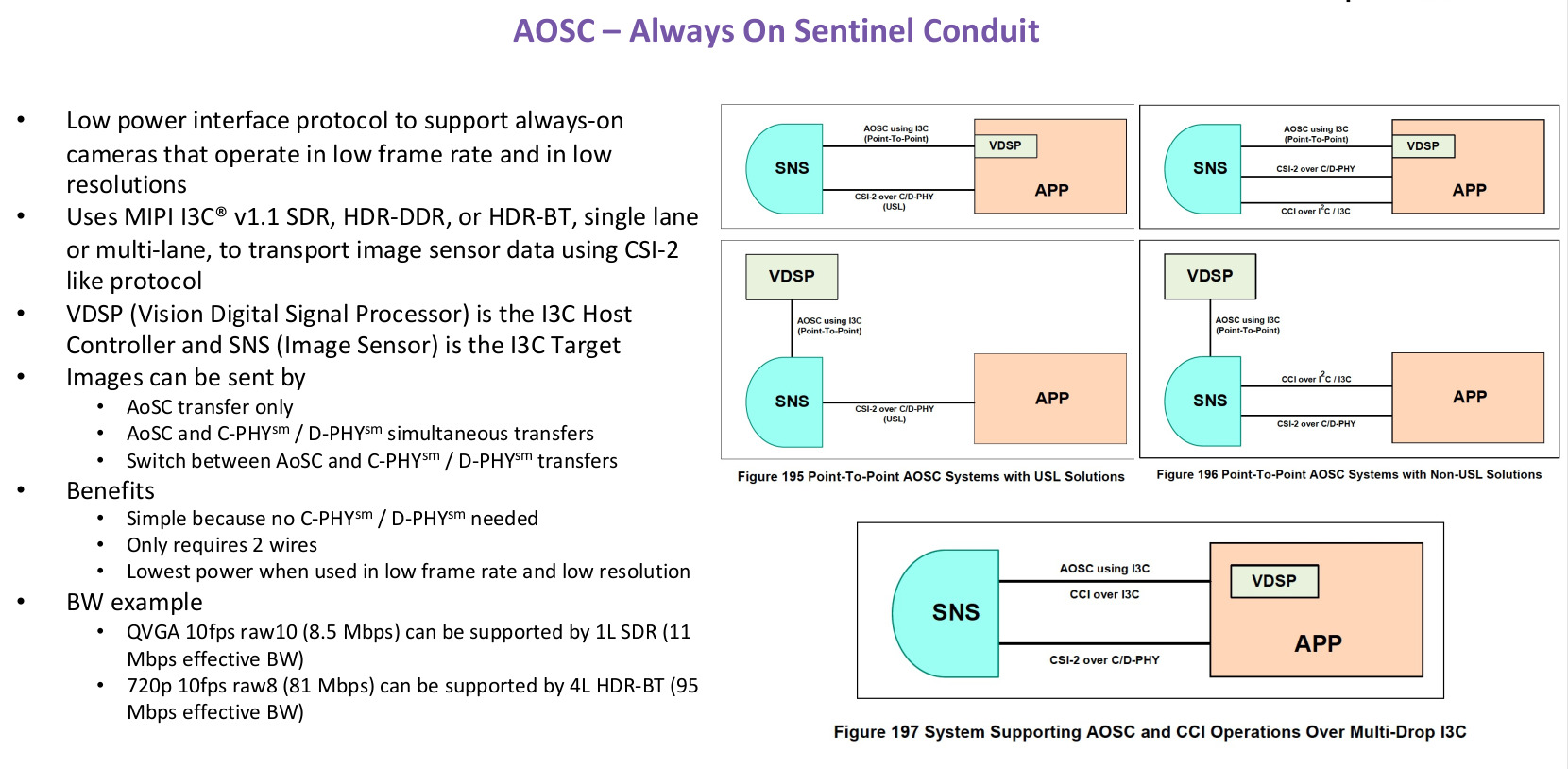
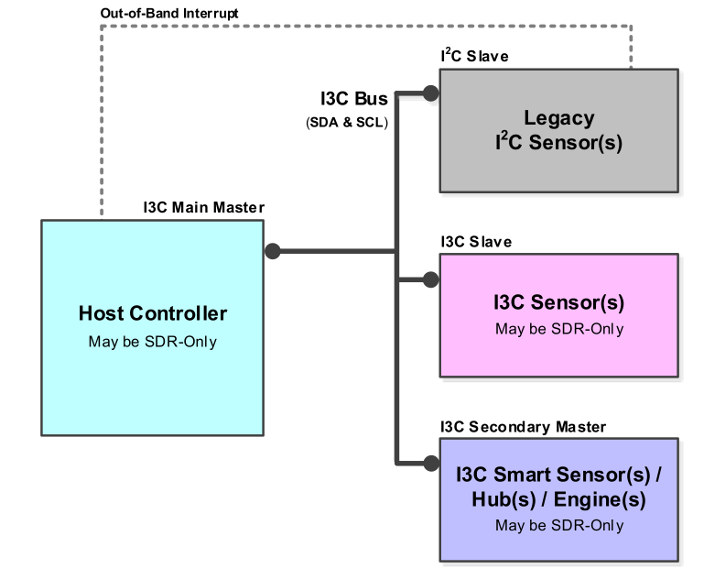
The Firefly HDMI-to-MIPI-CSI converter board converts an HDMI video and audio source into a MIPI-CSI camera stream for supported Rockchip SoCs, which is the complete opposite of the Olimex MIPI-HDMI adapter that converts MIPI DSI display signals to HDMI output. Built around the Rockchip RK628D video bridge chip, the board supports HDMI 1.4/2.0 input with 8-bit and 10-bit video, RGB888 and YUV420 color formats, and resolutions up to 4K @ 60fps. On the output side, it provides a MIPI-CSI interface compliant with MIPI D-PHY v1.2, with video output in YUV422 color format, supporting resolutions up to 4K @ 30fps. Audio output is available through a 3.5 mm headphone jack and onboard pin headers, making the board suitable for HDMI capture, smart display, micro-projector, and embedded video conversion applications. Firefly HDMI-to-MIPI-CSI board Specifications: Main Chip – Rockchip RK628D HDMI-to-MIPI CSI-2 converter Input HDMI 1.4 / HDMI 2.0 compliant 8-bit and 10-bit […]
Olimex LT8912B-based MIPI-HDMI adapter board adds HDMI output to the ESP32-P4-Devkit board
Olimex MIPI-HDMI adapter board is built around Lontium Semiconductors’ LT8912B MIPI DSI to HDMI bridge chip designed to work with their own ESP32-P4-DevKit. The board outputs up to 1080p60 8-bit HDMI via its LT8912B converter and supports 1–4 MIPI DSI data lanes (80 Mbps to 1.5 Gbps per lane) in continuous-clock mode, outputting HDMI 1.4 video in a compact 60 × 24 mm form factor. These features make it suitable for UI rendering, video streaming, media playback, vision workflows, and HMI applications like digital signage, kiosk systems, and portable multimedia devices. Olimex MIPI-HDMI adapter specifications: Mail Chip – LT8912B Single-Channel MIPI DSI Bridge to LVDS/HDMI/MHL converter MIPI Interface 15-pin FPC connector 1 clock lane + 1 to 4 data lanes D-PHY 1.1 and DSI 1.02 compliant 80 Mbps to 1.5 Gbps per lane supported data rate Continuous-clock mode only HDMI output HDMI Type-A connector HDMI 1.4 transmitter Up to 1080p […]
MIPI SoundWire I3S (SWI3S) targets high-bandwidth, low-latency audio applications
The MIPI Alliance has recently released the SoundWire I3S (MIPI SWI3S v1.0) specification for high-bandwidth, low-latency audio applications which unify control and data over a single, power-efficient interface. SWI3S builds upon the two-pin, multi-drop architecture of MIPI SoundWire released in 2014, and offers higher bandwidth, low power consumption, much better noise immunity, and support for scalable multi-device topologies to meet the increasing requirements of embedded audio systems. MIPI SWI3S v1.0 supports data rates up to 76 Mbps against 24 Mbps for the earlier SLIMbus and SoundWire audio interfaces, and improves noise immunity by operating in “forwarded clock” or “differential low voltage signaling”. It also implements a range of new features such as Hubs, multiple PHY support, control CRC, power-saving techniques, and more. MIPI SoundWire I3S key features: Transports audio data, control commands, interrupt signals, and synchronization information over a unified two-pin link Forwarded bit clock single-ended (FBCSE) and differential low-voltage […]
Luckfox Lyra Zero W is a small Rockchip RK3506B SBC with MIPI DSI connector, WiFi 6 and Bluetooth 5.2
Luckfox Lyra Zero W is a compact single board computer (SBC) powered by a Rockchip RK3506B triple-core Cortex-A7 SoC and mostly designed for smart wireless HMI with a MIPI DSI connector and a WiFi 6 and Bluetooth 5.2 module. The Raspberry Pi Zero-sized board also features 512MB of RAM and a 256MB SPI flash, a microSD card slot, two USB-C ports, a USB 2.0 connector, and a 40-pin GPIO header for compatibility with (most/some) Raspberry Pi HATs. Luckfox Lyra Zero W specifications: SoC – Rockchip RK3506B CPU Triple-core Arm Cortex-A7 CPU with 1.2 GHz Arm Cortex-M0 core GPU – 2D GPU only No VPU, no NPU Memory – 512MB DDRL3 Storage 256MB SPI NAND flash (W25N02KV) MicroSD card slot Display – 2-lane MIPI DSI connector up to 1280 x 1280 resolution @ 60 Hz Networking – 2.4 GHz WiFi 6 and Bluetooth 5.2 LE via SKI.WB800DCS module (based on AICSemi […]
MIPI C-PHY v3.0 released with 18-Wirestate mode encoding increasing the per-lane performance by up to 35 percent
The MIPI Alliance has recently released the MIPI C-PHY v3.0 specification, defining the physical layer for connecting cameras and displays. The main change in MIPI C-PHY Version 3.0 is the addition of an 18-Wirestate mode encoding option – instead of the 6-Wirestate mode encoding used in previous versions – that increases the maximum performance of a C-PHY lane by approximately 30 to 35 percent. The MIPI Alliance claims this enhancement delivers up to 75 Gbps over a short channel for ultra-high-resolution image sensors. The table below shows the key features and differences between versions of the MIPI C-PHY specification. Interestingly, the symbol rate decreased for MIPI C-PHY v3.0 compared to v2.1 (7.0 Gsps vs 8.0 Gsps for short channel), but the data rate increased from 18.3 to 24.9 Gbps, a 36% increase, due to the more efficient encoding option 32b9s that transports 32 bits over nine symbols (3.56 bits per symbol) while maintaining […]
Topaz Tz170b FPGA devkit features hardened LPDDR4 controller, hardened MIPI D-PHY up to 2 Gbps per lane
The Topaz Tz170b FPGA devkit from Efinix is a compact FPGA evaluation platform built around the Efinix Tz170 FPGA. This FPGA is built around a low-power, high-density 16 nm Quantum fabric and comes in a compact 484-ball FineLine BGA package. The company mentions that the board supports hardware-level MIPI D-PHY with data rates of up to 2 Gbps per lane and hardware-level LPDDR4 memory controller, making it ideal for high-speed embedded systems, vision processing, and custom SoC designs. Additionally, it includes 256 Mbit of LPDDR4 memory, dual SPI NOR flash memories, and high-speed QSE connectors for Efinix or custom daughter cards. Expansion is further enabled by a low-pin-count FMC connector, a microSD slot, user LEDs, and push buttons. Clock options include 33.33, 50, and 74.25 MHz oscillators, and a full range of onboard regulated power sources for stable operations. These features make this device useful for applications like edge AI, […]
Synaptics Astra SR series Arm Cortex-M55 MCUs feature Arm Ethos-U55 NPU, low-power Cortex-M4 core with microNPU
Synaptics unveiled an extension to its Astra Native AI platform with the new SR series of MCUs. This new product family, unlike the Astra SL series released last year, isn’t comprised of Linux-capable application processors. Instead, the Arm Cortex-M55 microcontrollers focus on providing high-performance, AI-native processing for Edge AI applications leveraging a built-in Arm Ethos-U55 NPU. Built on the Arm Cortex-M55 core and the Arm Ethos-U55 neural processing unit (NPU), these MCUs are optimized for multimodal applications, including vision, audio, and voice processing. As indicated in the MCU’s block diagram (see below), the SR series also features an optional low processing SoC unit featuring an Arm Cortex-M4 @ 100MHz and a Synaptics micro NPU engine. Such a provision in this MCU is what allows the three operation tiers the company offers with the MCU series: performance, efficiency, and ultra-low-power modes, allowing intelligence across various power levels. The MCU can switch […]
Efinix introduces the low-power Topaz RISC-V SoC FPGA family for “high-volume, mass-market applications”
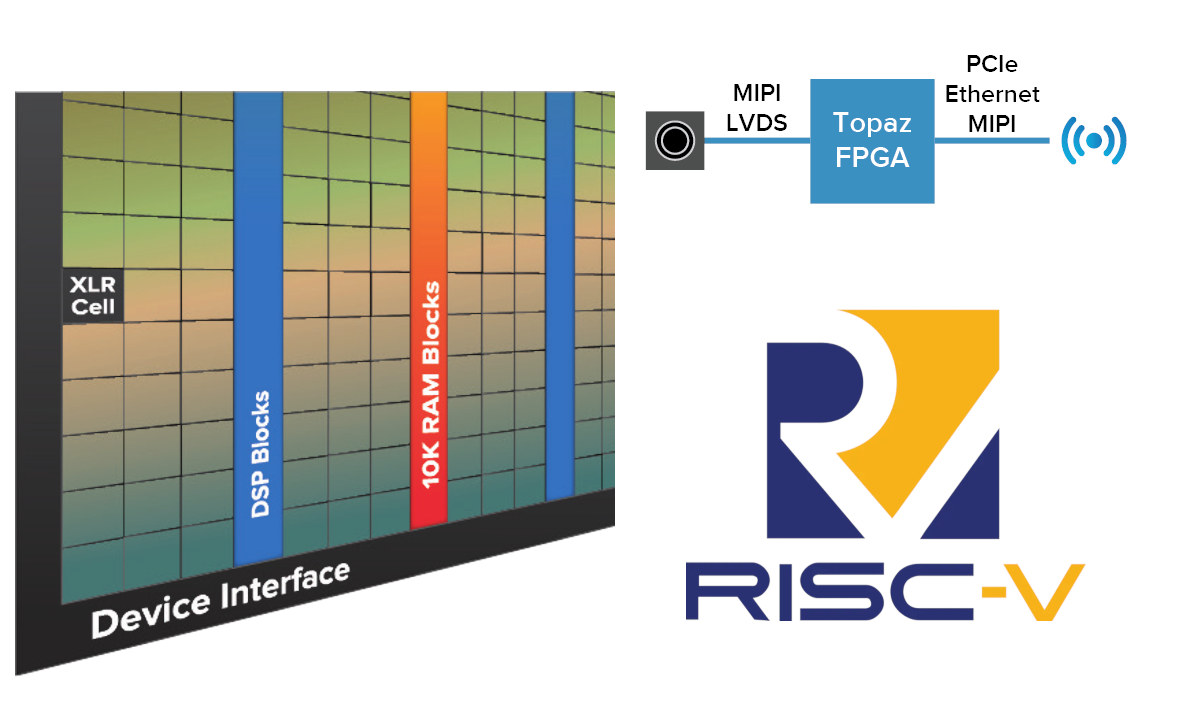
Efinix Topaz is a new low-power RISC-V SoC FPGA family manufactured with the same 16nm TSMC process as the Efinix Titanium SoC FPGA, but optimized for high-performance in a low-power footprint, and targetting high-volume, mass-market applications. The Topaz SoC FPGAs provide fewer features than the Titanium family but still offer up to four RISC-V hard cores, PCIe Gen3, MIPI interfaces, LPDDR4, LVDS, and 12.5 Gbps transmitter with most features being optional and depending on the exact SKUs selected. Efinix Topaz key features and specifications: FPGA compute fabric Up to 326,080 logic elements (LEs) Up to 19.22 Mbits embedded memory Up to 1,877 10-Kbit SRAM blocks Up to 1,008 embedded DSP blocks Memory – 10-kbit high-speed, embedded SRAM, configurable as single-port RAM, simple dual-port RAM, true dual-port RAM, or ROM FPGA interface blocks Optional 32-bit quad-core hardened RISC-V block (RISCV32I with M, A, C, F, and D extensions and six pipeline […]