openwrt News - CNX Software - Embedded Systems News

Avaota F2 – Allwinner V861 RISC-V SBC targets AI cameras with PTZ and audio support

Avaota F2 SBC

Avaota F2 is the first SBC based on an Allwinner V861 dual-core 64-bit RISC-V SoC with 128MB on-chip DDR3 memory, support for 4K cameras, a H.265 video codec, and a 1 TOPS AI accelerator. It’s an update to the earlier Avaota F1 camera board based on an Allwinner V821 SoC. The new open-source hardware F2 SBC offers several benefits, including support for both Full HD and 4K camera sensors, motor control for the PTZ (Pan-Tilt-Zoom) feature, and improved audio support through speaker (one) and microphone (two) connectors. However, the F1 also included WiFi, which the Avaota F2 lacks. Avaota F2 specifications: SoC – Allwinner V861M2-XXX CPU Dual-Core RISC-V XuanTie C907 (RV64GCBV/RV32GGCBV) clocked up to 1.4GHz with RVV 1.0 extensions Single-core RISC-V XuanTie E907 (RV32IMAFC) clocked up to 800MHz VPU Video Encoder H.264/H.265 up to  4K @ 25fps (M)JPEG up to 8192×8192 Video Decoder – (M)JPEG up to 1080p60 AI accelerator […]

Turris Omnia NG Wired dual 10GbE, quad 2.5GbE router drops Wi-Fi for cost savings

Turris Omnia NG Wired router

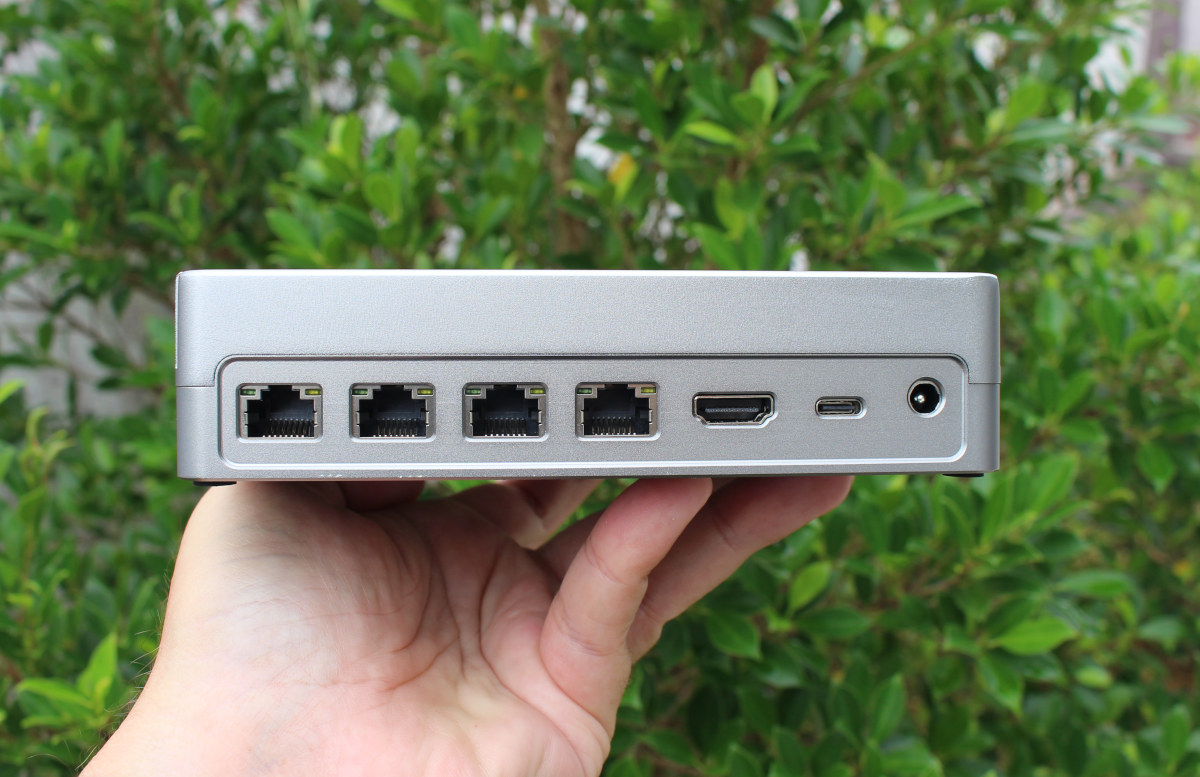
Not everybody needs Wi-Fi in their router. That’s why Turris has now introduced the Omnia NG Wired dual 10GbE, quad 2.5GbE router without built-in Wi-Fi 7 connectivity to reduce costs. The specifications are the same as those of the earlier Turris Omnia NG Wi-Fi 7 router introduced last November, and it still features two 10 Gbps Ethernet SFP+ cages and four 2.5GbE RJ45 ports, but Wi-Fi 7 (and 5G cellular) connectivity is optional. Turris Omnia NG Wired (RTROM04-NGW) specifications: SoC – Qualcomm IPQ9574 (Networking Pro 820 Platform) quad-core Arm Cortex-A73 processor @ 2.2GHz Memory – 2 GB RAM Storage 8 GB eMMC storage M.2 socket for NVMe SSD Display – 240 × 240 px IPS color display Networking 2x 10 Gbps Ethernet SFP+ cages (WAN/LAN) 4x 2.5GbE RJ45 ports Optional WiFi 7 via upgrade kit Optional 4G LTE/5G cellular connectivity via mini PCIe slot and 2x SIM slots USB – […]

NanoPi NEO3 Plus – A tiny Rockchip RK3528A headless SBC with Gigabit Ethernet, USB 3.0 port, GPIO header

NanoPi NEO3 Plus

FriendlyELEC NanoPi NEO3 Plus is an ultra-compact headless SBC powered by a Rockchip RK3528A SoC paired with 1GB RAM, whose main interfaces are a Gigabit Ethernet jack, a USB 3.2 port, and a 26-pin GPIO header. I can still remember using its predecessor, the NanoPi NEO3, based on a Rockchip RK3328, which I reviewed with Armbian in 2020. The new model is similar, with a quad-core Cortex-A53 SoC but clocked at 2.0 GHz instead of 1.5 GHz, and offered with a black metal case instead of a white plastic case. The OS can still be booted from a microSD card, but the NanoPi NEO3 Plus also offers a socket for an optional eMMC flash module, and adds an RTC battery connector, a speaker connector, and a MASK button for firmware updates. NanoPi NEO3 Plus specifications: SoC – Rockchip RK3528A CPU – Quad-core ARM Cortex-A53 @ 2.0 GHz GPU – Arm […]

Qualcomm Wi-Fi 8 solutions – FastConnect 8800 Mobile Client and Qualcomm Dragonwing Networking Platforms

Qualcomm FastConnect 8800 WiFi 8 client

Qualcomm has unveiled its Wi-Fi 8 (802.11bn) portfolio, which includes the FastConnect 8800 “Mobile Connectivity System”, also integrating Bluetooth 7 wireless technology, Ultra Wideband (UWB), and Thread,  and five Dragonwing Networking platforms for access points and routers. The Dragonwing NPro A8 Elite features a 5×5 Wi-Fi 8 radio system for high-performance enterprise access points and premium home routers, the Dragonwing FiberPro A8 Elite offers similar features but adds 10G fiber access (PON) for fiber-to-the-home gateways, the Dragonwing FWA Gen 5 Elite is designed for fixed wireless access using the Qualcomm X85 5G Modem-RF System, and the Qualcomm Dragonwing N8 and F8 platforms offer mainstream tier options for Ethernet and fiber broadband CPEs. Qualcomm FastConnect 8800 Wi-Fi 8 mobile client Qualcomm FastConnect 8800 (WCN885x) specifications: Wi-Fi 8 with advanced features like UWB, including  and RADAR Support for Snapdragon Sound™ Technology Suite, Bluetooth® High Data Throughput (HDT), and Qualcomm XPAN Proximity AI […]

DShanPi-A1 AI Education Rockchip RK3576 SBC features HDMI input and output ports, dual GbE

DShanPi-A1 AI Education SBC

DshanPi-A1 AI Education is a single board computer (SBC) powered by a Rockchip RK3576 octa-core Cortex-A72/A53 SoC, and paired with up to 8GB RAM and 64GB eMMC flash, which I first discovered in the Linux 6.19 changelog. The board features HDMI 2.1 video output, a mini HDMI video input port, a MIPI DSI display interface, two MIPI CSI connectors for up to four cameras, dual GbE, an M.2 Key-E socket for WiFi and Bluetooth, a few USB ports, and a 40-pin GPIO header compatible with some Raspberry Pi HAT boards. DShanPi-A1 specifications: SoC – Rockchip RK3576 CPU – Octa-core  CPU with 4x Cortex-A72 cores at 2.2 GHz, 4x Cortex-A53 cores at 2.0 GHz (1.6GHz for Industrial and Automotive) GPU – Arm Mali-G52 MC3 GPU with support for OpenGL ES 1.1, 2.0, and 3.2, OpenCL 2.0, and Vulkan 1.2 NPU – 6 TOPS (INT8) AI accelerator with support for INT4, INT8, […]

Olimex HoT aims to be lightweight, easier-to-use alternative to Home Assistant

Olimex HoT

Olimex HoT (Home of Things) is a lightweight Smart Home solution designed to run on low-end hardware (128MB RAM, 128MB flash) and interface with nodes running ESPHome. It can serve as an easier-to-use alternative for people who don’t need all the bells and whistles provided by powerful home automation frameworks such as Home Assistant or OpenHAB. Home Assistant open-source home automation software is great, but it requires a system with at least 2GB of RAM, and 4GB of RAM is often recommended for most users. There’s also a steep learning curve. This is what Tsvetan Usunov, Olimex CEO, realized last year when he tried Home Assistant, and he decided to start working on a low-cost, easy-to-use solution for IoT and Smart Home applications. That’s why the Olimex HoT project was created. Tsvetan gave a talk about the project entitled “Designing EUR 20 Open Source Hardware running Free/Libre Open Source Software […]

Qualcomm IPQ5424 embedded router board supports 22 Gbps tri-band Wi-Fi 7 and dual 10GbE networking

Qualcomm IPQ5424 router SBC

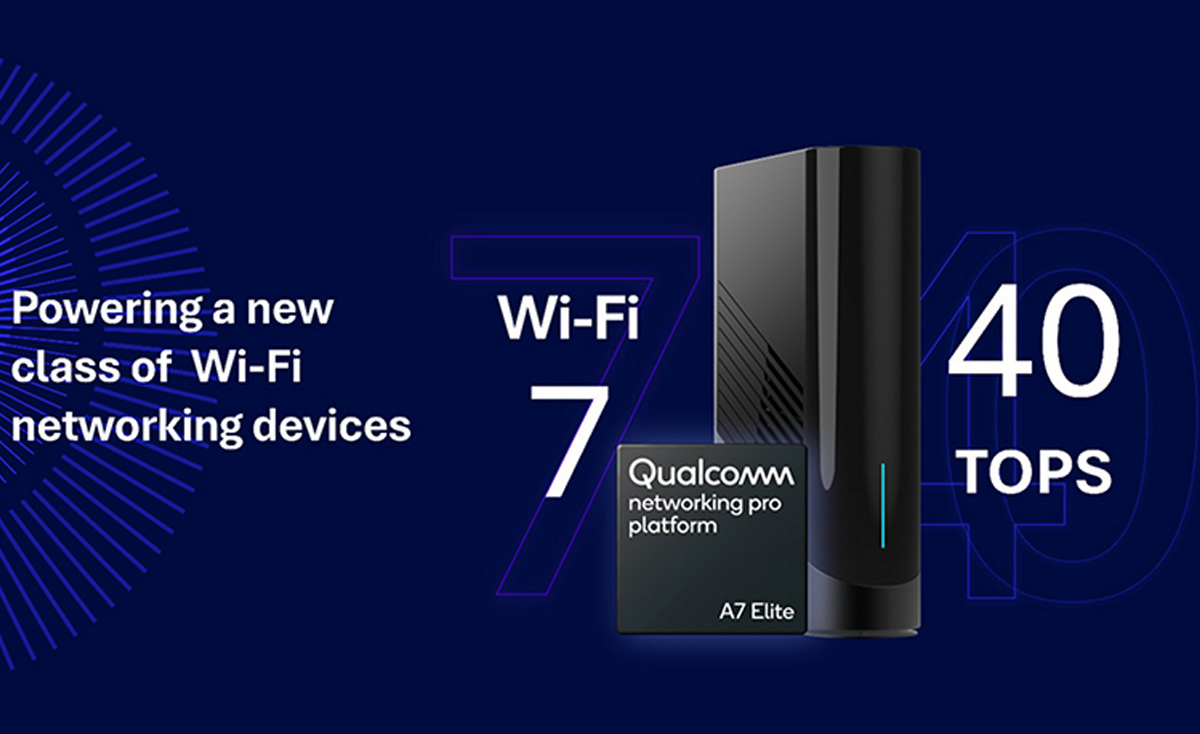
Wallys Communications’ DR5424 is a new embedded router board powered by a Qualcomm IPQ5424 quad-core Cortex-A55 SoC (aka Dragonwing NPro A7 Platform) and offering tri-band Wi-Fi 7 connectivity up to around 22 Gbps, along with two 10 GbE RJ45 ports and four 2.5GbE RJ45 ports for wired networking. Based on Qualcomm AP.MI01.2 reference design, the board also features 4GB or 8GB DDR4 memory, 256MB NAND flash, and 32MB NOR flash, as well as a USB 3.0 port, a USB 2.0 port, and JTAG and serial debug ports. Target applications include Wi-Fi 7 (802.11be) access points, Internet of Things (IoT) gateways, and HD streaming and gaming.   Qualcomm AP.MI01.2 specifications: SoC – Qualcomm IPQ5424 (Qualcomm Dragonwing NPro A7 Platform / NPA7) CPU – Quad-core Cortex-A55 “Marina” processor @ up to 1.5 GHz (Wallys) or 1.8 GHz (Qualcomm and Compex) Accelerator – Integrated accelerator designed for AI models specific to Wi-Fi and […]

NanoPC-T6 Plus Rockchip RK3588 SBC switches from LPDDR4x to LPDDR5 (up to 32GB)

NanoPC-T6 Plus

It’s been a while since FriendlyELEC has released a board, and the NanoPC-T6 Plus SBC is more of a variant of the NanoPC-T6 and NanoPC-T6 LTS rather than a really new board. It’s still based on a Rockchip RK3588 octa-core SoC, and equipped with two HDMI 2.1 ports, an HDMI input port, MIPI DSI/CSI interfaces, two 2.5GbE ports, and M.2 sockets for NVMe SSD and wireless, among other features. The main change appears to be that the new model is now offered with up to 32GB LPDDR5 rather than up to 16GB LPDDR4x in the previous models. It’s closer to the NanoPC-T6 LTS, although it now supports two analog microphones instead of just one, and restores the M.2 Key-B socket for optional 4G LTE connectivity found in the original NanoPC-T6. The 10-pin UART + 2x USB 2.0 header found in the LTS variant gives way to a 3-pin UART debug […]