AMD Kintex UltraScale+ Gen 2 is a mid-range FPGA family designed for the broadcast, test, industrial, and medical markets, which provides an update to the Spartan UltraScale+ FPGA family introduced in 2024, and promises availability until at least 2045. Key features include high-speed transceivers and PCIe Gen4 for support of 4K AV-over-IP, multi-stream capture, and frame-accurate transport, increased memory bandwidth for semiconductor test and inspection systems, and advanced imaging and real-time control for machine vision, industrial automation, medical imaging, and robotic systems. AMD Kintec UltraScale+ Gen2 key features AMD says the Kintex UltraScale+ Gen 2 devices deliver up to 5x increase in memory bandwidth when comparing the AMD Kintex UltraScale+ Gen 2 XC2KU040P and XC2KU050P FPGAs to the previous generation Kintex UltraScale+ FPGA, and up to 2x higher channel density per PCIe interface compared to the Altera Agilex A5EC065A FPGA. The company further states that compared to “competing platforms”, the family delivers […]
MicroPython v1.27 adds support for ESP32-C5, ESP32-P4, and STM32U5 microcontrollers
MicroPython is one of the most popular firmware for microcontrollers due to its ease of use. The MicroPython v1.27 release adds support for some interesting microcontrollers, namely Espressif Systems ESP32-C5 and ESP32-P4, thanks to an update to the ESP-IDF v5.5.1 framework, as well as STMicroelectronics STM32U5, and features a range of other changes. These include improvements to the test suite to cater to the increasing number of supported hardware platforms, the introduction of tier levels for different hardware platforms, various optimizations and bug fixes, updated libraries, new ESP32 and STM32 boards, and more. The last time we reported on a MicroPython release was for v1.24, which added support for Raspberry Pi RP2350 and ESP32-C6 microcontrollers. Other MicroPython v1.27 highlights: Test suite improvements Auto-detecting if the target has Unicode support Automatically including float tests when possible Always including stress tests Improving the skipping of tests that use slice and the […]
tinySA is a low-cost handheld spectrum analyzer with built-in signal generator
The tinySA is a compact, low-cost handheld spectrum analyzer and RF signal generator designed for hobbyists, radio amateurs, educators, and engineers. It comes in three different variants and can be used for RF debugging, signal inspection, interference hunting, filter testing, antenna-related measurements, and basic RF education, both in the field and on the bench. The product line includes the tinySA Basic, tinySA Ultra, and tinySA Ultra+, which mainly differ in their supported frequency ranges and performance. The tinySA Basic supports 100 kHz to 350 MHz on its low input and up to about 960 MHz on the high input, while the Ultra and Ultra+ models can observe signals up to 12GHz. The devices run from an internal rechargeable battery with USB-C charging, support firmware updates, internal self-test and calibration routines, marker and peak detection, configurable frequency span and amplitude settings, and PC control over USB. Input protection limits are specified at +10 […]
Bluetooth 6.2 gets more responsive, improves security, USB communication, and testing capabilities
Bluetooth 6.2 specification has just been released with a range of new features to enhance responsiveness with shorter connection intervals, strengthen security against amplitude-based RF attacks, and improve communication with a new “Bulk Serialization Mode” that’s especially useful for USB Bluetooth LE audio applications. The new Bluetooth Core 6.2 specification also introduces various BLE Test Mode enhancements. If you feel like Bluetooth specifications are released more often than in the past, that’s normal because the Bluetooth SIG switched to a bi-annual release schedule. For instance, the Bluetooth 6.1 specification was just published last May, or about 6 months ago… Bluetooth 6.2 highlights: Bluetooth Shorter Connection Intervals (SCI) reduce the minimum Bluetooth LE connection interval from 7.5 ms to just 375 µs for faster responsiveness. The change will especially impact high-performance HID devices, real-time human-machine interfaces (HMIs), and latency-sensitive sensors. AR/VR and gaming applications will particularly benefit from the lower latency. […]
Azulle’s OEM features for enhanced operations (Sponsored)
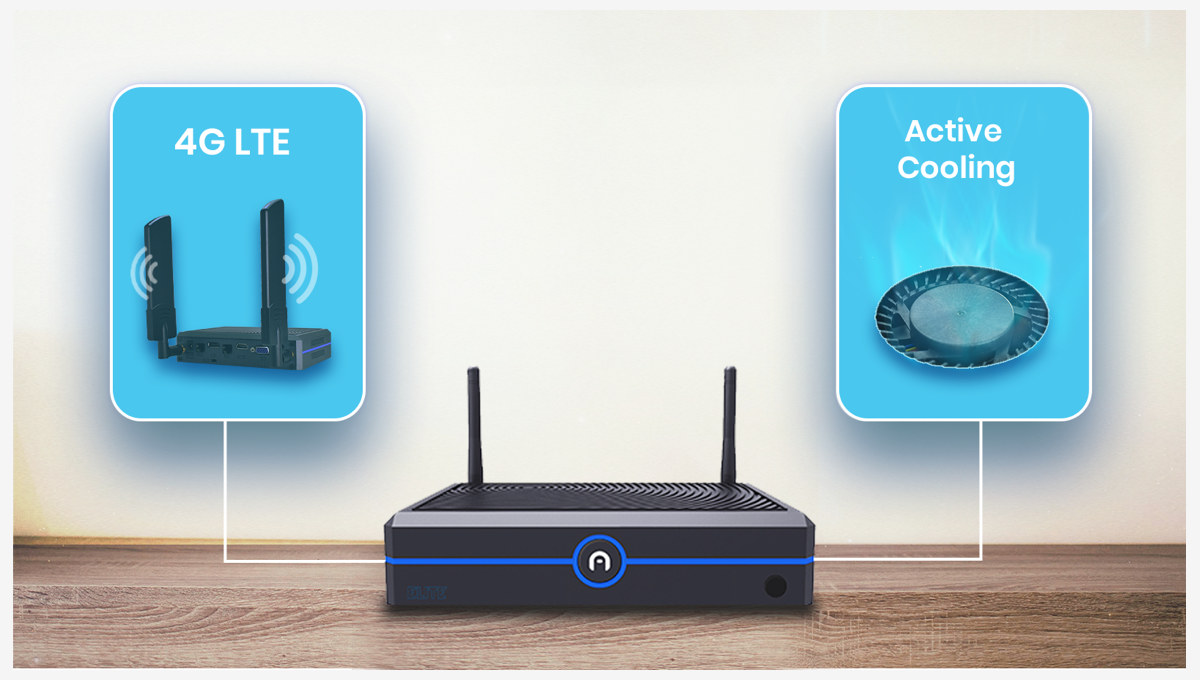
In the bustling world of tech innovation, where the quest for efficiency meets the desire for personalized solutions, Azulle emerges as a beacon of ingenuity. Azulle isn’t just a brand, but a manufacturer of hardware solutions for businesses. Picture a company aspiring to redefine its workspace, craving devices that seamlessly integrate into its established ecosystem while proudly bearing its distinctive insignia. This company embodies the ideal partner for Azulle manufacturing capabilities. With their unparalleled OEM (original equipment manufacturer) services, Azulle empowers organizations to craft mini PCs that aren’t just tools but extensions of their vision. Customization Features for Your Mini PC Azulle offers mini PCs with a wide range of configurations, allowing businesses to tailor the system to their specific needs. As a business, when buying from Azulle, you get the chance to choose the operating system, RAM, and storage for your hardware set-up. In addition, Azulle extends the flexibility […]
PicoVNA 5 software for vector network analyzers supports Windows, Linux, MacOS, and Raspberry Pi
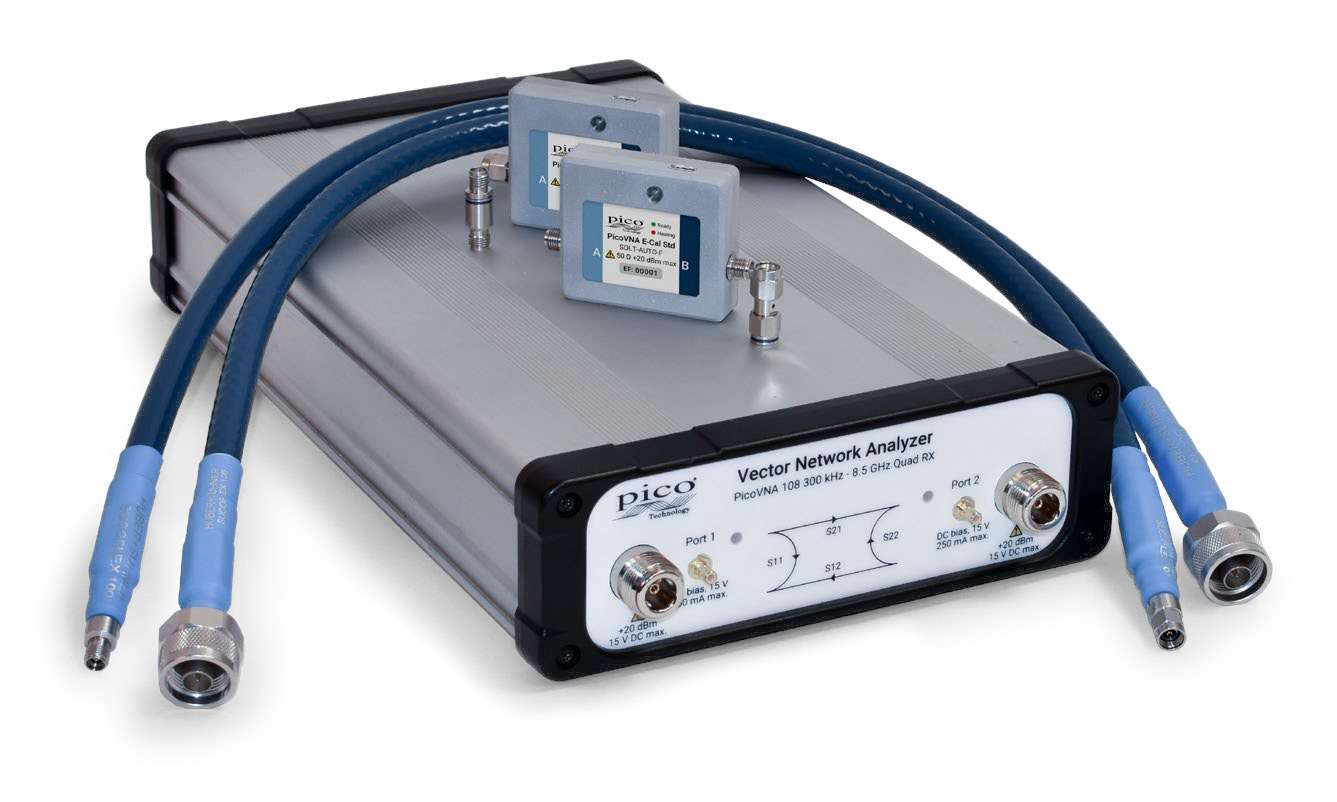
Pico Technology has released PicoVNA 5 control software for their vector network analyzers for Windows x86 64-bit, Mac, Linux x86 64-bit, and Raspberry Pi 3 and greater single board computers, superseding the Windows-only PicoVNA 3 software. As a Ubuntu user, I hate it when some hardware tool forces me to install software on Windows when there’s no Linux alternative, so any company that provides cross-platform tools is making the right move. I’m also not quite sure what a “vector network analyzer” (VNA) is, so I’ll first look into the PicoVNA 106 and PicoVNA 108 6/8.5 GHz VNAs from the company. PicoVNA 106/108 vector network analyzers highlights and specifications: Frequency ranges PicoVNA 106 – 300 kHz to 6 GHz PicoVNA 108 – 300 kHz to 8.5 GHz Up to 5500 dual-port S-parameters per second > 10 000 S11 + S21 per second Quad RX four-receiver architecture Up to 124 dB dynamic […]
Green Metrics Tool helps developers measuring & optimizing software power consumption
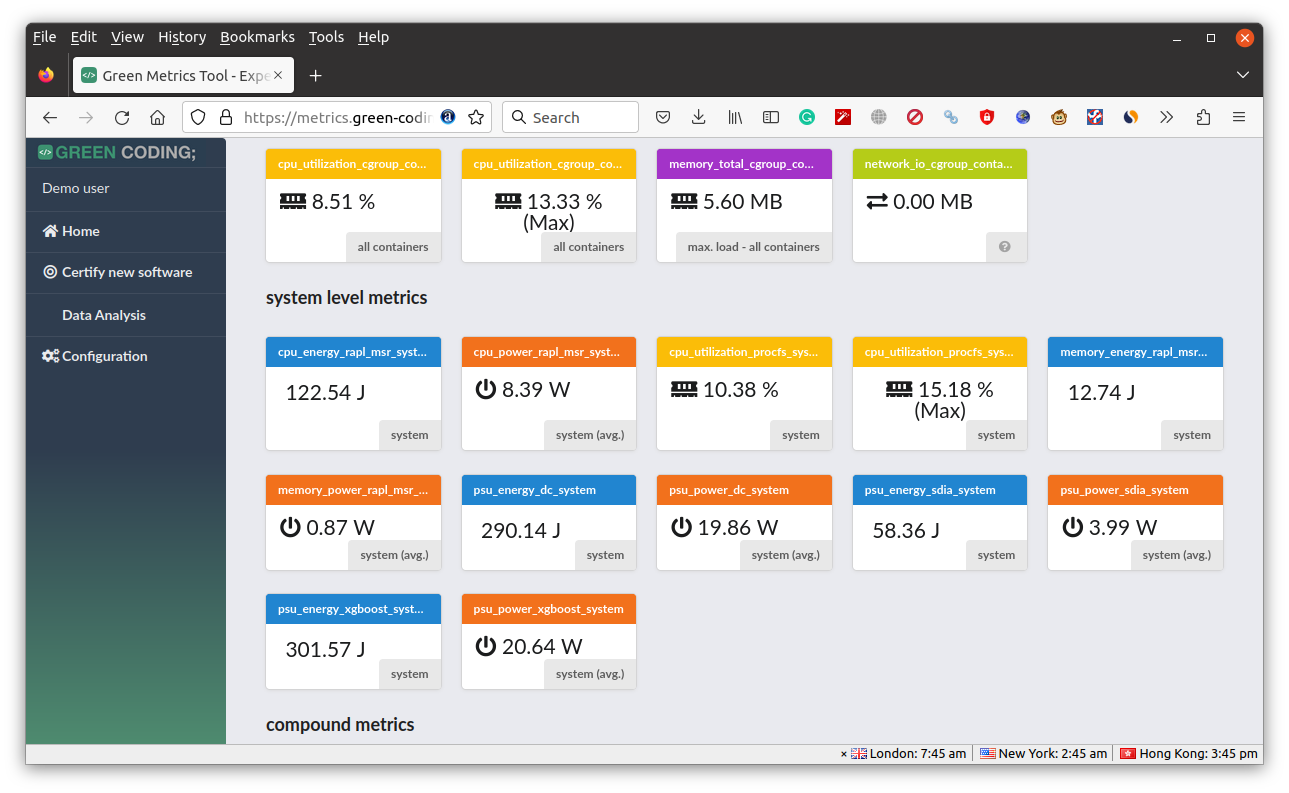
The Green Metrics Tool (GMT) is an open-source framework that allows the measurement, comparison, and optimization of the energy consumption of software with the goal of empowering both software engineers and users to make educated decisions about libraries, code snippets, and software in order to save energy along with carbon emissions. While the firmware of battery-powered embedded devices and the OS running on your smartphone are typically optimized for low power consumption in order to extend the battery life, the same can not be said of most software running on SBCs, desktop computers, and servers. But there are still benefits of having power-optimized programs on this type of hardware including lower electricity bills, a lower carbon footprint, and potentially quieter devices since the cooling fan may not have to be turned on as often. The Green Metrics Tool aims to help in that regard. The developers explain how that works: […]
Cortex-M55 based Arm Virtual Hardware is now available in AWS Cloud
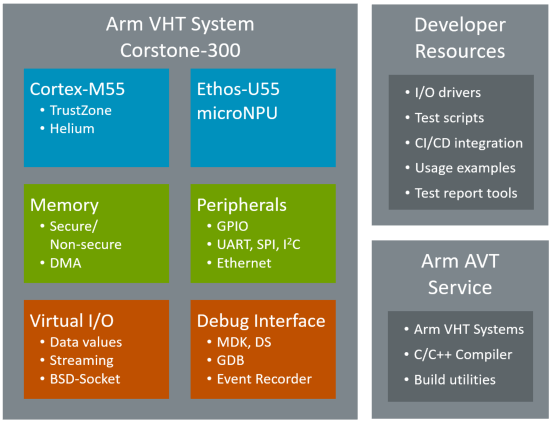
The Arm DevSummit 2021 is taking place on October 19-21, and the first announcements from Arm are related to IoT with “Arm Total Solutions for IoT delivering a full-stack solution to significantly accelerate IoT product development and improve product ROI”, “Project Centauri” aiming to achieve for an extensive Arm Cortex-M software ecosystem in the way that Project Cassini does for the Cortex-A ecosystem, starting with support for PSA Certified and Open-CMSIS-CDI cloud-to-device specification, and Arm Virtual Hardware based on Corstone-300 IoT platform with a Cortex-M55 MCU core and an Ethos-U55 microNPU accessible from Amazon Web Services. The first two are quite abstract right now, and more information may become available in the future, but the Arm Virtual Hardware is available now from AWS as a public beta, with 100 hours of free AWS EC2 CPU credits for the first 1,000 qualified users. The virtual hardware does not emulate only the […]