NXP has recently introduced the i.MX 952 applications processor, a new member of the i.MX 95 series, designed for AI-powered automotive and industrial applications, including driver monitoring, child presence detection, and in-cabin HMIs. The i.MX 952 features up to four Arm Cortex-A55 cores with Cortex-M7 and M33 microcontroller cores, and is compliant with ISO 26262 ASIL B and SIL2/SIL3 standards. It integrates an eIQ Neutron NPU for AI-based sensor fusion, a 500 Mpixel/s ISP with RGB-IR support, and is the first processor with built-in local dimming for better display efficiency. Security features include EdgeLock Secure Enclave with post-quantum cryptography, meeting ISO 21434 and IEC 62443 standards. It can be interfaced with NXP’s PF09 PMIC, PF53 regulator, Trimension UWB, and IW693/AW693 Wi-Fi 6/6E SoCs, and is pin-to-pin compatible with other members of the i.MX 95 family. NXP i.MX 952 specifications: CPU Up to 4 Arm Cortex-A55 cores with 32KB + 32KB L1-cache, 64KB L2 […]
Microchip PIC32-BZ6 BLE 6.0, Thread, and Matter wireless MCU integrates touch and motor control
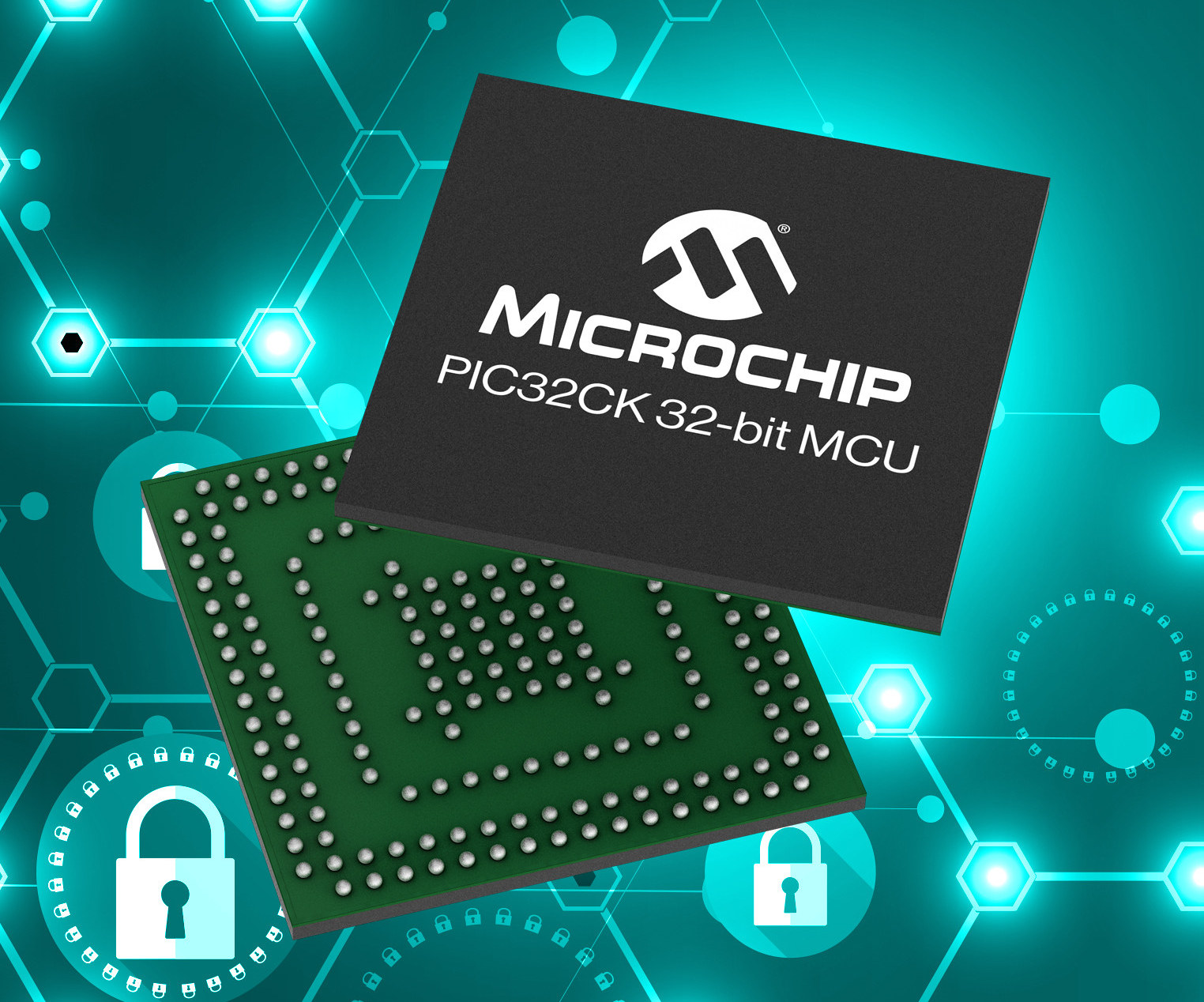
Microchip has recently introduced the PIC32-BZ6 family of single-chip, multiprotocol wireless MCUs, also available as RF-certified modules, and designed for smart home, industrial automation, and automotive applications. The module supports Bluetooth LE 6.0, IEEE 802.15.4-based Thread and Matter, and proprietary mesh protocols. For wired connectivity, there are two CAN-FD ports, a 10/100 Mbps Ethernet MAC, and a USB 2.0 full-speed transceiver. Other features include CVD-based touch sensing and motor control interfaces for interactive and real-time applications. As a secure MCU, the PIC32-BZ6 integrates a hardware-based security engine, a secure boot ROM, and encryption accelerators, along with OTA update capability for long-term device management. The microcontroller offers up to 54 GPIO pins, multiple pin and package options (up to 132-pin VQFN), and automotive-grade variants rated for -40°C to +125°C operation. Microchip PIC32-BZ6 specifications: MCU Core – 128 MHz Arm Cortex-M4F with FPU and DSP extensions Memory 512 KB multi-port SRAM (with […]
Linux 6.17 release – Main changes, Arm, RISC-V, and MIPS architectures
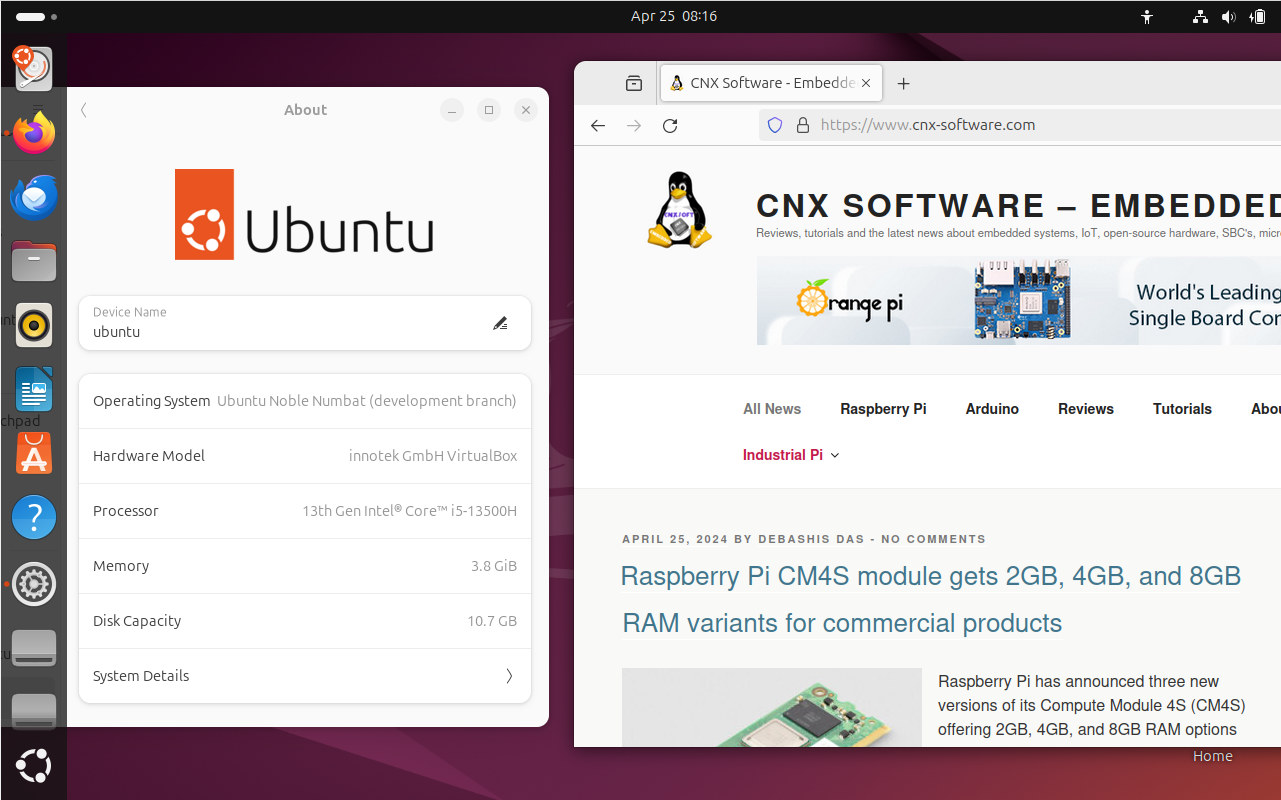
Linux 6.17 has just been released on LKML: No huge surprises this past week, so here we are, with kernel 6.17 pushed out and ready to go. Below is the shortlog for just the last week – not the full 6.17 release – as usual. It’s not exciting, which is all good. I think the biggest patch in there is some locking fixes for some bluetooth races that could cause use-after-free situations. Whee – that’s about as exciting as it gets. Other than that, there’ the usual driver fixlets (GPU and networking dominate as usual, but “dominate” is still pretty small), there’s some minor random other driver updates, some filesystem noise, and core kernel and mm. And some selftest updates. This obviously means that the merge window for 6.18 will open tomorrow, and I already have four dozen pull requests pending. Thanks to the proactive people – you know who […]
Fing Agent Raspberry Pi Kit – An all-in-one Raspberry Pi 4-based network monitoring solution
Fing has recently introduced the “Fing Agent Raspberry Pi Kit“, also called “Fing Agent plug-and-play Raspberry Pi 4 kit”, for its Fing Agent network monitoring system, which can be considered a follow-up to the earlier Fingbox hardware released in 2017. While Fingbox was a custom appliance based on Ubuntu Core, the new kit uses a Raspberry Pi, making it easier to set up and use in a home or small office network. The kit includes a Raspberry Pi 4 Model B (2GB) in an aluminium case, a 32GB microSD card with Fing Agent preinstalled, a USB-C power supply with adapters, and a Cat 5e Ethernet cable. Once connected to the router, it works with the Fing app, desktop, or web to monitor devices, track uptime and speed, detect intrusions, and send alerts about unusual activity. It also supports device blocking, presence detection, and diagnostics, such as port scans and vulnerability checks. Making it […]
Renesas RA0L1 low-cost Cortex-M23 MCUs adds capacitive, EMI-resistant touch
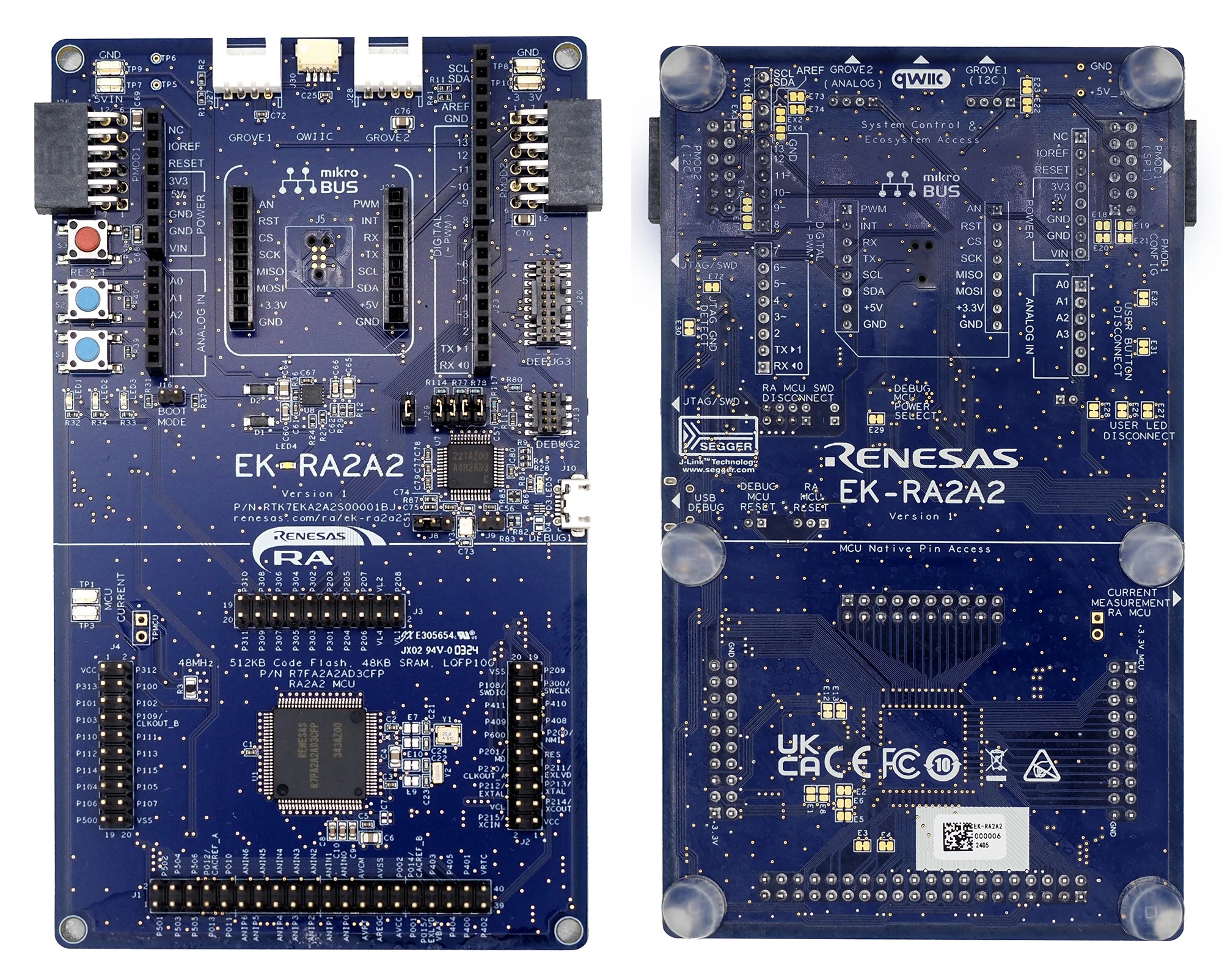
Renesas has expanded its low-cost RA0 series of low-cost, low-power Cortex-M23 MCUs with the new RA0L1, the first in the lineup to feature integrated capacitive touch. Designed for low-cost battery-powered applications with responsive touch control, ultra-low current consumption, and fast wake-up. The RA0L1 combines up to 64KB flash, 16KB SRAM, and a 1.6V–5.5V operating range with peripherals such as a 12-bit ADC, temperature sensor, multiple UART/I2C/SPI interfaces, timers, RTC, and a random number generator. It supports up to 24 capacitive touch channels using Renesas’ self-capacitance technology, a high-accuracy ±1% on-chip oscillator, safety functions, and security features including TRNG and unique ID. Renesas RA0L1 MCU specifications: MCU Core – Arm Cortex-M23 Armv8-M Core up to 32MHz Memory and Storage 16KB SRAM with parity Code Flash – Up to 64KB Data Flash – 1KB(1M program/erase cycles) Flash read protection (FRP) 128-bit unique ID Human-Machine Interface Capacitive Touch Sensing Unit – up to […]
ESP32 Marauder Double Barrel 5G adds 5GHz deauthentication with RTL8720DN module
The ESP32 Marauder – Double Barrel 5G is a dual-chip hacking and penetration testing tool that supports both 2.4 GHz and 5 GHz Wi-Fi scanning, deauthentication, and can be used for penetration testing, wireless research, and learning security concepts. The device is built around an ESP32, and can be used with Flipper Zero or as a standalone device. Additionally, it features a dedicated GPS receiver and a CC1101 Sub-GHz transceiver (433 MHz) for wireless experiments. Other features include a 2.8-inch touchscreen, 800 mAh rechargeable battery, micro-SD slot for logs/firmware/Flipper FAP files. There are also dual USB-C interfaces (one for charging/ESP32 recovery and one for BW16 firmware update), and four external antenna ports (Wi-Fi ×2, GPS, Sub-GHz) housed in a 3D-printed enclosure. ESP32 Marauder Double Barrel 5G specifications Main module – ESP32 Wi-Fi & Bluetooth SoC Storage – MicroSD card slot for firmware, logging, and data storage. Display – 2.8-inch touchscreen with included […]
SiFive introduces 2nd Gen Intelligence RISC-V AI CPUs: X160, X180, X280 Gen 2, X390 Gen 2, and XM Gen 2
SiFive has just launched its 2nd Generation Intelligence family, featuring five new RISC-V-based products: the new X160 Gen 2 and X180 Gen 2, and upgraded X280 Gen 2, X390 Gen 2, and XM Gen 2 processors, all featuring scalar, vector, and matrix processing (XM only) capabilities designed for AI workloads. The original Intelligence X280 64-bit RISC-V CPU was introduced in 2021, following the Intelligence X390 NPU in 2023, and the Intelligence XM Series in September 2024. The X160 Gen 2 (32-bit) and X180 Gen 2 (64-bit) are entry-level AIoT CU cores targeting edge compute and IoT applications for automotive, autonomous robotics, industrial automation, and smart IoT applications. The upgrade models get support for the RVA23 profile and a few other changes. SiFive X160/X180 Gen 2 CPUs Key features and specifications: Scalar processing Intelligence X160 Gen 2 – 32-bit RISC-V ISA (RV32I) Intelligence X180 Gen 2 – 64-bit RISC-V ISA (RV64I) Dual […]
Ambiq Apollo510B ultra-low-power Cortex-M55 Edge AI MCU adds Bluetooth LE 5.4
After the release of Apollo510, Ambiq has released Apollo510B, an ultra-low power Edge AI MCU that adds a 48 MHz network coprocessor for Bluetooth 5.4 LE (BLE) support. The new SoC combines Cortex-M55 with Helium MVE for AI/ML acceleration, secureSPOT 3.0 security, and graphiqSPOT 2.0 graphics for connected wearables, healthcare devices, and industrial IoT applications. The Apollo510B features 3.75MB of system RAM, 4MB of non-volatile memory, and a 12-bit ADC. It supports MIPI DSI and Quad SPI interfaces for displays, and offers audio capabilities such as always-on low-power ADC, a PDM stereo microphone interface, and dual multichannel I²S ports with asynchronous sample rate conversion. Peripheral options extend to USB 2.0 HS/FS, dual SDIO/eMMC controllers, multiple SPI and I²C masters, UART interfaces with flow control, and various GPIOs. Ambiq Apollo510B specifications: MCU Core Arm Cortex-M55 core at up to 250 MHz with Helium (MVE) vector instructions, FPU, TrustZone, MPU Caches/TCM – […]