smartphone News - Page 6 of 76 - CNX Software - Embedded Systems News

Arm unveils Cortex-X4, Cortex-A720, Cortex-A520 CPUs, Immortalis-720 GPU
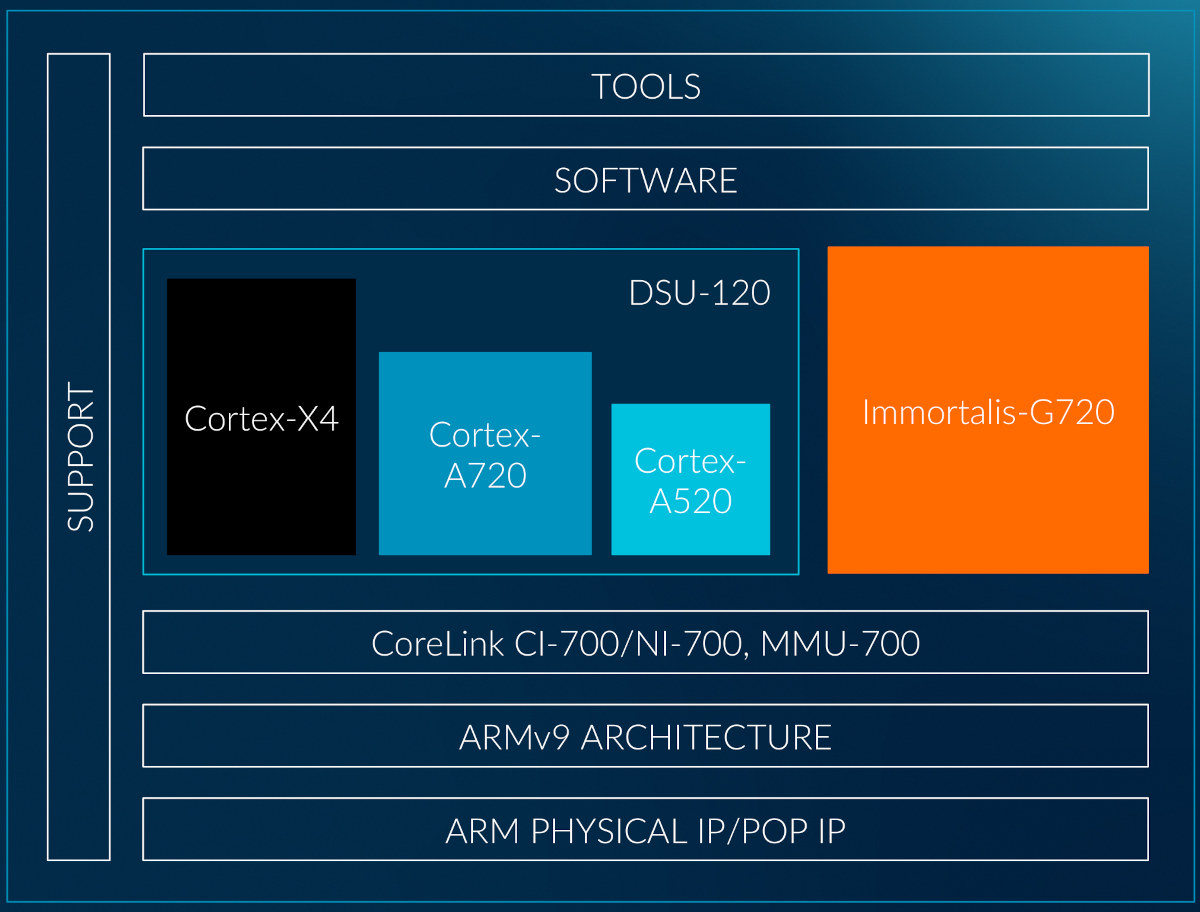
Arm Cortex-X4 Immortalis-G720 SoC block diagram

Arm has just announced the new Total Compute Solutions 2023 (TCS23) with Cortex-X4, Cortex-A720, and Cortex-A520 Armv9.2 CPU cores, and the 5th generation (i.e. no Valhall) Immortalis-720 GPU that will initially be found in SoC for premium smartphones and laptops before reaching the other markets over the years. The announcement follows TCS22 platform announced in June 2022 with Cortex-X3, Cortex-A715 and 510 cores plus the Immortalis-715 GPU that was eventually found in the MediaTek Dimensity 9200 SoC integrated into OPPO and Vivo smartphones, and the new TCS23 CPU cores offer up to 15% performance improvement, 40% higher efficiency, while the Immortalis-720 GPU offers similar performance and efficiency improvements on the graphics front. A typical TCS23 mobile SoC will have a Cortex-X4 premium core, a few Cortex-A720 high-performance cores, and a few Cortex-A520 efficiency cores managed by the new DynamIQ Shared Unit DSU-120 capable of handling up to 14 cores in […]

Linux 6.3 release – Notable changes, Arm, RISC-V and MIPS architectures

Linux 6.3 release

Linux Torvalds has just announced the release of Linux 6.3 on the Linux Kernel Mailing List (LKML): It’s been a calm release this time around, and the last week was really no different. So here we are, right on schedule, with the 6.3 release out and ready for your enjoyment. That doesn’t mean that something nasty couldn’t have been lurking all these weeks, of course, but let’s just take things at face value and hope it all means that everything is fine, and it really was a nice controlled release cycle. It happens. This also obviously means the merge window for 6.4 will open tomorrow. I already have two dozen pull requests waiting for me to start doing my pulls, and I appreciate it. I expect I’ll have even more when I wake up tomorrow. But in the meantime, let’s enjoy (and test) the 6.3 release. As always, the shortlog […]

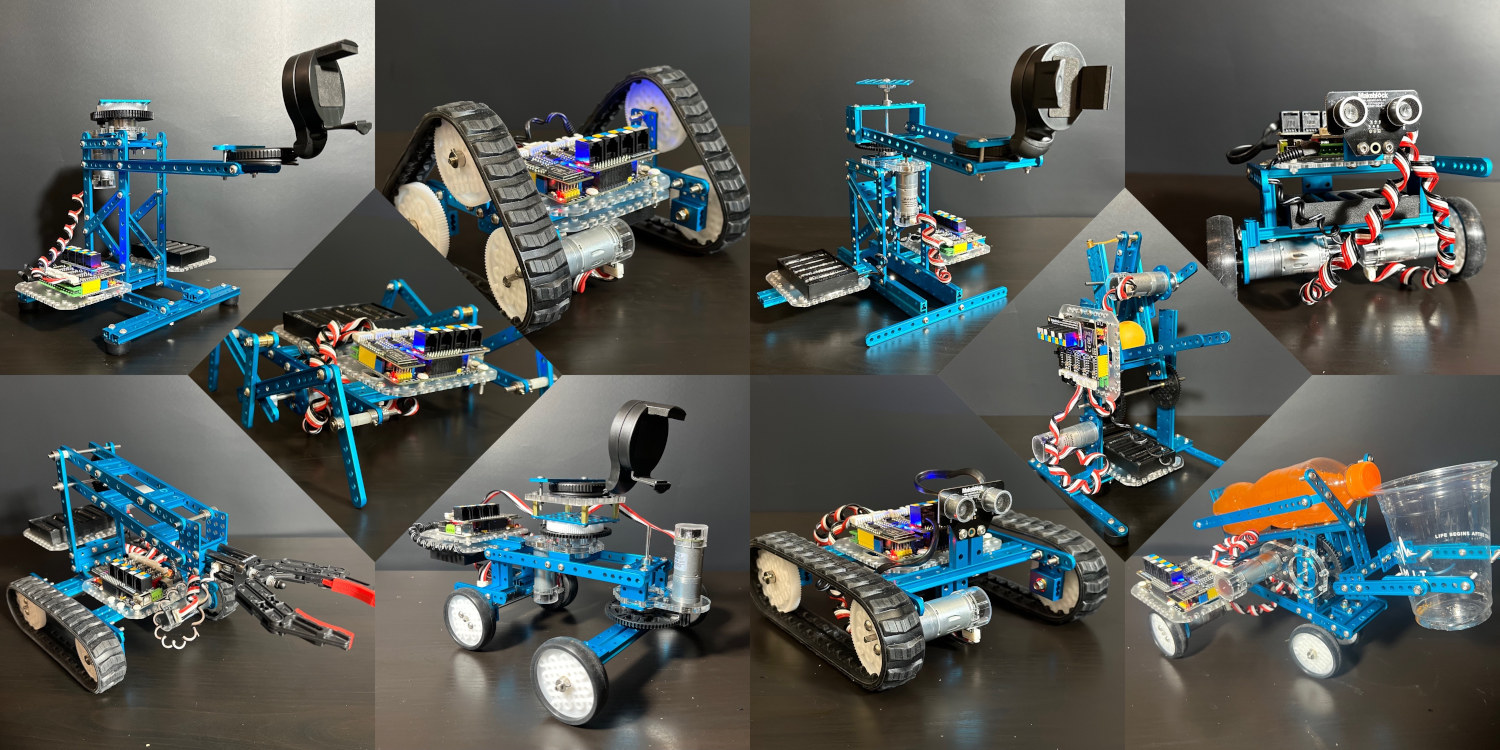
Makeblock Ultimate 2.0 review – A multi-function 10-in-1 educational robot kit

Makeblock Ultimate 2.0 robot kit review

Makeblock Ultimate 2.0 is an educational robot kit that can be used to easily create up to 10 different types of robots. An Arduino-compatible Mega 2560 MCU board serves as the main controller and there are over 550 mechanical parts and electronic modules. The robot can drive up to 4 encoder and stepping motors, control up to 10 servo motors to work simultaneously, and can also be connected to Arduino and Raspberry Pi boards for more complex projects. The review/tutorial is fairly long, so if you are short on time, you can jump to different sections by clicking on some of the links below: MegaPi control board and main modules description mBlock 5 visual-programming IDE installation Programming of DC Encoder motors, Ultrasonic sensor, Line follower module, motion sensor, RJ25 adapter, and shutter module mBlock mobile app Building the ten models for the Makeblock Ultimate 2.0 robot kit (as shown in […]

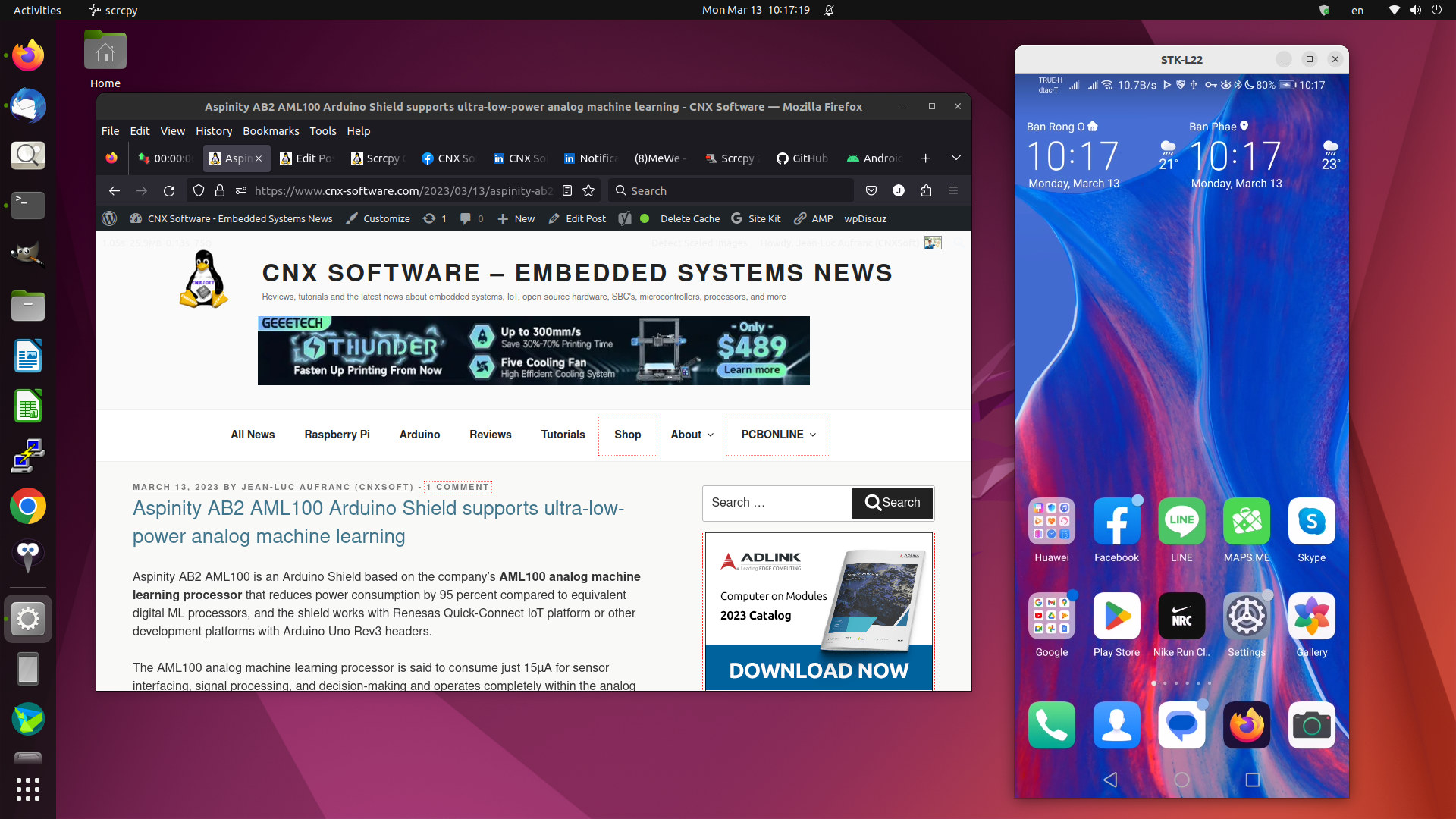
Scrcpy 2.0 Android screen mirroring and control utility for PCs released with audio forwarding support

Srcpy 2.0

Scrcpy 2.0 Android screen mirroring and control utility for Windows, Linux, and macOS has just been released with support for audio forwarding that enables audio to be played back into the computer/laptop, instead of the smartphone, at least for mobile devices running Android 11 or greater. We first reported about Scrcpy open-source utility in 2018, and at the time, it worked relatively well in Ubuntu 16.04 but required quite a few steps for the installation, and it would lag from time to time. I could still use the mouse and keyboard to control my phone, send SMS, chat, browse the web, play games, switch between landscape and portrait modes, and so on. Five years later, Scrcpy 2.0 has been released, the installation is much easier, and new features have been implemented. Scrcpy 2.0 highlights: Quality – 1920×1080 or above Performance – 30~120fps, depending on the device Latency – 35~70ms Startup […]

Linux 6.2 release – Main changes, Arm, RISC-V, and MIPS architectures

Linux 6.2 release

Linux 6.2 has just been released with Linus Torvalds making the announcement on LKML as usual: So here we are, right on (the extended) schedule, with 6.2 out. Nothing unexpected happened last week, with just a random selection of small fixes spread all over, with nothing really standing out. The shortlog is tiny and appended below, you can scroll through it if you’re bored. Wed have a couple of small things that Thorsten was tracking on the regression side, but I wasn’t going to apply any last-minute patches that weren’t actively pushed by maintainers, so they will have to show up for stable. Nothing seemed even remotely worth trying to delay things for. And this obviously means that the 6.3 merge window will open tomorrow, and I already have 30+ pull requests queued up, which I really appreciate. I like how people have started to take the whole “ready for […]

Purism Lapdock kit converts the Librem 5 Linux smartphone into a laptop

Purism Lapdock Kit

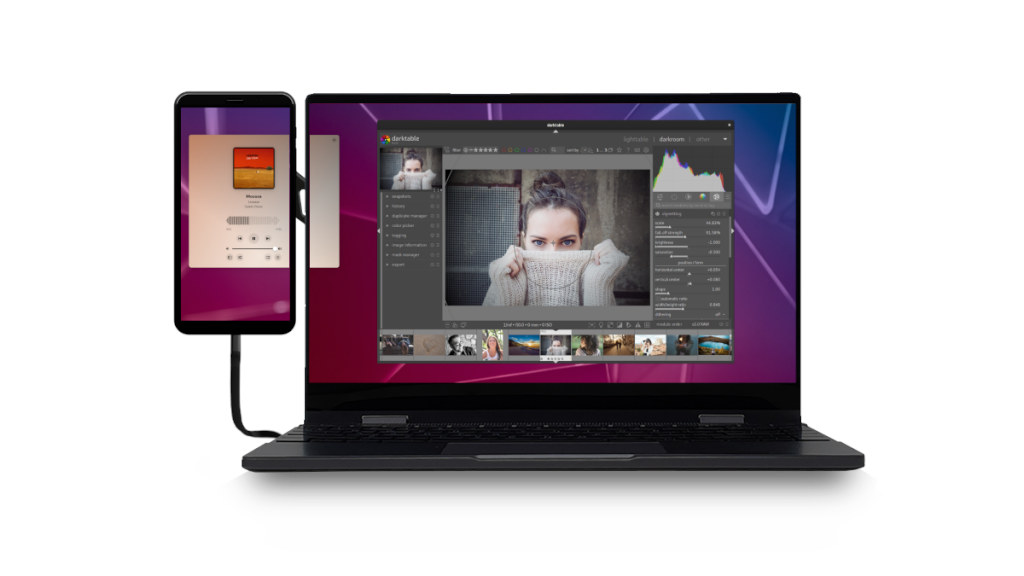
Purism has just announced the Lapdock kit to turn their Librem 5 Linux smartphone into a laptop with a 13.3-inch touchscreen display thanks to the NexDock 360 laptop dock. I was a big believer in mobile desktop convergence around 10 years ago, expected to be soon able to use my phone as a computer or laptop with a dock, and it looked like it might have become a reality when Canonical launched the Ubuntu Edge smartphone crowdfunding campaign in 2013. But it turns out demand was not sufficient, and Canonical eventually ended their convergence efforts focusing on profitable IoT and cloud segments instead. But that does not mean there isn’t a niche market and Purism’s Lapdock kit addresses it to some extent. The Lapdock kit is comprised of three parts namely the NexDock 360 laptop dock, a magnetic mount to attach the Librem 5 to the side of the NexDock […]

MediaTek Dimensity 7200 Armv9 Cortex-A715/A510 processor targets mainstream 5G smartphones

MediaTek Dimensity 7200

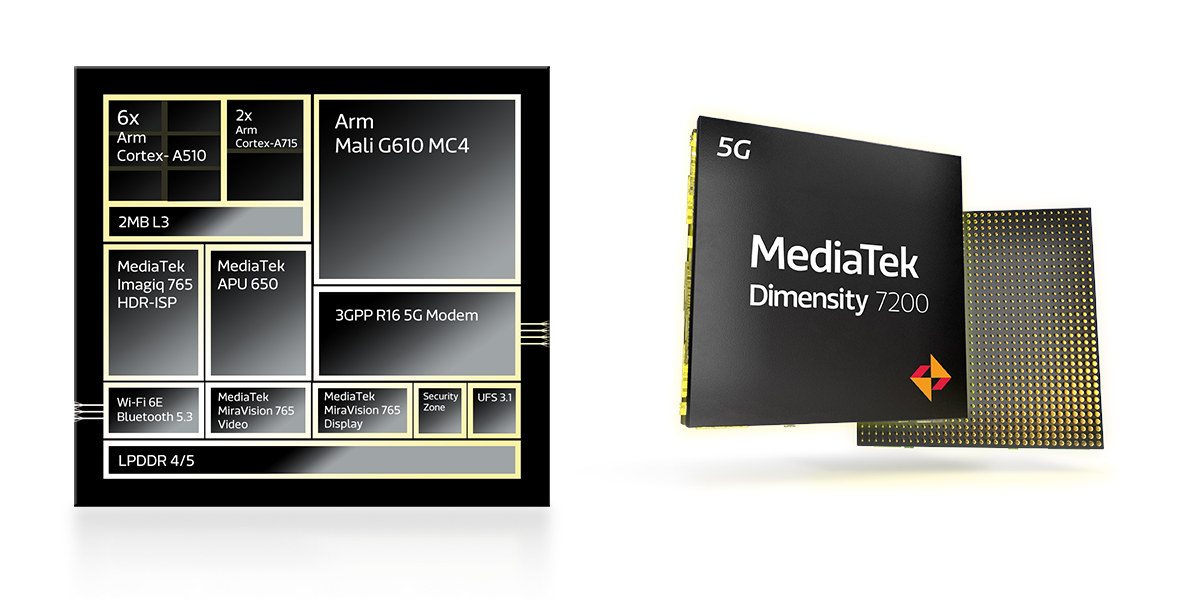
Manufactured with a 4nm processor, the MediaTek Dimensity 7200 is an octa-core Armv9 processor designed for mainstream smartphones. with two Cortex-A715 cores, six Cortex-A510 cores, a Mali-G610 MC4 GPU, as well as 5G, WiFi 6E, and Bluetooth 5.3 connectivity. So far, I had only seen Armv9 SoCs with a mix of Cortex-A510 “LITTLE” cores, Cortex-A710/A715 “big” core, and Cortex-X2 or Cortex-X3 “flagship cores” as found in the Dimensity 9200 processor,  but the Dimensity 7200 is one of the first Armv9 processors – one other being the Snapdragon 7 Gen 1 – without a Cortex-X core in order to provide a more affordable solution. MediaTek Dimensity 7200 specifications: CPU 2x Arm Cortex-A715 up to 2.8GHz 6x Arm Cortex-A510 2MB L3 cache GPU – Arm Mali-G610 MC4 with MediaTek HyperEngine 5.0 APU – MediaTek APU 650 AI accelerator DPU/VPU – MediaTek MiraVision 765 engine for display and 4K HDR video decoding/encoding Memory […]

Snapdragon X75 modem brings 5G Advanced to smartphones, IoT, and FWA routers

Snapdragon X75 5G Advanced modem

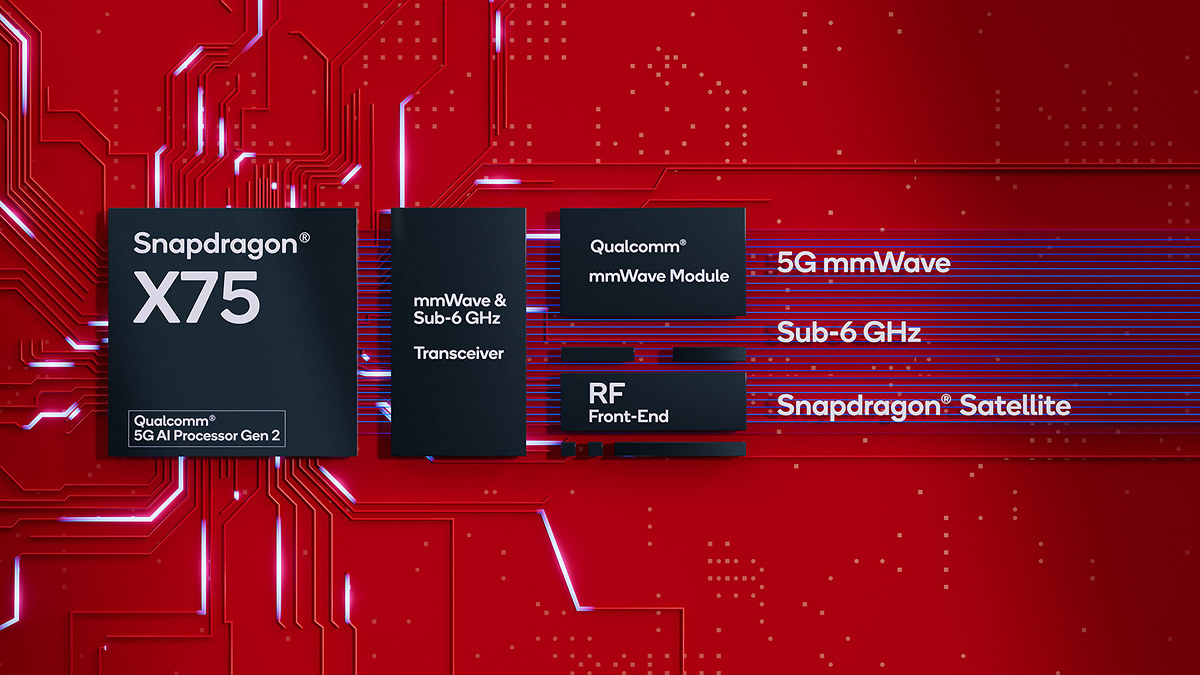
Qualcomm Snapdragon X75 is the latest 5G Modem-RF System from the company bringing 5G Advanced connectivity to smartphones, PCs, industrial IoT, vehicles, and 5G Fixed Wireless Access (FWA) routers. 5G is getting more confusing than ever, as after just having launched a 5G NR-Light modem for smartwatches, industrial IoT, and XR glasses, Qualcomm introduced the first “5G Advanced” modem with the Snapdragon X75 targetting a wide range of applications that benefit from the improvements in speed, coverage, mobility, power efficiency, etc… made possible by the 5G NR Release 18. Snapdragon X75 key features and specifications: Cellular Technology –  5G NR, LTE, LAA, WCDMA, TD-SCDMA, GSM/ Edge, CBRS, Dynamic Spectrum Sharing (DSS), EN-DC, NR-DC, mmWave, sub-6 GHz 5G Spectrum – mmWave-sub6 aggregation, sub-6 carrier aggregation (FDD-TDD, FDD-FDD, TDD-TDD), FDD-TDD support for uplink-CA, Dynamic Spectrum Sharing (DSS) 5G Modes – FDD, TDD, SA (standalone), NSA (non-standalone) Up to 10CC aggregation in mmWave, […]