smartwatch News - CNX Software - Embedded Systems News

Qualcomm Snapdragon Wear Elite wearable platform offers 5G RedCap, WiFi 6, Bluetooth 6.0, built-in AI accelerator

Snapdragon Wear Elite

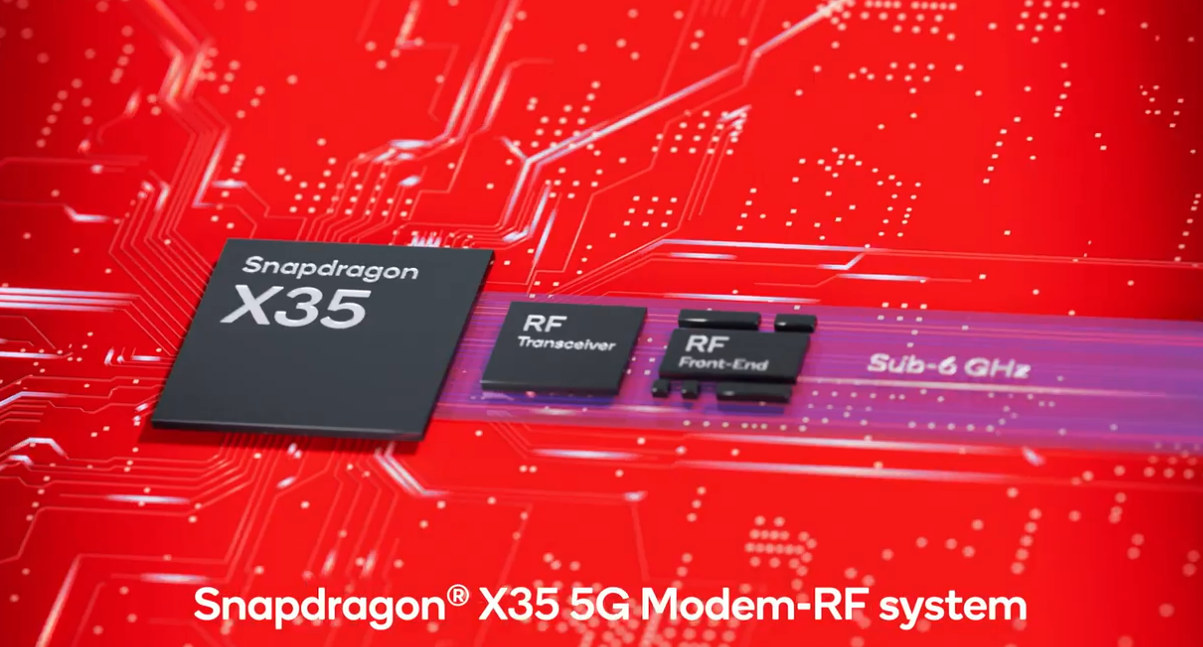
Qualcomm Snapdragon Wear Elite is described as the “world’s first Personal AI wearable platform”, and features an NPU for on-device AI delivering up to 12 TOPS of performance at low power, supporting 2B parameter models. It delivers up to 5x single-core CPU improvement and up to 7x faster GPU compared to the previous-generation Snapdragon W5+ Gen 2 Wearable Platform while offering up to 30% more battery life for multi-day battery life, thanks to a 3nm architecture. The new Snapdragon Wear Elite platform also supports fast charging with up to 50% charge in under 10 minutes. Snapdragon Wear Elite specifications: CPU – Up to 2.1 GHz GPU Qualcomm Adreno 3D GPU supporting OpenGL ES 3.2, Vulkan 1.2, and OpenCL 2.0 APIs 2.5D GPU co-processor clocked at up to 500 MHz ISP – Qualcomm Spectra AI accelerator – Qualcomm Hexagon NPU; up to 12 TOPS of AI performance; support for up tp 2B […]

AsteroidOS 2.0 open-source smartwatch OS released, now supports around 30 devices

AsteroidOS 2.0

AsteroidOS 2.0 Linux-based, open-source smartwatch operating system has just been released with features such as always-on display support, Tilt-to-Wake, a customizable QuickPanel, multiple launcher styles, Nightstand mode, performance improvements, and support for about 30 devices. It’s been a long journey. We first noted the open-source project in 2016 when Florent Revest showcased a basic user experience on the LG G Watch, just before giving a talk at FOSDEM 2016 introducing AsteroidOS. This was followed by the launch of the Connect Watch (crowdfunded) AsteroidOS smartwatch in 2017 by a French company (which didn’t get funded), and AsteroidOS 1.0 was released in 2018. So it’s been ten years since it all started, and the developers have now released AsteroidOS 2.0. AsteroidOS 2.0 highlights: New features Always-on Display, Tilt-to-wake, Palm-to-sleep Heart rate monitor app Initial step counting support Music volume control Compass support Support for Bluetooth HID and Audio Design, Usability, and App Improvements […]

ESP32-C6 development board features 1.8-inch AMOLED touch display, built-in mic and speaker, IMU, RTC, and more

ESP32 C6 Display Development Board

Waveshare ESP32-C6-Touch-AMOLED-1.8 is an ESP32-C6-based touch display development board featuring a 1.8-inch capacitive AMOLED display, a 6-axis IMU, RTC, audio codec, microSD card slot, USB-C for power and programming, power/boot buttons, and various I/Os including I²C, UART, USB, and GPIO pads. Compared to boards like Waveshare ESP32-S3-LCD-1.28, ESP32-S3-Touch-LCD-1.69 (based on ESP32-S3), and ESP32-P4-WIFI6-Touch-LCD-3.4C/4C (based on ESP32-P4), this board is based on the ESP32-C6 wireless SoC with 2.4 GHz Wi-Fi 6, Bluetooth 5 LE, Zigbee, and Thread connectivity. It also includes a 16 MB external flash and a 368 × 448 AMOLED display with 16.7 million colors and capacitive touch support. Power is managed by an AXP2101 PMIC for Li-ion battery support and charging. Typical applications include smart home control panels, wearable and handheld IoT devices, voice-enabled assistants, data loggers, portable dashboards, and HMI-focused embedded prototypes. Waveshare ESP32-C6-Touch-AMOLED-1.8 specifications: SoC – Espressif Systems ESP32-C6 CPU Single-core 32-bit RISC-V clocked up to 160 MHz […]

Snapdragon W5+ and W5 Gen 2 wearable platforms gain NB-NTN satellite support

Snapdragon W5 Gen2 features NB-NTN satellite

Qualcomm Snapdragon W5+ and W5 Gen 2 are new wearable platforms adding NB-NTN satellite support for emergencies to the Snapdragon W5+/W5 wearable platforms introduced in 2022, and found in various WearOS smartwatches and the Beacon W5 SoM. The W5+/W5 Gen 2 platforms still feature a 1.7 GHz quad-core Cortex-A53 processor, an Adreno A702 GPU, an AON QCC5100 ML co-processor (W5+ Gen 2 only), MIPI DSI and MIPI CSI interfaces, cellular connectivity, dual-band WiFi, Bluetooth 5.3, GNSS, and optional NFC support. The main changes are NB-NTN support, an upgrade to 3GPP Rel 17 with Cat 1Bis, a 20% (or 30% depending on where you read) smaller RF frontend, and 50% more accurate GPS in urban or deep canyon areas. Snapdragon W5+/W5 Gen 2 specifications: SWS5100 SoC CPU – Quad-core Cortex-A53 processor @ up to 1.7 GHz GPU – Qualcomm Adreno A702 @ up to 1 GHz with OpenGL ES 3.1 API […]

Bestechnic BES2700YP Arm Cortex-M55 Bluetooth Audio SoC targets headphones, earbuds, portable speakers

BES2700YP Arm Cortex-M55 Bluetooth Audio SoC

Bestechnic BES2700YP is an Arm Cortex-M55 Bluetooth Audio SoC designed for Smart earbuds with adaptive ANC, Smart Bluetooth headphones/headsets, ANC hearing-aids, Bluetooth speakers, and other portable audio devices When I wrote about the Ambiq Apollo330 Plus SoC family last week, I realized it was the first time I covered Arm Cortex-M55 microcontrollers with built-in wireless, in that case Bluetooth LE 5.4 and 802.15.4 (Thread/Matter) radios, and that’s how I came across the BES2700YP SoC with a more narrow use cases since it’s made for Smart Bluetooth audio applications. BES Technic BES2700YP key features and specifications: CPU Subsystem – Arm Cortex-M55 core Sensor Hub Subsystem – Arm STAR-MC1 core (improved Arm Cortex-M33 core) with sensor engine, BECO NPU, and VAD (Voice Activity Detection) Memory – 4 MB SRAM shared across the CPU, Bluetooth, and Sensor Hub cores Storage – Flash in package, boot ROM Bluetooth Subsystem Arm STAR-MC1 core (Arm Cortex-M33 […]

SiFli SF32LB52J big.LITTLE Arm Cortex-M33 Bluetooth MCU powers the Core Time 2 smartwatch

SiFli SF32LB52J block diagram

SiFli SF23LB52J is a Bluetooth 5.3 microcontroller part of the SF32LB52x family with two Cortex-M33 in big.LITTLE configuration with a 240 MHz high-performance core for user application/GUI and a 24 MHz low-power core to manage the Bluetooth part. A few months ago, Eric Migicovsky, the founder of the smartwatch company Pebble, and now Core Devices, introduced the Core 2 Duo and Core Time 2 smartwatches running PebbleOS open-source firmware that were mostly relaunches of the never-released Pebble 2 and Pebble Time 2 with some tweaks. We already knew the Core 2 Duo would be based on a Nordic nRF52840 Arm Cortex-M4F microcontroller, however, the one for the Core Time 2 was kept secret. That’s until today, as Eric has just announced that the Core Time 2 would be based on the SiFli SF23LB52J MCU, since the smartwatch required an MCU with more RAM and processing power, and SiFli also offers […]

LILYGO T-Watch S3 Plus smartwatch gets GPS and 940mAh battery

LILYGO T Watch S3 Plus

LILYGO has recently introduced the T-Watch S3 Plus, an ESP32-S3 smartwatch which can be considered an upgrade from the previous generation T-Watch S3, adding a u-blox MIA-M10Q GPS and a larger 940mAh LiPo battery for extended battery life. The T-Watch S3 Plus smartwatch still supports Wi-Fi, Bluetooth LE, and LoRa connectivity, and integrates a 1.54-inch 16-bit full-color TFT LCD display with capacitive touch and a wide-viewing angle. The smartwatch also features an infrared (IR) transmitter that can be used for remote control or proximity detection. T-Watch S3 Plus specifications Wireless MCU – Espressif Systems ESP32-S3 CPU – Dual-Core 32-bit Tensilica LX7 @ up to 240 MHz with vector instructions for AI/ML acceleration Memory – 512KB SRAM, 8MB PSRAM Storage – 16MB flash, 384KB ROM Wireless – Wi-Fi 4 and Bluetooth 5 LE/Mesh Display – 1.54-inch 16-bit full color TFT LCD display with 240×240 resolution, capacitive touch; ST7789V SPI controller Audio – […]

The Pebble Smartwatch is back with the Core 2 Duo and Core Time 2 models running PebbleOS open-source firmware

Pebble 2025 Core 2 Duo Core Time 2

The Pebble Smartwatch was first introduced in 2012 with a black and white e-Paper display, a week of battery life, and an amazingly successful Kickstarter company that raised over 10 million dollars. It was followed by the Pebble Time with a color display in 2015, and the Pebble 2 & Time 2 watches followed in 2016. But then it all went south from there, and Pebble’s assets were purchased by Fitbit in December 2016, all projects were canceled that year, and cloud services were discontinued in June 2018. Since then, the community has taken over working on the Rebble project to keep existing watches running, and Google acquired Fitbit in 2021. However, the project is slowly coming back to life. First, Google released the source code for the Pebble smartwatches and Pebble’s founder, Eric Migicovsky, and a team of engineers worked on reviving the project which now culminates with the […]