Espressif has recently released the ESP-IDF v6.0 framework with support for ESP32-C5 and ESP32-C61, so we can expect more ESP32-C5 boards. Following the launch of boards like DFRobot FireBeetle 2 and the Espressif DevKitC-1, SparkFun has now launched its Thing Plus – ESP32-C5, an Adafruit Feather-compatible board based on the ESP32-C5. The timing is no coincidence. Although the ESP32-C5 dual-band WiFi 6 SoC was announced back in 2022, hardware makers have been waiting for stable software support. With the release of ESP-IDF v6.0, the ESP32-C5 moves from “preview” to “stable” and adds key features, such as Safe Bootloader OTA updates. This enables the ROM bootloader to fall back to a recovery partition if an update fails, making it reliable enough for companies like SparkFun to launch hardware for remote deployments and Matter-compatible smart home applications. SparkFun Thing Plus – ESP32-C5 specifications: Wireless module – ESP32-C5-WROOM-1 SoC – Espressif Systems ESP32-C5 CPU Single-core […]
SparkFun OpenScale IoT – An ESP32 board with HX711 ADC for smart scales with WiFi and Bluetooth connectivity
The SparkFun OpenScale – IoT project is a ready-to-use ESP32-based IoT smart scale with open-source hardware and firmware support that makes it easy to read precise weight data from load cells without writing custom code from scratch for basic operation. It handles amplification via the HX711 24-bit ADC, calibration, temperature compensation (using the onboard TMP102 and an optional external DS18B20 probe), and serial output/configuration through a simple text-based menu. It also features Wi-Fi for live data and OTA firmware updates, requiring no dedicated apps—just standard terminal tools and a browser for viewing data. Additionally, there is a Qwiic I²C connector for adding extra sensors or displays. The board operates from 5 V with a typical current consumption of 80 to 100 mA, supports selectable output data rates of 10 or 80 SPS, and includes an adjustable gain for accurate measurements in long-term monitoring setups. SparkFun OpenScale – IoT Specifications: Wireless […]
Arduino-programmable environmental and air quality sensor kit features ENS160 and BME280 sensors
Designed by Nova Radio Labs in the US, the Novaduino Environmental Sensor Kit is an Arduino-programmable air quality and weather monitoring solution built around the company’s own Novaduino Display Module. It provides VOCs, eCO₂, temperature, humidity, and barometric pressure data in real time, making it ideal for Smart Home experiments, classroom projects, or hobby weather-station builds. The kit integrates a Sciosense ENS160 air-quality sensor and Bosch BME280 environmental sensor connected via Qwiic, which measures TVOCs, eCO₂, temperature, humidity, and pressure with an on-device AQI indicator. It includes the Novaduino display PCBA, 2.4-inch IPS touchscreen, buttons, rotary encoder, Feather M0 Express or RP2040 module support, headers, mechanical hardware, and optional 3D-printable enclosures (STL/F3D/STP). Designed for learning soldering, assembly, and Arduino programming, the kit is uncalibrated and intended for educational and experimental use only. Novaduino Environmental Sensor Kit specifications: Core Platform – Novaduino 2.4-Inch Display Module Supported development boards – Adafruit Feather and […]
SparkFun Air Quality PM1/PM2.5/PM10 Sensor features Bosch’s BMV080, the world’s smallest particulate matter sensor
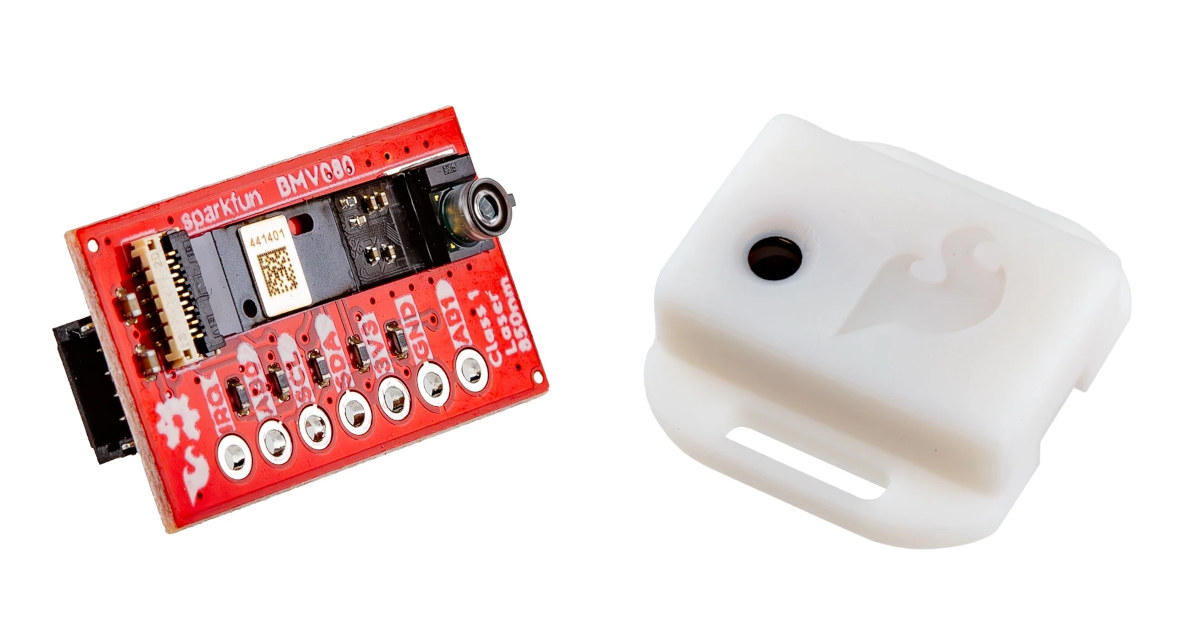
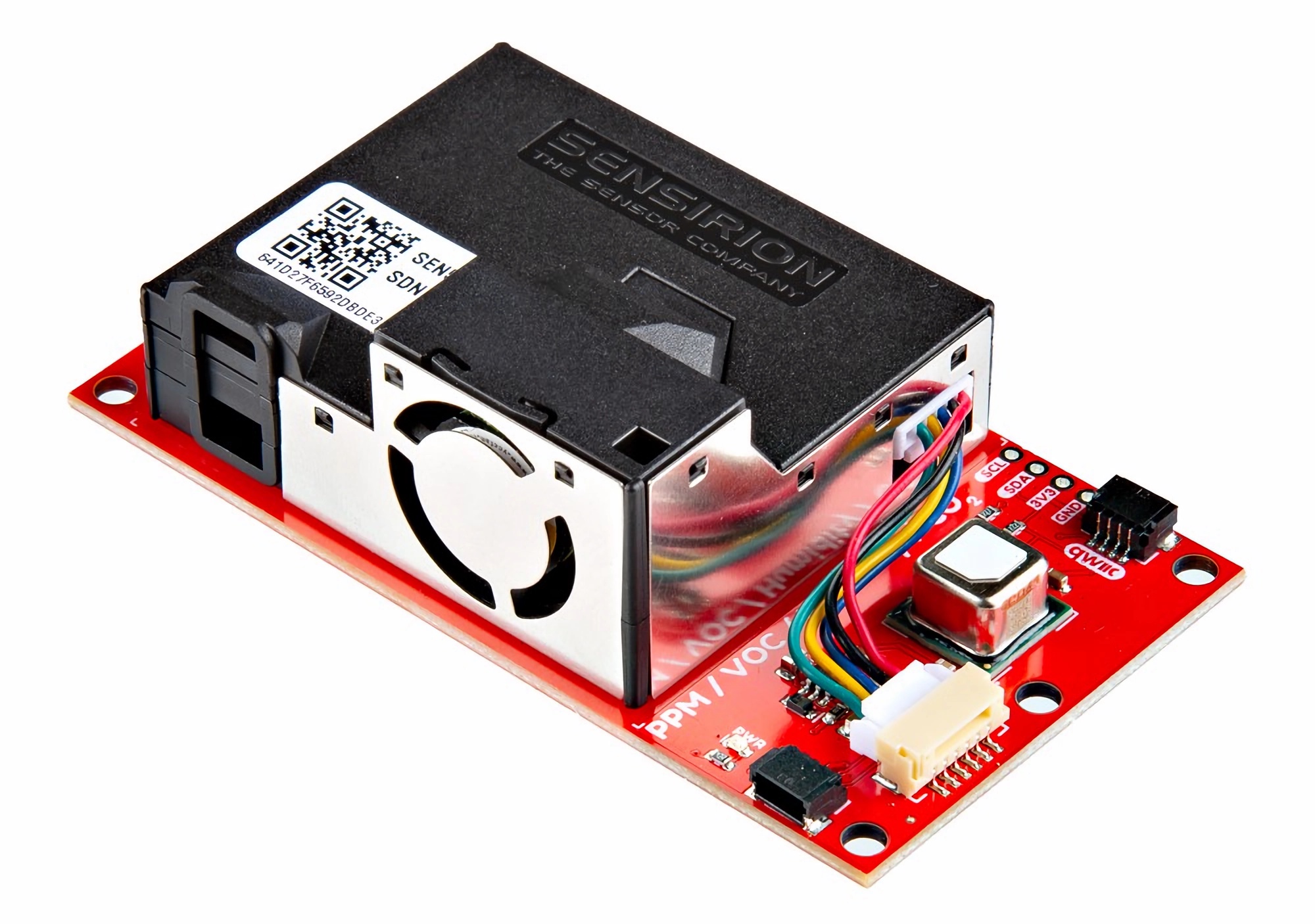
SparkFun’s “Air Quality PM1/PM2.5/PM10 Sensor – BMV080 (Qwiic)” is breakout board for the Bosch Sensortec BMV080 particulate matter sensor which the German company claims is the world’s smallest and 450 times smaller in volume than any comparable device on the market. It’s summer in Thailand right now, and besides scorching temperatures of over 40°C during the day, it’s also smog season with high PM 2.5 values and frequent alerts not to exercise outdoors. We usually get the Air Quality Index (AQI) from apps like IQAir AirVisual, or people can install air quality monitors in fixed locations to get local readings. But the small size (4.4 x 3.0 x 20 mm³) of the Bosch BMV080 can enable PM2.5 monitoring in wearables or other small devices like the PurpleAir PIXEL USB dongle. SparkFun Air Quality PM1/PM2.5/PM10 Sensor – BMV080 (Qwiic) specifications: Sensor – Bosch Sensortec BMV080 PM Mass Concentration Range: 0 to […]
SparkFun IoT RedBoard – Raspberry Pi RP2350 or ESP32 WiFi & Bluetooth boards with Arduino UNO R4 form factor
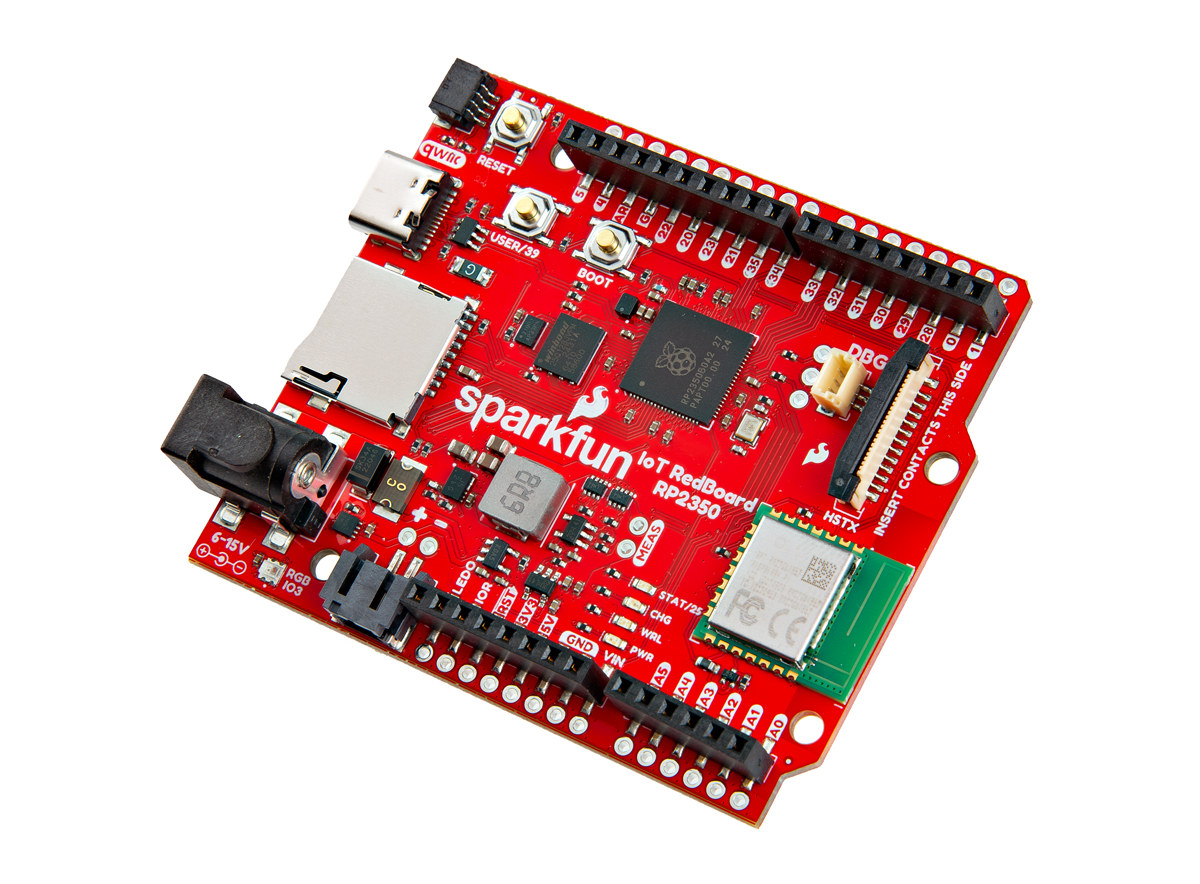
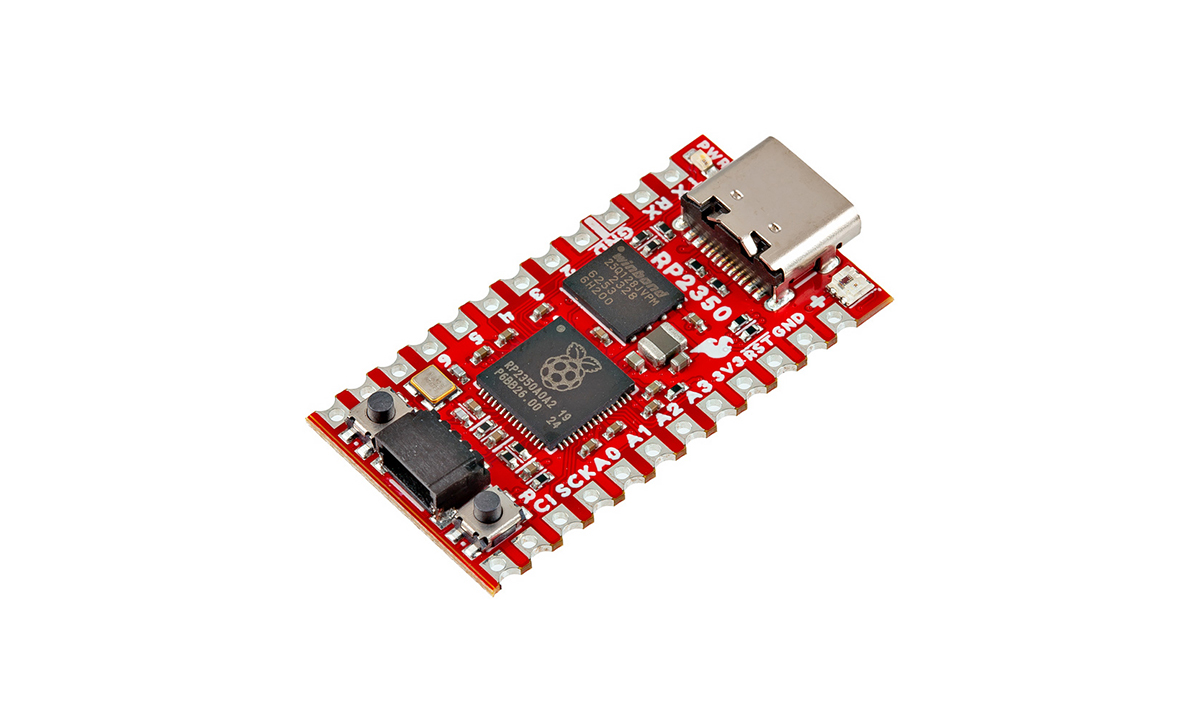
SparkFun has just launched the “IoT RedBoard – RP2350” and “IoT RedBoard – ESP32” boards with Arduino UNO R4 form factor based on respectively Raspberry Pi RP2350B + RM2 wireless module and ESP32-WROOM-32E WiFi and Bluetooth module. Both boards feature Arduino UNO headers and a Qwiic connector for expansion, a microSD card for storage, battery support, USB and DC jack power input, plus a few buttons and LEDs. The RP2350 board also adds an HSTX connector mainly useful for controlling HDMI or SPI displays. Sparkfun IoT RedBoard specifications: MCU sub-system and wireless RP2350 model MCU – Raspberry Pi RP2350B CPU Dual-core Arm Cortex-M33 @ 150 MHz with Arm Trust zone, Secure boot Dual-core RISC-V Hazard3 @ 150 MHz Up to two cores can be used at any given time Memory – 520 KB on-chip SRAM Memory – 8MB PSRAM Storage – 16MB Flash Wireless module – Raspberry Pi RM2 2.4 […]
Raspberry Pi Pico SDK 2.1.1 release adds 200MHz clock option for RP2040, various Waveshare boards, new code samples
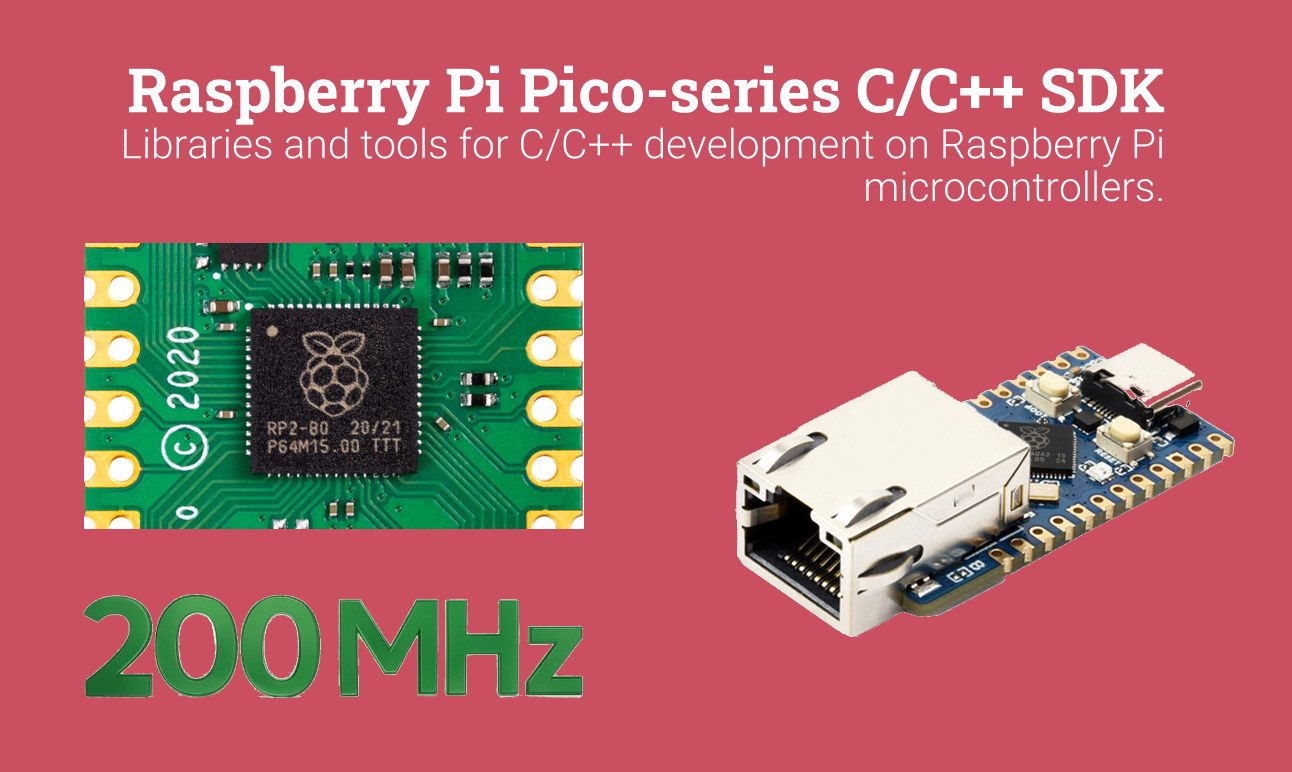
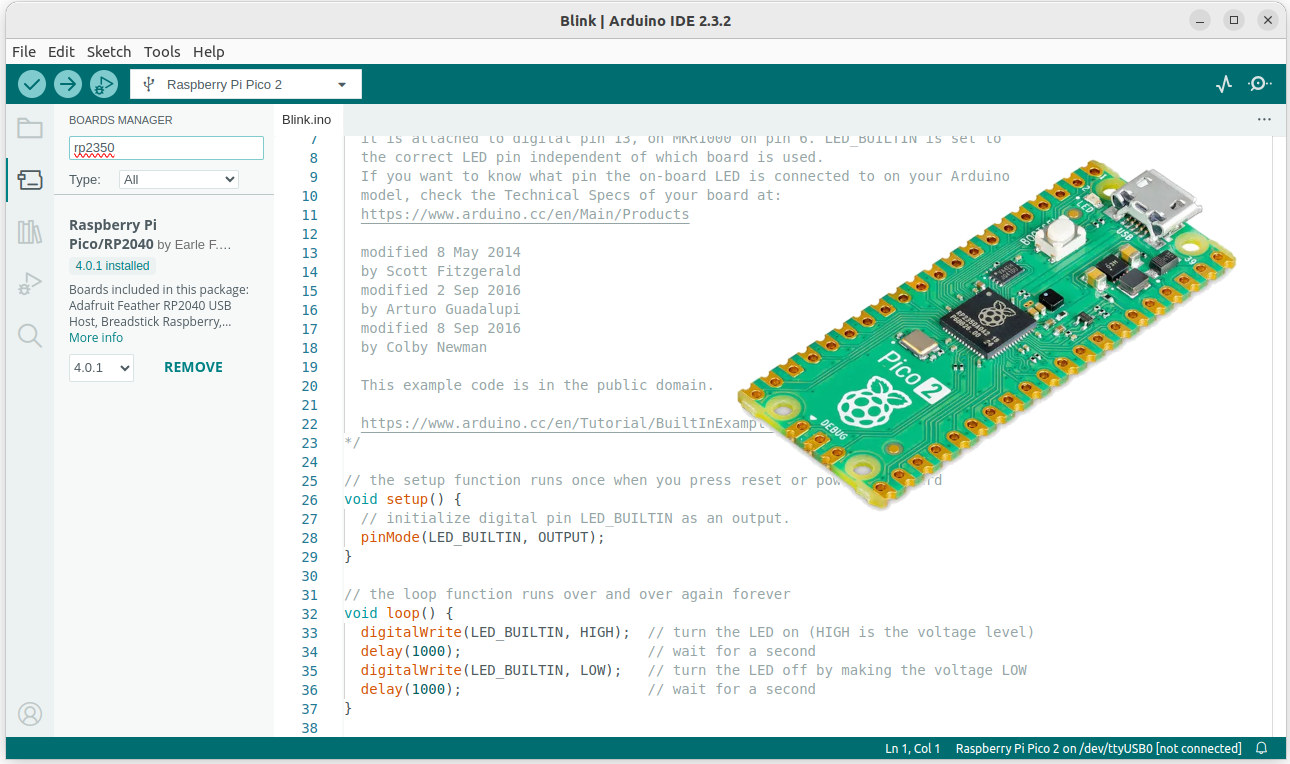
The Raspberry Pi Pico SDK 2.1.1 has just been released with official 200 MHz clock support for the Raspberry Pi RP2040 MCU, several new boards mostly from Waveshare, but also one from Sparkfun, as well as new code samples, and other small changes. Raspberry Pi RP2040 gets official 200 MHz clock support When the Raspberry Pi RP2040 was first released along with Raspberry Pi Pico in 2021, we were told the default frequency was 48 MHz, but the microcontroller could also run up to 133 MHz. Eventually, I think the Cortex-M0+ cores were clocked at 125 MHz by default, although some projects (e.g. PicoDVI) would boost the frequency up to 252 MHz. Frequencies higher than 133 Mhz were not officially supported so far, but the Pico SDK 2.1.1 changes that since the Raspberry Pi RP2040 has now been certified to run at a system clock of 200MHz when using a […]
SparkFun Digi X-ON LoRaWAN development kit combines Digi HX15 gateway with RP2350 IoT node and environmental sensors module
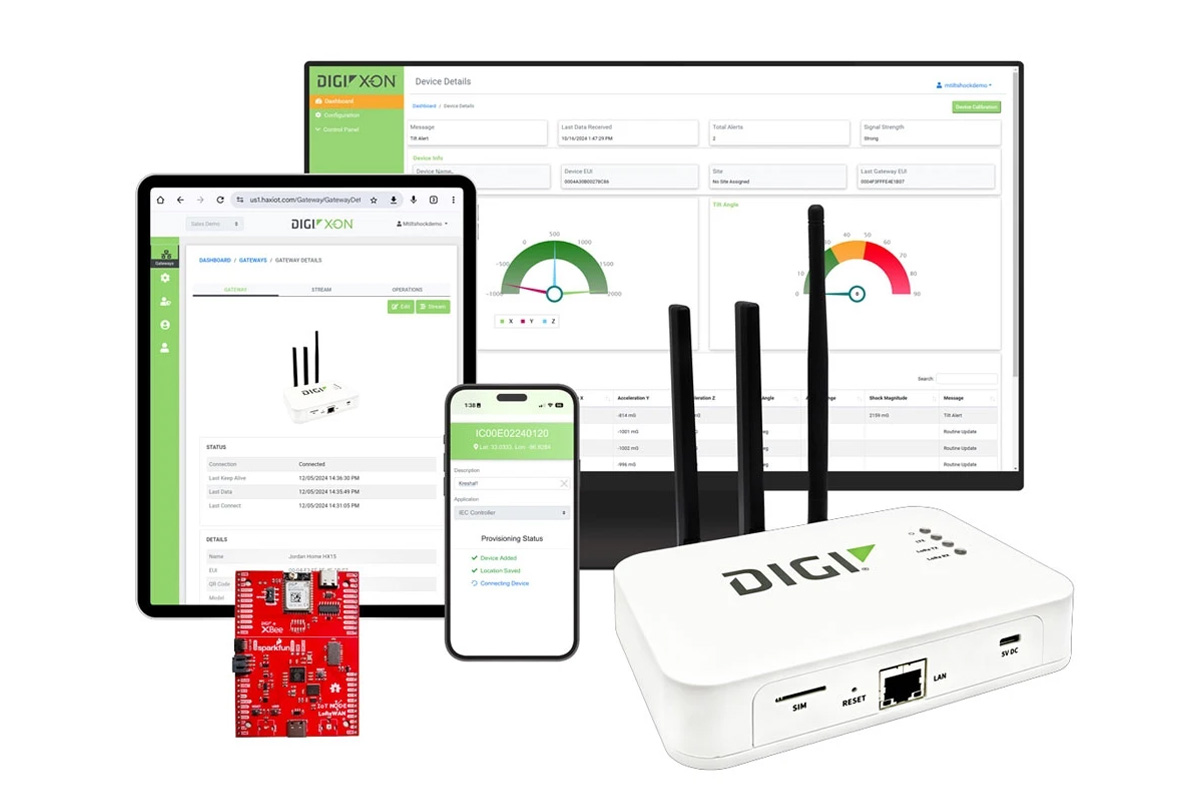
SparkFun has recently released the Digi X-ON LoRaWAN development kit an all-in-one IoT development kit designed to simplify the setup and deployment of LoRa-based IoT systems. It includes the Digi HX15 Gateway, SparkFun IoT Node for LoRaWAN, and the ENS160/BME280 environmental sensor, enabling rapid prototyping and connectivity with the help of the Digi X-ON cloud platform. The SparkFun IoT Node is built around the Raspberry Pi RP2350 microcontroller, which features 16MB flash, 8MB PSRAM, multiple GPIOs, LiPo battery support, microSD storage, and USB-C connectivity. It also integrates the Digi XBee LR module for long-range LoRaWAN communication with pre-activated cloud connectivity. With an onboard Qwiic connector and Arduino support, this development kit is ideal for applications like industrial monitoring, environmental sensing, smart agriculture, remote data collection, and more. Digi HX15 gateway specifications Microprocessor – STMicro STM32MP157C MPU with dual-core Cortex A7 @ 650 MHz, Cortex-M4 @ 209 MHz with FPU/MPU, 3D […]
SparkFun introduces Quadband GNSS RTK Breakout board with Quectel LG290P module for high-precision navigation
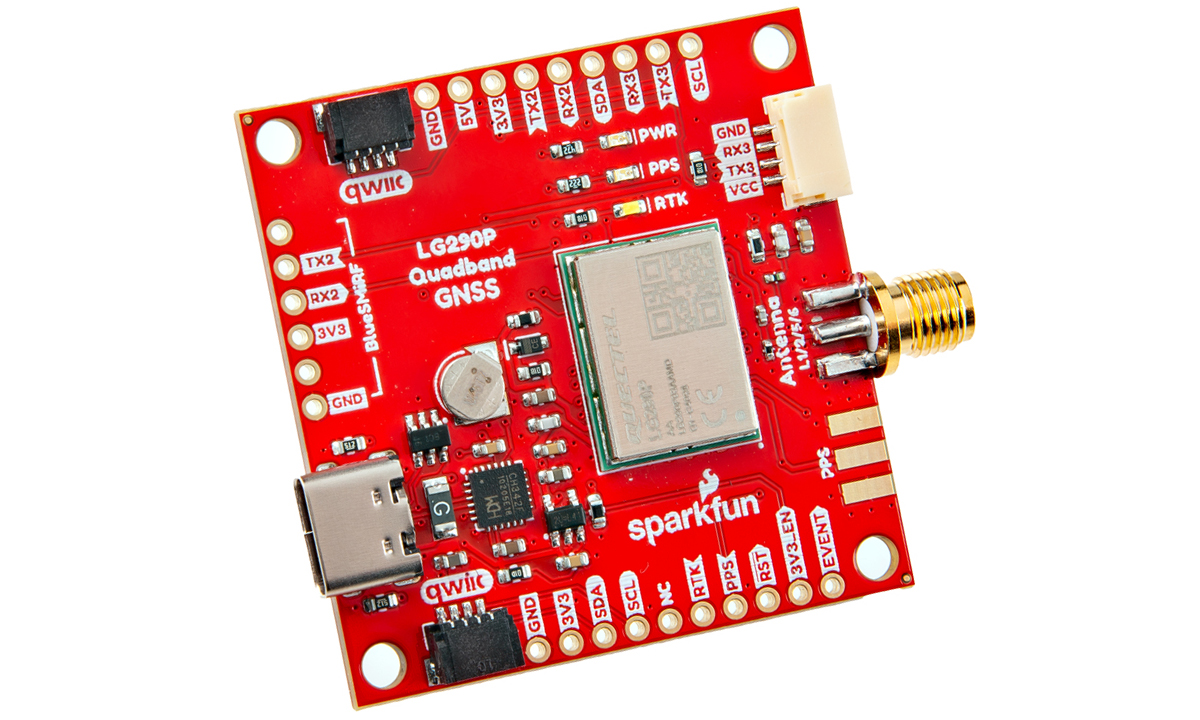
SparkFun has released the Quadband GNSS RTK Breakout featuring the Quectel LG290P module designed for high-precision real-time kinematic (RTK) applications. It supports GPS, GLONASS, Galileo, BDS, QZSS, and NavIC constellations, with the ability to simultaneously receive signals from L1, L2, L5, and L6/E6 frequency bands. The module includes support for SBAS augmentation systems (e.g., WAAS, EGNOS, GAGAN) and PPP services (e.g., BDS PPP-B2b, QZSS CLAS), delivering reliable positioning with fast convergence times for precision navigation tasks. The breakout board offers a compact design (43.2 x 43.2mm) and multiple expansion options including 24 PTH pins, dual 4-pin JST Qwiic connectors, three UART interfaces, a USB-C connector, and additional PTH pins for BlueSMiRF/Serial-to-UART. With its RTK support and advanced GNSS capabilities, the board is ideal for applications requiring high-accuracy positioning and robust navigation performance. Previously, we covered several GNSS boards including the SparkFun GNSS L1/L5, u-blox EVK-LEXI-R10, and Conexio Stratus Pro and […]