Cellular GPS trackers have been around for a few years, but so far mostly 2G or 3G GPS trackers with products like Ping, Particle Asset tracker, and many other models selling on Aliexpress. 4G GPS tracker have been less common. However, recently we’ve seen platforms like Wio LTE and AutoPi that could handle GPS tracking over LTE connectivity, and another alternative would be Mictrack MT600 that ready-to-use solution to track your car or other vehicle with GPS and 4G. Mictrack MT600 hardware specifications: GNSS U-BLOX7 GPS Chip GPS sensitivity -162dBm Channel – 56 Positioning Accuracy – 10m Cold start: 30s; warm start: 15s; hot start: 1s SMA antenna connector Cellular Connectivity Qualcomm 4G LTE chip MT600-A model (North America): 4G FDD LTE: 700/850/1700/1900MHz 3G UMTS: 850/1700/1900MHz GSM: 850/1900MHz MT600-C model (Asia): 4G FDD LTE: 900/1800/2100MHz 4G TDD LTE: 1900/2300/2500/2600MHz 3G UMTS: 900/2100MHz GSM: 900/1800MHz MT600-E (Australia/Asia/Europe) 4G FDD LTE: 800/850/900/1800/2100/2600MHz 3G […]
Particle E Series is a Family of 2G, 3G, 4G LTE Cellular IoT Modules Optimized for Mass Production
Cellular IoT has really taken off this year from the low cost Orange Pi 2G IoT board to 4G GPS Trackers, and global IoT SIM cards. Particle has been in this market for a couple of years, starting with their Electron boards, and the company has just announced the new Particle E series family of industrialized 2G, 3G, and LTE-enabled modules and a development kit. Key features of Particles E series modules: Cellular Connectivity u-blox SARA modules for cellular connectivity LTE: SARA-R410M 3G: SARA-U201/U260/U270 2G: SARA-G350 (2G) Embedded SIM card, Particle MVNO support in 100+ countries u.FL antenna connector MCU – STM32F205RGT6 120MHz ARM Cortex M3 microcontroller with 1MB flash, 128KB RAM Storage – • Expandable flash memory I/Os – 63-pin surface mountable castellated module with up 30x GPIOs, 12x ADC, 2x DAC, 13x PWM, 3x UART, 2x SPI, 1x I2S, 2x CAN, 1x USB 2.0 (Some signals are multiplexed) […]
Wio LTE GPS Tracker Board Comes with a 4G Modem, Supports Espruino Firmware (JavaScript Programming)
Seeed Studio launched Wio GPS tracker with a 2G GSM module a few months ago, and while it should work in some countries, others are phasing out 2G networks, and only support 3G or 4G. The company has now launched an update with Wio LTE board with the same form factor, and most of the same features except they replaced the 2G/Bluetooth/GNSS module with a 4G LTE/GNSS module, and Atmel SAMD21 ARM Cortex M0+ microcontroller by an STMicro STM32 ARM Cortex-M4F MCU. Wio LTE board specifications: MCU – STMicro STM32F405RG ARM Cortex M4F MCU @ 168 MHz with 1MB flash, 192+4KB SRAM Storage – micro SD slot Connectivity via Quectel EC21-A (America) module LTE Cat.1 modem: FDD LTE: B2/B4/B12 WCDMA: B2/B4/B5 AT Command: 3GPP TS27.007 and enhanced AT Commands Data – LTE-FDD Max 10Mbps(DL) Max 5Mbps (UL) NanoSIM card 2x u.FL antenna connectors GNSS – GPS/BeiDou/GLONASS/Galileo/QZSS with 1x u.FL GNSS […]
AutoPi is a 4G & GPS OBD-II Dongle Based on Raspberry Pi Zero W Board (Crowdfunding)
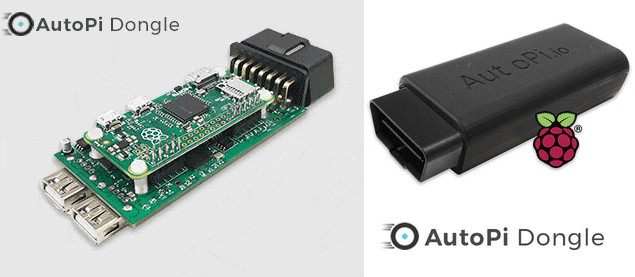
We’ve previously covered Macchina M2 OBD-II dongle based on an Arduino compatible MCU, and with 4G LTE support for the maker market, and iWave Systems OBD-II dongle with 4G LTE and LTE running Linux on NXP i.MX6 for the B2B market, but so far I had not seen an hackable OBD-II dongle running Linux for the maker market. AutoPi dongle fills that void as it is based on Raspberry Pi Zero W board, runs Raspbian with Autopi software (AutoPi Core), supports 4G LTE, GPS, etc,.. and connects to your car’s OBD-II socket. AutoPi dongle specifications: SoC – Broadcom BCM2835 ARN11 Core processor @ up to 1 GHz System Memory – 512MB LPDDR2 SRAM Storage – 8GB micro SD card Cellular Connectivity 4G Cat 1 modem with 3G/EDGE fallback working worldwide (but region locked) 4G bands – Region specific 3G fallback (WCDMA) – B1, B2, B4, B5, B8 EDGE fallback – […]
Checking out Hologram’s Developer SIM Card for Worldwide IoT Projects
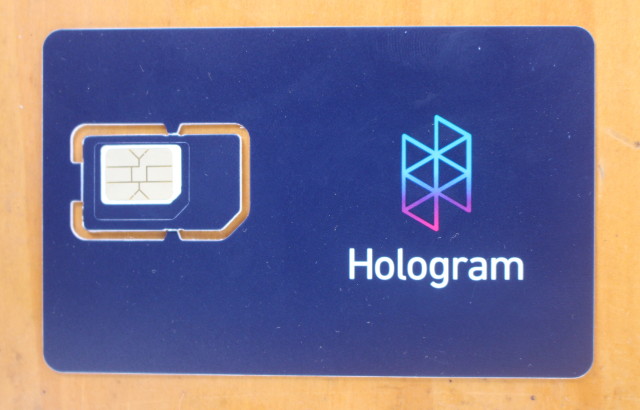
Hologram is a service that offers 2G/3G/4G cellular connectivity for the Internet of Things via a SIM card that works in over 170 countries, and with pricing starting at $0.40 per month. In order to promote their services, the company offers a free developer SIM card which I ordered when I first wrote about the service last month. I was pleased and surprised they would sent it to Asia for free, and I got the card in a bubble envelop. The back of the card includes a 18 to 22 digit SIM card number and bar code, that we’ll need to use for activation, and a link that redirects to https://hologram.io/docs/. I planned to try the card with Wio GPS tracker board which requires a nano SIM card, and there are convenient cutouts to convert the SIM card to micro SIM or nano SIM card formats. Before using the card […]
Videostrong VS-RD-RK3399 Development Board Review – Part 1: Unboxing, Kit Assembly, SDK and Documentation
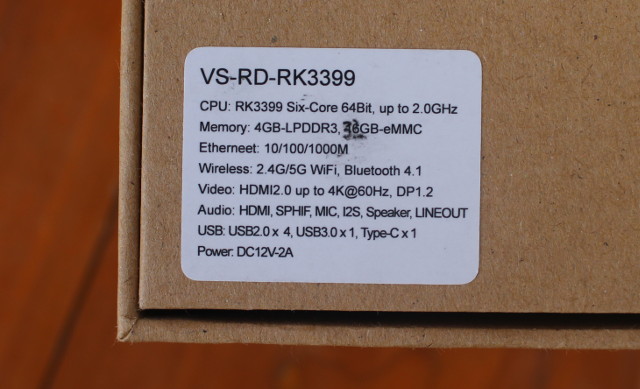
Videostrong VS-RD-RK3399 development board is a full-featured development based on Rockchip RK3399 hexa-core processor with up to 4GB RAM, and 32GB eMMC flash, and plenty of I/Os. The company has sent me a sample, and after getting some trouble going through customs with questions like “what is a development board?” and “is it a board for TV boxes or computers?”, I finally got hold of the parcel. Today, I’ll check out the board and its accessories, show how to assemble it, and since the company shared more info about documentation and software, quickly go over what’s available. Videostrong VS-RD-RK3399 Development Kit Unboxing The board was in a bland carton box, which is fine since it’s not a consumer product, with a stick showing I got the 4GB LPDDR3 / 32GB eMMC flash version. There’s also a board using 2GB/16GB configuration. The package includes the board, bottom and top acrylic plates […]
NutsBoard Pistachio 3.5″ Embedded SBC is Powered by NXP i.MX 6Dual/Quad Processor
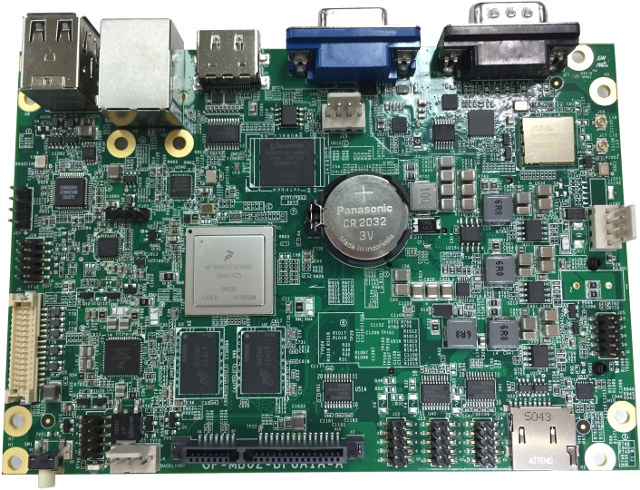
I don’t write about i.MX6 solutions much anymore, since there are so many options available on the market, but Pistachio SBC has been designed by a company I had never heard of before: NutsBoard, and they’ve released documentation and software publicly, which does not always happen in the industrial/embedded space. Pistachio single board computer specifications: SoC – NXP ARM Cortex-A9 IMX6 Quad/Dual @ 800MHz System Memory – Up to 2GB LPDDR3 Storage – 4GB eMMC flash, 1x SATA interface, 1x micro SD card slot Display I/F / Video Output 2x LVDS (6 or 8 bit) 1x 24-bit VGA output 1x HDMI port up to 1920×1080 (FHD) 1x I2C AR1021 touch controller Audio – SGTL5000 audio codec with class D amplifier; 1x audio header for speaker and microphone Connectivity – Gigabit Ethernet (Qualcomm AR8035), industrial grade wireless module (Jorjin WG7833) with dual band WiFi 802.11 a/b/g/n, Bluetooth 4.2 USB – 4x […]
CrazyPi Board Runs Ubuntu and ROS on Rockchip RK3128 SoC for Robotics & IoT Projects (Crowdfunding)
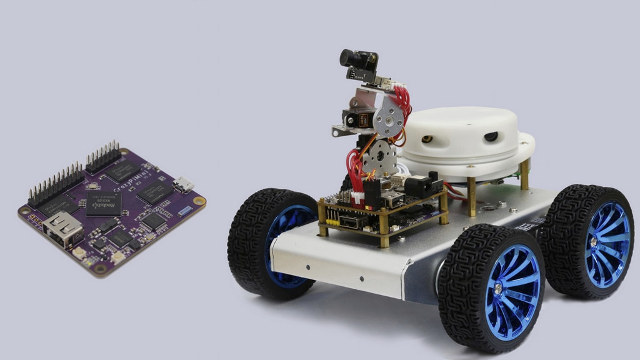
CrazyPi is a maker board powered by Rockchip RK3128 quad core Cortex A7 processor that can take various magnetically connected modules such as LIDAR, gimbal, 4G LTE, etc.., and runs both Ubuntu and ROS (Robot Operating System) for DIY robotics & IoT projects. CrazyPi main board specifications: SoC – Rockchip RK3128 quad core Cortex A7 processor @ 1.2 GHz with ARM Mali GPU MCU – ARM Cortex-M3 @ 72 MHz System Memory – 1GB DDR3L @ 1066 MHz Storage – 16GB eMMC flash pre-loaded with Ubuntu and ROS Connectivity – 802.11 a/b/g/n WiFi @ 150 Mbps, Bluetooth 4.0 USB – 1x USB 2.0 host port Expansion Headers – Two headers with a total of 36-pin exposing 1x HDMI, 1x speaker, 1x microphone, 3x PWM, 1x I2C, 1x UART, 1x SPDIF, 1x SPI, 1x USB Power Supply – 5V via micro USB port ? Dimensions – Smaller than credit card The […]