AMD Kintex UltraScale+ Gen 2 mid-range FPGA family to be available until at least 2045

AMD Kintex UltraScale+ Gen 2

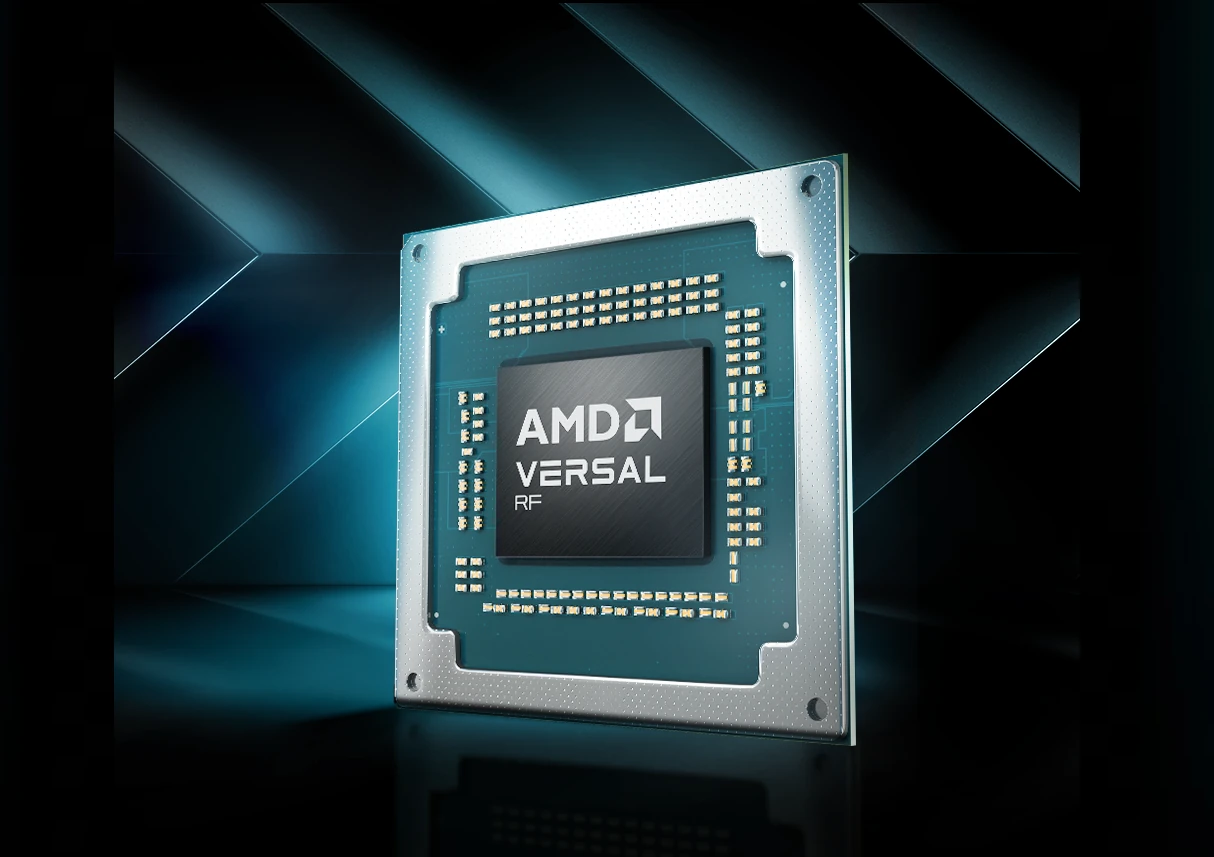
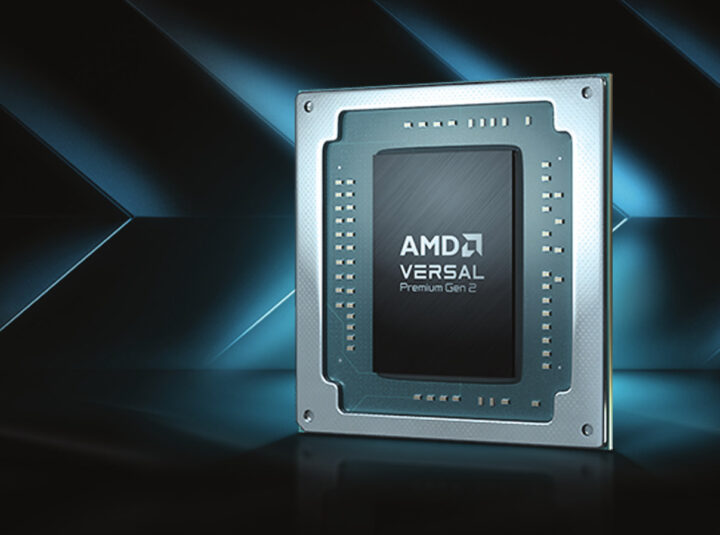
AMD Kintex UltraScale+ Gen 2 is a mid-range FPGA family designed for the broadcast, test, industrial, and medical markets, which provides an update to the Spartan UltraScale+ FPGA family introduced in 2024, and promises availability until at least 2045. Key features include high-speed transceivers and PCIe Gen4 for support of 4K AV-over-IP, multi-stream capture, and frame-accurate transport, increased memory bandwidth for semiconductor test and inspection systems, and advanced imaging and real-time control for machine vision, industrial automation, medical imaging, and robotic systems. AMD Kintec UltraScale+ Gen2 key features AMD says the Kintex UltraScale+ Gen 2 devices deliver up to 5x increase in memory bandwidth when comparing the AMD Kintex UltraScale+ Gen 2 XC2KU040P and XC2KU050P FPGAs to the previous generation Kintex UltraScale+ FPGA, and up to 2x higher channel density per PCIe interface compared to the Altera Agilex A5EC065A FPGA. The company further states that compared to “competing platforms”, the family delivers […]

Congatec conga-TCRP1 COM Express Type 6 module features AMD Ryzen AI Embedded P100 SoC with 50 TOPS NPU

conga TCRP1 COM Express Compact (Type 6) module with AMD Ryzen AI Embedded P100 Series SoCs

Congatec conga-TCRP1 is a COM Express 3.1 Type 6 Compact module powered by the newly announced AMD Ryzen AI Embedded P100 Series processors, which feature AMD’s latest Zen 5 architecture, RDNA 3.5 graphics, and an XDNA 2 NPU for 59 TOPS of combined AI performance, including up to 50 TOPS from the NPU. The module supports up to 96 GB of DDR5-5600 memory and is available in 4-core and 6-core variants with a configurable 15 W to 54 W TDP, allowing both passive and active cooling designs. It supports up to four independent displays, offers PCIe Gen4 and PEG x4 expansion, and includes 2.5 GbE, USB 3.2 Gen 2, and USB 2.0 ports, along with SATA or optional onboard NVMe storage options. Additional features include TPM 2.0, UEFI firmware, and hardware monitoring. The module is available in both commercial and industrial variants with operating temperatures down to -40 °C, which […]

AMD launches Ryzen AI Embedded P100 and X100 processors with up to 50 TOPS of AI performance

AMD Ryzen AI Embedded P100 X100 SoC

AMD has introduced the Ryzen AI Embedded P100 and X100 x86 processors designed to power AI-driven applications at the edge, such as automotive digital cockpits, smart healthcare equipment, and humanoid robotics. AMD had previously launched several Ryzen Embedded families, starting with the Ryzen Embedded V1000 in 2018, and more recently, the Ryzen Embedded 8000 family with a 16 TOPS NPU, yet without “AI” in the name. The new AMD Ryzen AI Embedded family is based on high-performance “Zen 5” core architecture, an RDNA 3.5 GPU for real-time visualization and graphics, and an XDNA 2 NPU for low-latency, low-power AI acceleration. The P100 Series processors target in-vehicle infotainment and industrial automation, while the X100 Series processors feature higher CPU core counts and AI TOPS performance for more demanding physical AI and autonomous systems. Six models are currently available in the Ryzen AI Embedded P100 family: AMD Ryzen AI P121, P123, P121i, […]

Year 2025 in Review, CNX Software stats, and looking ahead to 2026

Happy New Year 2026 CNX Software

Time for the last post of 2025, as the year is almost over. I’ll look back at key developments and notable products launched in 2025, share some CNX Software website traffic statistics, and look ahead to 2026. Year 2025 in Review After 22 product releases in 2024, Raspberry Pi calmed down a little bit in 2025, and the highlights of the year included the Raspberry Pi 500+ mechanical keyboard, the 5-inch variant of the Raspberry Pi Touch Display 2, and a Raspberry Pi 5 1GB RAM. What didn’t quite stop were the accessories from third parties for Raspberry Pi SBC and Raspberry Pi Pico boards. The most exciting Arm SoC release of 2025 was probably the 12-core CIX P1 Armv9 SoC found in Radxa Orion O6 SBC, MINISFORUM MS-R1 Arm mini PC, and Orange Pi 6 Plus board, but while performance was fine, it was overhyped in 2024, and software […]

CIX releases P1 CPU TRM and developer guides for GPU, AI accelerator, OS and firmware/BIOS

CIX P1 documentation

CIX has finally released the technical reference manual (TRM) for the P1 (CD8180/CD8160) Arm Cortex-A720/A520 SoC, along with developer guides for the GPU (Arm Immortalis G720 and NVIDIA/AMD discrete graphics cards), the AI accelerator, as well as OS (Android, Linux, and Windows) and firmware (BIOS) installation and development. A slow (but steady?) progress There was a lot of excitement when the Radxa Orion O6 mini-ITX motherboard was introduced in December 2024, as we were told the CIX P1 12-core Armv9 processor would offer performance similar to Apple M1 SoC and Qualcomm 8cx Gen3 platform, at an affordable price ($199 and up for the mini-ITX board), and software support would include a Debian image, full UEFI via an open-source EDKII implementation, as well as an SDK along with hardware and software documentation, community forum support, and regular firmware & OS updates. CIX was even called “a native open source ecosystem chip […]

Up to 16-core AMD EPYC Embedded 2005 Series Zen 5 processors support up 28 PCIe Gen5 lanes, offer 10-year availability

AMD EPYC Embedded 2005 Series Processors

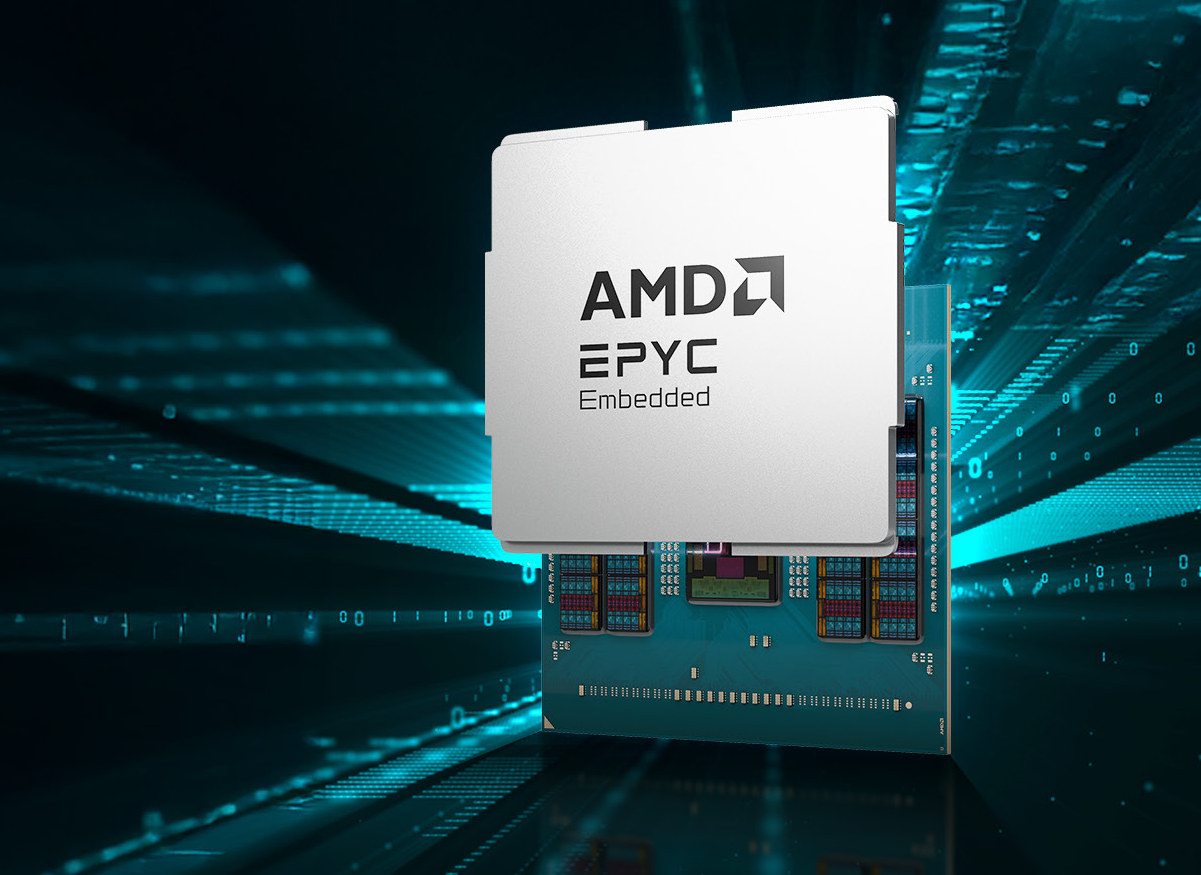
After the release of the high-performance EPYC Embedded 9005, AMD has now introduced the EPYC Embedded 2005 Series, a mid-range processor family also based on the “Zen 5” architecture and designed for space-constrained networking, storage, and industrial edge applications. The new SoCs feature up to 16 cores (32 threads) with 64 MB L3 cache, support dual-channel DDR5-5600 memory with ECC, and offer 28 lanes of PCIe Gen5 connectivity. It also supports advanced RAS capabilities, BMC, PCIe Hot Plug, multi-SPI ROM, and AMD Infinity Guard security. The processors come in a compact 40 x 40mm BGA package, which, according to AMD, is up to 2.4x smaller than competing enterprise solutions (Intel Xeon 6500P-B). Yet, they are designed for 24/7 operation, with up to 10 years of availability with full open-source software support. These features make it suitable for networking switches/routers, cold storage systems, aerospace, robotics, and other high-reliability embedded infrastructure. EPYC […]

AMD Spartan UltraScale+ SU35P FPGA evaluation kit supports Raspberry Pi, Arduino, Mikrobus, and Pmod expansion

AMD SCU35 evaluation kit

AMD’s SCU35 Evaluation Kit is an affordable ($229) development board powered by the AMD Spartan UltraScale+ SU35P FPGA device, which targets low-power industrial, medical, and data center applications requiring I/O expansion and board management capabilities. Designed for headless applications, the board features a 10/100 Mbps Ethernet port and a USB-C port for power, as well as plenty of headers and connectors compatible with off-the-shelf expansion boards or modules, including Arduino UNO headers, two 40-pin Raspberry Pi GPIO headers, two Mikrobus headers, four Pmod connectors, and an HSIO board-to-board connector.   AMD SCU35 evaluation kit specifications: FPGA – AMD Spartan Ultrascale+ SU35P (XCSU35P-2SBVB625E) 36K Logic Cells 304 Max Total I/O• Board Management Controller Memory – 1.93 Mb on-chip memory Memory – 64 Mbit HyperRAM Storage 128 Mbit QSPI flash 64 Kbit EEPROM Networking – 10/100Mbps Ethernet RJ45 port Sensor – 3-axis linear accelerometer Expansion Arduino UNO headers 2x 40-pin Raspberry Pi […]

FPGA-based Game Bub handheld console supports original Nintendo cartridge, wireless controllers (Crowdfunding)

Game Bub open source hardware FPGA retro emulation handheld

Game Bub is an open-source AMD Artix-7 FPGA and ESP32-S3-based handheld gaming console that supports Nintendo Game Boy, Game Boy Color, and Game Boy Advance cartridges. On top of that, it supports TV output via the Game Bub Dock and features Bluetooth for connecting wireless controllers. The device also features cartridge backup and restore functions through FlashGBX, letting users save files, dump ROMs, reflash writable carts, and even extract photos from the Game Boy Camera. The device supports direct ROM loading and the built-in rumble motor, accelerometer, gyroscope, and real-time clock ensure compatibility with games that rely on these peripherals. The device is housed in a transparent 90s-style enclosure, runs on a 3000 mAh battery for over 14 hours of gameplay, and weighs just 250 g, making it portable yet durable. Additionally, it can be used as an FPGA development board with its PMOD expansion slot and plenty of unused […]

Exit mobile version