Discovery Drive – An ESP32-S3-based azimuth/elevation rotator for satellite dishes and SDR antennas (Crowdfunding)

ESP32-S3 antenna rotator

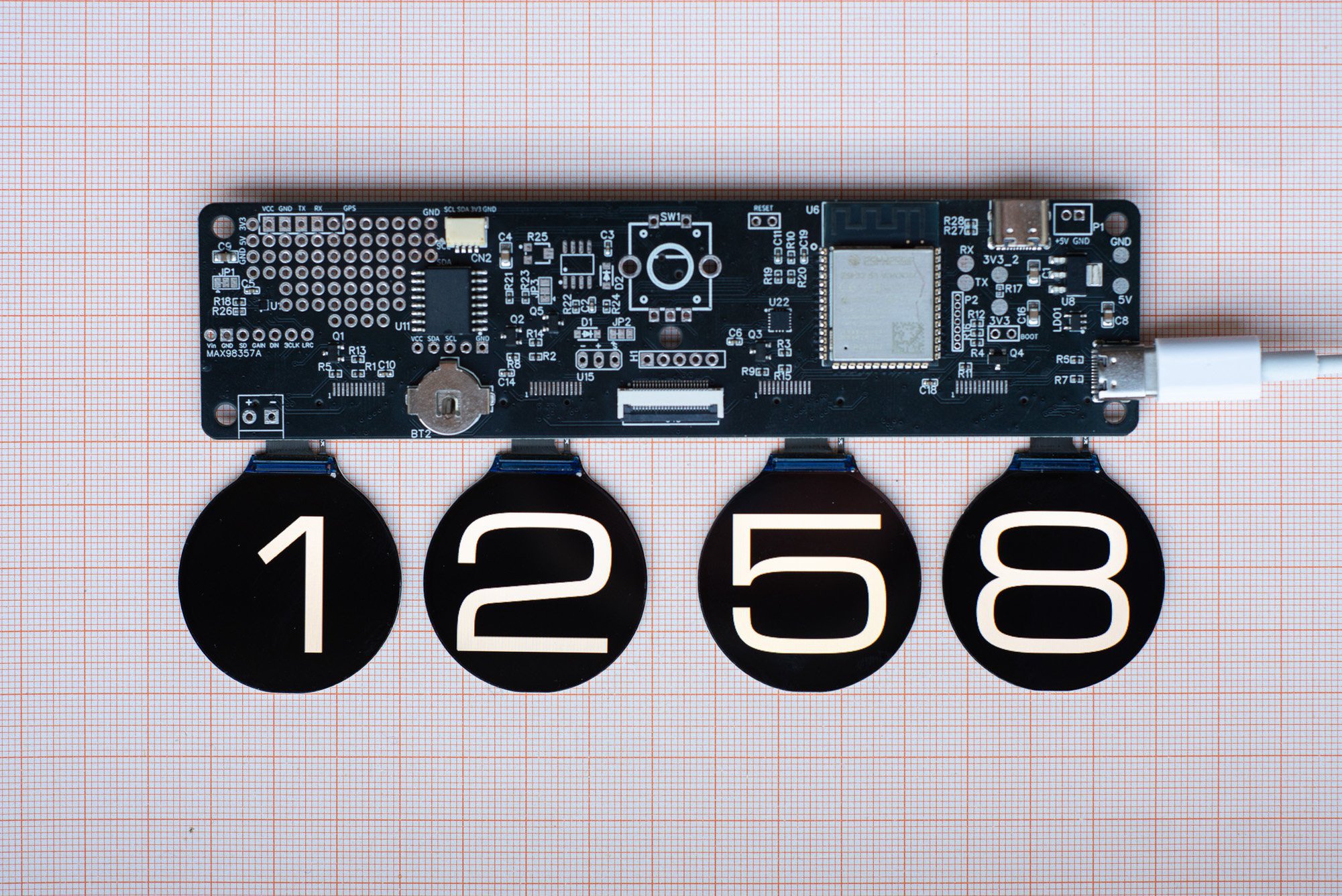
KrakenRF, the team behind the KrakenSDR, has designed the Discovery Drive ESP32-S3-based, low-cost, fully weatherproof, automatic azimuth/elevation (Az/El) antenna rotator for their Discovery Dish or other directional antennas, such as Yagis and Wi-Fi grids, weighing up to 5kg. Compared to DIY projects like SatNOGS (which require 3D printing and hardware sourcing), the Discovery Drive is designed as a plug-and-play solution. You can simply mount it to a mast, attach the dish, connect to 12V power and Wi-Fi, and use its web UI to start tracking polar-orbiting weather satellites (like METEOR-M2 or FENGYUN), CubeSats, or amateur radio satellites. KrakenRF Discovery Drive specifications: Controller – Espressif Systems ESP32-S3-based control board Connectivity – 2.4 GHz 802.11 b/g/n Wi-Fi 4 (via ESP32) with external antenna Motor and Rotation Torque – Up to 125 kg·cm (12.25 Nm); supports antenna payloads up to 5 kg Azimuth Range – -360° to +360° Elevation Range – 0° to […]

AsteroidOS 2.0 open-source smartwatch OS released, now supports around 30 devices

AsteroidOS 2.0

AsteroidOS 2.0 Linux-based, open-source smartwatch operating system has just been released with features such as always-on display support, Tilt-to-Wake, a customizable QuickPanel, multiple launcher styles, Nightstand mode, performance improvements, and support for about 30 devices. It’s been a long journey. We first noted the open-source project in 2016 when Florent Revest showcased a basic user experience on the LG G Watch, just before giving a talk at FOSDEM 2016 introducing AsteroidOS. This was followed by the launch of the Connect Watch (crowdfunded) AsteroidOS smartwatch in 2017 by a French company (which didn’t get funded), and AsteroidOS 1.0 was released in 2018. So it’s been ten years since it all started, and the developers have now released AsteroidOS 2.0. AsteroidOS 2.0 highlights: New features Always-on Display, Tilt-to-wake, Palm-to-sleep Heart rate monitor app Initial step counting support Music volume control Compass support Support for Bluetooth HID and Audio Design, Usability, and App Improvements […]

Mimiclaw is an OpenClaw-like AI assistant for ESP32-S3 boards

MiniClaw OpenClaw ESP32 S3

MimiClaw is an OpenClaw-inspired AI assistant designed for ESP32-S3 boards, which acts as a gateway between the Telegram messaging application and Claude online LLM to control the hardware by just chatting to it. We’ve just written about PicoClaw, an ultra-lightweight personal AI Assistant for cheap Linux boards that just needs 10MB of spare RAM. It was itself inspired by Nanobot, a lightweight assistant written in Python, that’s 99% smaller, in terms of lines of code, than the original OpenClaw project that started it all. Since most of the processing is done through messaging apps and online LLMs, it was only a matter of time until this type of solution was ported to microcontrollers. MimiClaw highlights: Written in C; relies on the ESP-IDF 5.5 framework System requirements – ESP32-S3 board with 16 MB flash and 8 MB PSRAM, such as the LILYGO T7-S3, FireBeetle 2 ESP32-S3, ESP32-S3-DevKitC-1-N16R8, Seeed Studio’s XIAO ESP32S3 […]

Open Stack standalone 4G LTE IoT board runs RTOS on Quectel EC200U LTE module (Crowdfunding)

Open Stack — Standalone 4G LTE IoT & Connectivity Module

Open Stack is a standalone 4G LTE IoT connectivity board designed to run RTOS-based C applications directly on the Quectel EC200U series LTE module, meaning you don’t need an external MCU like Arduino, ESP32, or Raspberry Pi. By removing the MCU, the board reduces power consumption, bill-of-materials (BOM) cost, and physical footprint. The board supports multi-band LTE with GSM fallback, GNSS, and Bluetooth 4.2, as well as IPv4/IPv6 client and server modes. It also includes a USB Type-C port, a Nano SIM card slot, LTE/GNSS/BLE antenna connectors, an OLED information display, status LEDs, control buttons, and a 40-pin Raspberry Pi HAT-compatible GPIO header. Networking support includes TCP/UDP, SSL/TLS, HTTP/HTTPS, MQTT, LwM2M, CoAP, FTP/FTPS, and PPP, making it suitable for asset tracking, industrial monitoring, BLE-to-LTE gateways, remote infrastructure, and always-connected IoT deployments without additional controller hardware. Open Stack specifications: Cellular Module – Quectel EC200U-CN series (EC200UCNAA-N05-SGNSA) module Cellular Connectivity: LTE FDD […]

Geehy G32R430 Arm Cortex-M52 Encoder MCU features Arctangent accelerator, dual 16-bit ADC for industrial motion control systems

Geehy G32R430 Cortex M52 Encoder MCU

Last year, Geehy introduced the industry’s first dual-core Cortex-M52 real-time MCU, and has now followed up with the G32R430, an Arm Cortex-M52 Encoder MCU with two 16-bit ADCs and a hardware ATAN (arctangent) accelerator for sub-1 µs electrical angle computation in high-precision encoder and motion control systems. The MCU is clocked at 128 MHz and uses ITCM/DTCM tightly coupled memory for deterministic, zero-wait-state execution, alongside a 4KB cache for low-latency control loops. It integrates two 16-bit high-precision ADCs with support for synchronous sampling, along with an extra 12-bit ADC, multiple analog comparators, DACs, and an on-chip temperature sensor, allowing encoder designs to be built with very few external analog components. It also supports various encoder protocols, including BiSS-C, SSI, Tamagawa, and SPI, and includes generic interfaces like USART, SPI, and I²C. With a –40°C to +105°C industrial operating range, this MCU is suitable for servo motors, industrial robots, absolute and incremental […]

WCH CH32H417 dual-core RISC-V MCU offers USB 3.0, 500MB/s UHSIF, and Fast Ethernet interfaces

CH32H417 block diagram

WCH CH32H417 is a high-performance dual-core RISC-V microcontroller clocked at up to 400 MHz with up to 960 KB flash, 896KB SRAM, and a range of interfaces, including a 5 Gbps USB 3.0 Host/Device SuperSpeed interface. Other notable features include a 500MB/s UHSIF (Universal High Speed Interface), 10/100Mbps Ethernet MAC and PHY, a SerDes high-speed isolated transceiver, a USB 2.0 High-Speed Host/Device, a USB 2.0 OTG Full Speed, USB PD support, and Display and Camera interfaces. The CH32H417 also offers the usual low-speed I/Os (95x GPIO, SPI…) and analog inputs and outputs (ADC/DAC). WCH CH32H417 CH32H417 specifications: Cores (Coremark: 5.73/MHz) QingKe RISC-V5F up to 400 MHz QinKe RISC-V3F up to 144 MHz GPU – Graphics Processing Hardware Accelerator GPHA Memory – 896KB SRAM Storage 960KB Flash 200MHz dual-edge SD/EMMC controller (SDMMC) SDIO master/slave interface with support for SD/SDIO/MMC Flexible Storage Controller FMC Display – DCT-TFT Display Controller LTDC Camera I/F […]

Cerelog ESP-EEG – A low-cost ESP32-based EEG acquisition board for brain computer interface (BCI) experiments

Cerelog ESP EEG ESP32 EEG acquisition board

The Cerelog ESP-EEG is an 8-channel, low-cost brain computer interface (BCI) circuit board built around the ESP32 MCU and designed for EEG data acquisition. The board supports 8-channel, 24-bit EEG data collection and connects to a host system over USB-C for both power and data. The board has an active noise-removal bias pin which reduces mains interference, along with onboard status LEDs, including a dedicated indicator for active data capture. It works with third-party or DIY EEG headsets using adapter boards, and STL files are provided for 3D printed mounts. Cerelog also offers various software tools and sample code to enable real-time EEG visualization, BCI experiments, neurofeedback, and custom brain-controlled applications. Cerelog ESP-EEG specifications: Wireless Module – ESP32-WROOM-32 SoC – ESP32 CPU – Dual-core processor @ 160 MHz Memory  – 520 KB SRAM Wireless WiFi 802.11 b/g/n, Bluetooth 4.2 Storage – 4 MB flash PCB antenna Analog Front-End (via TI’s […]

ESP-Scope is a web-based oscilloscope built using the ESP-IDF framework and Gemini 3 LLM

ESP32 oscilloscope

ESP-Scope is an open-source firmware transforming any ESP32 board into an oscilloscope using one of the ADC pins up to 83,333 Hz sample rate (on the ESP32-C6) and visualizing the results over Wi-Fi in a web browser, be it Google Chrome, Mozilla Firefox, or others. It’s not the first ESP32 oscilloscope project we’ve seen, as last year, we covered Bojan Jurca’s “Esp32_oscilloscope” Arduino sketch doing something very similar. The ESP-Scope is a little different, since it’s based on the ESP-IDF framework, and was used to test AI code generators, specifically “Google Antigravity using Gemini 3, with refinements, hints and tips and overall design specified by a human”. It just took a few hours to build. ESP-Score firmware features: Real-time signal visualization on a web browser. Adjustable sample rate (1-83333 Hz) and attenuation. Crosshair functionality for precise measurements Adjustable trigger level Test signal generation Reset functionality to clear settings and reload […]

Exit mobile version