When I wrote the Year 2025 in review post, I expected an announcement for the Wildcat Lake CPUs at CES 2026, but instead, Intel initially introduced the high-end Core Ultra Series 3 “Panther Lake” family. I assumed the Wildcat Lake announcement was postponed, but some users’ reports on X indicate the company did demonstrate the new Core Series 3 (no “Ultra” there) “Wildcat Lake” processors as lower-end Core Series 3 “Panther Lake” SKUs. Intel has yet to disclose part names, and there’s nothing about the Wildcat Lake on Intel Ark at the time of writing. However, some information was shared through slides and X users. Intel Core Series 3 “Wildcat Lake” key features and specifications: CPU – Hexa-core processor with 2x Cougar Cover P-cores (Performance cores), 4x Darkmont LPE-cores (Low-Power Efficient cores) GPU – 2x Xe-core Intel Xe3 graphics (no ray tracing, not designed for gaming) AI accelerator – Intel […]
Progress on upstream Linux for MediaTek Genio IoT SoCs and boards
Collabora announced a partnership with MediaTek to bring upstream support to the Genio IoT SoCs and boards in November 2024, but since the announcement was new at the time, no work had been done, and I didn’t write about it. However, almost one year later, Collabora can now report very good progress, especially for MediaTek MT8395 boards like Genio 1200 EVK and Radxa NIO 12L, which are now usable with mainline/upstream Linux since most features are implemented. But improvements also extend to MediaTek Genio 510 and Genio 700 EVKs, and the collaboration will continue with work on newer MediaTek Genio and Kompanio processors for IoT solutions and Chromebooks. The two MediaTek Genio 1200 boards can now boot mainline Linux without any out-of-tree patches while providing support for the Audio DSP, JPEG, video hardware encoders and decoders, the Arm Mali-G57 MC5 GPU (via the open source Panfrost driver), as well as […]
Linux 6.17 release – Main changes, Arm, RISC-V, and MIPS architectures
Linux 6.17 has just been released on LKML: No huge surprises this past week, so here we are, with kernel 6.17 pushed out and ready to go. Below is the shortlog for just the last week – not the full 6.17 release – as usual. It’s not exciting, which is all good. I think the biggest patch in there is some locking fixes for some bluetooth races that could cause use-after-free situations. Whee – that’s about as exciting as it gets. Other than that, there’ the usual driver fixlets (GPU and networking dominate as usual, but “dominate” is still pretty small), there’s some minor random other driver updates, some filesystem noise, and core kernel and mm. And some selftest updates. This obviously means that the merge window for 6.18 will open tomorrow, and I already have four dozen pull requests pending. Thanks to the proactive people – you know who […]
Nuvoton introduces the first security chip based on OpenTitan open-source silicon Root of Trust
Google has announced the start of the fabrication of a Nuvoton security chip featuring OpenTitan open-source silicon Root of Trust (RoT), the first such production-ready chip. It will soon be available in lowRISC’s Voyager 1 demo board, and later this year in Chromebooks and data centers. We first wrote about OpenTitan open-source Root of Trust (RoT) chips in 2020 as a collaboration between Google, Seagate, Nuvoton, Western Digital, lowRISC, as well as some other companies, projects, and universities that aimed at “building a transparent, high-quality reference design and integration guidelines for silicon root of trust (RoT) chips”. OpenTitan itself reached commercial availability last year, after the first engineering samples were released in 2023, and Google now says the Nuvoton chip (yet to have a proper name) is the first production-ready OpenTitan chip. Hardware Root of Trust (RoT) are small secure microcontrollers that are the equivalent of Certificate Authorities (CAs) to […]
Linux 6.11 Release – Notable changes, Arm, RISC-V and MIPS architectures
Linux 6.11 is out with Linus Torvalds’ announcement on the Linux kernel mailing list (LKML): I’m once again on the road and not in my normal timezone, but it’s Sunday afternoon here in Vienna, and 6.11 is out. The last week was actually pretty quiet and calm, which is nice to see. The shortlog is below for anybody who wants to look at the details, but it really isn’t very many patches, and the patches are all pretty small. Nothing in particular stands out – the biggest patch in here is for Hyper-V Confidential Computing documentation. Anyway, with this, the merge window will obviously open tomorrow, and I already have 40+ pull requests pending. That said, exactly _because_ I’m on the road, it will probably be a fairly slow start to the merge window, since not only am I on my laptop, there’s OSS Europe starting tomorrow and then the […]
Linux 6.9 release – Main changes, Arm, RISC-V, and MIPS architectures
Linus Torvalds has just announced the release of Linux 6.9 on LKML: So Thorsten is still reporting a few regression fixes that haven’t made it to me yet, but none of them look big or worrisome enough to delay the release for another week. We’ll have to backport them when they get resolved and hit upstream. So 6.9 is now out, and last week has looked quite stable (and the whole release has felt pretty normal). Below is the shortlog for the last week, with the changes mostly being dominated by some driver updates (gpu and networking being the big ones, but “big” is still pretty small, and there’s various other driver noise in there too). Outside of drivers, it’s some filesystem fixes (bcachefs still stands out, but ksmbd shows up too), some late selftest fixes, and some core networking fixes. And I now have a more powerful arm64 machine […]
Linux 6.8 release – Notable changes, Arm, RISC-V, and MIPS architectures
Linus Torvalds has just announced the release of Linux 6.8 on the Linux kernel mailing list: So it took a bit longer for the commit counts to come down this release than I tend to prefer, but a lot of that seemed to be about various selftest updates (networking in particular) rather than any actual real sign of problems. And the last two weeks have been pretty quiet, so I feel there’s no real reason to delay 6.8. We always have some straggling work, and we’ll end up having some of it pushed to stable rather than hold up the new code. Nothing worrisome enough to keep the regular release schedule from happening. As usual, the shortlog below is just for the last week since rc7, the overall changes in 6.8 are obviously much much bigger. This is not the historically big release that 6.7 was – we seem to […]
CTL Chromebook NL73 Series to support 5G RedCap with a Snapdragon X35 modem
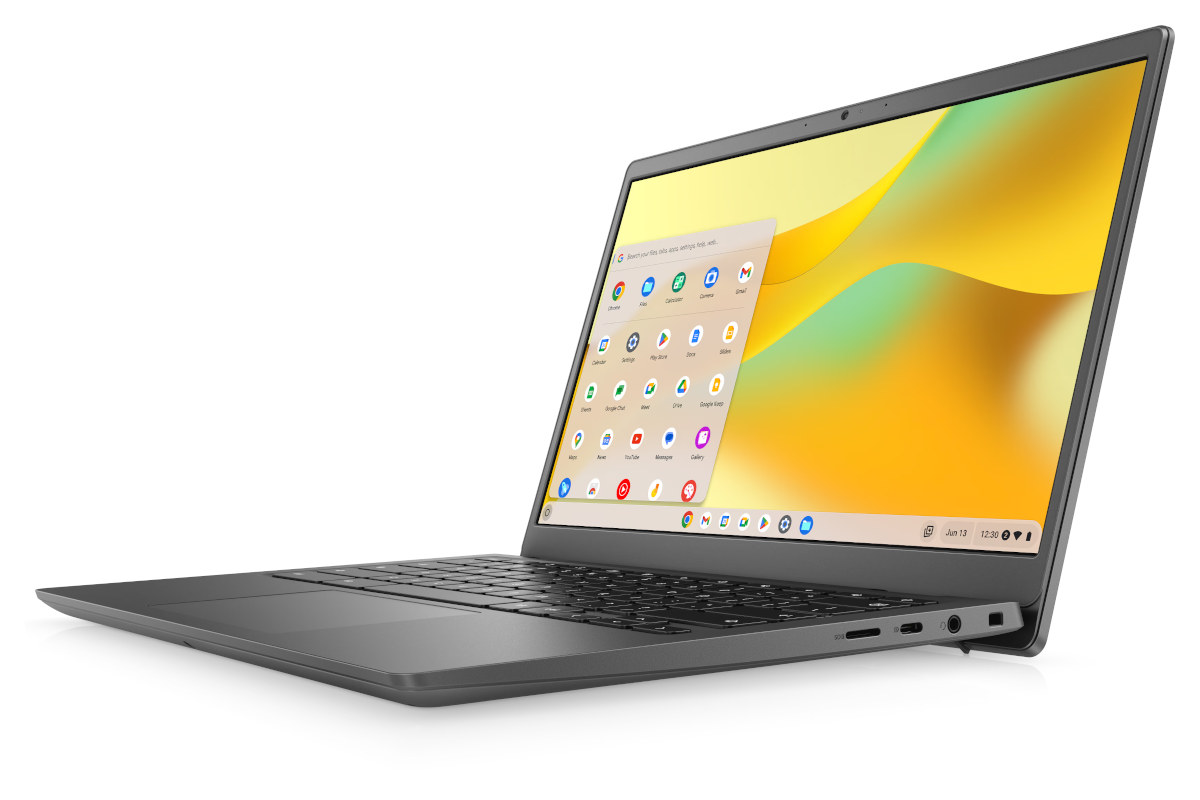
CTL Chromebook NL73 Series based on Intel Processor N100 or N200 SoC will be offered with a Snapdragon X35 modem to support the new 5G RedCap (Reduced Capability) standard. 5G RedCap – also known as 5G NR-Light – keeps some 5G features such as low latency, low power consumption, enhanced security, and network slicing while limiting the bandwidth to around a few hundred Mbps. It was initially designed to target industrial IoT applications, but Qualcomm also mentioned its Snapdragon X35 modem could be used in smartwatches and XR glasses when it was first announced, and it might be used in other cost-sensitive devices such as Chromebooks. Chromebook NL73 “5G RedCap” key specifications: Alder Lake N-Series SoC (one or the other) Intel Processor N100 quad-core processor up to 3.4 GHz (Turbo) with 6MB cache, 24EU Intel HD graphics; TDP: 6W Intel Processor N200 quad-core processor up to 3.7 GHz (Turbo) with […]