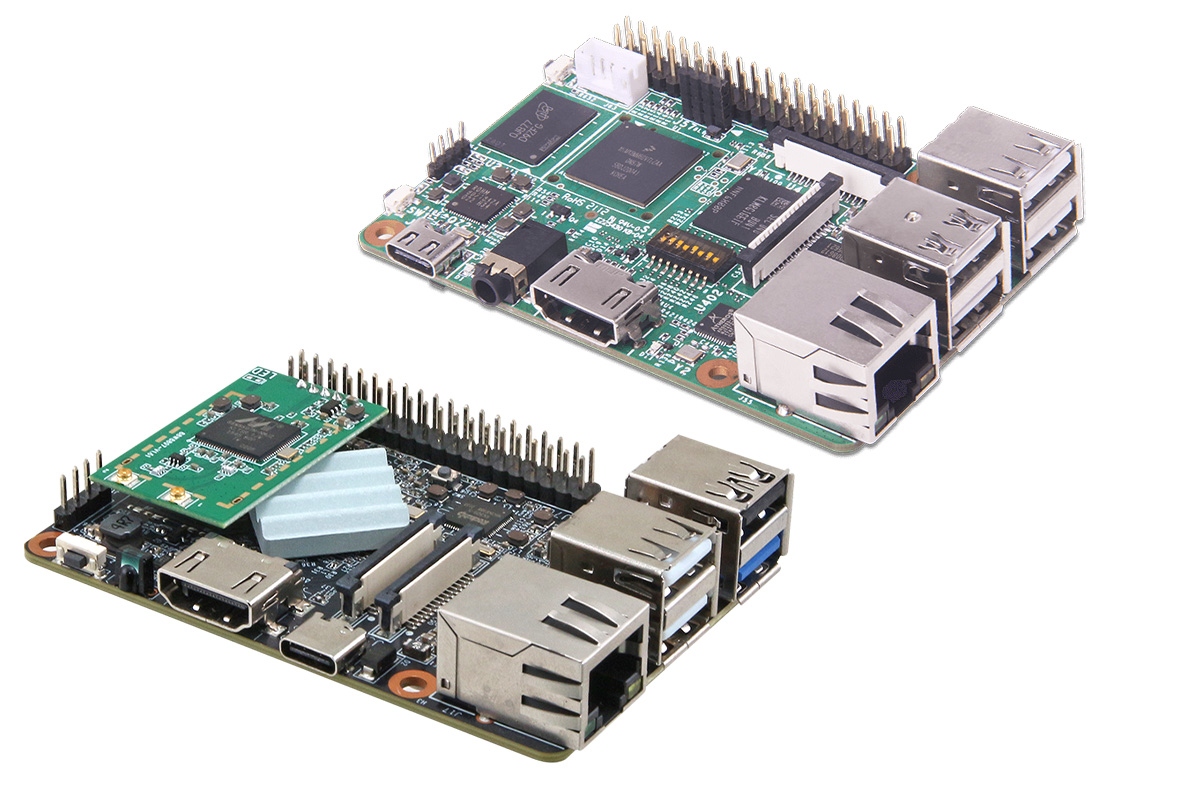

Made by Japan-based PiLink, the PL-R5 and PL-R5M Series are compact industrial PCs powered by a Raspberry Pi Compute Module 5 (CM5) and offered with either IP20 or IP65 ingress protection rating. The PL-R5 Series provides one USB 3.0 port, one Gigabit Ethernet port, and 9V to 40V DC input, while the PL-R5M Series offers one USB 2.0 port, one 100 Mbps Ethernet port, an optional extra Gigabit Ethernet port, and a 10.7V to 28.8V DC input range. Both include optional WiFi 5 and Bluetooth, an M.2 B-Key socket for cellular, optional RS-232, RS-485, I2C interfaces, and more. The IP65 models are offered in Basic, Basic Plus (adds 4x analog inputs, 4x DI/DO), and USB (3x USB ports) configurations. The PL-R5 also adds a DIO CAN IP65 variant with two DI, two DO, and two CAN Bus interfaces. The IP20 variants have an even wider choice of options. PiLink PL-R5/R5M […]
VU GPSDR – A low-cost GPS-disciplined SDR expansion board for the Vivid Unit RK3399 touchscreen SBC
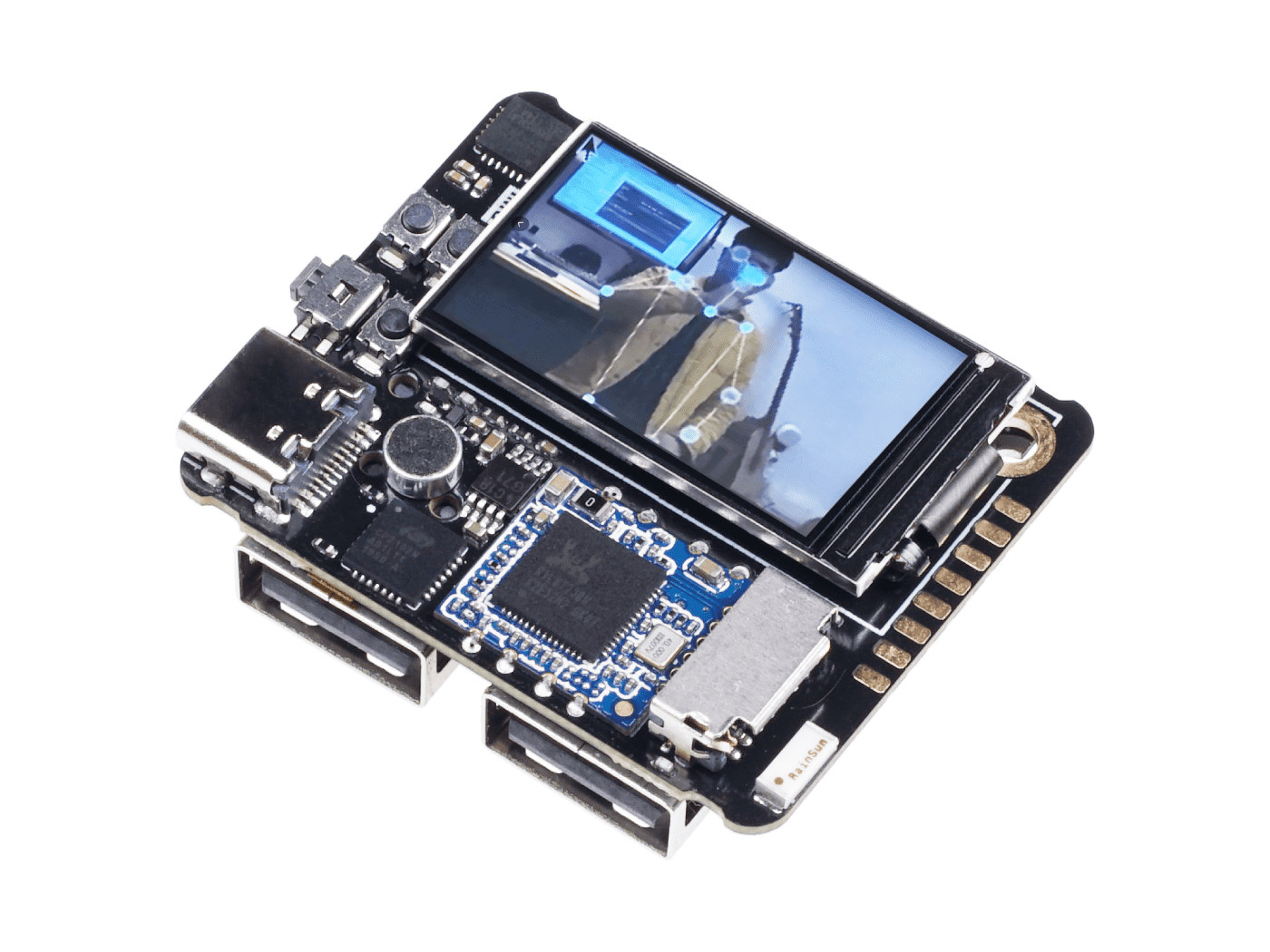
UUGear’s VU GPSDR is a low-cost GPS-disciplined SDR expansion board designed specifically for the Vivid Unit, a palm-sized Rockchip RK3399-based touchscreen SBC we covered back in 2024. The VU GPSDR is built around the RTL2832U ADC and Rafael Micro R860 tuner, but what makes it different from SDRs like the PhaseLatch Mini and DeepRad SDR is the integration of a u-blox NEO-M8N GPS module. This module provides a GPS-disciplined 24 MHz clock reference to the Si5351 local oscillator, which ensures high frequency stability and timing accuracy that is typically only found in much more expensive SDR hardware. VU GPSDR specifications: Supported Platform – UUGear Vivid Unit via Vivid Unit Extender Gen 1/2 (See details below) MCU – STM8S003F for board-level controls RF Tuner – Rafael Micro R860 ADC – Realtek RTL2832U Frequency Range – 500 kHz to 1.766 GHz Bandwidth – Up to 3.2 MHz (2.4 MHz recommended for stability) HF […]
Cubie A7S – A compact Allwinner A733 SBC with USB-C DisplayPort, GbE, WiFi 6, PCIe Gen3 FFC connector, GPIO headers
Radxa has launched its third Allwinner A733 octa-core Cortex-A76/A55 SBC with the compact Cubie A7S featuring up to 16GB LPDDR5 memory, up to 256GB eMMC flash and a microSD card slot for storage, a Gigabit Ethernet RJ45 port, and a WiFi 6 and Bluetooth 5.2 wireless module. Other features include two USB-C ports, including one supporting DisplayPort Alt mode for video output, a USB 2.0 Type-A port, a 16-pin PCIe Gen3 x1 FFC connector, 30-pin and 15-pin GPIO headers, and a 4-lane MIPI CSI camera connector. At 51 x 51 mm, it offers a middle ground between the credit card-sized Cubie A7A and the Pi Zero-sized Cubie A7Z. Cubie A7S specifications: SoC – Allwinner A733 CPU Dual-core Arm Cortex-A76 @ up to 2.00 GHz Hexa-core Arm Cortex-A55 @ up to 1.8 GHz Single-core RISC-V E902 real-time core @ up to 200 MHz GPU – Imagination Technologies BXM-4-64 MC1 GPU with […]
Raspberry Pi OS adds easier USB gadget mode support
Raspberry Pi OS Trixie now supports USB gadget mode out of the box, allowing users to connect to their Raspberry Pi boards over IP through USB without the need for a router. My first experience with USB gadget functionality was when I reviewed the Beaglebone Green Wireless SBC in 2016, but for some reason, official support for the Raspberry Pi ecosystem took a lot longer, and it was only officially implemented in Raspberry Pi OS Trixie images dated 20.10.2025 and later through the rpi-usb-gadget package. It’s been possible to use the USB gadget mode on Raspberry Pi OS for a while, but it was rather convoluted with outdated scripts, manual configuration steps, and platform-specific instructions. The new rpi-usb-gadget package streamlines the process and makes things much easier: The Raspberry Pi SBC will present itself as a USB Ethernet device when connected to a PC Users can SSH directly using the […]
Arduino UNO Q 4GB board with 4GB RAM, 32GB storage is now available for $59
When the Arduino UNO Q was first unveiled in October 2025, the specifications of the Qualcomm DragonWing SBC listed the ABX00162 SKU with 2GB RAM and 16GB eMMC flash, and the ABX00173 SKU with 4GB RAM and 32GB eMMC flash. So far, only the 2GB variant was available, and Arduino has now announced the availability of the Arduino UNO Q 4GB with 4GB of RAM and 32GB eMMC storage for more complex projects. Arduino UNO Q 4GB (ABX00173) specifications: Application SoC/MPU – Qualcomm QRB2210 CPU – Quad-core Cortex-A53 processor at up to 2.0 GHz GPU – Adreno 702 GPU at 845 MHz with support for OpenGL ES 3.1, Vulkan 1.1, OpenCL 2.0 DSP – Hexagon QDSP6 v66 VPU – 1080p 30 fps encode / 1080p 30fps decode ISP – 2x Image Signal Processor (13 MP + 13 MP or 25 MP) @ 30 fps Real-time MCU – STMicro STM32U585 Arm Cortex-M33 microcontroller […]
Raspberry Pi AI HAT+ 2 review – A 40 TOPS AI accelerator tested with Computer Vision, LLM, and VLM workloads
Raspberry Pi sent me a sample of their AI HAT+ 2 generative AI accelerator based on Hailo-10H for review. The 40 TOPS AI accelerator is advertised as being suitable for LLMs (Large Language Models) and VLM (Vision Language Models), while delivering about the same performance as the first-generation AI HAT+ (Hailo-8) for AI vision/computer vision models. After going through an unboxing, I’ll assemble the AI HAT+ 2 to a Raspberry Pi 5 with 2GB of RAM fitted with a Raspberry Pi Camera Module 3, before quickly checking whether AI vision models work as expected, and spending more time on testing LLM and VLM samples. Raspberry Pi AI HAT+ 2 unboxing My sample had a somewhat long and rough trip from the UK to Thailand, and the package did not look that good when DHL delivered it. But luckily, nothing was damaged, and I got the AI HAT+ 2 with a […]
Raspberry Pi CM0-powered low-cost industrial box PCs offer RS-485, 4G LTE, and wide DC input options
EDATEC has recently released the ED-IPC1000 and ED-IPC1100 Raspberry Pi CM0-based industrial box PCs with DIN-rail mounting options. The ED-IPC1000 is the low-cost version, featuring standard connectivity options such as Wi-Fi and Bluetooth. In contrast, the ED-IPC1100 offers RS-485 and 4G CAT-1 connectivity, along with a wider power input, making it suitable for more advanced industrial applications. As a reminder, the Raspberry Pi CM0 is a solder-on module based on a Broadcom BCM2710A1 quad-core Arm Cortex-A53 CPU with 512 MB RAM, optional 8 GB/16 GB eMMC flash, and optional 2.4 GHz Wi-Fi/Bluetooth. It’s only available to manufacturers in China; expect finished products like the ED-IPC1000/IPC1100 box PCs can be sold worldwide. Other features of the computers include 1080p30 HDMI output, dual USB 2.0, 10/100 Mbps Ethernet, an integrated RTC with CR2032 backup, a watchdog timer, 5V USB-C power input, passive cooling, and DIN-rail mounting. The ED-IPC1100 adds an onboard 4G LTE […]
NanoPC-T6 Plus Rockchip RK3588 SBC switches from LPDDR4x to LPDDR5 (up to 32GB)
It’s been a while since FriendlyELEC has released a board, and the NanoPC-T6 Plus SBC is more of a variant of the NanoPC-T6 and NanoPC-T6 LTS rather than a really new board. It’s still based on a Rockchip RK3588 octa-core SoC, and equipped with two HDMI 2.1 ports, an HDMI input port, MIPI DSI/CSI interfaces, two 2.5GbE ports, and M.2 sockets for NVMe SSD and wireless, among other features. The main change appears to be that the new model is now offered with up to 32GB LPDDR5 rather than up to 16GB LPDDR4x in the previous models. It’s closer to the NanoPC-T6 LTS, although it now supports two analog microphones instead of just one, and restores the M.2 Key-B socket for optional 4G LTE connectivity found in the original NanoPC-T6. The 10-pin UART + 2x USB 2.0 header found in the LTS variant gives way to a 3-pin UART debug […]