
StackChan is a cute, community-build, open-source AI desktop robot (Crowdfunding)

M5Stack Stackchan

StackChan is an open-source AI desktop robot based on the M5Stack CoreS3 ESP32-S3 IoT controller that works as an AI Voice Assistant and can notably be used for Smart Home & IoT control. It features a 2-inch touchscreen display, a VGA camera, a dual microphone array and a 1W speaker for voice interaction, a few sensors, an infrared receiver, an infrared transmitter/blaster, two servos for horizontal and vertical movement, and a few buttons and LEDs. StackChan specifications: Core module – M5Stack CoreS3 IoT controller Wireless MCU – Espressif Systems ESP32-S3FN16R8 CPU – Dual-core 32-bit Xtensa LX7 microcontroller with AI vector instructions up to 240MHz, RISC-V ULP co-processor Memory – 512KB SRAM, 8MB PSRAM Storage – 16MB flash, Wirleess – 2.4GHz WiFi 4 (802.11b/g/n), Bluetooth 5.0 BLE + Mesh Antenna – Internal 3D antenna Storage – MicroSD card slot Display – 2-inch IPS display with 320×240 resolution, 65,536 colors via ILI9342C […]

LILYGO T-Beam 1W – An ESP32-S3 + SX1262 high-power LoRa dev board with 32 dBm output, GNSS support

LILYGO T Beam 1W

The LILYGO T-Beam-1W is an ESP32-S3-based high-power LoRa development board featuring an SX1262 RF transceiver, an onboard 1W power amplifier (32 dBm), a L76K GNSS module, a 1.3-inch SH1106 OLED, a microSD slot, USB-C, Qwiic connectors, and an AXP2101 PMU. The board runs on a 7.4V battery and includes a cooling fan for high-power RF operation. We first wrote about the original LILYGO T-Beam (then branded as TTGO) in 2018, and since then, the company introduced various revisions of the T-Beam as it became popular. The T-Beam 1W is the most powerful version so far, with a built-in 1 Watt amplifier that allows the board to transmit data over longer distances without needing to buy separate, bulky amplifiers. LilyGO T-Beam-1W Specifications: Core module – Espressif Systems ESP32-S3-WROOM-1 SoC – ESP32-S3 CPU – Dual-core LX7 processor with up to 240MHz Memory – 512KB SRAM, 8MB PSRAM Storage – 384KB ROM Wireless – […]

XIAO ePaper DIY Kit – EE02 – An ESP32-S3 board designed for 13.3-inch Spectra 6 color E-Ink display

XIAO ESP32-S3 13.3-inch E-ink Spectra 6 color display kit

Seeed Studio’s XIAO ePaper DIY Kit EE02 is an ESP32-S3 WiFi and Bluetooth board designed specifically for the 13.3-inch Spectra 6 color E-Ink display provided by the company. It’s based on a similar design as the XIAO ePaper DIY Kit-EE04 (ESP32-S3) and XIAO ePaper DIY Kit-EN04 (nRF52480) introduced last December, which are suitable for smaller 1.54 to 7.15-inch ePaper displays. Like the previous models, the new EE02 model also includes a battery connector with a power switch, a built-in charging IC, and comes with one reset and three user buttons. With support for a larger 13.3-inch color ePaper display, it’s especially well-suited for digital frames and information boards. XIAO ePart DIY kit – EE02 specifications: Wireless board – XIAO ESP32S3 Plus SoC – Espressif ESP32-S3R8 CPU – Dual-core Tensilica LX7 microcontroller up to 240 MHz with vector instructions for AI acceleration Memory – 8MB PSRAM Wireless – WiFi 4 and Bluetooth […]

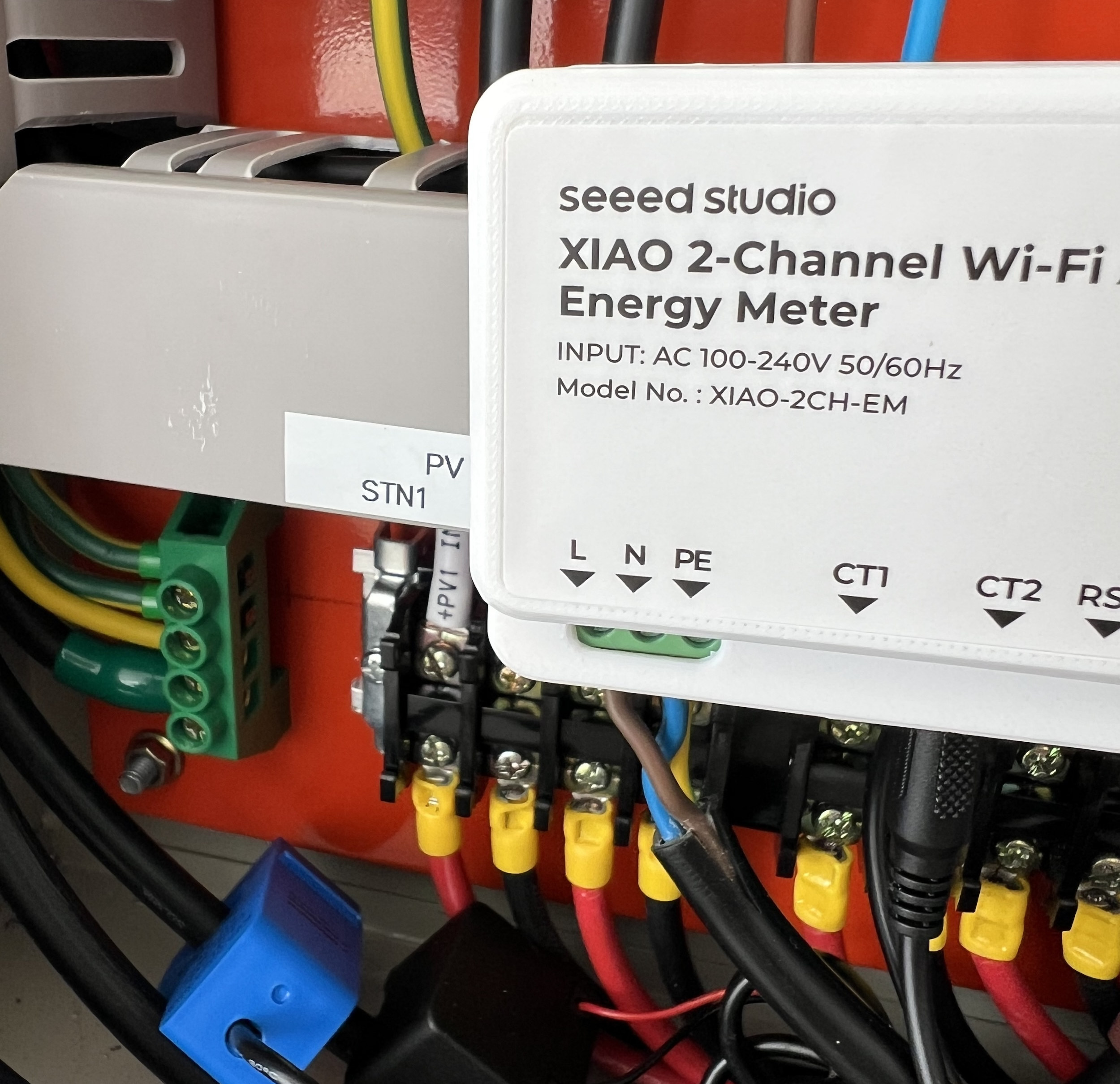
Home Assistant-compatible Makerfabs ESP32-S3-based energy meter features BL0942 energy metering IC

Energy Meter for Home Assistant

The Energy Meter for Home Assistant is an ESP32-S3-based single-phase energy monitoring and control module designed to work with Home Assistant via ESPHome. It measures real-time power and energy consumption and also has a remote on/off control. The device is built around the BL0942 calibration-free energy metering IC, which supports voltage, current, power, and energy measurements with less than 1% error. It operates directly from AC 100–240V, includes an onboard 15A relay for switching loads, and provides electrical isolation for safety. Connectivity is done through USB and Wi-Fi using ESPHome for easy firmware flashing, API encryption, and automatic discovery in Home Assistant. These features make it suitable for smart homes, DIY energy monitoring, smart sockets, home energy dashboards, and automation projects. Energy Meter for Home Assistant specifications: Core module – Espressif Systems ESP32-S3-WROOM-1 SoC – ESP32-S3 CPU – Dual-core Tensilica LX7 up to 240 MHz with vector extension for AI/ML workloads […]

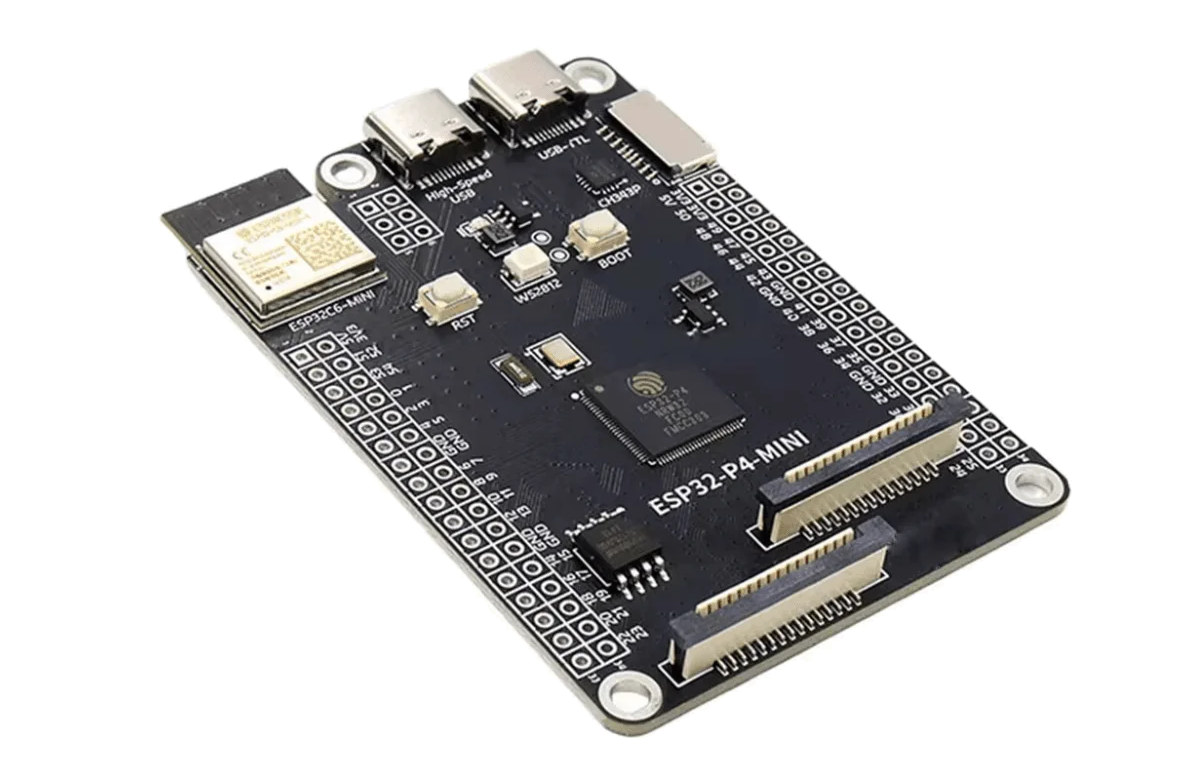
ESP32-S3 development board features 4.2-inch Reflective LCD (RLCD), dual microphone array, onboard speaker

ESP32 S3 RLCD Development Board

Waveshare ESP32-S3-RLCD-4.2 is a 4.2-inch Reflective LCD (RLCD) development board built around ESP32-S3 wireless SoC for DIY projects, rapid prototyping, and smart display devices that need a paperlike experience with a higher refresh rate compared to e-paper displays. The ESP32-S3 provides 2.4 GHz Wi-Fi and Bluetooth 5 LE connectivity, and the board also includes a dual microphone array with ES7210 ADC and ES8311 audio codec, as well as an onboard speaker for AI voice interaction. Other features include an SHTC3 temperature and humidity sensor, a PCF85063 RTC, a microSD card slot for storage, along with multiple GPIO, UART, and I²C expansion headers. Power, programming, and battery charging are done through the USB Type-C port connected to an optional 18650 battery. Applications include electronic calendars, desktop displays, voice-based devices, environmental monitoring, and low-power indoor or outdoor display systems. ESP32-S3-RLCD-4.2 specifications Core module – Espressif Systems ESP32-S3-WROOM-1-N16R8 SoC – ESP32-S3 CPU – Dual-core […]

ESP32-DIV V1 handheld pentesting tool supports Wi-Fi Attacks, BLE spoofing, 2.4GHz scanning, and Sub-GHz jamming

ESP32 DIV Wi Fi, BLE, 2.4GHz and Sub GHZ pentesting tool

Designed by Cirket open-source hardware in China, the ESP32-DIV V1 is a handheld wireless pentesting and experimentation tool with Wi-Fi, BLE, generic 2.4 GHz (NRF24), and Sub-GHz RF (CC1101) communication. The device targets hardware hackers and cybersecurity researchers for learning and testing wireless vulnerabilities across multiple frequency bands. The device features a modular “sandwich” design consisting of a Main Board and a Shield Board connected via a 20-pin header. The Main Board integrates an ESP32 microcontroller, a 2.8-inch ILI9341 TFT display with XPT2046 touch controller, SD card slot, battery charging and power management, and navigation controls. The Shield Board hosts the RF hardware, including three NRF24L01 modules, a CC1101 Sub-GHz transceiver, and multiple SMA antenna connectors. ESP32-DIV (V1) specifications: Wireless Module  – ESP32-WROOM-32U SoC –  ESP32 dual-core wireless microcontroller CPU – Dual-core Xtensa 32-bit microprocessor @ 240MHz Memory –  520KB internal SRAM Wireless – Wi-Fi 802.11b/g/n, and Bluetooth (4.2 and […]

Year 2025 in Review, CNX Software stats, and looking ahead to 2026

Happy New Year 2026 CNX Software

Time for the last post of 2025, as the year is almost over. I’ll look back at key developments and notable products launched in 2025, share some CNX Software website traffic statistics, and look ahead to 2026. Year 2025 in Review After 22 product releases in 2024, Raspberry Pi calmed down a little bit in 2025, and the highlights of the year included the Raspberry Pi 500+ mechanical keyboard, the 5-inch variant of the Raspberry Pi Touch Display 2, and a Raspberry Pi 5 1GB RAM. What didn’t quite stop were the accessories from third parties for Raspberry Pi SBC and Raspberry Pi Pico boards. The most exciting Arm SoC release of 2025 was probably the 12-core CIX P1 Armv9 SoC found in Radxa Orion O6 SBC, MINISFORUM MS-R1 Arm mini PC, and Orange Pi 6 Plus board, but while performance was fine, it was overhyped in 2024, and software […]

DFRobot HUSKYLENS 2 AI camera review – From built-in AI samples to training a custom model to detect elephants

Huskylens 2 Ai camera review

Hello, today I am going to review the HUSKYLENS 2, released in October 2025. It is the next generation of HUSKYLENS, an AI vision sensor equipped with a Kendryte K230 dual-core RISC-V SoC with a 6 TOPS AI accelerator and a 2.4-inch IPS touchscreen. The device runs machine vision algorithms fully on-device, providing fast and low-latency performance, and includes more than 15 built-in AI models. HUSKYLENS 2 also supports deploying custom-trained models, including integration with Large Language Models (LLMs) via a Model Context Protocol (MCP) service. In addition, it is compatible with various microcontrollers, such as Arduino and Raspberry Pi, through UART or I2C communication interfaces. HUSKYLENS 2 unboxing The manufacturer sent the HUSKYLENS 2 module and the Microscope Lens separately. Both parcels were shipped from Chengdu, China, and arrived at my office in Chanthaburi, Thailand, in about one week. The parcels were packed in standard cardboard boxes and arrived […]

Exit mobile version