ESP-KVM – An open-source IP KVM solution based on ESP32-P4 RISC-V MCU

ESP-KVM ESP32-P4 IP KVM

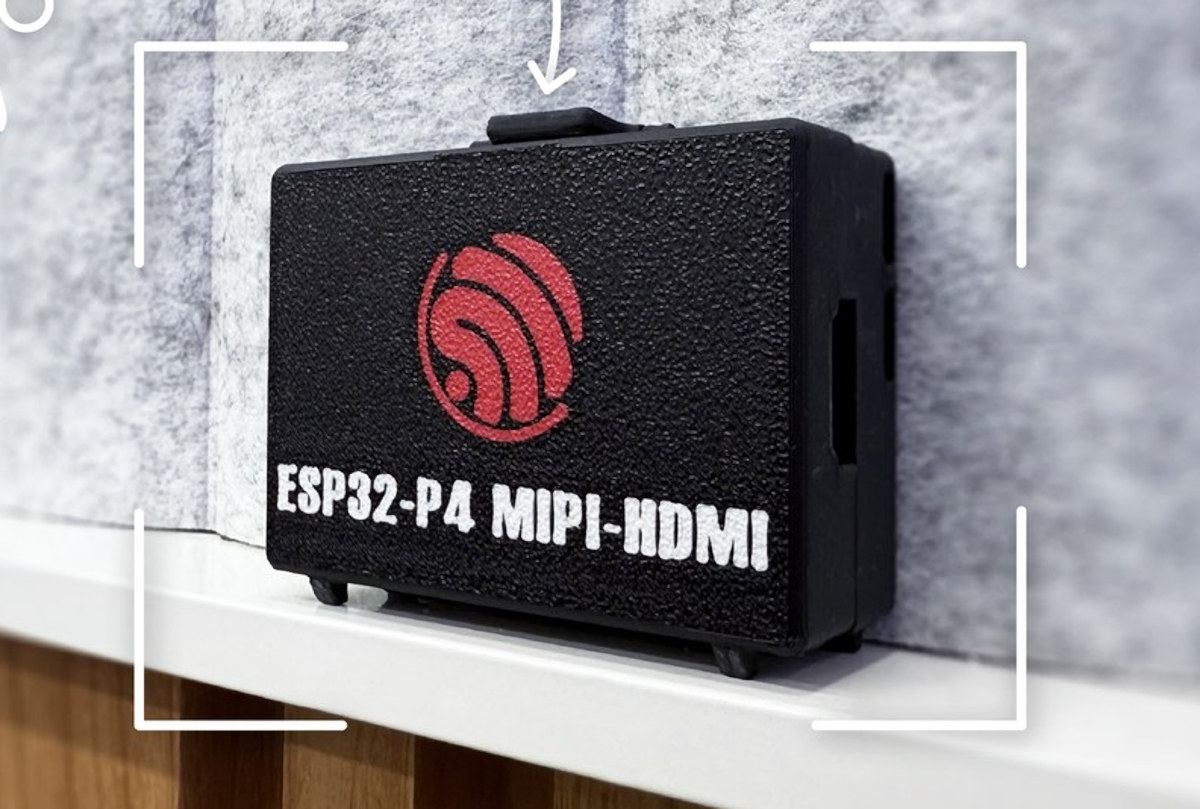
Earlier this month, the P4 KVM project was brought to my attention. It provides IP KVM functionality to a Waveshare ESP32-P4-WIFI6-POE-ETH board when paired with a Toshiba TC358743 HDMI-to-CSI adapter. However, it doesn’t work with the new ESP32-P4 V3.x variants featuring a proper H.264 video encoding implementation, and the developer (Jonathan Rowny) says it’s just a proof-of-concept with many bugs and no security, so I decided to skip it. The good news is that he also encouraged others to fork the project, and Evgenij Spitsyn did just that with the release of the ESP-KVM project, which supports both MJPEG and H.264 encoding and a range of other features. ESP-KVM highlights: Video capture, resolution changes, and MJPEG or H.264 encoding Keyboard, absolute and relative pointer, media keys, copy/paste Touch mode for phones and tablets (trackpad, on-screen keyboard) Multiple viewers, one in control at a time with takeover HTTPS, login, physical password […]

7.6-inch square HDMI displays with USB capacitive touchscreen offered at 1200×1200 or 800×800 resolution

7.6-inch square HDMI touch display

VIEWE UEDX12120076-HMD-RB-A and UEDX80800076-HMD-RB-A are 7.6-inch square HDMI capacitive touch displays with 1200×1200 and 800×800 resolution, respectively. We had previously seen 4-inch square HDMI +USB touch displays with 720×720 resolution for Raspberry Pi or other SBCs, but if you need something larger, VIEWE has now launched 7.6-inch variants with higher resolutions. VIEWE UEDX12120076-HMD-RB-A/UEDX80800076-HMD specifications: Display 7.6-inch MIPI DSI square IPS display Resolution UEDX80800076-HMD-RB-A – 800 x 800 UEDX12120076-HMD-RB-A – 1200 x 1200 Display driver ILI9881C for UEDX80800076-HMD-RB-A Potentially HX8279 for UEDX12120076-HMD-RB-A Brightness – 1,000 cd/㎡ Active area – 135.36 x 135.36 mm Touchscreen – Optional 5-point capacitive touchscreen via USB-C port (likely FT6336U touch IC) Video Input Mini HDMI 1.4 ITE HDMI input to MIPI DSI bridge based on the blurry photo of the controller. USB – USB-C port for power and touchscreen Misc – LED lifetime: 30,000 hours Power Supply – 5V via USB-C port Dimensions – 148.24 x […]

RP2350B bells&whistles development board features on-board RP2040 debugger, HDMI, and microSD card slot

RP2350B bells&whistles board

While searching Tindie for a new project, I found a new Raspberry Pi RP2350B-based development board called “Bells&Whistles,” which is interesting because it also features an onboard RP2040-based debugger running Picoprobe firmware, removing the need for a separate debug probe. Other than that, it has an HDMI output, a MicroSD card slot for storage, an optional 8 MB of PSRAM, and since it uses the Raspberry Pi RP2350B variant, it supports up to 46 GPIO pins. The board also features two USB Type-C ports, one for the RP2350B and the other for the RP2040 debugger, and is especially useful for clutter-free rapid prototyping and development workflows. RP2350B bells&whistles board specifications: SoC – Raspberry Pi RP2350B CPU Dual-core Arm Cortex-M33 @ 150 MHz with Arm TrustZone Dual-core RISC-V Hazard3 @ 150 MHz Only two cores can be used at any given time Memory – 520 KB on-chip SRAM Package – QFN-80 Memory – […]

AweSun Cloud KVM Q1 Review – An ultra-compact, low-cost KVM over IP solution tested with Windows 11 and Android clients

AweSun Q1 Pironman 5 Pro Max

AweSun has sent me a sample of their “Cloud KVM Q1” 4K KVM over IP solution for review. It’s a compact device with the minimum number of ports for a connected KVM: USB-C for keyboard and mouse emulation, HDMI input for video, and Ethernet for connectivity to the host. Like other such KVMs, it enables hardware-level remote access even in the BIOS, and the company advertised remote access to server, computer, and mobile phone targets, with the latter requiring an additional USB-C dock for HDMI input. I’ll start the review by going through the specifications, performing an unboxing and a teardown, and testing both mobile and desktop clients with targets like a Raspberry Pi 5 and an Android mobile phone. AweSun Cloud KVM Q1 specifications Here are the specifications from the company: Video Input HDMI port Resolution – Up to 2560 x 1600 with 15 FPS framerate Networking 100Mbps RJ45 […]

ModRetro M64 – An AMD Artix UltraScale+ FPGA based open-source Nintendo 64-compatible console with original cartridge support

M64 Console Clear

ModRetro has announced the M64, an open-source Nintendo 64-compatible console powered by an AMD Artix UltraScale+ FPGA, designed to play original cartridges using hardware-level emulation instead of software. The M64’s reliance on an AMD Artix FPGA enables accurate and responsive gameplay, and the console supports original game cartridges and controllers, while also adding modern connectivity features such as HDMI, WiFi, Bluetooth, and USB-C. ModRetro M64 specifications: FPGA – AMD Artix UltraScale+ (16nm architecture) Memory – PSRAM Storage – MicroSD card slot (for firmware updates and potential homebrew applications) Media Interfaces – Dedicated Nintendo 64 physical cartridge slot for original retro media preservation and play. Display – HDMI port (upscaling for modern TVs, supporting custom video filters like Scan Line and CRT profiles) Audio – Digital audio output via HDMI Connectivity Bluetooth with advanced “SCI” wireless mode (ModRetro’s own low-latency protocol) Wi-Fi support for firmware upgrade USB – 3x USB-C ports […]

ODROID-H5 Review – Part 2: A dual 10GbE mini PC tested with Ubuntu 26.04

ODROID-H5 review dual 10GbE Ubuntu 26.04

I received a kit for review last week with an ODROID-H5 SBC, a Type1 case, an M.2 10GbE module, and other accessories. In the first part of the review, I went through an unboxing, assembled the kit, and tested whether it could boot an M.2 NVMe SSD with Ubuntu 24.04 and Windows 11. I’ve now updated the system to Ubuntu 26.04, run a few benchmarks, tested the two 10GbE RJ45 ports, as well as other features. I’ll report my experience about all that today. Upgrading from Ubuntu 24.04 to Ubuntu 26.04 The 512GB M.2 NVMe SSD I use in the ODROID-H5 comes from a laptop, which I upgraded with a 2TB SSD. That means the operating systems were not upgraded for a few months. While Ubuntu 24.04 could boot, it would not show the two 10GbE interfaces. That’s because the required drivers were not available in the version of Ubuntu […]

VIA Labs VL610/VL610D MST Hub controllers to enable USB-C multi-display adapters with up to three 4K display outputs

VIA VL610 USB-C board three video outputs

VIA Labs VL610/VL610D MST (Multi-Stream Transport) Hub controllers are designed for multi-display expansion, enabling USB-C adapters to drive up to three 4K UHD high-resolution HDMI or DisplayPort displays simultaneously. The chips succeed the VL605 single-channel USB-C to HDMI 2.1 signal converter. The VL610 supports three video outputs up to 4Kp60, while the VL610D is limited to two video outputs for different docking design needs. VIA VL610/VL610D key features and specifications: Display/USB Input – DisplayPort Receiver (DPRX) supporting HBR3 (High Bit Rate 3) up to 32.4 Gbps, suitable for up to 8Kp60 and D+/D- USB 2.0 Video and Audio output VL610 HDMI 2.1 FRL transmitter Configurable port supporting DP++ or HDMI 2.1 FRL Configurable port supporting DP++ or HDMI TMDS VL610D – Dual display configuration (not clear details provided) Single display up to 8Kp60 or 4Kp240 Triple display up to 4Kp60 or QHDp144. Up to 6x independent audio and video streams […]

ODROID-H5 SBC Review – Part 1: Unboxing, Type1 case assembly, and first boot

ODROID H5 Review Type 1 case Ubuntu 24.04

Hardkernel has sent me a kit with the ODROID-H5 10GbE SBC for review. In addition to the Intel Core i3-300 board itself, the kit also comes with an ODROID-H5 Type-1 case, an M.2 card for a second 10 Gbps Ethernet port, and other accessories. I’ll start the review with an unboxing, my experience assembling the kit, and first boot using an M.2 NVMe SSD with Ubuntu 24.04 and Windows 11 in a dual-boot configuration. In a few weeks, I’ll continue the review after upgrading to Ubuntu 26.04 and perform thorough testing of all features and performance. ODROID-H5 kit unboxing An advantage of the ODROID family is that it’s highly flexible, and you can build your own customized system. For this review, Hardkernel sent me a package with the following items: External LED power button H5 Case Type 1 enclosure ODROID-H5 16GB DDR5 SO-DIMM (Crucial) 15V/4A PSU with US plug adapter […]

Exit mobile version