
The SLogic16U3 is a compact, low-cost USB 3.0 logic analyzer with up to 3.2 Gbps bandwidth and 16 input channels, designed for debugging, reverse-engineering, and verifying digital circuits and embedded systems. The device supports sampling rates up to 800MS/s with four channels, 400MS/s with eight channels, and 200MS/s with sixteen channels via a 5 Gbps USB 3.0 interface. On top of that, it supports 0–10V inputs and features adjustable trigger thresholds (0–6V). Housed in a 40×40×10 mm compact aluminum case, it supports over 150 protocols like SPI, I²C, UART, CAN, and JTAG, and provides edge-based triggering with real-time streaming over USB. The device can be extended as an oscilloscope via an optional ADC module and integrates seamlessly with Sigrok and PulseView software for waveform visualization. SLogic16U3 specifications: MCU – TBD Input channels – 16 digital channels Sampling rates 800MS/s @ 4 channels 400MS/s @ 8 channels 200MS/s @ 16 channels […]
$2 WeAct Display FS adds a 0.96-inch USB information display to your computer
WeAct Display FS is an inexpensive 0.96-inch USB display dongle designed to add an information display or a tiny secondary display to your computer or SBC. We’ve seen this type of information display with products such as the Turing Smart Screen, a larger 3.5-inch color display, or small OLEDs integrated into cases such as the Pironman 5 Max to disable text. The WeAct Display FS V1 may be tiny, but it’s also a full-color 160×80 resolution display that can be customized with software provided by WeAct. WeAct Display FS V1 specifications: Display – 0.96-inch RGB565 display with 160×80 resolution Host interface – “Reversible” USB 2.0 Type-A Full Speed (FS) port showing as a CDC device Dimensions – 43 x 14.5 mm Since you wouldn’t want to get a display only for it to face the wrong direction, for instance, the desk or the wall, the company made the USB-A port […]
Home Assistant 2025.3 released with dashboard view headers, tile card improvements, better SmartThings integration
The popular Home Assistant has gotten an update with version 2025.3 that brings dashboard view headers, several tile card improvements, better map clustering, streamed responses from LLMs, and improved SmartThings integrations. Let’s have a look at some of the improvements starting with dashboard view headers which allow users to add a title and welcoming text to dashboards using Markdown and templates. You can also add badges next to the headers. Home Assistant 2025.3 also brings plenty of improvements to tile cards: Adding a circular background around tiles that perform actions, and leaving the ones that just show extra information without a circle Features of a tile card can now be positioned inline in the tile card (e.g. on/off button) New features: switch toggle, counter toggle (to increase, decrease, or reset a counter entity), animations when hovering over atile card Editor improvements for ease of use The new version of Home […]
picoLLM is a cross-platform, on-device LLM inference engine
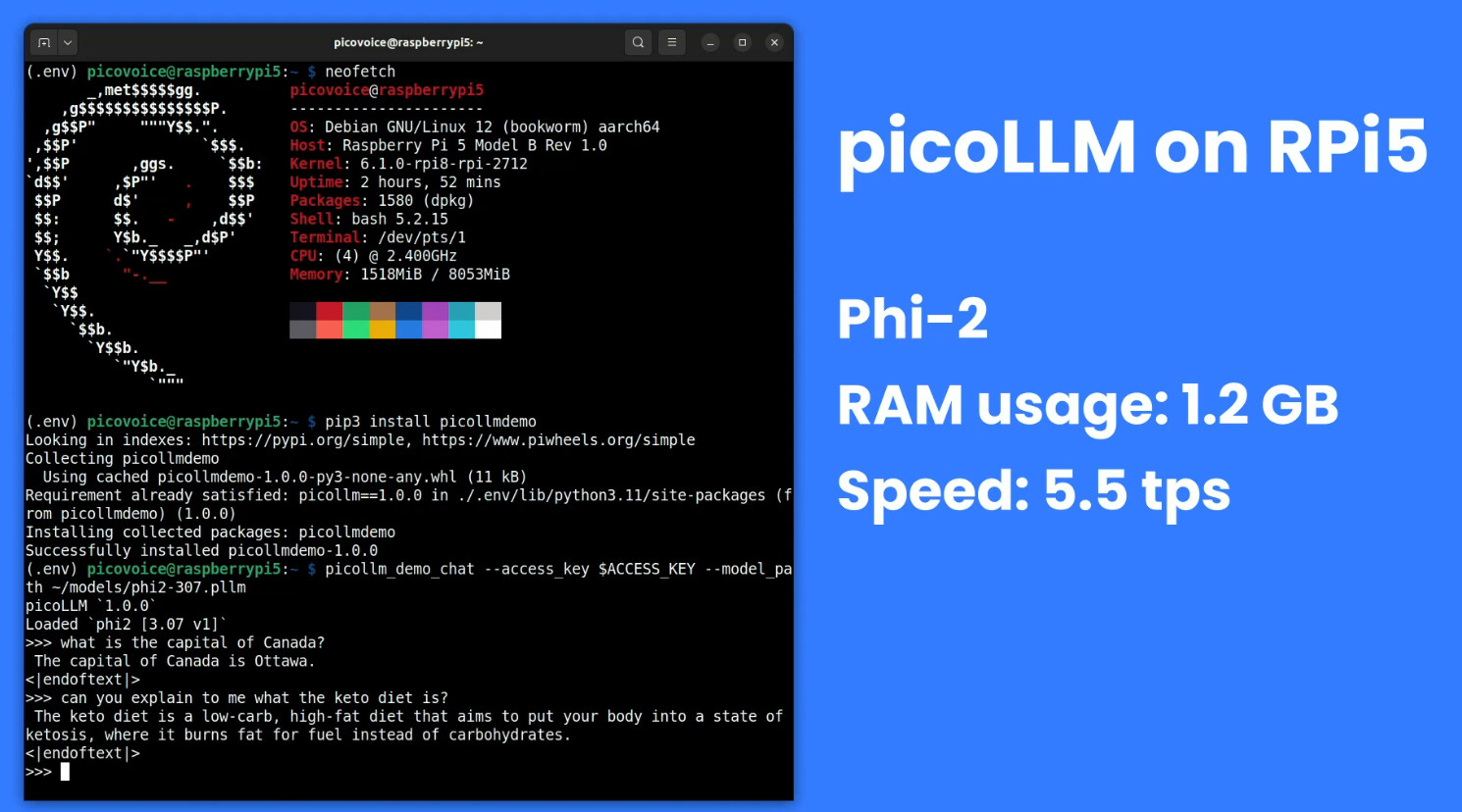
Large Language Models (LLMs) can run locally on mini PCs or single board computers like the Raspberry Pi 5 but with limited performance due to high memory usage and bandwidth requirements. That’s why Picovoice has developed the picoLLM Inference Engine cross-platform SDK optimized for running compressed large language models on systems running Linux (x86_64), macOS (arm64, x86_64), and Windows (x86_64), Raspberry Pi OS on Pi 5 and 4, Android and iOS mobile operating systems, as well as web browsers such as Chrome, Safari, Edge, and Firefox. Alireza Kenarsari, Picovoice CEO, told CNX Software that “picoLLM is a joint effort of Picovoice deep learning researchers who developed the X-bit quantization algorithm and engineers who built the cross-platform LLM inference engine to bring any LLM to any device and control back to enterprises”. The company says picoLLM delivers better accuracy than GPTQ when using Llama-3.8B MMLU (Massive Multitask Language Understanding) as a […]
Kodi 21.0 Omega released with FFmpeg 6, LG webOS support, and more
Kodi 21.0 “Omega” has just been released with the latest version of the open-source media center adding 3,750 commits since the release of Kodi 20.0 “Nexus” on January 15th, 2023 that notably added AV1 hardware decoding in Android and x86. The new Kodi 21.0 version updates FFmpeg to version 6, adds native support for LG webOS televisions after some reverse-engineering, and implements new features such as Dolby Vision on-the-fly profile conversion in Android, native windowing in macOS that does not rely on the SDL library, and an in-game player viewer to view which game port each player’s controller is currently connected to. Most of the changes were not user-facing and instead, were under-the-hood improvements to the stability, performance, and security of Kodi. You’ll find more changes in the Kodi 21.0 Alpha/Beta/RC pre-release announcements and the complete list of changes on GitHub. That also means Kodi v22 “P*” development has started. […]
M5Stack releases local server implementations of UIFlow visual programming Web IDE
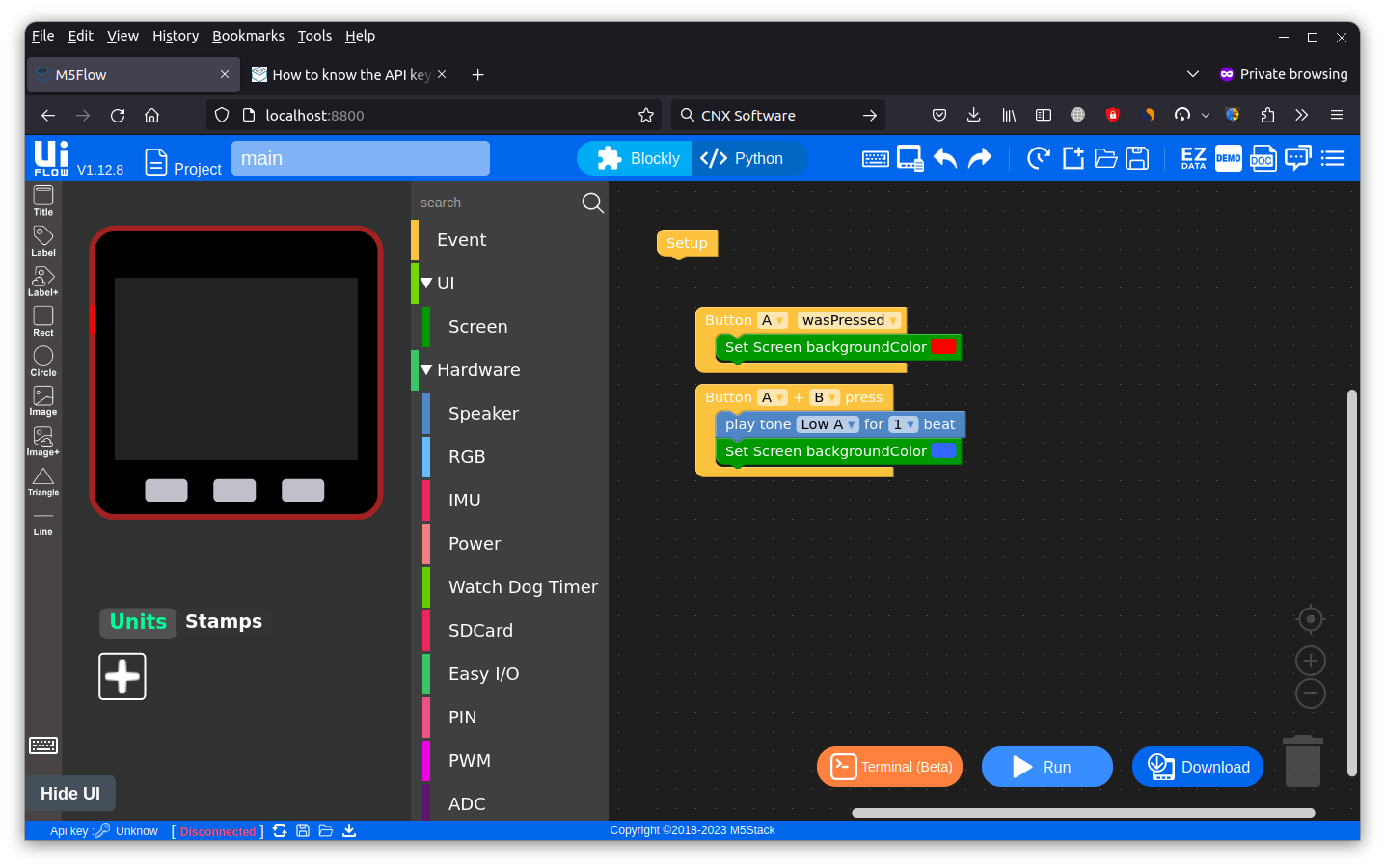
Visual programming is now a very popular method to teach programming to kids and M5Stack relies on UIFlow for their ESP32-based IoT development kit. Like most other companies, M5Stack provides either a Web IDE accessible from their server or a desktop program available for Windows, MacOS, or Linux, but the company has now released a local server implementation that allows users to run a Web IDE instance in their local network. The local server is available for Windows 11 x64, MacOS, Ubuntu 22.04, and Linux Arm (e.g. Raspberry Pi), so I downloaded the Ubuntu version to give it a try on my laptop. Somehow the Ubuntu release is full of Windows DLLs, but let’s ignore that for now, and the README.txt tells us to install one dependency and run the program as follows:
|
1 2 |
apt install ttf-mscorefonts-installer ./UIFlow.Server.Desktop |
A window pops up letting us start or stop the server. It can be accessed with […]
56% off UPDF – An Adobe Acrobat Alternative for PC, Mac, iOS and Android (Sponsored)
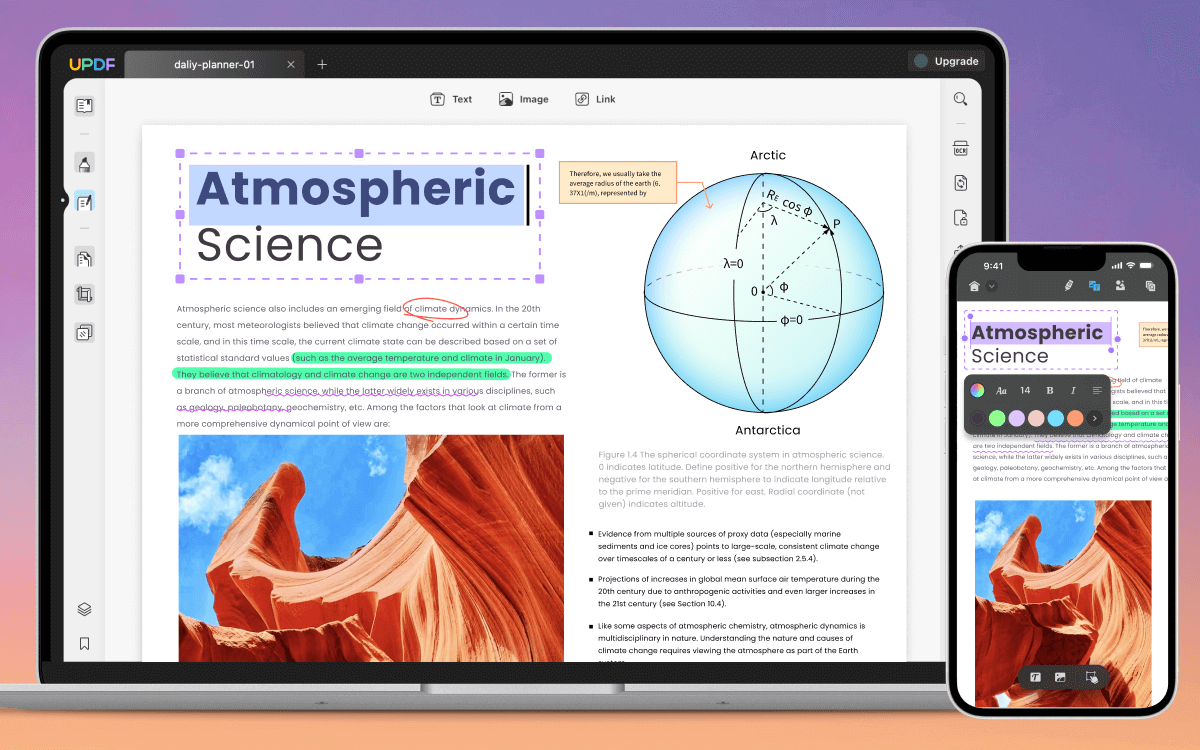
UPDF is an all-in-one PDF editor that can read, annotate, edit and sync, convert, encrypt, sign, and organize PDFs. It’s a cross-platform software that works on Mac OS, Windows, Android, and iOS with one license working on all operating systems. The developers also plan to release AI features next month to automatically translate, summarize, write, rewrite, explain, and proofread PDFs quickly using the latest artificial intelligence development, but users can already benefit from a 56% discount for UDPF Pro as part of the Father’s Day promotion for which we’ll provide more detail at the end of this post. Key features of UPDF PDF Editor View and Read PDF – UPDF supports basic features of PDF readers such as opening and reading PDFs, printing PDF, searching for a text query, or even displaying a PDF as a slideshow. Edit and Sync PDF – As an advanced PDF editor, the program can […]
Add Z-Wave LR (Long Range) to Raspberry Pi or Home Assistant Yellow with Zooz 800 Series USB stick or GPIO Module
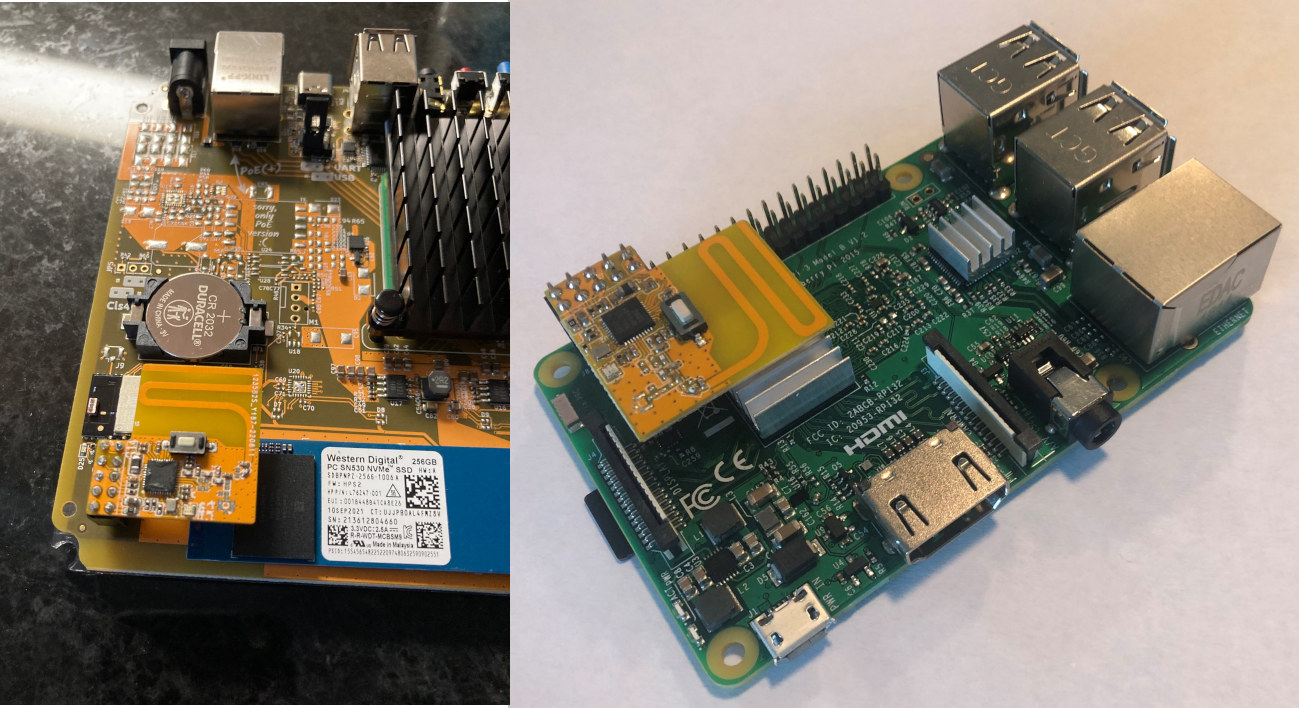
We wrote about the new Z-Wave Long Range (LR) standard aka “Z-Wave Plus LR” promising four times the range and 10-year battery life in September 2020 but hadn’t heard much about it since then, at least until now, as Zooz has launched the ZST39 LR USB Stick and ZAC93 LR GPIO module based on a Z-Wave 800 Series chip, with the GPIO module compatible with Home Assistant Yellow and Raspberry Pi SBCs. Zooz 800 Series Z-Wave Long Range GPIO Module ZAC93 LR ZAC93 LR specifications: Z-Wave Frequency – 908.42 MHz (US, CA, MX) / 921.4 MHz (AU, NZ) / 868.42 MHz (EU) Wireless Range – Up to 1 mile/1.6 km in open space with Long Range enabled (up to 300 meters in open space, up to 76 meters indoors in traditional mesh networks) Support for up to 200 devices in a single network Host interface – 10-pin header to Raspberry […]