VS Code gets AutoML Embedded plugin for automated model tuning, deployment, and benchmarking

VS Code AutoML Embedded

AutoML for Embedded, developed by Analog Devices (ADI) and Antmicro, is an open-source plugin for Visual Studio Code that works alongside ADI’s CodeFusion Studio plugin. Built on the Kenning framework, it automates the full ML pipeline, including model search, hyperparameter tuning, optimization, compression, and deployment, making edge AI development easy on resource-constrained devices. The company mentions that it supports the ADI MAX78002 AI accelerator MCU, the MAX32690 MCU, Renode-based simulation, and Zephyr RTOS. It uses SMAC and Hyperband algorithms for automated model search and hyperparameter tuning, along with model compression and quantization to meet strict memory and compute limits. The plugin offers built-in benchmarking for inference speed, memory footprint, and accuracy, while performing RAM and compute compatibility checks. All these features make it useful for applications like image classification, anomaly detection, predictive maintenance, NLP, and action recognition on low-power IoT and embedded systems. AutoML Embedded overview: Type – Open-source AutoML plugin […]

Arduino Nano R4 board launched for $12.10 with Renesas RA4M1 microcontroller

Arduino Nano R4

Arduino has shrunk the UNO R4 with the Arduino Nano R4 board equipped with the same 48 MHz Renesas RA4M1 32-bit Arm Cortex-M4F microcontroller, but offered in a much more compact form factor. It’s closer to the UNO R4 Minima in terms of functionality, since it lacks the ESP32 wireless module and LED matrix found in the UNO R4 WiFi board. The new Nano R4 still features a USB-C port, an I2C Qwiic connector, and two 15-pin GPIO headers with castellated holes for expansion. Arduino Nano R4 specifications: Microcontroller – Renesas RA4M1 Arm Cortex-M4F MCU @ 48 MHz with 32KB SRAM, 256KB flash, 8KB EEPROM USB – 1 x USB Type-C port for power and programming Expansion 2x 15-pin GPIO headers 21x digital I/Os Analog 8x 14-bit analog input pins, 1x Op Amp using A1, A2, and A3 pins 12-bit analog DAC 6x PWM 1x UART, 1x I2C (5V), 1x […]

Industrial IoT board based on NuMicro M467 Ethernet MCU follows Arduino UNO R4 form factor

Nuvoton NuMaker UNO M4 Cortex M4 industrial dev board

The NuMaker-UNO-M4 is an industrial-grade IoT development board powered by a Nuvoton NuMicro M467 series Arm Cortex-M4F Ethernet MCU and following the Arduino UNO R4 form factor. The board also comes with Ethernet, RS485, CAN FD, and a microSD card slot for data logging. Power options include 5V via USB Type-C, 5–5.5V through a DC jack, and external 3.3V/5V through headers. It also features Arduino-compatible headers, push buttons, status LEDs, and a dedicated high-speed USB for power and programming. Nuvoton NuMaker-UNO-M4 Specifications SoC –Nuvoton NuMicro M467SJHAN CPU – Arm Cortex-M4 @ up to 192 MHz, with FPU and DSP Memory – Up to 512 KB SRAM with 64 KB parity check Storage Up to 1024 KB Flash with dual-bank, FOTA, and XOM support 8 KB LDROM, 3 KB OTP ROM Storage – MicroSD card slot Connectivity – 4-pin 10/100 Mbps Ethernet connector via RealTek RTL8201FI PHY USB – USB Type-C port […]

Renesas RA2T1 low-power Cortex-M23 MCUs target BLDC/PMSM motor applications

Renesas RA2T1 microcontroller (MCU) group

Renesas has recently launched the RA2T1 group of low-power motor control MCUs, built around a 64 MHz Arm Cortex-M23, for low-cost single-motor applications like power tools, fans, and home appliances. Designed for Brushless DC Electric Motors (BLDC) and Permanent Magnet Synchronous Motors (PMSM), the RA2T1 supports both trapezoidal and FOC control techniques, thanks to its integrated 3-channel Sample and Hold (S&H) circuits that enable accurate 3-phase current detection. It also includes PWM shutdown features and various analog and digital peripherals in compact packages as small as 4×4 mm QFN. Previously, Renesas introduced the RA8T1, also a motor control MCU based on the Cortex-M85 core with Helium instructions and DSP extensions. Ideal for AI-enhanced motor control in industrial and robotics applications. Around the same time, Infineon launched the PSOC Control C3x series, with real-time motor control and security features along with fast ADCs, high-resolution PWM, and PSA Level 2 compliance. Renesas […]

Renesas R8P1 – A 1 GHz Arm Cortex-M85 microcontroller with Ethos-U55 NPU for Audio and Vision AI applications

Renesas RA8P1

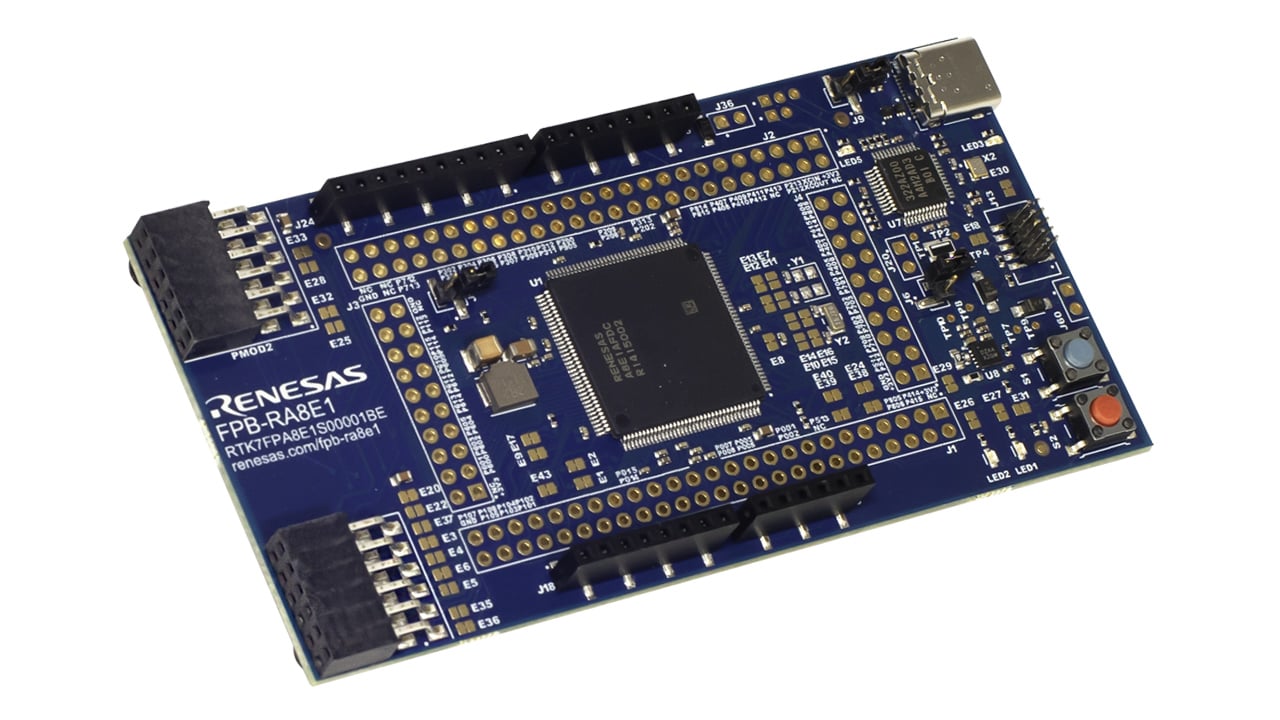
Renesas has introduced its most powerful Cortex-A85 microcontroller to date: the R8P1, clocked at 1 GHz and equipped with a 500 MHz Arm Ethos-U55 NPU for edge AI applications, as well as an Arm Cortex-M33 real-time core clocked at 250 MHz. With a 2D GPU, MIPI DSI and parallel RGB display interfaces, MIPI CSI and parallel camera interfaces, and I2S and PDM audio interface, the Renesas RA8P1 is mainly designed to address Voice AI and Vision AI applications requiring real-time analytics. The 1 GHz microcontroller also has plenty of other peripherals and security features, as we can see from the specifications and block diagram below. Renesas RA8P1 specifications: MCU core Arm Cortex-M85 clocked at 1 GHz with Helium MVE (M-Profile Vector Extension) with 32KB I/D caches; 7300+ CoreMarks Arm Cortex-M33 clocked at 250 MHz with 32KB I/D caches GPU – 2D drawing engine NPU – Arm Ethos-U55 NPU delivering 256 […]

Nexus RP2350 LiPo board improves on Raspberry Pi Pico 2 with LiPo battery support, 16MB flash, USB-C port

Nexus RP2350 LiPo board

Zaitronics Nexus RP2350 LiPo is a Raspberry Pi RP2350 board similar to the Raspberry Pi Pico 2, but with various improvements, namely support for LiPo batteries, a 16MB SPI flash, a USB-C port, and a Qwiic/STEMMA QT expansion connector. The Australian company says that apart from those improvements, the board has the same size and pinout as the original Raspberry Pi Pico 2, and if there’s enough interest, a Nexus RP2350 LiPo W board adding WiFi and Bluetooth may also be designed in the future. Nexus RP2350 LiPo specifications: SoC – Raspberry Pi RP2350A CPU Dual-core Arm Cortex-M33 @ 150 MHz with Arm Trustzone, Secure boot OR Dual-core RISC-V Hazard3 @ 150 MHz Either two cores can be used. Memory – 520 KB on-chip SRAM Security 8KB of anti-fuse OTP for key storage Secure boot (Arm only) SHA-256 acceleration Hardware TRNG Fast glitch detectors. Package – QFN-60 Storage – 16 […]

$2 development board features Puya PY32F030 Cortex-M0+ MCU with 64KB Flash, 8KB RAM

Puya PY32F030 development board

The Puya PY32F030 core board is a low-cost industrial development board based on the 48 MHz PY32F030K28T6 Arm Cortex-M0+ MCU, featuring 64KB flash and 8KB RAM, and capable of operating in a wide temperature range of -40°C to 105°C. It supports USB, SPI, I2C, UART, and I2S interfaces, and is designed for applications such as IoT, robotics, and automation in harsh environments. We have written about various low-cost MCUs over the past. Back in 2019, we wrote about the Padauk PMS150C, a 3-cent 8-bit MCU with 64 bytes of RAM, up to 6 I/Os, PWM, and basic peripherals. Then in 2022, the WCH CH32V003 made headlines with a 32-bit RISC-V core, 2KB SRAM, 16KB flash, and a 10-cent price tag. After that, in 2023, we discovered the Puya PY32 series of MCUs. It was an 8-cent MCU with an Arm Cortex-M0+ core, 32KB flash, and 4KB RAM, and was found […]

GigaDevice GD32C231 entry-level Arm Cortex-M23 MCU ships with 12KB ECC SRAM, 32KB or 64KB ECC flash

GigabiDevice GD32C231 low cost Cortex M23 MCU

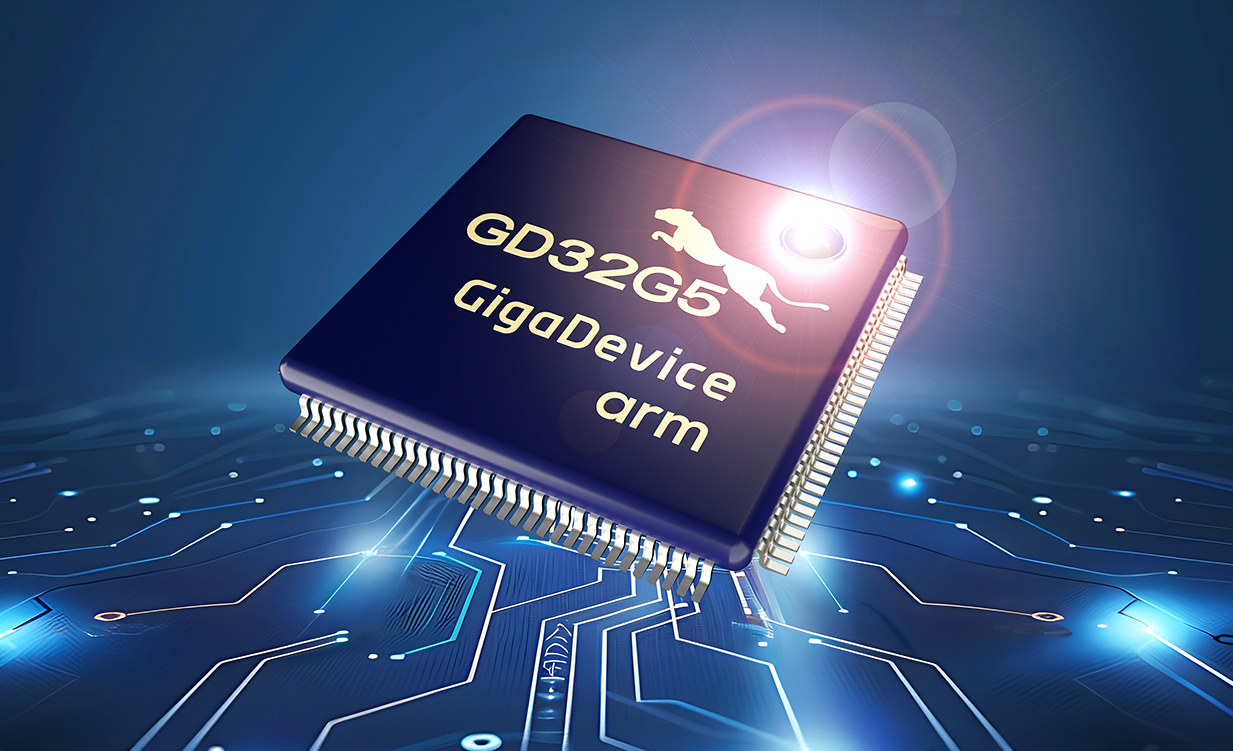
GigaDevice GD32C231 entry-level microcontroller is built around a 48 MHz Arm Cortex-M23 core with up to 64KB ECC flash, 12KB ECC SRAM, and is offered in 20-pin to 48-pin packages with up to 45 GPIOs, a range of peripherals, analog inputs, and timers. The company says the GD32C231 series targets cost-effective small home appliances, BMS (Battery Management Systems), small-screen display devices, battery-powered handhelds, industrial auxiliary controls, and automotive aftermarket systems. GigaDevice GD32C231 key features and specifications: Core – Arm Cortex-M23 @ up to 48 MHz Memory – 12KB SRAM with ECC Storage – 32KB or 64KB flash with  ECC Audio – 1x I2S Low-speed Peripherals Up to 45x GPIO Up to 3x USART, 2x I2C, 2x SPI Analog 12-bit ADC with 13 channels 2x analog comparators Timers 4x 16-bit general-purpose (GP) timers 16-bit Advanced (AD) timer RTC IWDG, WWDG 24-bit SysTick Misc – CRC module Supply Voltage – 2.3 to […]

Exit mobile version