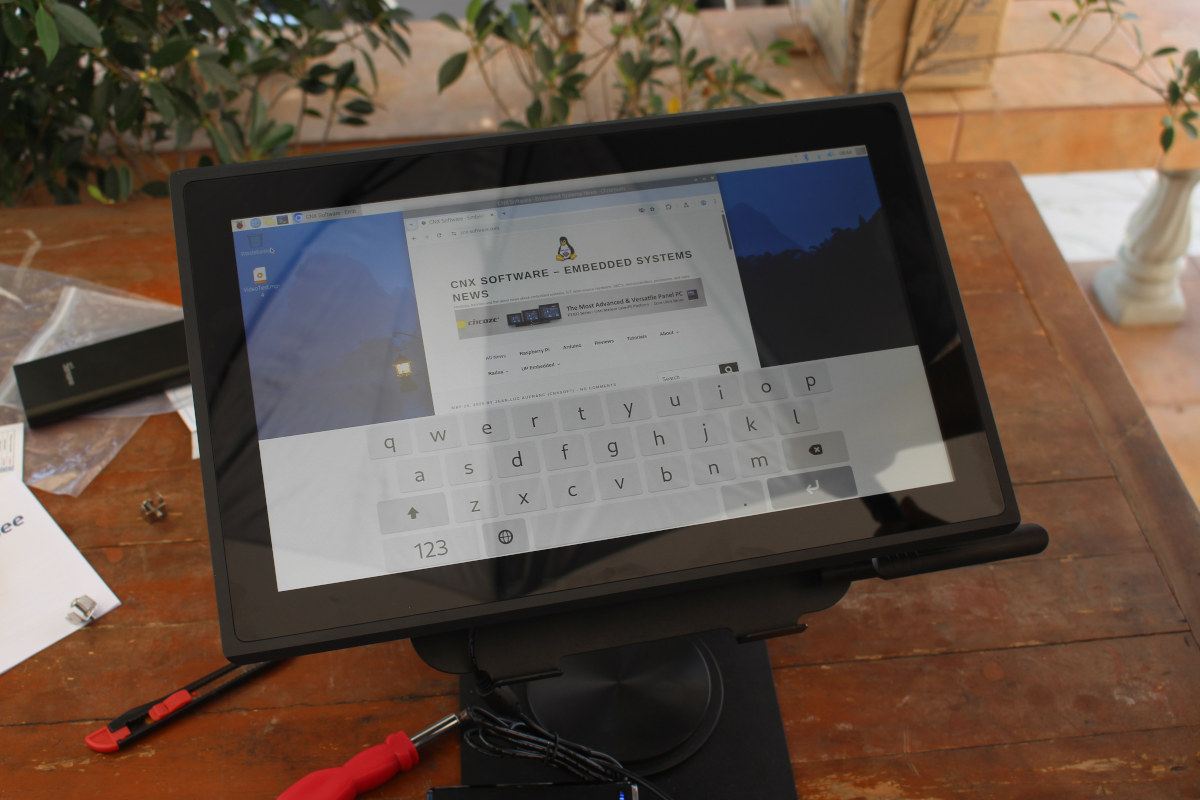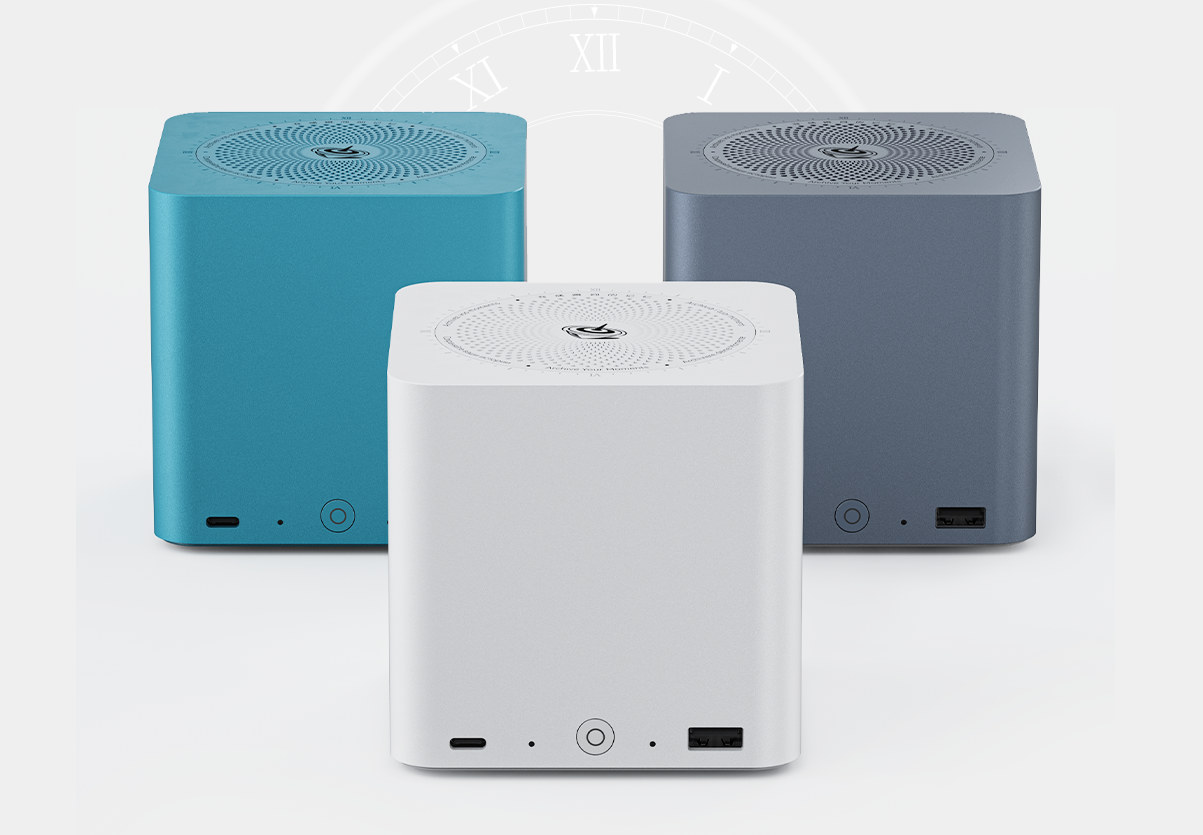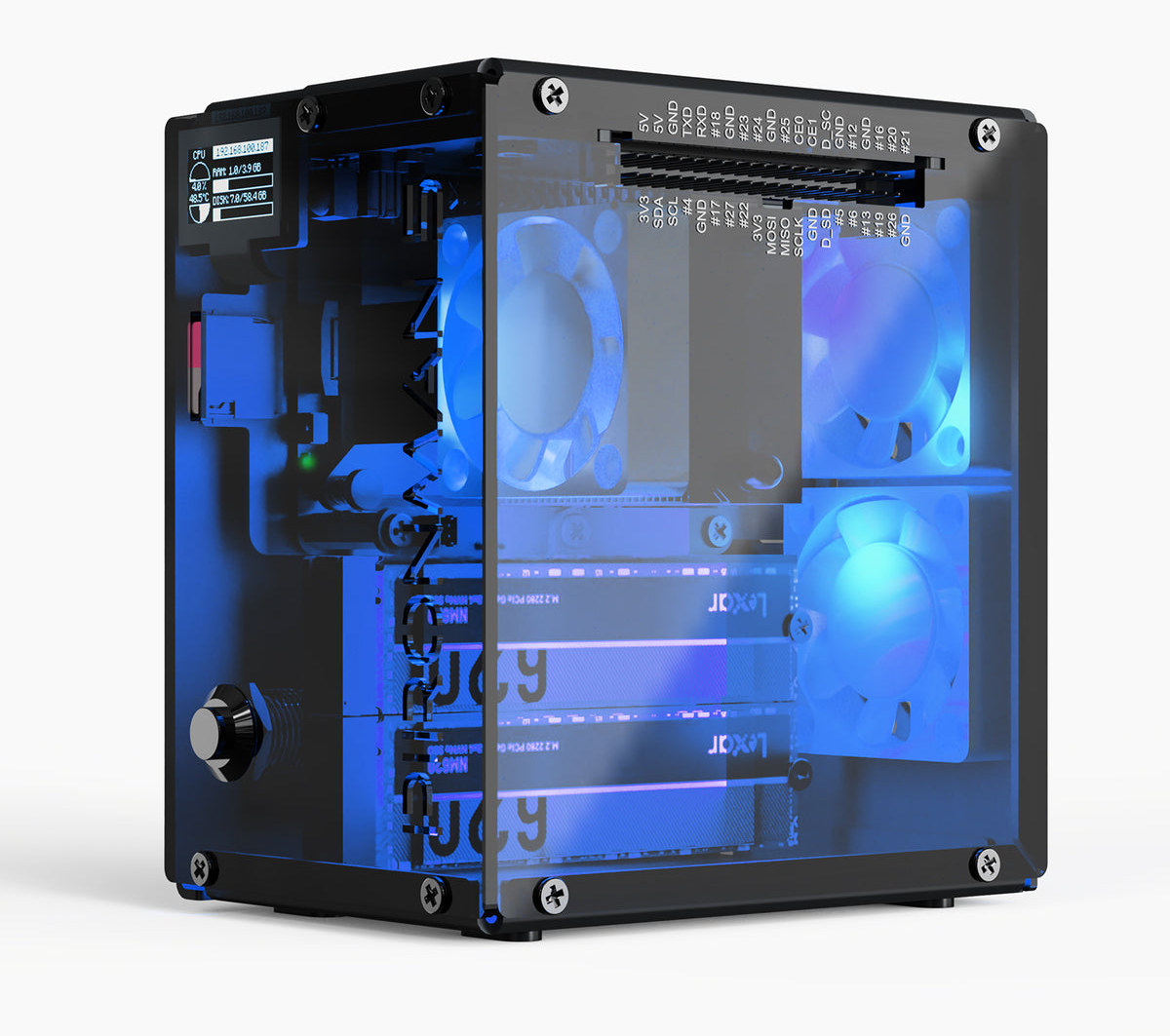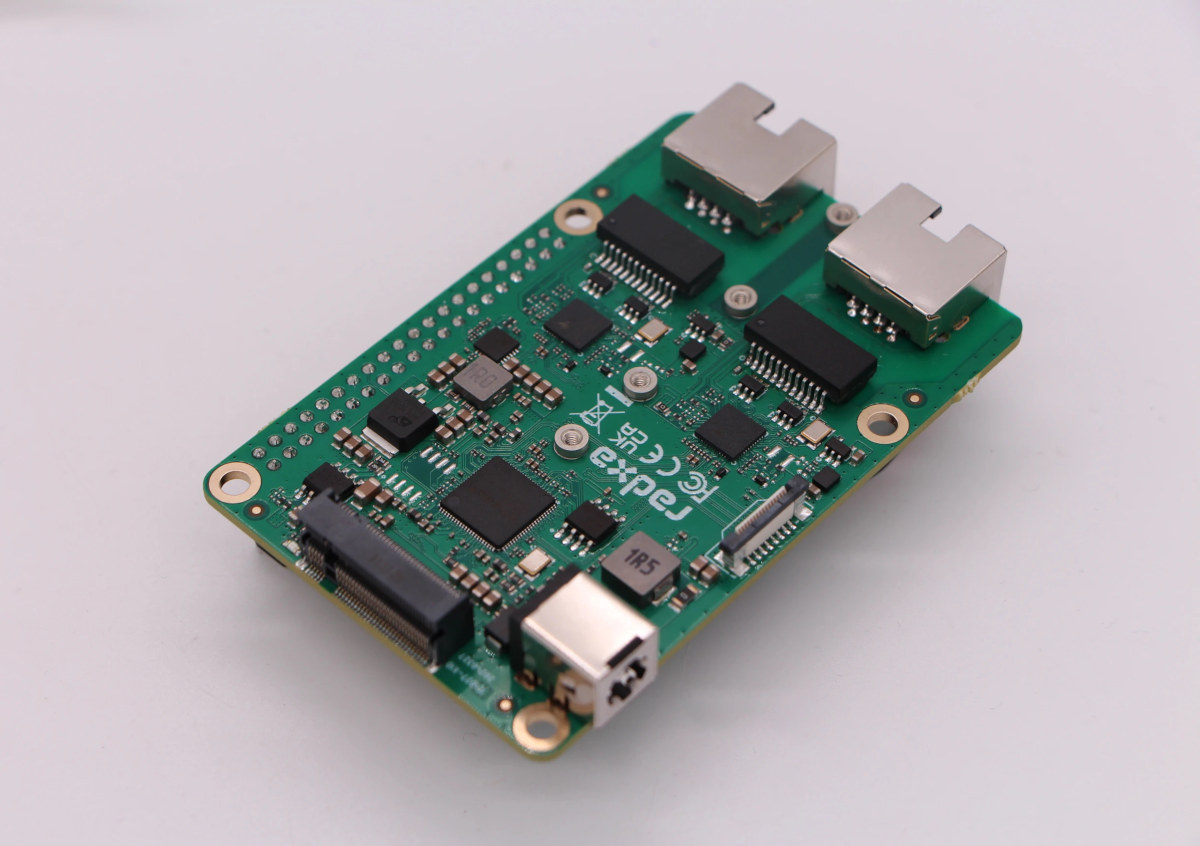
Beelink ME Pro is a compact 2-bay hybrid NAS and Windows 11 mini PC built around Intel N95 (Alder Lake-N) or N150 (Twin Lake) SoC, and equipped with two 3.5-/2.5-inch SATA bays and three M.2 2280 NVMe slots for storage. It also features a “DIY drawer” design that lets users swap the motherboard for upgrades. The system also features up to 16 GB of LPDDR5 memory, 5 GbE and 2.5 GbE networking, Wi-Fi 6, Bluetooth 5.4, and various I/Os, including USB-C (10 Gbps), USB-A, HDMI 2.0, and a 3.5 mm audio jack. An internal blower-based cooling system, an aluminum chassis with thermal pads, and anti-vibration drive mounts help with improved thermals and noise control. Target applications include home NAS, media server, Proxmox/TrueNAS host, small office file server, lightweight virtualization, backup appliance, and compact desktop PC. Beelink ME Pro specifications: SoC(one or the other) Intel Processor N95 quad-core “Alder Lake-N” processor […]
TerraMaster D1 SSD Pro – A Thunderbolt 5 fanless SSD enclosure with 80Gbps bandwidth, 7GB/s practical performance
TerraMaster has recently launched the D1 SSD Pro Thunderbolt 5 fanless enclosure, an update to the previous Thunderbolt 4-based TerraMaster D1 SSD Plus. The new version features an 80Gbps Thunderbolt 5 port, supports M.2 2280 NVMe SSDs with up to 8TB capacity, and has been tested at up to 7,061MB/s read and 6,816MB/s write speeds, nearly doubling Thunderbolt 4 performance. The enclosure uses a fanless, CNC-machined aluminum design that enables silent operation through passive heat dissipation. It also features smart LED indicators for connection speed, and offers compatibility with Thunderbolt 5/4/3, USB4, and USB 3.2 across Windows, macOS, and Linux, including boot support on macOS. With various protection features (short-circuit, surge, ESD) and a compact, rugged design, it is suited for 8K/4K video editors, power MacBook users, gamers who need real-time editing, ultra-fast transfers, and reliable external boot or workspace storage. TerraMaster D1 SSD Pro specifications Performance (claimed) – Up […]
MUSE Book laptop review – Testing an octa-core RISC-V Linux laptop in 2026
SpacemiT sent me a sample of the MUSE Book RISC-V Linux laptop for review. It’s based on the SpacemiT K1/M1 octa-core 64-bit RISC-V SoC, ships with up to 16 GB of RAM, eMMC flash and/or NVMe SSD, and features a 14.1-inch IPS display with 1920×1080 resolution, WiFi 6 connectivity, a few USB ports, and more. I won’t go through all the hardware specifications since Leo already did that when he wrote about the MUSE Book Laptop in April 2024, along with a teardown, and additional details about the SpacemiT K1/M1 SoC. I’ll still do an unboxing and quickly check the hardware, but I’ll focus on the software part to show the progress with Bianbu OS 2.3 (Ubuntu 24.04-based) on RISC-V hardware, as I just did for the low-end StarFive JH7110S-based VisionFive 2 Lite SBC. It’s quite a long review, so if you are short on time, you can jump directly […]
VisionFive 2 Lite SBC Review – Ubuntu 24.04 on a low-cost RISC-V SBC in 2026
StarFive has sent me a sample of the VisionFive 2 Lite RISC-V SBC for review. It’s a low-cost credit card-sized board based on the StarFive JH7110S quad-core RISC-V SBC and designed to get started with Linux RISC-V on the cheap. When I first tested the earlier VisionFive 2 SBC with a StarFive JH7110 RISC-V SoC in February 2023, I didn’t call it a review, but rather a hands-on experience, since, at the time, many features still didn’t work properly. Almost three years have passed since then, so reviewing the VisionFive 2 Lite SBC with Ubuntu 24.04 will allow us to see how much progress has been made on the software side. If you are in a rush, you can jump to the what works, what doesn’t section. VisionFive 2 Lite unboxing I received the board in a plastic box with a cover reading “VisionFive 2 Lite Your Gateway to RISC-V”. […]
UP Squared Pro TWL AI Dev Kit Review – Intel N150 + Hailo-8L accelerator tested on Ubuntu 24.04
I’ve been asked to review three Intel-based UP AI development kits running Ubuntu 24.04 Pro. Last time, I tested the UP TWL SBC with Nx Meta and UP AI Toolkit, and most AI workloads would pass, but since these were running on the Intel N150 CPU or GPU, the performance was not optimal for most. I’ll now switch to the UP Squared Pro TWL “mid-range” AI devkit review with another Intel Processor N150 SBC fitted with a 13 TOPS Hailo-8L M.2 AI accelerator. Both the UP TWL and UP Squared Pro TWL come with a 64GB eMMC flash, and I found out it was rather tight since AI software and models can take a lot of space. The UP Squared Pro TWL has a few M.2 sockets, so I’ll install an NVMe SSD to expand storage before installing the UP AI toolkit. As usual, I’ll run a few benchmarks and […]
Waveshare’s updated Raspberry Pi 5 dual micro HDMI to HDMI adapter adds NVMe storage support
Waveshare has recently released the Pi5 Connector Adapter (C), an upgraded version of its earlier Pi5 Connector Adapter, adding support for M.2 NVMe SSDs and enabling direct OS booting from an SSD. The board connects to the Raspberry Pi 5 via its 16-pin PCIe interface and supports M.2 NVMe SSDs in 2230/2242 sizes with PCIe Gen2/Gen3 speeds. It also converts the Pi’s micro HDMI ports into full-size HDMI connectors and brings all ports on one side next to the USB and Ethernet ports of the SBC. It offers two methods for power: a USB-C input or a screw-terminal supply. Pi5 Connector Adapter (C) specifications: Supported SBC – Raspberry Pi 5 (it can support the Raspberry Pi 4B too, but the SSD functionality will not work) Storage – M.2 M-key 2230 / 2242 socket for NVMe SSD (support direct OS boot) Display – 2x HDMI outputs via 2x micro HDMI input […]
COM-HPC Mini Computer-on-Module (CoM) features up to Intel Core Ultra 7 255H “Arrow Lake” processor
AAEON HPC-ARHm is a COM-HPC Mini R1.2 module powered by a choice of 28W Intel Core Ultra Arrow Lake and Meteor Lake processors with Intel Arc/Arc 140T/130T GPU and up to 96 TOPS of combined AI performance. The Computer-on-Module supports up to 64GB LPDDR5x, offers three 4K-capable display interfaces through two DDI (DP/HDMI) and one eDP interface, dual 2.5GbE networking, twelve USB interfaces, including four 10 Gbps USB 3.2, sixteen PCIe Gen4/Gen3 lanes, and more. It primarily targets Edge AI solutions such as UAVs, robots, IC testing equipment, and healthcare imaging devices. HPC-ARH-m COM-HPC Mini module specifications: Meteor Lake-H or Arrow Lake-H SoC (one or the other) Intel Core Ultra 5 125H 14-core/18-thread (4P+8E+2LPE) processor @ up to 4.9 / 3.6 / 2.5 GHz with 18MB cache, 7x Xe-Cores Intel Arc graphics @ 2.2 GHz (18 TOPS), Intel AI Boost NPU (11 TOPS); PBP: 28W Intel Core Ultra 7 155H […]
Turris Omnia NG Wi-Fi 7 router features dual 10GbE SFP+, mini PCIe slot for 4G LTE/5G, runs OpenWrt-based Turris OS
The Turris Omnia NG is a high-performance Wi-Fi 7 router with a mini PCIe slot for 4G/5G modems, two 10GbE SFP+ cages, a 240×240 px color display, and a D-Pad button, running OpenWrt-based Turris OS, and designed for advanced home users, small businesses, and lab environments. Built around a 2.2 GHz Qualcomm IPQ9574 quad-core 64-bit Arm Cortex-A73 CPU, the Omnia NG supports Wi-Fi 7/6 tri-band connectivity. Additionally, it features four 2.5Gbps Ethernet ports, two USB 3.0 ports, NVMe storage support, and includes a 90 W power supply for attached peripherals. Other hardware highlights include rack-mount supports, a metal chassis, and antenna arrays for 4×4 MIMO operation. It comes 10 years after the original Turris Omnia open-source router was launched on Indiegogo. Turris Omnia NG Router specifications: CPU – Qualcomm IPQ9574 quad-core Arm Cortex-A73 processor @ 2.2GHz processor Memory – 2 GB RAM Storage 8 GB eMMC storage M.2 socket for […]