
Pine64 Ox64 is a single board computer powered by Bouffalo Lab BL808 dual-core 64-bit/32-bit RISC-V processor with up to 64MB embedded RAM, multiple radios for WiFi 4, Bluetooth 5.0, and 802.15.4 (Zigbee), as well as an AI accelerator. The board also features up to 16MB XSPI NOR flash, a MicroSD card socket, a USB 2.0 OTG port with support for a 2-lane MIPI CSI camera module, and two 20-pin GPIO headers for expansion. It measures just 51 x 21mm, or in other words, is about the size of a Raspberry Pi Pico W. Pine64 Ox64 specifications: SoC – Bouffalo Lab BL808 with: CPU Alibaba T-head C906 64-bit RISC-V core @ 480MHz Alibaba T-head E907 32-bit RISC-V core @ 320MHz Alibaba T-head E902 32-bit RISC-V @ 150MHz Memory – 728KB SRAM, 64MB embedded DRAM AI accelerator – NPU BLAI-100 (Bouffalo Lab AI engine) for video/audio detection/recognition Wireless 2.4 GHz 802.11 b/g/n […]
SBC Case Builder 2.0 released with GUI
SBC Case Builder 2.0 tool to create enclosures for single board computers has been released with a customizer graphical user interface, additional cases & SBCs, support for variable height standoffs, and more. We wrote about the SBC Case Builder tool to easily generate various types of 3D printable enclosures using OpenSCAD earlier this year. The SBC Model Framework used in the solution was focused on ODROID boards, and you had to type the parameters in a configuration file. SBC Case Builder 2.0 software changes that with a convenient-to-use graphical interface allowing for the dynamic adjustment of any of the case attributes. The new version of the software also supports variable height standoffs, multi-associative parametric accessory positioning, and offers 8 “base cases”, namely shell, panel, stacked, tray, round, hex, snap, and fitted. The solution works with 47 SBCs defined in the latest version of the SBC Model Framework. The following SBCs […]
Pinecil V2 soldering iron gets BL706 Bluetooth LE RISC-V MCU, USB PD EPR support
PINE64 is about to launch the second generation Pinecil RISC-V soldering iron with the Pinecil V2 featuring a new Bouffalo Lab BL706 RISC-V microcontroller with Bluetooth LE connectivity, optimizations for higher power levels, as well as tentative support for the new USB PD EPR standard (Extended Power Range) working at up to 28V. I don’t solder every day, but when I do, I use my Pinecil soldering iron, as it’s heating super fast and does the job, and in my case, works quite better than the TS100 soldering iron. So it should come as no surprise that the Pincel is the most popular consumer hardware from the PINE64 community (after SOPine modules), and the new Pinecil V2 is a welcome upgrading building on the same design but with Bluetooth LE connectivity and a lower tip resistance. Pinecil V2 preliminary specifications: MCU – Bouffalo Lab BL706 32-bit RISC-V microcontroller @ 144 […]
MNT Pocket Reform 7-inch modular mini laptop takes a range of Arm (and FPGA) modules
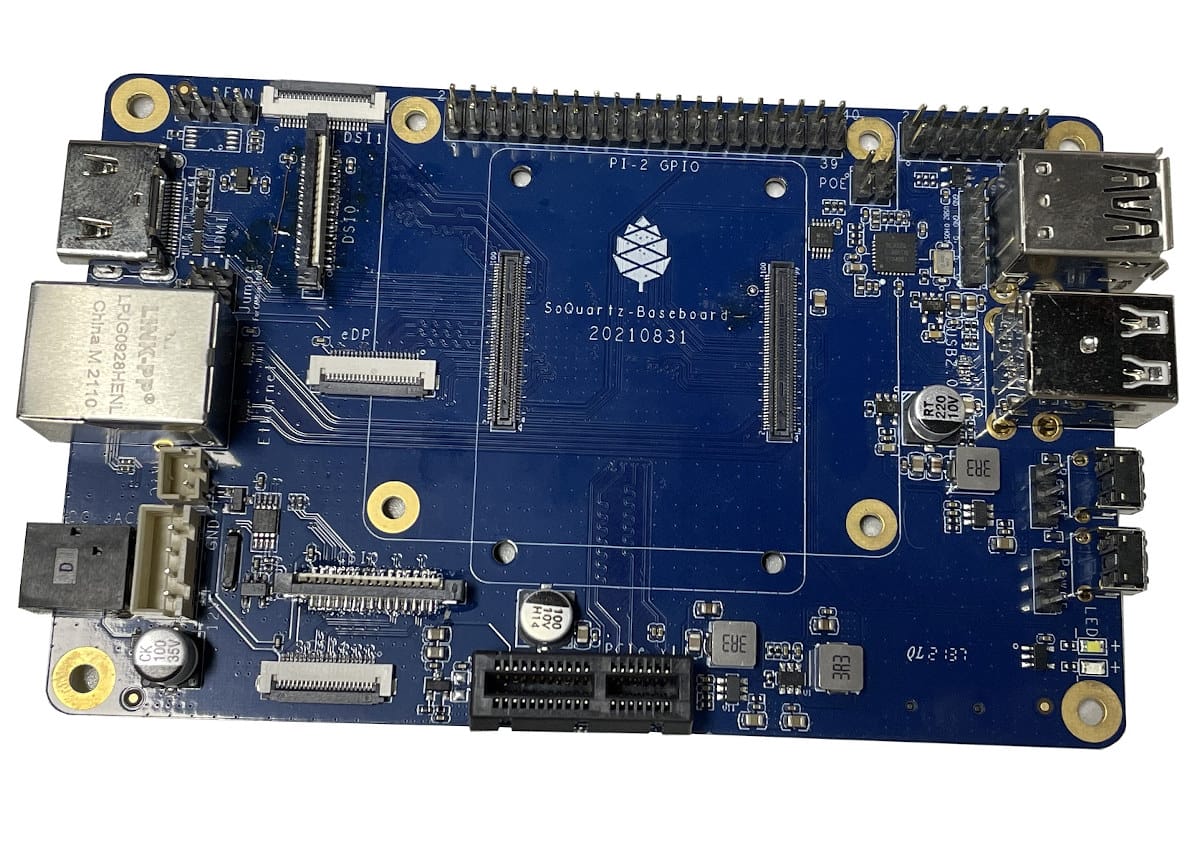
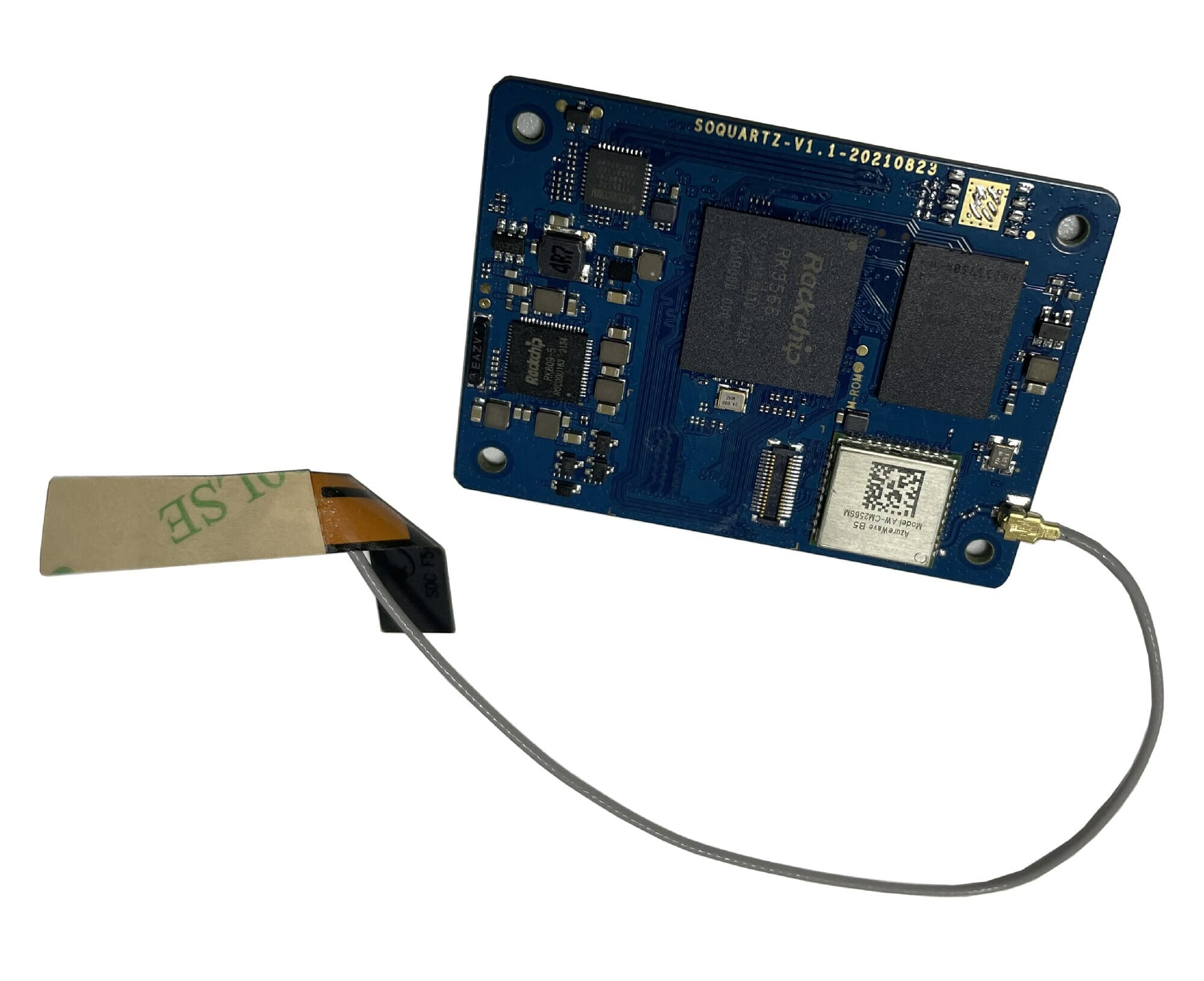
MNT Pocket Reform is an open-source hardware mini laptop with a 7-inch Full HD display, an ortholinear mechanical keyboard, and trackball, that follows the path of its older and bigger sibling: the MNT Reform 2 laptop initially launched with an NXP i.MX 8M quad-core Arm Cortex-A53 module. The new laptop will not only support a similar “NXP i.MX 8M Plus” module but also a range of other Arm modules namely an NXP Layerscape LS1028A module with up to 16GB RAM, the Raspberry Pi CM4 module via an adapter, Pine64 SOQuartz (RK3566, up to 8GB RAM), as well as based on AMD Xilinx Kintex-7 FPGA for industrial use. MNT Pocket Reform specifications: Available system-on-modules Standard: NXP i.MX 8M Plus quad-core Arm Cortex-A53 @ 1.8GHz with 4 or 8 GB DDR4, Vivante GC7000UL GPU, 2.3 TOPS NPU NXP Layerscape LS1028A dual-core Arm Cortex-A72 with 8 or 16GB DDR4, Vivante GC7000UL GPU Raspberry […]
Quartz64 Model B SBC with 4GB RAM is now available for $59.99
While it may be hard to buy a Raspberry Pi these days, there are various alternatives with the Raspberry Pi 3/4 form factor, including Pine64’s Quartz64 Model B SBC powered by a Rockchip RK3566 processor that has just launched for $59.99 with 4GB RAM. The Quartz64 Model B is a smaller version of the Quartz64 Model A launched earlier this year, that comes with HDMI 2.0a and MIPI DSI display interfaces, a MIPI CSI camera interface, Gigabit Ethernet, WiFi 5 and Bluetooth 5.0, as well as several USB 2.0/3.0 ports, and of course, a 40-pin Raspberry Pi compatible GPIO header. Quartz64 Model B specifications: SoC – Rockchip RK3566 quad-core Cortex-A55 processor up to 1.8 GHz with Arm Mali-G52 GPU supporting OpenGL ES 1.1/2.0/3.2, OpenCL 2.0, Vulkan 1.1, 0.8 TOPS NPU for AI acceleration System Memory – 4GB LPDDR4 Storage 128 Mbit SPI Flash optional eMMC module from 16GB up to […]
Linux 5.18 release – Main changes, Arm, RISC-V, and MIPS architectures
Linux 5.18 is out! Linus Torvalds has just announced the release on lkml: No unexpected nasty surprises this last week, so here we go with the 5.18 release right on schedule. That obviously means that the merge window for 5.19 will open tomorrow, and I already have a few pull requests pending. Thank you everybody. I’d still like people to run boring old plain 5.18 just to check, before we start with the excitement of all the new features for the merge window. The full shortlog for the last week is below, and nothing really odd stands out. The diffstat looks a bit funny – unusually we have parsic architecture patches being a big part of it due to some last-minute cache flushing fixes, but that is probably more indicative of everything else being pretty small. So outside of the parisc fixes, there’s random driver updates (mellanox mlx5 stands out, […]
PineSound is a development board for earbuds and digital audio players
You may have read Pine64’s April’s Fools spoof about the PineBuds and PinePod earlier this month. It turns out those will be real, and the Pine64 PineSound development board will be used to bring the PineBuds earbuds and PinePod digital audio player to market. The PineSound board features Bestechnic BES2300 Bluetooth 5.0 audio chip, two coaxial & optical input and output, a 3.5mm headphone jack, 4.4mm and 2.5mm balanced jacks, an SMA connector, a USB Type-C connector, plus interfaces for a touchscreen display. PineSound preliminary specifications: WiSoC – Bestechnic BES2300-YP dual-core Arm Cortex-M4F @ up to 300 MHz with HW DSP instruction, 992KB SRAM, 4MB flash, Bluetooth 5.0 dual mode. Supports hybrid ANC (active noise cancellation) and TWS (true wireless stereo). Note: the datasheet has been made available in the comments section. Display – LCD (should be SPI) and touch panel connectors Audio Coaxial & optical input (left) Coaxial & […]
Capyloon mobile Web-based OS works on Pinephone Pro, Librem 5, Pixel 3a
Capyloon is an experimental Web-based OS leveraging b2gOS that served as the base for the now-defunct Firefox OS. The developers’ goal is to provide an open-source OS improving privacy and user control through web technologies. It’s still early stage, and some of the technologies used include the IPFS protocol, WebAssembly plugins, and the Tor network. Capyloon is more like a new phone shell as it replaces Phosh when installing it in a Linux smartphone. The first version of Capyloon released last month worked on Pixel 3a, other Android phones through a generic system image, and 64-bit x86 Debian machines. But since then, the developers added support for Apple M1, and yesterday they released Debian packages for PinePhone Pro and Librem 5 Linux smartphones to run Capyloon on top of a Mobian image. Instructions are as follows: Download the Debian package for PinePhone Pro or Librem 5 Install the package withsudo […]