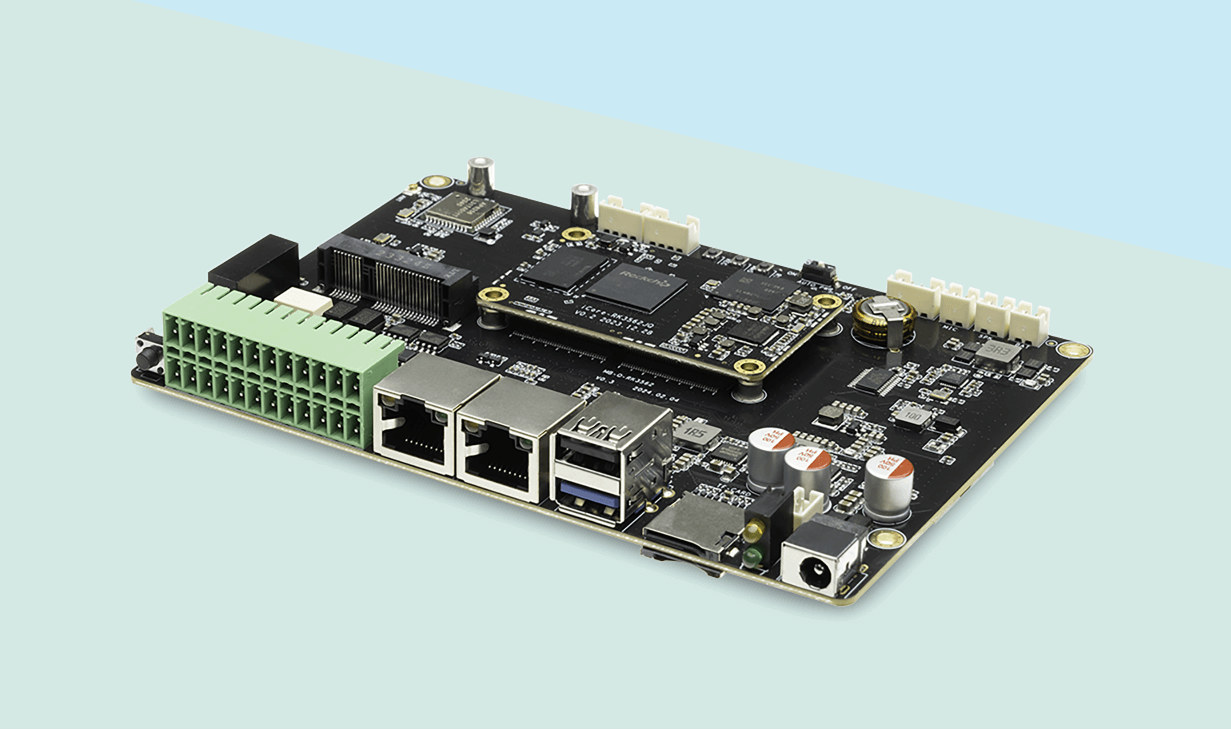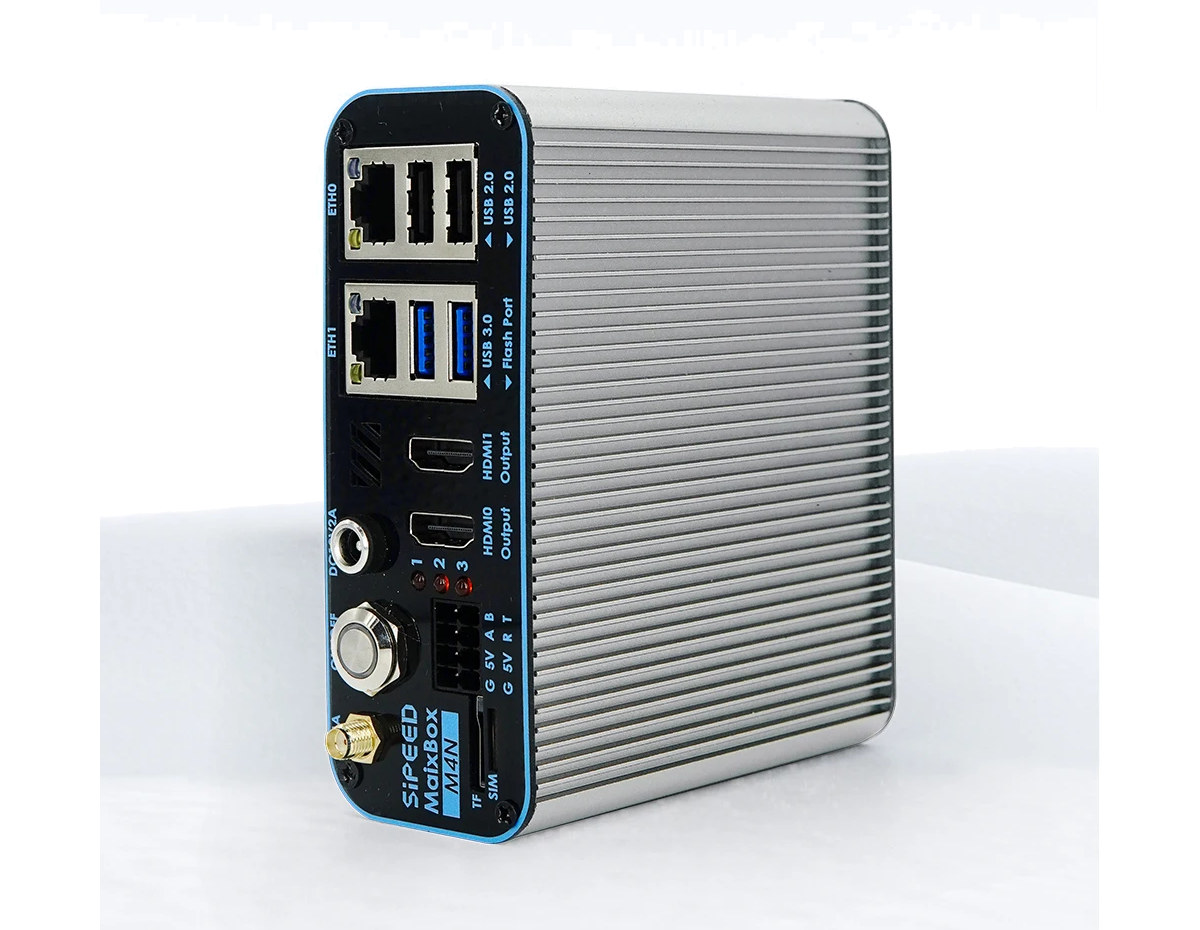
Forlinx Embedded UP4 is a new family of pin-to-pin compatible system-on-modules currently offered with Rockchip RK3568J/RK3562J, NXP i.MX 9352, or Allwinner T527N/T536 processors. The UP4 modules measure just 40×40 mm and expose 487 pins through a hybrid LCC (Leadless Chip Carrier) and LGA (Land Grid Array) design with 1.0mm contact pitch and 1.27mm ball pitch, respectively. This should allow companies to design a single carrier board for multiple CPU variants. Forlinx UP4 specifications: SoC FET-MX9352-UP4 – NXP i.MX 9352 with 2x Arm Cortex-A55 cores @ up to 1.7 GHz, Cortex-M33 real-time core @ 250 MHz, 2D GPU only, 0.5 TOPS Arm Ethos U65 microNPU FET3568-UP4 – Rockchip RK3568B2/J with 4x Arm Cortex-A55 cores @ up to 2.0/1.8 GHz, Arm Mali-G52 MP2 3D GPU, 1 TOPS AI NPU FET3562J-UP4 – Rockchip RK3562J with 4x Arm Cortex-A53 cores @ 1.8 GHz, Arm Mali-G52-2EE 3D GPU, 1 TOPS NPU FET527N-UP4 – Allwinner T527N […]
AsteroidOS 2.0 open-source smartwatch OS released, now supports around 30 devices
AsteroidOS 2.0 Linux-based, open-source smartwatch operating system has just been released with features such as always-on display support, Tilt-to-Wake, a customizable QuickPanel, multiple launcher styles, Nightstand mode, performance improvements, and support for about 30 devices. It’s been a long journey. We first noted the open-source project in 2016 when Florent Revest showcased a basic user experience on the LG G Watch, just before giving a talk at FOSDEM 2016 introducing AsteroidOS. This was followed by the launch of the Connect Watch (crowdfunded) AsteroidOS smartwatch in 2017 by a French company (which didn’t get funded), and AsteroidOS 1.0 was released in 2018. So it’s been ten years since it all started, and the developers have now released AsteroidOS 2.0. AsteroidOS 2.0 highlights: New features Always-on Display, Tilt-to-wake, Palm-to-sleep Heart rate monitor app Initial step counting support Music volume control Compass support Support for Bluetooth HID and Audio Design, Usability, and App Improvements […]
Allwinner T153-based industrial SoM and SBC feature a mix of Arm Cortex-A7 and RISC-V cores
Forlinx has recently introduced the Allwinner T153-based FET153-S SoM and the OK153-S SBC. The Allwinner T153 processor features a hybrid architecture that combines a quad-core Arm Cortex-A7 CPU with an XuanTie E907 RISC-V core. The board features up to 1GB DDR3 RAM, 8GB eMMC, triple Gigabit Ethernet, dual CAN-FD, RS-485, and a Local Bus for PSRAM or FPGA expansion. Display options include support for RGB, LVDS, and MIPI DSI interfaces, and camera inputs are offered via parallel or MIPI CSI. Additional I/O include multiple UART, I²C, SPI, I²S, GPADC, and GPIO options, along with Wi-Fi/Bluetooth, a USB Type-C OTG port, and a Mini PCIe socket for 4G modules. Target applications include real-time control and edge computing, industrial automation, IoT gateways, and embedded systems. Forlinx FET153-S system-on-module Specifications: SoC – Allwinner T153 CPU 4x Arm Cortex-A7 cores @ up to 1.6GHz XuanTie E907 RISC-V core @ up to 600MHz GPU – 2D […]
Raspberry Pi-like Allwinner A527/T527 industrial SBC features dual camera support and AI acceleration
EBYTE has recently released an Allwinner A527/T527-based Raspberry Pi-like industrial SBC with dual camera and AI features, with a design very similar to the Walnut Pi 2B, and to a lesser extent, the Orange Pi 4A. It is designed for embedded, IoT, and smart commercial applications. The board supports up to 4GB LPDDR4 RAM, 32GB eMMC storage, and MicroSD card expansion. Display options include HDMI 2.0 and a 4-lane MIPI DSI interface enabling dual 4K output, while two 4-lane MIPI CSI connectors allow simultaneous camera inputs. Connectivity options include Gigabit Ethernet, Wi-Fi 4, Bluetooth 4.2, and a PCIe 2.1 x1 slot for high-speed expansion. It also features four USB 2.0 ports, a Type-C power interface, and a 40-pin Raspberry Pi-compatible GPIO header. EBYTE Allwinner A527/T527 SBC specifications: SoC – Allwinner T527 (industrial) / Allwinner A527 (commercial) CPU Octa-core Arm Cortex-A55 processor with four cores @ 1.80 GHz (T527) or 2.0 […]
EMAC SoM-35D1F industrial SO-DIMM SoM features NuvoTon MA35D1 SoC, two GbE interfaces
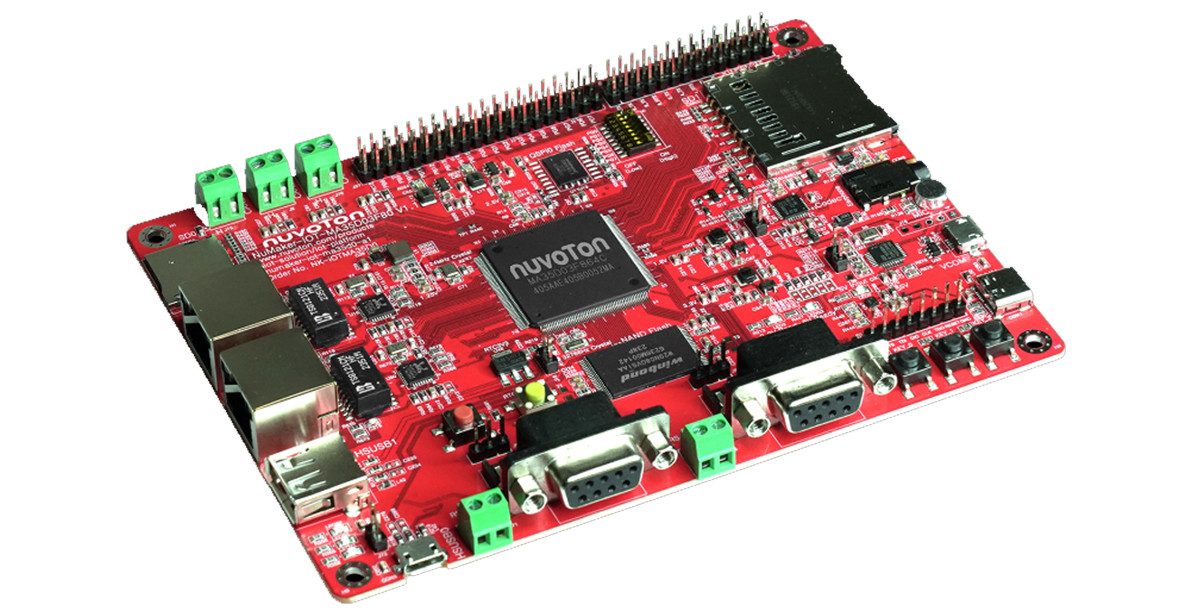
EMAC SoM-35D1F is an industrial-grade SoM built around the NuvoTon NuMicro MA35D1 dual-core Cortex-A35/M4 SoC with a 200-pin SO-DIMM edge connector. The module comes with 512MB DDR3L RAM and up to 16GB eMMC flash, and targets applications such as edge gateways, HMI systems, industrial automation, and smart energy systems. The SoM-35D1F also features dual Gigabit Ethernet, 4x serial interfaces (RS485/RS232), 2x CAN-FD, multiple USB 2.0 interfaces, I2S audio, SPI, I2C, and 14x GPIO. It also supports CSI camera input, a 24-bit LCD controller with resistive touch, and 12-bit ADCs for analog sensing. Additionally, it comes with security features like TrustZone, Secure Boot, and TSI (Trusted System Identity). EMAC SoM-35D1F specifications: SoC – Nuvoton NuMicro MA35D1 CPU 2x Arm Cortex-A35 cores at up to 800 MHz Arm Cortex-M4 processor core at up to 180 MHz GPU – 2D Graphic Engine (GFX) VPU – H.264 video decoder up to 1920×1080 @ 45 Hz; […]
Walnut Pi 2B is an Allwinner T527 octa-core SBC with Raspberry Pi 5 form factor and interfaces
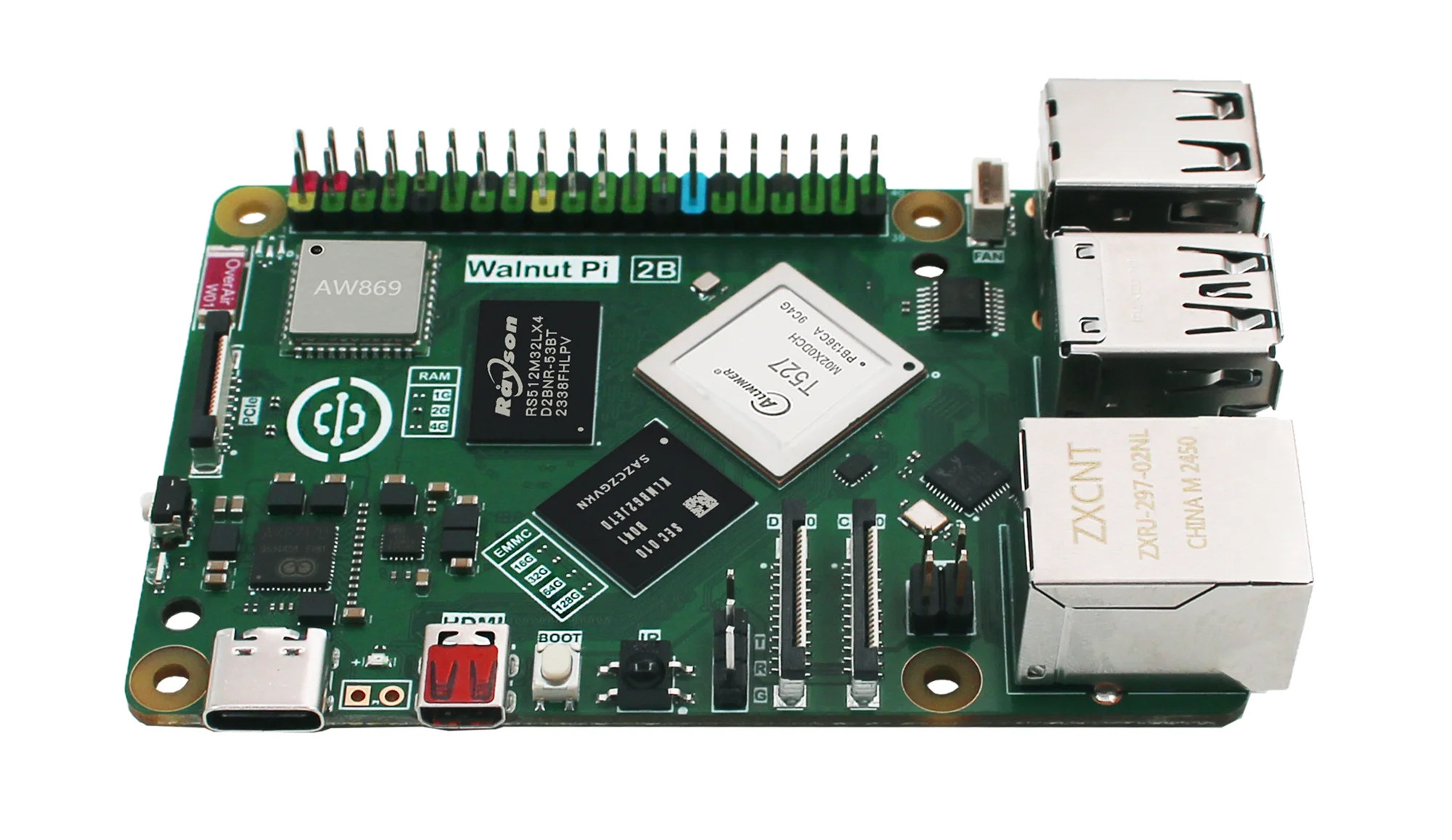
Walnut Pi 2B is a single board computer (SBC) powered by an Allwinner T527 octa-core Cortex-A55 SoC with a built-in 2 TOPS AI accelerator that closely follows the Raspberry Pi 5 design for compatibility with most HAT+ expansion boards and accessories. The Walnut Pi 2B SBC ships with 1GB to 4GB LPDDR4 RAM, an optional 32GB eMMC flash, and features a microSD card slot, gigabit Ethernet, four USB ports, a WiFI and Bluetooth module, MIPI DSI/CSI connectors, and the same PCIe FFC connector as found on the Raspberry Pi 5, and a 40-pin GPIO. One of the most obvious differences is that it only comes with one micro HDMI port instead of two on the Pi 5. Let’s check out the specifications to find other changes. Walnut Pi 2B specifications: SoC – Allwinner T527 CPU Octa-core Arm Cortex-A55 processor with four cores @ 1.80 GHz and four cores @ 1.42GHz […]
Haasoscope Pro open-source, real-time sampling USB oscilloscope supports up to 2GHz bandwidth (Crowdfunding)
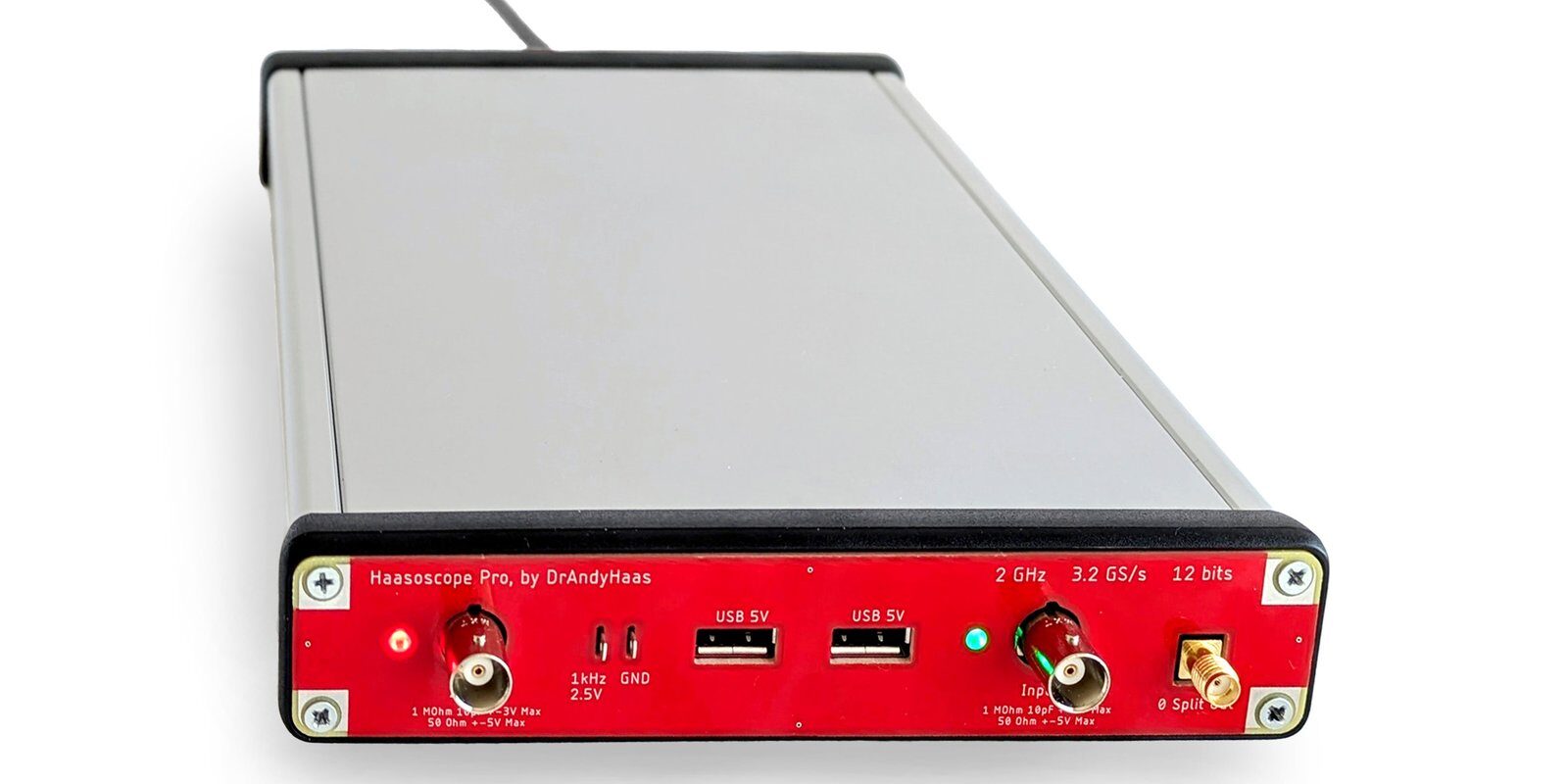
The Haasoscope Pro is an open-source hardware, high-bandwidth, and real-time sampling USB oscilloscope. Building upon its predecessor, the Haasoscope, the new Pro model offers a bandwidth of 2GHz, 12-bit resolution, and a 3.2GS/s sampling rate. The Haasoscope Pro USB oscilloscope is “designed to be low cost, while maintaining super-fast performance.” While it only comes with 2 channels, the flexible design makes it possible to combine and sync multiple devices (using Cat5 cables) to double the sample rate or add more channels. The oscilloscope works with standard x10 passive probes but a custom active probe, the Haasoscope Pro-be, is also offered. It supports the full 2GHz analog bandwidth and is priced much cheaper than similar probes. The Haasoscope Pro USB oscilloscope’s high sampling rate and bandwidth make it ideal for radio frequency signal analysis and high-speed digital debugging. It is similar to the ThunderScope Thunderbolt and PCIe oscilloscope which offers more […]
Graperain G3562 – A Rockchip RK3562 system-on-module and development board
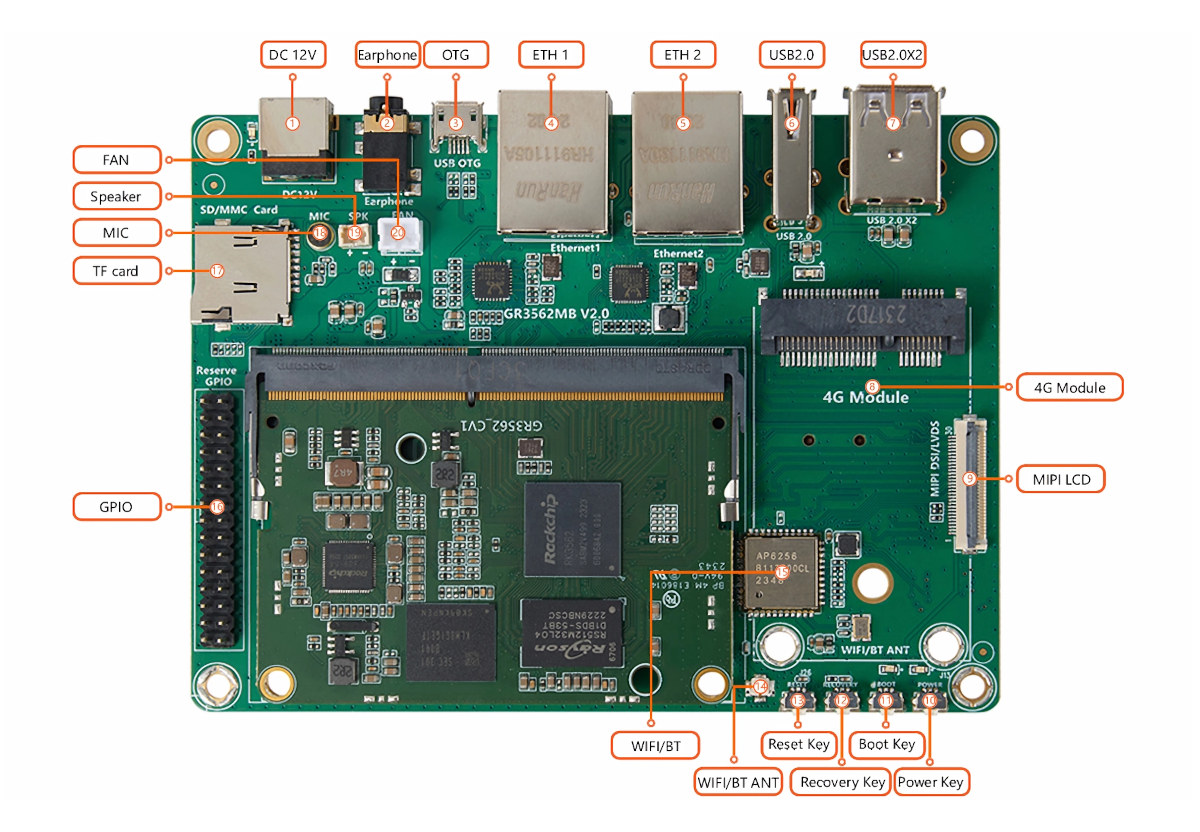
Graperain G3562 is a Rockchip RK3562 quad-core Cortex-A53 system-on-module (SoM) with up to 8GB LPDDR4, up to 128GB eMMC flash suitable for Edge AI, IoT, automation, and consumer electronic applications. The company also provides the G3562 development board for the SoM with an M.2 socket for NVMe SSD, dual Ethernet, WiFi 5 and Bluetooth 5.0, and optional 4G LTE/3G cellular connectivity, plus a MIPI DSI/LVDS display connector, two MIPI CSI camera connectors, three USB 2.0 ports, audio interfaces, and expansion through a 30-pin GPIO header and UART connector. Graperain G3562 SoM GrapeRain G3562 specifications: SoC – Rockchip RK3562 CPU – Quad-core Arm Cortex-A53 quad-core @ 2.0 GHz GPU – Mali-G52-2EE with support for OpenGL ES 1.1/2.0/3.2, OpenCL 2.0, Vulkan 1.0/1.1 AI accelerator – 1 TOPS (INT8) NPU VPU Encoder – H.264 1920×1080 @ 60fps Decoder – H.265/VP9 4096×2304 @ 30fps; H.264 1920×1080 @ 60fps RAM – 2GB LPDDR4 by default […]