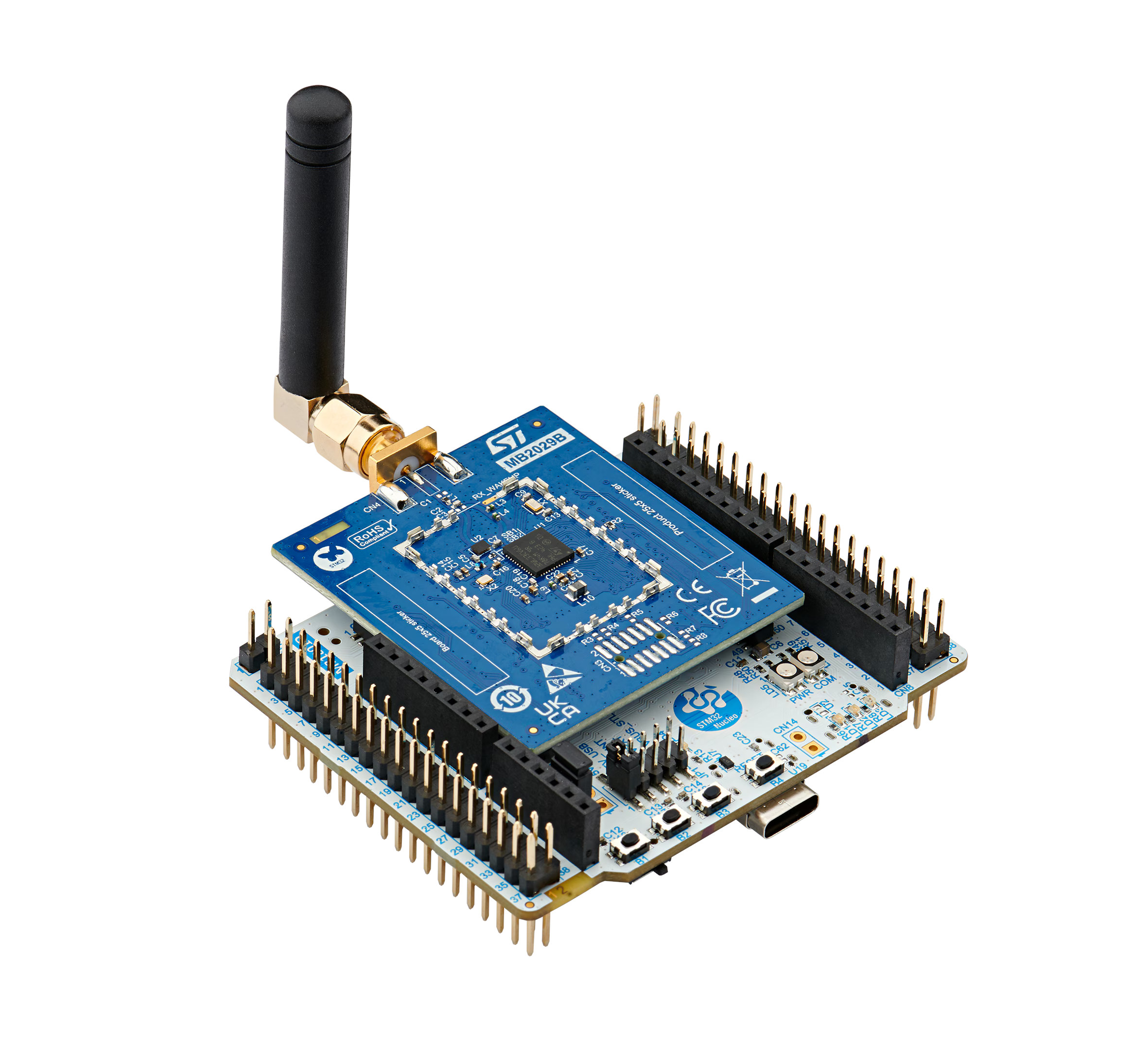
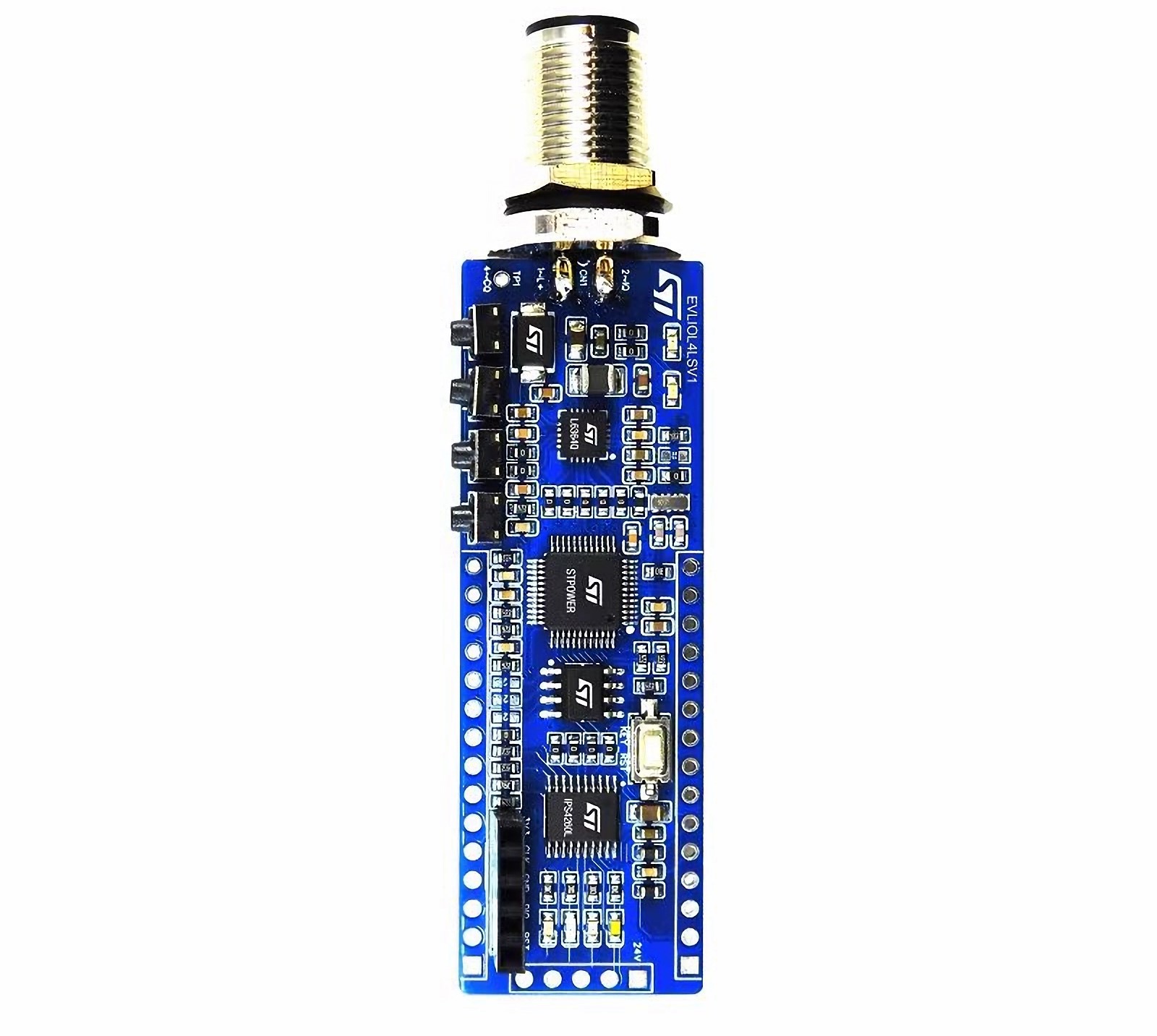
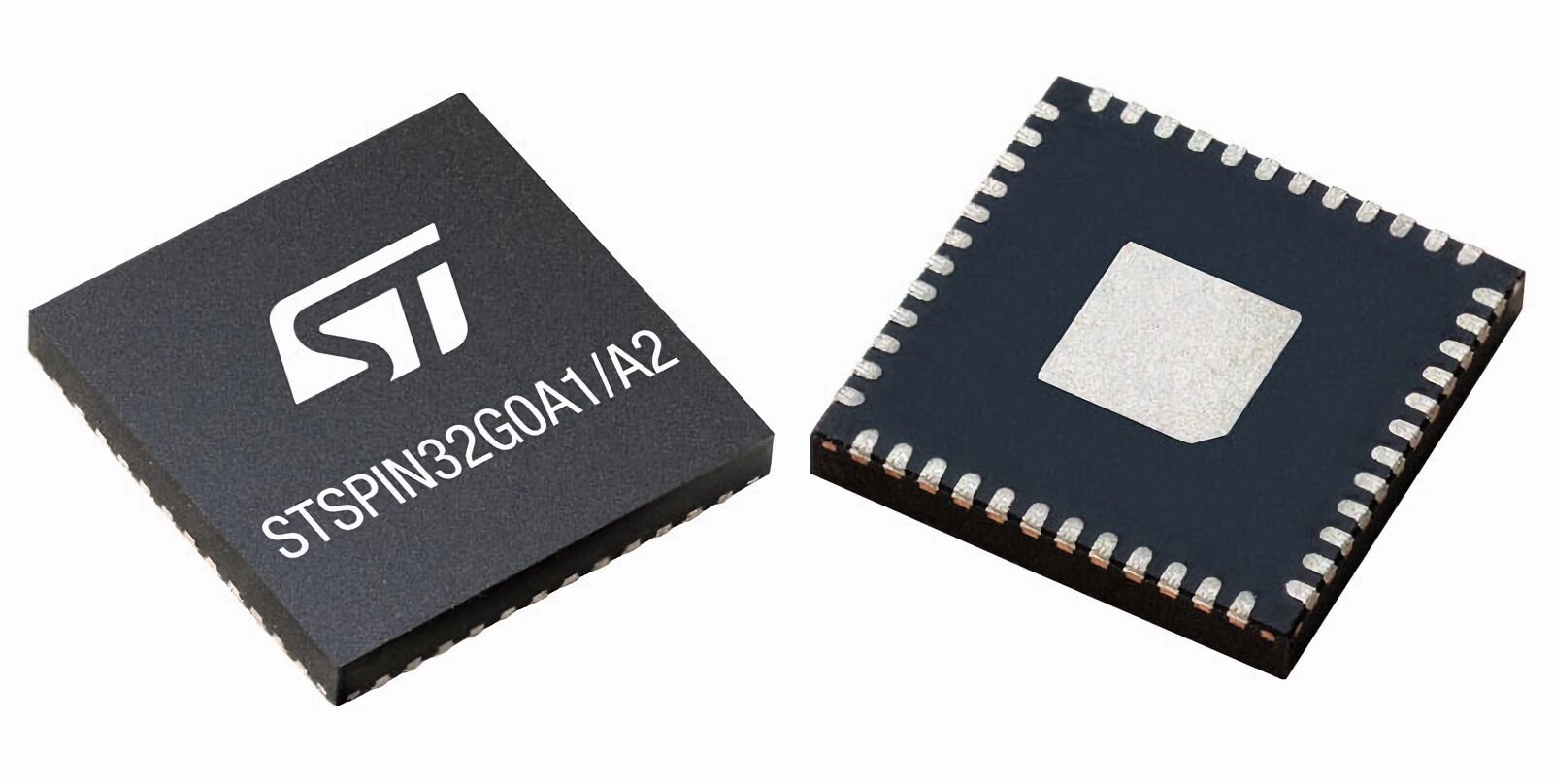
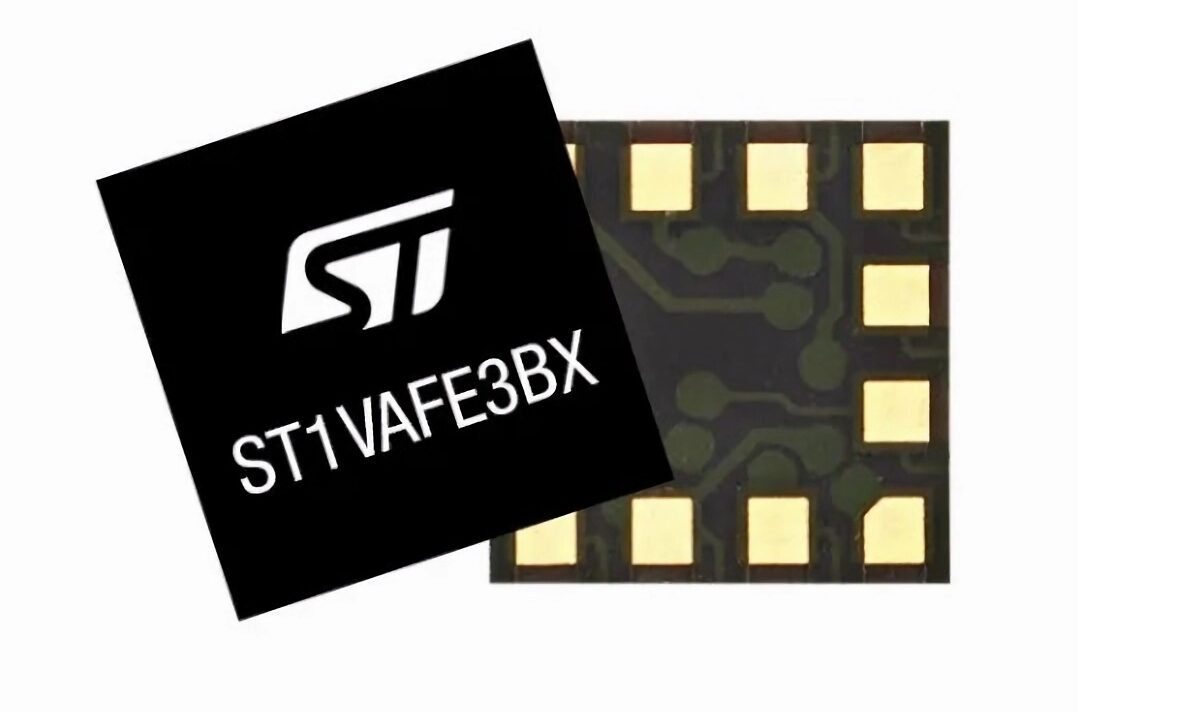
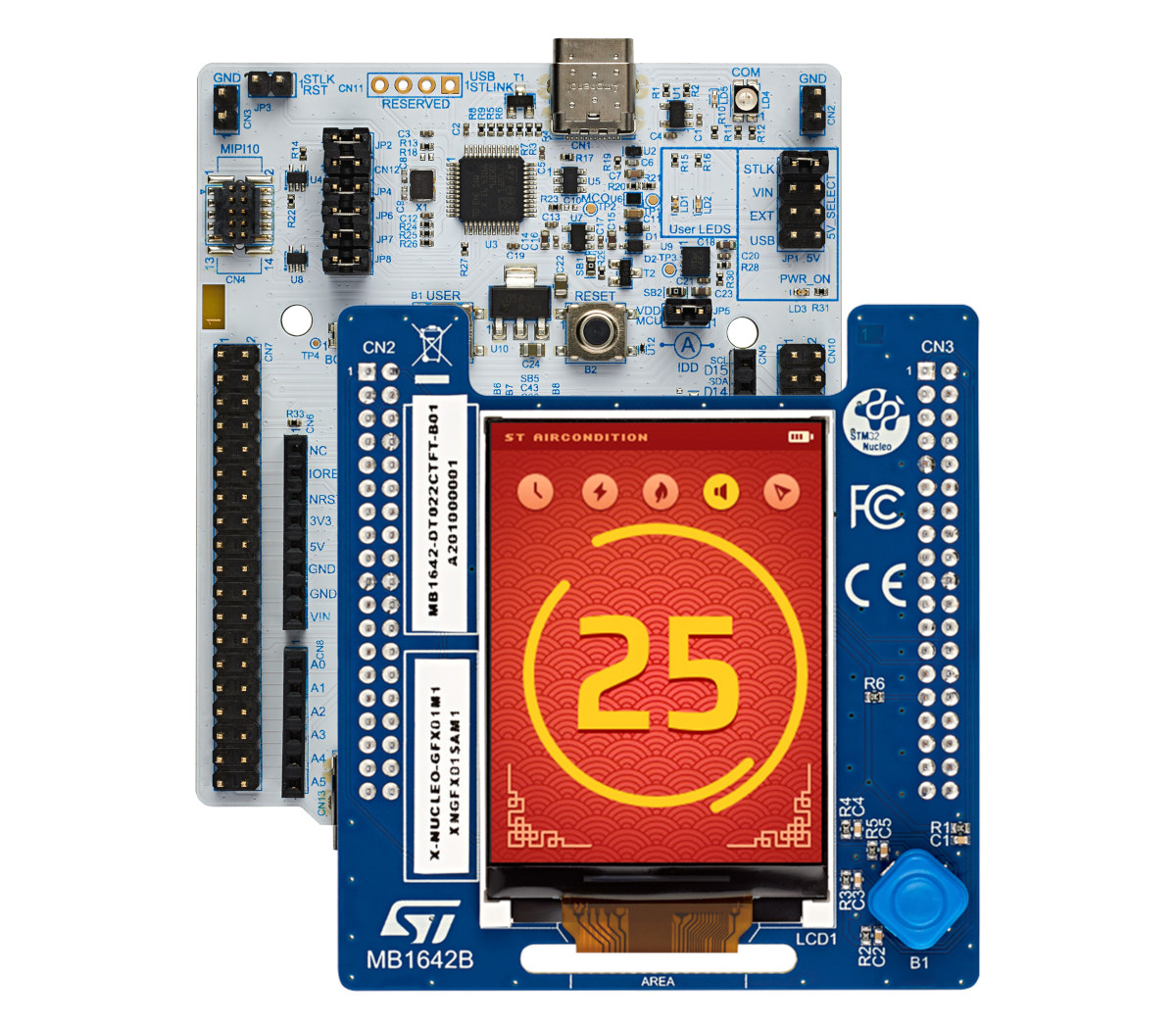
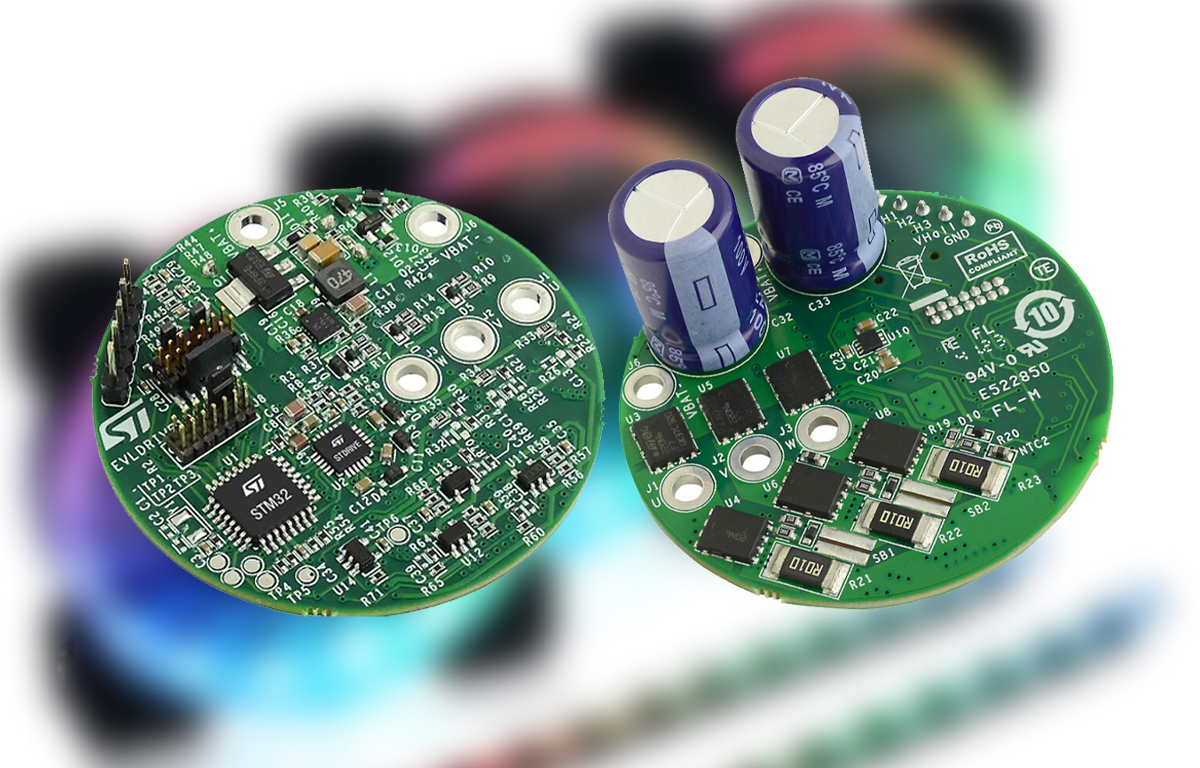
The STEVAL-ROBKIT1 is an evaluation kit for robotics applications based on ST’s STM32H725 and STM32G0 Arm microcontrollers. It’s the first such robot kit from the company, and it targets both traditional engineering teams, educators, and students. The kit features an STM32H725 main board, an STM32G0 motor-control PCB, and a 1.53MP camera + ToF sensor module, as well as a robotic frame, wheels, and motors with encoders. It does not require a soldering iron for assembly to make it easier for students. STEVAL-ROBKIT1 key components and features: Main board – STEVAL-ROBKIT1-1 SoC – STMicro STM32H725IGT6 Arm Cortex-M7 microcontroller @ 550 MHz with 1MB flash, 564 KB SRAM with ECC Wireless – BlueNRG-M2 Bluetooth LE 5.2 SoC Sensors 6-axis IMU (LSM6DSV16BX) Magnetometer (LIS2MDL) Microphone (MP34DT06J) Expansion – 40-pin Raspberry Pi-like header Motor control board – STEVAL-ROBKIT1-2 SoC – STMicro STM32G071CBT6 Arm Cortex-M0+ microcontroller at 64 MHz with 128 KB flash, 36KB SRAM Motor […]
STMicro ST25DA-C is the first NFC chip with Matter support
ST ST25DA-C is an NFC chip with built-in support for the latest Matter 1.5 protocol, enabling easier installation of smart devices on home networks, including lighting, access control, security cameras, or any IoT device. NFC here is used as an alternative to Bluetooth LE or QR core commissioning. NFC tap-to-pair functionality enables users to tap an NFC tag code on a device with their smartphone to securely and easily add it to their Matter-compatible app(s) and network(s). Besides batteryless commissioning, the ST25DA-C chip can also be used for firmware updates over I2C (Matter OTA), and secure storage for keys & certificates. ST25DA-C secure NFC tag specifications: Contact interface 1.62 V to 3.3 V supply voltage range ESD protection Human body model (HBM): 6 kV for digital and antenna pads Charge device model (CDM): 1 kV based on a STMicroelectronics module I2C serial interface up to 400 kHz Contactless interface Power […]
5 Ways Embedded AI Processors are Revolutionizing Device Performance (Sponsored)
Artificial intelligence (AI) is moving from cloud-first architectures to edge-first designs, so more processing now runs on phones, cameras, and embedded controllers. Running inference on-device cuts latency and keeps sensitive data local. This momentum is reshaping product roadmaps, all due to different revolutions driven by edge AI. The Core Revolutions Driven by Edge AI Instead of routing every model and signal to the cloud, devices are processing more data locally to act faster and protect sensitive information. Because edge AI is changing where intelligence runs, IDC estimates global spending on edge computing reached about $261 billion in 2025. This rapid enterprise investment is due to several reasons. 1. Enabling Real-Time, On-Device Decisions Eliminating the cloud round-trip lets devices turn sensor input into action in milliseconds. This capability is essential for industrial automation and control loops because embedded AI processors run optimized models on-device, so decisions happen continuously. 2. Strengthening Privacy […]
ST’s Human Presence Detection (HPD) solution tracks head and posture with AI and VL53L8CP ToF sensor
Back in 2022, we first saw STMicro launch the VL53L5CP ToF presence detection sensor for the PC market with features like user detection, gesture recognition, and intruder alert. Building upon that, the company has recently released its 5th‑generation Human Presence Detection (HPD) solution, built around the VL53L8CP 8×8 multizone Time‑of‑Flight sensor family with edge AI features offered as a turnkey solution for laptops, PCs, monitors, and accessories. We have seen and even tested earlier ToF sensors like the VL53L0X and VL53L1X, which used a single-photon avalanche diode (SPAD) for single-zone ranging. After that, we saw ST release the VL53L5, which was a major upgrade with up to 64-zone multi-zone support, enabling features like touch-to-focus and object tracking. Now, in the age of AI, ST has launched a 5th-gen turnkey HPD solution built around the VL53L8CP sensor. STMicro HPD solution specifications: Sensor – ST FlightSense VL53L8CP 5th generation multi-zone direct Time-of-Flight (dToF) […]
STMicro STM32WBA5MMG is a tiny wireless module with Bluetooth LE 6.0, Zigbee 3.0, and OpenThread
STMicro’s STM32WBA5MMG is a tiny (12.5 x 8 mm), ultra-low-power 2.4 GHz wireless module based on the STM32WBA55UG wireless microcontroller with support for Bluetooth 6.0 LE, Zigbee 3.0, and OpenThread. The company further adds that designing a board for the module does not require any RF expertise, it provides a fully integrated Bill of Materials (BOM) with 32 MHz and 32 kHz crystals and integrated antenna matching or optional external antenna configurations, and its compatibility with 2-layer PCBs helps reduce costs. STM32WBA5MMG specifications: Wireless MCU – STMicro STM32WBA55UG Core – 32-bit Arm Cortex-M33 CPU with TrustZone®, MPU, DSP, and FPU Memory – 128 KB SRAM, including 64 KB with parity check Storage 1 MB flash memory with ECC, including 256 KB with 100 kcycles 512-byte (32 rows) OTP ART Accelerator – 8 KB instruction cache allowing 0-wait-state execution from flash memory (frequency up to 100 MHz, 150 DMIPS) Wireless Bluetooth […]
ST’s LSM6DSV320X – An AI-enabled IMU with two MEMS accelerometers for activity and shock detection
STMicroelectronics has introduced the LSM6DSV320X, a compact AI-enabled inertial measurement unit (IMU) that integrates a 3-axis digital gyroscope, a 3-axis low-g accelerometer (±16g), and a 3-axis high-g accelerometer (±320g) in a tiny 3 x 2.5mm package, ideal for space-constrained IoT devices such as wearables, smartphones, gaming controllers, smart tags, personal safety gear, and industrial monitoring systems. Most motion sensors are designed to track daily activities or detect sudden impacts, but the LSM6DSV320X is built to do both. One accelerometer tracks everyday motion up to ±16g, while the other handles high-impact events up to ±320g. One of the most interesting features is its adaptive self-configuration (ASC), which allows real-time adjustment of internal settings based on activity without the need for a host CPU, optimizing power use and responsiveness. It also includes a machine learning core (MLC) capable of running up to eight decision trees and a finite state machine (FSM) to […]
STMicro STM32U3 ultra-low-power Cortex-M33 MCU achieves 117 Coremark/mW in active mode, consumes 1.6 µA in stop mode
STMicro STM32U3 is a new family of Arm Cortex-M33 microcontrollers clocked at up to 96 MHz with ultra-low-power consumption designed for utility meters, healthcare devices such as glucose meters and insulin pumps, and industrial sensors. The company says the STM32U3 MCU family is a “market leader in terms of efficiency” with 117 Coremark/mW in active mode, and consumes 1.6µA in stop mode. The Coremark/mW score means the STM32U3 offers almost twice the efficiency of the STM32U5 series, and five times that of the STM32L4 series. Other highlights include up to 1MB of dual-bank flash, 256kB of SRAM, and various interfaces like MIPI I3C, SAI audio, 12-bit ADC, etc… STMicro STM32U3 key features and specifications: MCU Core 32-bit Arm Cortex-M33 CPU @ 96 MHz with TrustZone and FPU Performance 1.5 DMIPS/MHz (Dhrystone 2.1) 387 CoreMark (4.09 CoreMark/MHz) 500 ULPMark-CP 117 ULPMark-CM 202000 SecureMark-TLS ART Accelerator with DSP instructions Memory/Storage 256 KB […]
STMicro releases Teseo VI quad-band GNSS receivers for automotive and robotics applications
STMicro has launched the Teseo VI family of global navigation satellite system (GNSS) receivers for high-volume precise positioning applications. These quad-band GNSS receivers support multiple constellations and frequency bands, enabling high-accuracy positioning for various automotive and robotics applications. The Teseo VI quad-band GNSS receivers are described as the first chips in the market to “integrate multi-constellation and quad-band signal processing in a single die.” The single-chip design allows for compact products and accelerates time to market. The new Teseo VI GNSS family includes the Teseo VI STA8600A, Teseo VI+ STA8610A, and the Teseo APP2 STA9200MA. All variants integrate dual independent Arm Cortex-M7 cores with ST’s proprietary phase change memory (PCM) technology, eliminating the need for external memory. They are targeted at applications in advanced driving systems, autonomous vehicles, asset tracking, smart agriculture, and robot deliveries. Other quad-band GNSS modules include the Quectel LG290P and u-blox X20. Teseo VI STA8600A, VI+ […]