
GyroidOS virtualization solution aims to secure embedded devices, ease cybersecurity certification

GyroidOS

Maintained by Fraunhofer AISEC, GyroidOS is an open-source, multi-arch OS-level virtualization solution designed for embedded devices with hardware security features, and aiming to support security certification processes such as Common Criteria (ISO/IEC 15408), DIN SPEC 27070 – IDS Trust Security profile, and IEC-62443 cybersecurity standards. The virtualization layer is based on Linux-specific features like namespaces, cgroups, and capabilities to provide isolation of different guest operating system stacks on top of a single, shared Linux kernel. It offers a much smaller footprint and additional separation of privileged instances compared to other container solutions, such as Docker. GyroidOS security features Container isolation based on a modularized OS-level virtualization layer Secure boot (e.g., UEFI on x86) Kernel module signing Signed GuestOSes (containers) Measured boot and remote attestation Full disk encryption coupled to TPM and secure boot Restriction of superuser in containers with Linux capabilities Fine-grained device access with device cgroups whitelists Secure Element […]

Milk-V Titan – A $329 octa-core 64-bit RISC-V mini-ITX motherboard with a PCIe Gen4 x16 slot

Milk-V Titan mini-ITX motherboard

We first noted the UltraRISC UR-DP1000-powered Milk-V Titan mini-ITX motherboard when we wrote an article about three high-performance RISC-V processors to watch in H2 2025. There have been some delays, as there often are, but the Titan board finally appears to be in stock, so it’s probably a good time to have a closer look. Powered by a 2 GHz UR-DP1000 octa-core RISC-V CPU, the Titan mini-ITX motherboard supports up to 64GB DIMM memory and M.2 NVMe storage (PCIe Gen4 x4), and features a PCIe Gen4 x16 slot for a graphics card or other expansion, Gigabit Ethernet, four USB 3.0 ports, a BMC, and more. Milk-V Titan specifications: CPU – UltraRISC UR-DP1000 8x 64-bit RISC-V UR-CP100 “RV64GCBHX” cores up to 2.0 GHz Two 4x core cluster design with 4MB L3 cache each, and a total of 16MB cache. Fully RVA22 compliant, and “Compliant with RVA23 excluding V extension.” Supports Hardware […]

Radxa Dragon Q6A Arm SBC gets official Windows 11 preview

Radxa Dragon Q6A Windows 11

While most people use Linux on Arm SBCs, it’s typically possible to run Windows 11 on Arm boards with UEFI support, but with caveats such as the GPU and VPU not working and other issues. One solution is to avoid the Arm architecture altogether and go with an x86 SBC like the Radxa X4, ODROID-H4+, or LattePanda IOTA, among others. But things may change for the better now that Qualcomm SBCs are becoming a thing, and Radxa has just announced official Windows support for the Radxa Dragon Q6A. Note that it is only a preview image for now. Nevertheless, here’s what is working without installing additional drivers on Windows 11: HDMI output (inherited from UEFI GOP)​ PCIe – Note: NVMe available; system does not include network card drivers eMMC​ flash UFS​ USB 2.0​ USB 3.0, but devices must be connected before booting into the system But once you install drivers, […]

Radxa Orion O6N – A smaller, cheaper 12-core Armv9 Nano-ITX SBC based on CIX P1 (CD8160) SoC

Orion O6N Nano-ITX SBC

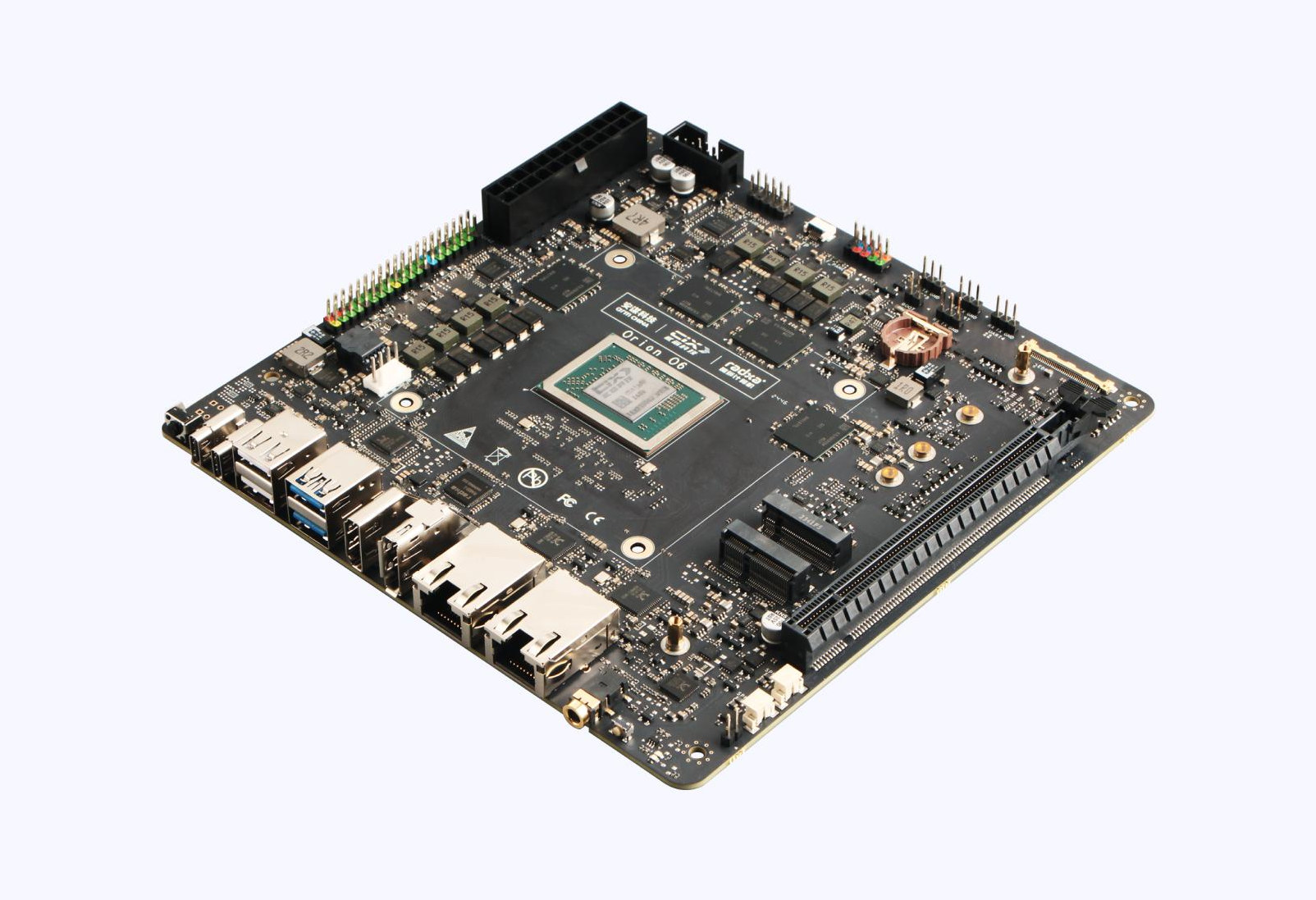
Radxa Orion O6N is a Nano-ITX SBC powered by CIX P1 (CD8160 variant) 12-core Cortex-A720/A50 processor with a 30/45 TOPS AI accelerator, up to 64GB LPDDR5, support for UFS and M.2 NVMe storage, and plenty of interfaces. It’s a smaller and cheaper version of the Orion O6 mini-ITX motherboard introduced at the end of last year. It offers most of the same features, but is equipped with a CD8160 SoC instead of a CD8180 with a slightly lower CPU frequency for the Cortex-A720 big cores (2.6 vs 2.8 GHz), more storage options, fewer display interfaces, no dedicated audio port, 2.5GbE networking instead of 5GbE, and a few other differences you can see in the specifications below. Radxa Orion O6N specifications (highlights in bold and strikethrough show differences against Orion O6): SoC – Cix P1 (Codename: CD8160) 12-core DynamIQ processor 4x Cortex‑A720 big cores @ up to 2.6 GHz 4x Cortex‑A720 […]

TrueNAS is now (unofficially) available for 64-bit Arm platforms with UEFI support

TrueNAS Arm

TrueNAS Scale NAS platform was designed to work on x86-64 computers only, but there’s now an unofficial port for 64-bit Arm (Aarch64) targets running a UEFI bootloader, including the Raspberry Pi 4/5 SBCs and other higher-end Arm boards. Previously known as FreeNAS, the community edition, FreeBSD-based TrueNAS Core was phased out in 2022 and replaced with the Linux-based TrueNAS Scale. iXsystems also provides TrueNAS Enterprise, a paid version with more advanced features, but all versions only work on 64-bit x86 machines. TrueNAS forum user Joel0 decided to change that and patched TrueNAS Scale to run on ARM (aarch64). The main requirements are having a 64-bit Arm target, at least 8GB RAM, 16GB boot storage, and a working UEFI bootloader. The image has been tested with a QEMU virtual machine, and it should also work on a Raspberry Pi 4 or 5 with UEFI, but it has not been tested. One […]

Radxa Orion O6 mini-ITX motherboard gets Arm SystemReady SR v2.5 certification
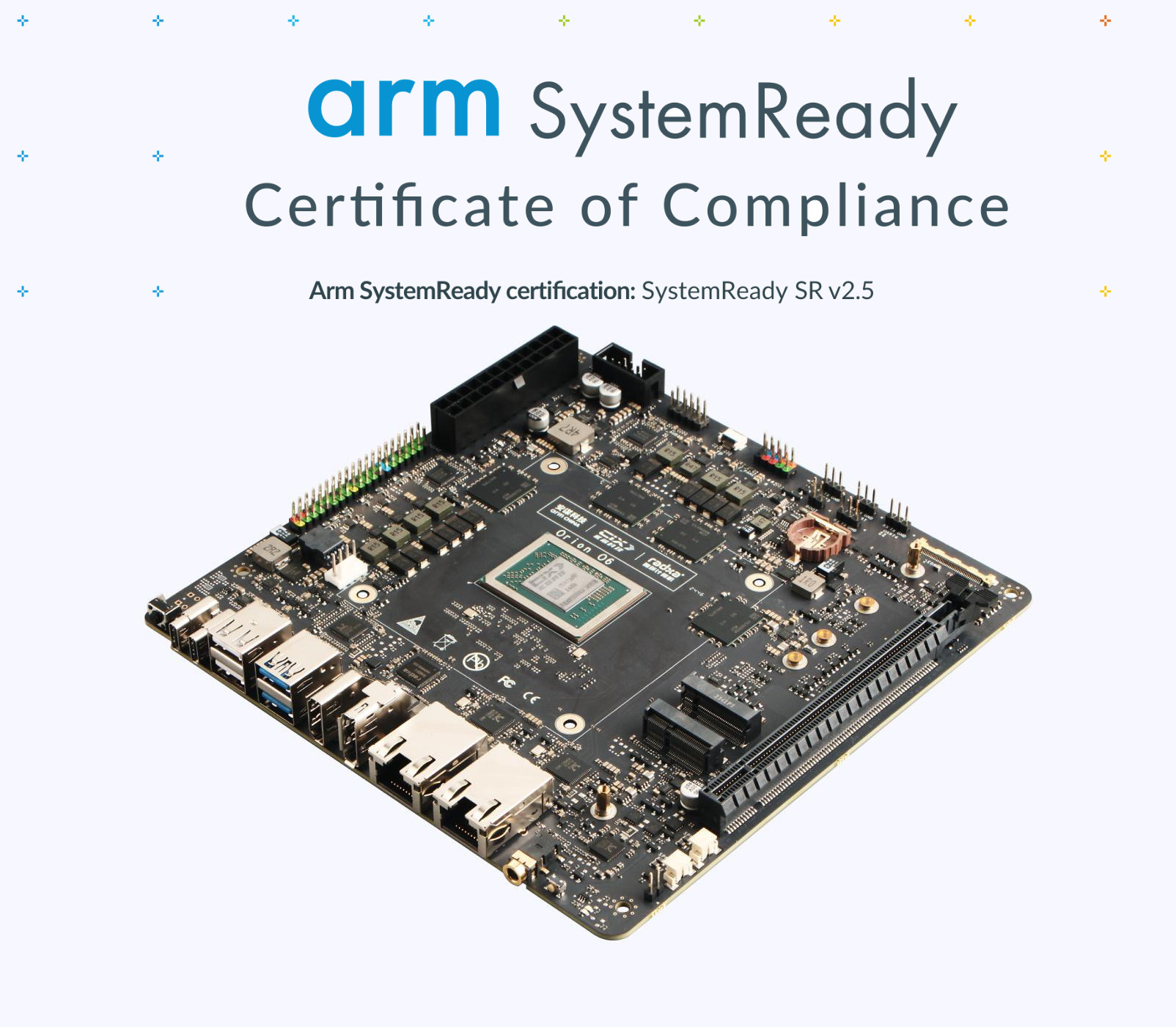
Orion O6 Arm SystemReady SR compliance

Radxa Orion O6 mini-ITX motherboard powered by a CIX P1 12-core Cortex-A720/A520 SoC has just obtained Arm SystemReady SR (ServerReady) v2.5 certification, meaning it’s been shown to run unmodified several OS images such as Windows and Ubuntu. I’ve already tested a Debian 12 image modified by Radxa on the Orion O6, but one of the goals of the platform was to provide a universal UEFI + ACPI firmware to boot any Arm ISO released by OS vendors, for instance, the Ubuntu Desktop ISO for Arm 64-bit architecture downloaded directly from the Ubuntu website. The Arm SystemReady SR certification is a step in the right direction, as it means the Orion O6 has passed a number of tests showing it can boot several off-the-shelf OS images. We’ll find Radxa’s Orion O6 listed on the Arm SystemReady Compliance page among boards from other manufacturers, as well as the Radxa ROCK Pi 4B+, […]

Muse Pi Pro is a feature-packed, credit card-sized SpacemIT M1 RISC-V SBC with HDMI, GbE, 4x USB, M.2 and mPCIe sockets

Muse Pi Pro

Muse Pi Pro is a feature-packed, credit card-sized SBC powered by the SpacemIT M1 octa-core 64-bit RISC-V AI SoC with a 2 TOPS NPU and equipped with up to 16GB LPDDR4x and 128GB eMMC flash. The single board computer features gigabit Ethernet and a WiFi 6 + Bluetooth 5.3 module for connectivity, HDMI and MIPI DSI display interfaces, two MIPI CSI interfaces, a 3.5mm audio jack,  four USB 3.0 ports, an M.2 socket for an NVMe SSD or wireless module, a mini PCIE socket for WiFi and 4G LTE/5G cellular connector, and a 40-pin GPIO header for expansion. That’s quite a lot of features for such a compact board. Muse Pi Pro specifications: SoC – SpacemiT M1 (similar to SpacemIT K1, but clocked at 1.8 GHz) CPU – 8-core X60 RISC-V processor @ 1.8 GHz GPU – Imagination IMG BXE-2-32 with support for OpenGL ES3.2, Vulkan 1.2, OpenCL 3.0; 20 […]

Radxa Orion O6 Preview – Part 2: Debian 12 – What works, what doesn’t

Orion O6 Review Debian 12

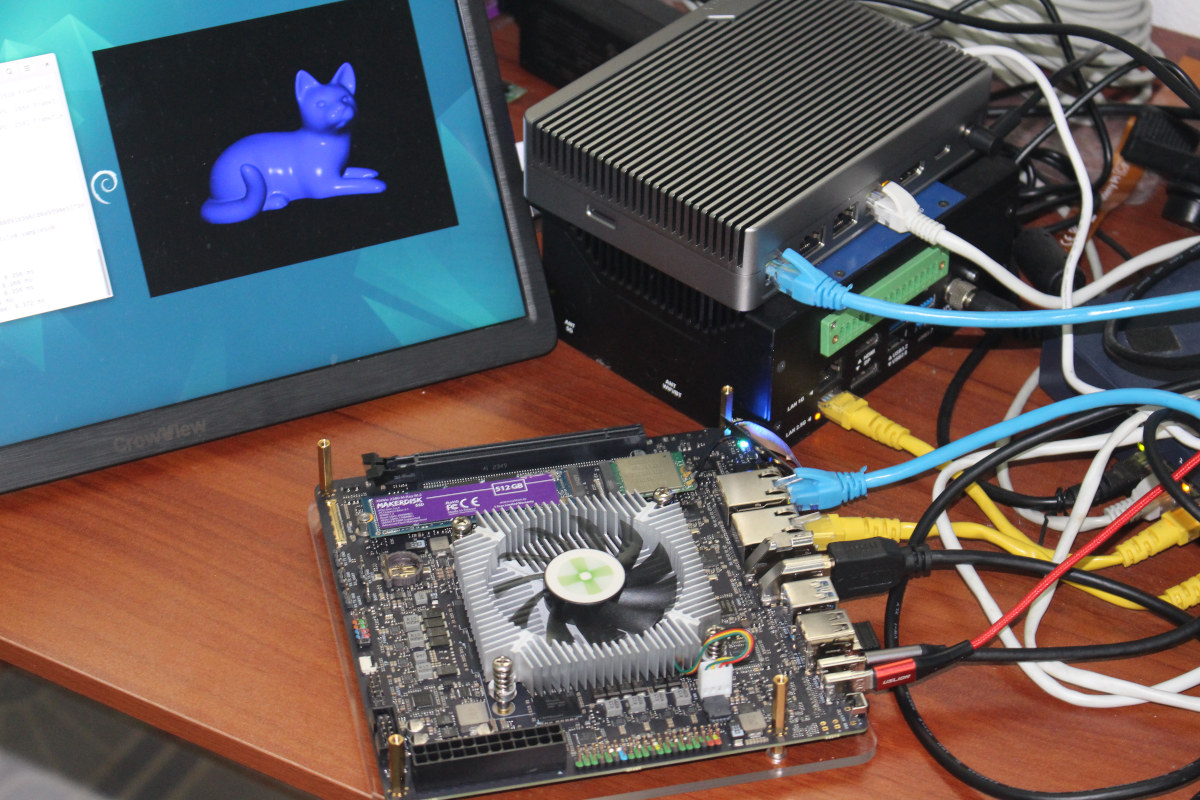
I went through an unboxing and Debian 12 installation on the Radxa Orion O6 at the end of January, but decided to work on other reviews since software support still needed to be worked on. Since then, there’s been some work done, but no new image released. After waiting for almost two months, I’ve decided to carry on with the review by testing the Debian 12 image in a way similar to the Rock 5B SBC preview I did with Debian 11 in 2022 to check what works and what doesn’t on the Orion O6 at the time of the review. That will involve testing all ports, including 5GbE networking and the PCIe slot with an (old) NVIDIA graphics card, running some benchmarks, and also trying the Debian 12 image with a self-built Linux 6.13 kernel using ACPI instead of UEFI for the default image. Orion O6 SBC benchmarks on […]

Exit mobile version