voip News - CNX Software - Embedded Systems News

Android 17 Beta 1 released with H.266/VVC support, camera improvements, and more

Android 17

Google has just announced the release of Android 17 Beta 1 with performance improvements, H.266/VVC video codec support, smoother camera mode transitions, privacy and security enhancements, and more. The company is not releasing Developer Previews anymore, and instead follows the “continuous Canary channel” announced with the first Android 16 Developer Preview. So, with Android 17, the very first release is the “Beta 1” release. Some of the key changes in Android 17 so far: Developers can’t opt out of orientation and resizability restrictions on large screen devices (sw > 600 dp), so they’ll have to make sure their apps work on tablets, foldables, and desktop windowing environments. With one exception: apps categorized as games with android:appCategory flag. Google published a separate blog post about the change. Performance improvements and tools Lock-free MessageQueue that will reduce missed frames. Added Generational garbage collection to ART’s Concurrent Mark-Compact collector. This aims to reduce […]

Qualcomm IPQ5424 embedded router board supports 22 Gbps tri-band Wi-Fi 7 and dual 10GbE networking

Qualcomm IPQ5424 router SBC

Wallys Communications’ DR5424 is a new embedded router board powered by a Qualcomm IPQ5424 quad-core Cortex-A55 SoC (aka Dragonwing NPro A7 Platform) and offering tri-band Wi-Fi 7 connectivity up to around 22 Gbps, along with two 10 GbE RJ45 ports and four 2.5GbE RJ45 ports for wired networking. Based on Qualcomm AP.MI01.2 reference design, the board also features 4GB or 8GB DDR4 memory, 256MB NAND flash, and 32MB NOR flash, as well as a USB 3.0 port, a USB 2.0 port, and JTAG and serial debug ports. Target applications include Wi-Fi 7 (802.11be) access points, Internet of Things (IoT) gateways, and HD streaming and gaming.   Qualcomm AP.MI01.2 specifications: SoC – Qualcomm IPQ5424 (Qualcomm Dragonwing NPro A7 Platform / NPA7) CPU – Quad-core Cortex-A55 “Marina” processor @ up to 1.5 GHz (Wallys) or 1.8 GHz (Qualcomm and Compex) Accelerator – Integrated accelerator designed for AI models specific to Wi-Fi and […]

WiPhone ESP32 VoIP Phone Targets Makers and Hackers (Crowdfunding)
WiPhone

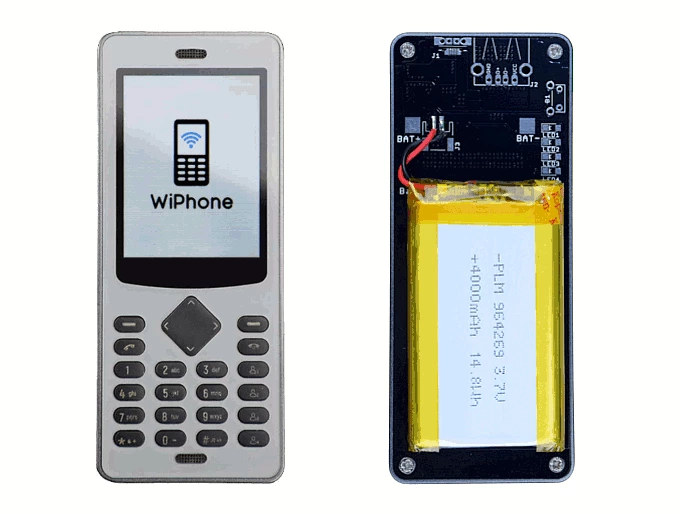
WiPhone – pronounced as in Wi(reless) Phone – is a tiny VoIP phone made for makers and hardware hackers. The phone is based on ESP32 WiFi + Bluetooth SoC, is designed to be easily disassembled and modified both at the hardware and software level. It looks like an entry-level 2G/3G feature phone, except you can make only make phone calls over WiFi using a SiP account, as there’s no cellular modem. WiPhone specifications: SoC – Espressif ESP32 dual core Tensilica LX6 processor @ 240 MHz System Memory – 4MB PSRAM Storage – 16MB flash, microSD card slot Display – 2.4″ screen with 320×240 resolution Connectivity – 802.11b/g/n WiFi, Bluetooth 4.1 dual mode (BT not yet supported  in software) Audio – 3.5mm audio jack USB – 1x micro USB port for charging, serial communication and firmware updates Expansion – 20-pin programmable header on back of phone with UART, SPI, I2C, PWM, […]

AMBE+2 Vocoder Promises High Voice Quality at Low (2.0 to 9.6 Kbps) Data Rates

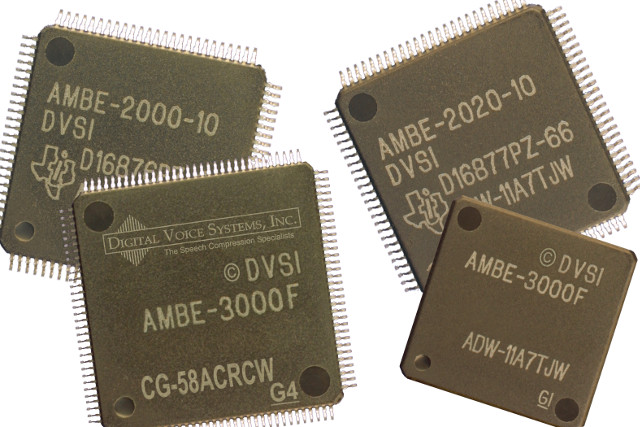
Opus 1.2 open source audio codec was release a few months ago with the ability to deliver low power low high-quality audio bitrate for speech with bitrates as low as  12 Kbps. Digital Voice Systems (DVSI) claims to have gone even lower thanks to their AMBE+2 vocoder (Advanced MultiBand Excitation) providing high-quality speech at data rates from 2.0 to 9.6 kilobytes per second. AMBE+2 vocoder is said to outperform the company’s previous generation AMBE+ Vocoder as well as the G.729 and G.726 vocoders, while operating at only 4.0 Kbps. The vocoder is suitable for mobile radio, secure voice, satellite communication, computer telephony, digital voice and storage applications The solution can be integrated into product either using software licensing, or through Vocoder chips, and the company lists the following key benefits: Maintains speech intelligibility and speaker recognition at rates as low as 2.0 kbps Resistant to background noise and channel bit errors […]

Amazon Introduces Echo 2, Echo Plus, Echo Connect, and Echo Spot Alexa Devices

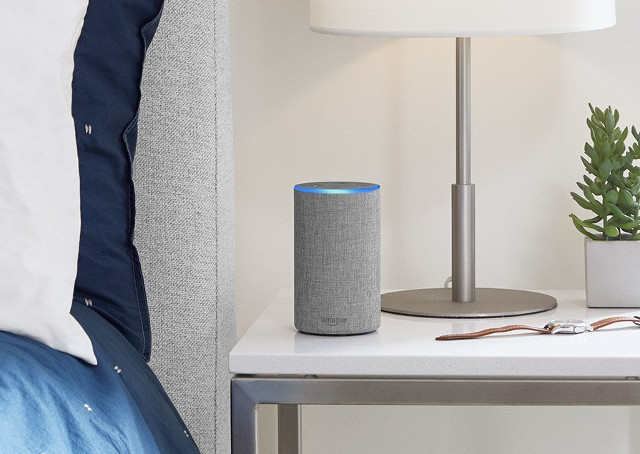
Beside their “all-new” Amazon Fire TV 2017, Amazon has made a bunch of other announcements mostly related to their Alexa services with four new or updated Echo devices:  the “all-new” Echo, the Echo Plus, Echo Connect, and the Echo Spot. 2017 Amazon Echo (aka Echo 2) The new second generation of the Alexa based Echo has a new smaller design, improved sound with Dolby processing, and a lower price at just under $100. Some of the key features include: Speakers – 2.5″ woofer and 0.6″ tweeter Connectivity Dual band 802.11 b/g/n WiFi for streaming music from Amazon Music, Spotify, Pandora, etc…, controlling smart devices Bluetooth LE Audio 3.5mm audio jack 7-mic array using beamforming technology and enhanced noise cancellation. Improved wake-word (“Alexa”) detection Various designs with 6 different fabrics Dimensions – 148 x 88 x 88 mm Weight – 821 grams The Echo can make free calls to the US, […]

Rockchip RV1108 Cortex A7 + DSP SoC is Made for Audio & Video Conference and Recording Applications

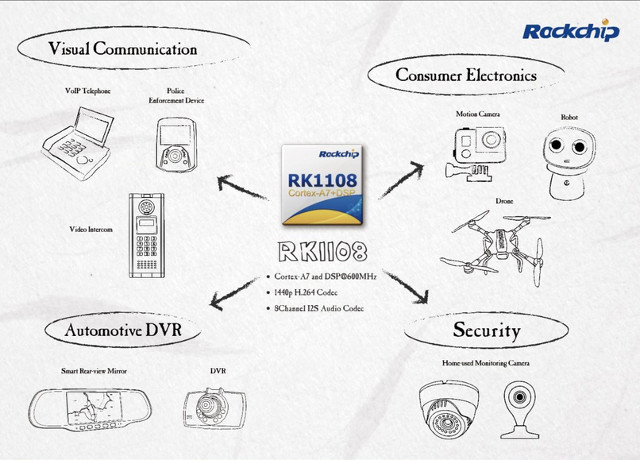
[Update May 2017: Rockchip has renamed RK1108 to RV1108.] Rockchip has introduced RV1108 ARM Cortex A7 SoC with a 600 MHz DSP targeting visual communication, consumer electronics, automotive DVR, and security applications thanks to its 8-channel I2S audio codec and 1440p H.264 video encoder and decoder. Detailed specifications can be found on the official Rockchip Wiki: CPU – Single-core ARM Cortex-A7 Core processor with NEON and FPU,  32KB/32KB L1 I-Cache/D-Cache, Unified 128KB L2 Cache, and Trustzone Video/Image DSP – Up to 600 MHz, 32KB I-TCM and 32KB I-cache, 128KB D-TCM Memory 12KB internal SRAM DDR3/DDR3L interface – 16 Bits data width, 1 ranks (chip selects), up to 512 MB RAM NAND Flash Interface – 8-bit async NAND flash, 16-bit hardware ECC eMMC Interface – Compatible with standard iNAND interface, eMMC 4.51 standard. SD/MMC Interface – Compatible with SD 3.0, MMC 4.41 System Component 2x 64-bit timers with interrupt-based operation 8x […]

Setting a VoIP SIP user agent with Embedded Linux

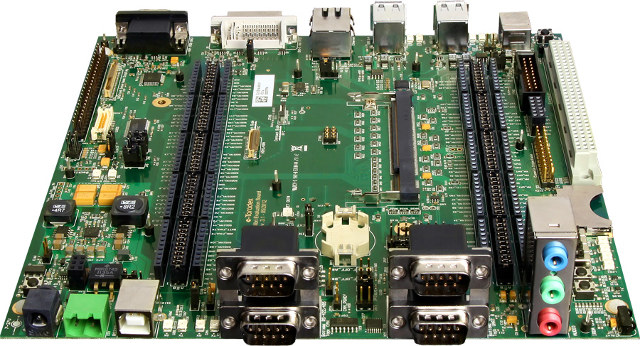
This is a guest post by Leonardo Graboski Veiga, working for Toradex. Introduction This article’s main goals are: to cross-compile the PJSIP libraries and the PJSUA API reference implementation; deploy it to the target system; give an overview about the SIP protocol; and explore the reference implementation features, regarding audio only. For this purpose, a Computer on Module (CoM) from Toradex was chosen in the following configuration: Colibri iMX6DL* + Colibri Evaluation Board. The evaluation board and CoM are displayed in Figures 1 and 2, respectively.   VOIP or Voice over IP, is a term designed to refer to a set of methods and technologies targeted for the implementation of telephony services over the Internet. For the purpose of this article, the scope will be limited to the use of a reference implementation built upon the SIP communication handling protocol by means of the PJSIP libraries and PJSUA2 API. If […]

SolidRun ClearFog Pro and Base Router Boards Feature Marvell ARMADA 380/388 Processor

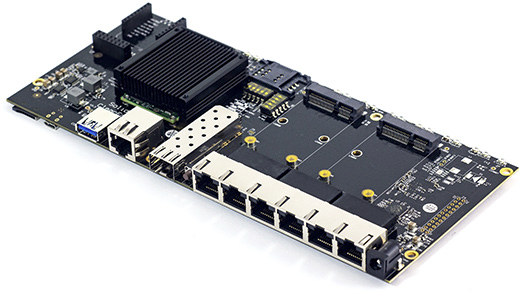
Last month, I wrote about Turris Omnia an upcoming open source hardware router board with 6 Gigbit Ethernet ports and an SFP cage powered by Marvell ARMADA 385 processor. SolidRun has now unveiled ClearFog Pro router board with similar features, but opting instead for either Marvell ARMADA 380 or 388 processor. The company will also soon launch or lower-end version called ClearFog Base with the less ports, but with the same system-on-module as ClearFog Pro: Processor – Marvell ARMADA 380 (88F6810) single core or 388 (88F6828) dual core ARMv7 processor (Cortex A9 class) @ up to 1.6 GHz with 1MB L2 cache, NEON and FPU System Memory – 256MB to 1GB 16-bit DDR3L (ARMADA 380) or 32-bit DDR3L (ARMADA 388) Storage Pro version – M.2 slot, 1x micro SD slot, 2x mSATA/mPCIE Base version – M.2 slot, 1x micro SD slot, 1x mSATA/mPCIE Connectivity Pro version – 6x switched Gigabit […]