Semtech launches AirLink RX400 and EX400 5G RedCap routers for IoT applications

AirLink RX400 EX400 5G RedCap routers

Semtech has just launched the AirLink RX400 and EX400 5G RedCap routers for industrial and commercial IoT applications. They offer a lower power consumption and lower costs compared to traditional 5G deployment. The routers are powered by an unnamed Arm Cortex-A55 processor, feature up to two Gigabit Ethernet ports, 5G RedCap cellular connectivity (3GPP Release 17 and 5G Standalone) with LTE Cat 4 fallback, dual-band GNSS, optional WiFi 6 connectivity, and optional RS-232 interfaces, among other features. AirLink RX400/RX400 specifications: SoC – Unnamed dual-core Arm Cortex-A55 processor System Memory – 600 MB RAM available to containers Storage – 500 MB flash available to containers Networking AirLink EX400 – 2x Gigabit Ethernet ports AirLink RX400 – Gigabit Ethernet port 5G RedCap (Reduced Capability) cellular connectivity up to 226 Mbps downlink, 120 Mbps uplink, dual SIM (Nano-4FF); 4G LTE fallback Optional dual-band Wi-Fi 6 1×1 MIMO up to 600 Mbps Serial (AirLink RX400 […]

M5MonsterC5 hacking tool adds ESP32-C5 and 5 GHz Wi-Fi 6 support to M5Stack Cardputer ADV and Tab5

M5MonsterC5 M5Stack Carputer ADV

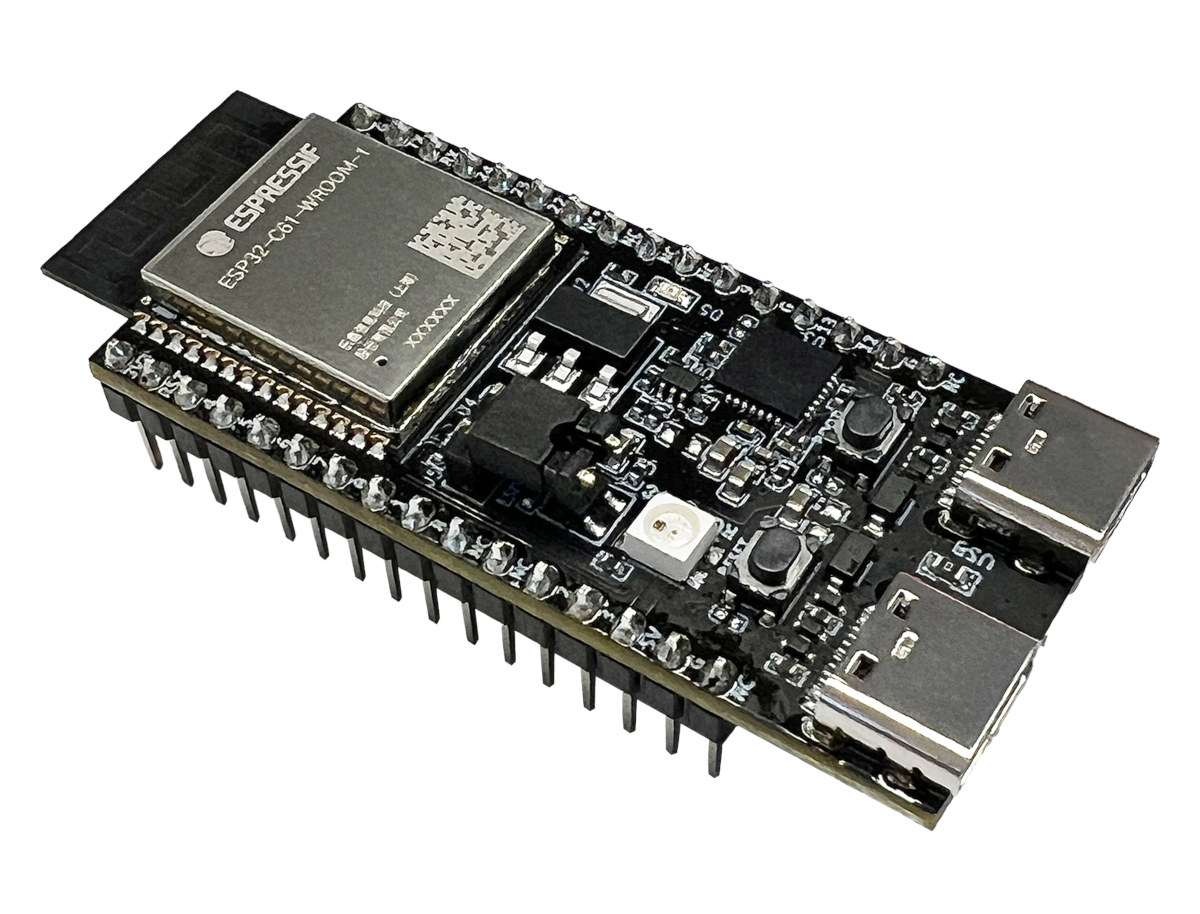
Developed by Laboratorium in Poland, the M5MonsterC5 is an ESP32-C5-based “Marauder” hacking tool designed to work with M5Stack Cardputer ADV or M5Stack Tab5. It gets connected to the Cardputer ADV or Tab5 via a Grove connector and runs JanOS and Project Zero for wireless security research, experimentation, and rapid prototyping with minimal setup. Built around the ESP32-C5, the device supports dual-band Wi-Fi 6 (2.4/5-GHz) and 802.15.4 (Thread/Zigbee) to the M5Stack devices. Key features include multi-channel deauthentication with 5 GHz support, Evil Twin and phishing captive portals, WPA3 SAE overflow attacks, wardriving with GPS logging and WiGLE-compatible exports, passive sniffing, Karma attacks, whitelist management, and persistent “blackout” modes. The platform uses a two-stage web-based flashing process (JanOS on the Monster board and a Cardputer app flasher), offers microSD card and optional GPS support, and is intended strictly for authorized Wi-Fi auditing, offensive security research, and educational use under the Project Zero […]

HalowLink 2 Wi-Fi HaLow access point and extender offers up to 1 km range, supports up to 1,000 IoT end devices

GL.iNet HaLowLink 2 WiFi HaLow access point extender

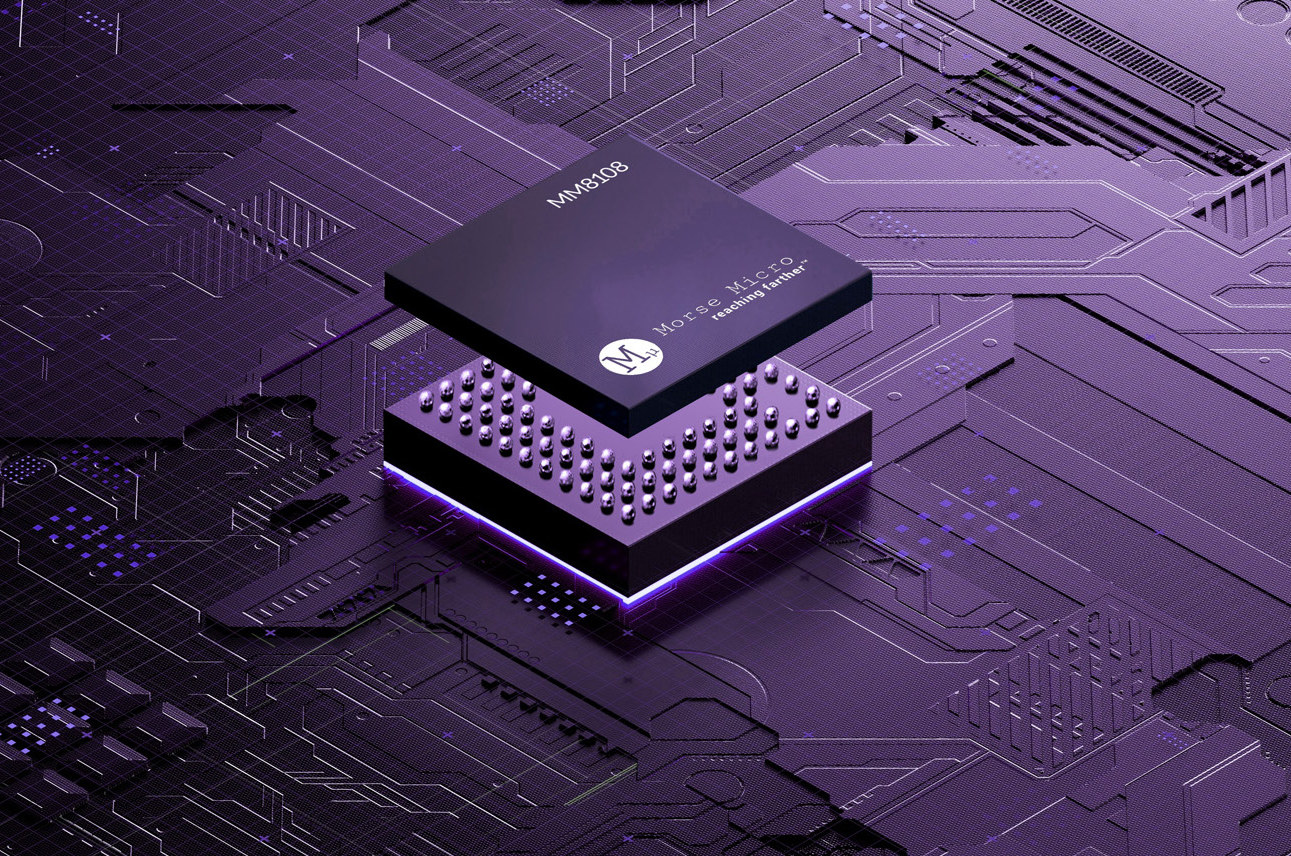
Designed in collaboration with Morse Micro, GL.iNet’s HalowLink 2 is a Wi-Fi HaLow (802.11ah) access point and extender that offers up to 1 km range and supports up to 1,000 IoT end devices. It’s an update to the earlier HaLowLink 1 Wi-Fi HaLow gateway with the exact same functionality, except it replaces a Morse Micro MM6108-based module with an MM8108-based module that offers a higher max link rate (43.3 Mbps vs 32.5 Mbps), broader region support, higher device capacity, and potentially better /performance range with up to 26 dBm Tx power (vs 23dBm in the first generation model). HalowLink 2 specifications: SoC – Mediatek MT7621 dual-core, quad-thread MIPS1004K processor @ up to 880MHz System Memory – 256MB DDR3 Storage – 32MB NAND Flash Connectivity Wi-Fi HaLow (802.11ah) AzureWave AW-HM677 module with Morse Micro MM8108 HaLow chipset supporting Wi-Fi HaLow, IEEE 802.11ah, Sub-GHz, 43.3 Mbps, ultra-low power, WPA3 Sub-GHz frequency range […]

Compex Wi-Fi 7 Dual-Band Dual-Concurrent Modules: High-Performance Solutions for Next-Gen Connectivity (Sponsored)

Compex Wi-Fi 7 Dual-Band Dual-Concurrent Modules

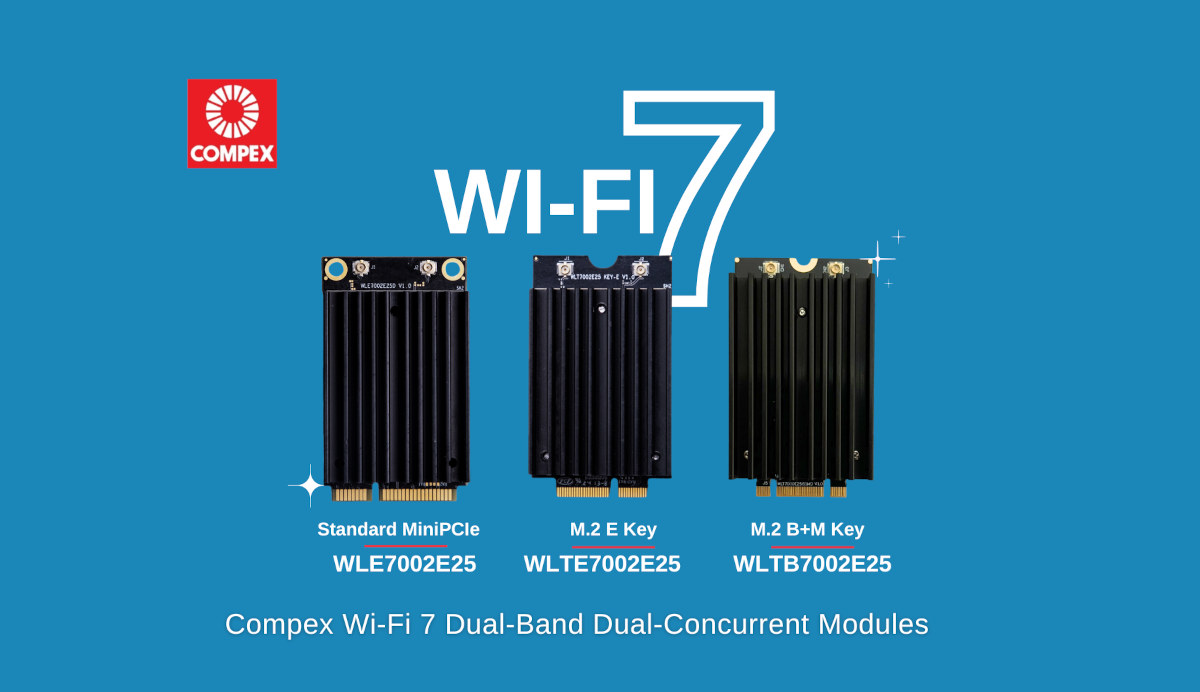
Compex has been a Qualcomm Authorized Design Centre (ADC) since 2014, helping customers design specialized, high-specification Wi-Fi products for demanding and mission-critical applications. For Wi-Fi 7 (802.11be), Compex has introduced a family of standard modules for system designers who are looking for flexible module options that support different band combinations, form factors, and deployment scenarios. The Compex Wi-Fi 7 Dual-Band Dual-Concurrent Module family is designed to address these requirements by offering a versatile set of dual-band configurations across 2.4GHz, 5GHz, and 6GHz, delivering high performance and adaptability for a wide range of applications. Qualcomm-Powered Dual-Band Dual-Concurrent Modules Powered by Qualcomm’s QCN6224, QCN6274, and QCN9274 ‘Waikiki’ radio chipsets, the Compex Wi-Fi 7 Dual-Band Dual-Concurrent Module family features dual-band combinations across 2.4GHz, 5GHz, and 6GHz bands. These modules support advanced Wi-Fi 7 functions such as Multi-Link Operation (MLO), OFDMA, and 4096-QAM. These 2×2 MU-MIMO modules are available in standard MiniPCIe, M.2 E-Key, […]

LILYGO T-Beam 1W – An ESP32-S3 + SX1262 high-power LoRa dev board with 32 dBm output, GNSS support

LILYGO T Beam 1W

The LILYGO T-Beam-1W is an ESP32-S3-based high-power LoRa development board featuring an SX1262 RF transceiver, an onboard 1W power amplifier (32 dBm), a L76K GNSS module, a 1.3-inch SH1106 OLED, a microSD slot, USB-C, Qwiic connectors, and an AXP2101 PMU. The board runs on a 7.4V battery and includes a cooling fan for high-power RF operation. We first wrote about the original LILYGO T-Beam (then branded as TTGO) in 2018, and since then, the company introduced various revisions of the T-Beam as it became popular. The T-Beam 1W is the most powerful version so far, with a built-in 1 Watt amplifier that allows the board to transmit data over longer distances without needing to buy separate, bulky amplifiers. LilyGO T-Beam-1W Specifications: Core module – Espressif Systems ESP32-S3-WROOM-1 SoC – ESP32-S3 CPU – Dual-core LX7 processor with up to 240MHz Memory – 512KB SRAM, 8MB PSRAM Storage – 384KB ROM Wireless – […]

Nordic Semi nRF54LM20B wireless SoC integrates 128 MHz Axon NPU for Edge AI workloads

nRF54LM20B

Nordic Semi nRF54ML20B Arm Cortex-M33 wireless SoC is the first nRF54L microcontroller to integrate the ultra-efficient Axon Neural Processing Unit (NPU) for edge AI workloads. The NPU is said to deliver up to 7 times faster performance and up to 8 times higher energy efficiency versus (unnamed) competing wireless solutions for tasks such as sound classification, keyword spotting, and image-based detection. The Axon NPU is also about 15x faster compared to using the Cortex-M33 CPU for the same task. Other than the NPU, the nRF54LM20B offers exactly the same features as the earlier nRF54LM20A wireless microcontroller, including up to 2 MB NVM, 512 KB RAM, a 128 MHz Arm Cortex-M33 plus RISC-V coprocessor, high-speed USB, up to 66 GPIOs, and an ultra-low-power 2.4 GHz radio supporting Bluetooth LE, Bluetooth Channel Sounding, Matter over Thread, and more as shown in the nRF54L comparison table below. Like other nRF54L wireless SoCs, the […]

Year 2025 in Review, CNX Software stats, and looking ahead to 2026

Happy New Year 2026 CNX Software

Time for the last post of 2025, as the year is almost over. I’ll look back at key developments and notable products launched in 2025, share some CNX Software website traffic statistics, and look ahead to 2026. Year 2025 in Review After 22 product releases in 2024, Raspberry Pi calmed down a little bit in 2025, and the highlights of the year included the Raspberry Pi 500+ mechanical keyboard, the 5-inch variant of the Raspberry Pi Touch Display 2, and a Raspberry Pi 5 1GB RAM. What didn’t quite stop were the accessories from third parties for Raspberry Pi SBC and Raspberry Pi Pico boards. The most exciting Arm SoC release of 2025 was probably the 12-core CIX P1 Armv9 SoC found in Radxa Orion O6 SBC, MINISFORUM MS-R1 Arm mini PC, and Orange Pi 6 Plus board, but while performance was fine, it was overhyped in 2024, and software […]

GigaDevice GD32VW553-UNIFI – A $2+ WiFi 6 and Bluetooth 5.2 LE wireless IoT module

GD32VW553-UNIFI module

GD32VW553-UNIFI is an inexpensive wireless IoT module based on GigaDevice GD32VW553 RISC-V microcontroller featuring 2.4 GHz WiFi 6 and Bluetooth 5.2 LE connectivity, and offered with a PCB antenna or IPEX antenna connector. The GD32VW553 MCU integrates 320KB SRAM and 4096KB on-chip flash, and supports link rates of up to 114.7 Mbps over WiFi and 2 Mbps over Bluetooth LE. The UNIFI module exposes 18 GPIOs from the microcontroller and is available in two different temperature ranges: -40 to +85°C or -40 to +105°C. GD32VW553-UNIFI specifications: SoC – GigaDevice GD32VW553 CPU – 32-bit RISC-V processor up to 160 MHz with RV32I/M/A/F/D/C/P/B instruction extensions Memory – 320KB (288 KB + 32KB shared) SRAM Storage – 4096 KB flash Wireless WiFi 802.11b/g/n/ax compatible 802.11i (WPA, WPA2, WPA3). Open, shared key, and pair-wise key authentication services Single antenna 1×1 stream in 20MHz channels upport of 802.11ax MCS up to MCS9 with a Max […]

Exit mobile version