
PicoClaw is an ultra-lightweight personal AI Assistant designed to work on less than 10 MB RAM and suitable for resource-constrained embedded boards such as the Sipeed LicheeRV Nano SBC going for around $15 and powered by a SOPHGO SG2002 RISC-V SoC with 256MB on-chip DDR3. I keep reading news about the OpenClaw personal AI assistant, after first finding out about it when the Cubie A7S SBC was launched. OpenClaw (previously ClawdBot) clears your inbox, sends emails, manages your calendar, and checks you in for flights from WhatsApp, Telegram, or any chat app. It’s been shown to run a range of hardware platforms, but it can be resource-intensive, and HKUDS created the nanobot ultra-lightweight personal AI assistant with about ~4,000 lines of Python code, or roughly 99% smaller than Clawdbot’s 430k+ lines. PicoClaw further builds on the nanobot project, and has been “refactored from the ground up in Go through a […]
AMD launches Ryzen AI Embedded P100 and X100 processors with up to 50 TOPS of AI performance
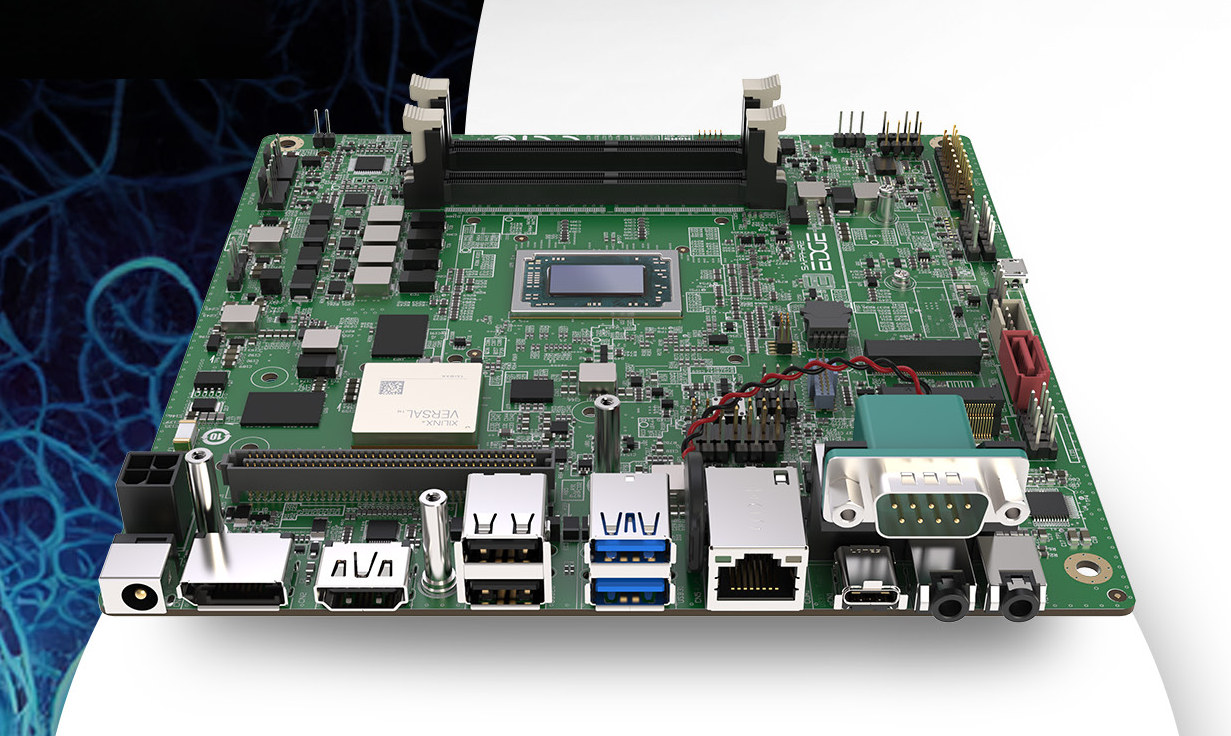
AMD has introduced the Ryzen AI Embedded P100 and X100 x86 processors designed to power AI-driven applications at the edge, such as automotive digital cockpits, smart healthcare equipment, and humanoid robotics. AMD had previously launched several Ryzen Embedded families, starting with the Ryzen Embedded V1000 in 2018, and more recently, the Ryzen Embedded 8000 family with a 16 TOPS NPU, yet without “AI” in the name. The new AMD Ryzen AI Embedded family is based on high-performance “Zen 5” core architecture, an RDNA 3.5 GPU for real-time visualization and graphics, and an XDNA 2 NPU for low-latency, low-power AI acceleration. The P100 Series processors target in-vehicle infotainment and industrial automation, while the X100 Series processors feature higher CPU core counts and AI TOPS performance for more demanding physical AI and autonomous systems. Six models are currently available in the Ryzen AI Embedded P100 family: AMD Ryzen AI P121, P123, P121i, […]
Year 2025 in Review, CNX Software stats, and looking ahead to 2026
Time for the last post of 2025, as the year is almost over. I’ll look back at key developments and notable products launched in 2025, share some CNX Software website traffic statistics, and look ahead to 2026. Year 2025 in Review After 22 product releases in 2024, Raspberry Pi calmed down a little bit in 2025, and the highlights of the year included the Raspberry Pi 500+ mechanical keyboard, the 5-inch variant of the Raspberry Pi Touch Display 2, and a Raspberry Pi 5 1GB RAM. What didn’t quite stop were the accessories from third parties for Raspberry Pi SBC and Raspberry Pi Pico boards. The most exciting Arm SoC release of 2025 was probably the 12-core CIX P1 Armv9 SoC found in Radxa Orion O6 SBC, MINISFORUM MS-R1 Arm mini PC, and Orange Pi 6 Plus board, but while performance was fine, it was overhyped in 2024, and software […]
OpenMediaVault 8 (OMV8) ” Synchrony” released for 64-bit x86 (AMD64) and Arm (ARM64) platforms only
OpenMediaVault 8, or OMV8 for shorts, codenamed “Synchrony” has been released, now supporting only 64-bit architectures (AMD64 and ARM64), and dropping 32-bit systems based on the i386, armel, and armhf architectures. OpenMediaVault is a popular, open-source network-attached storage (NAS) solution based on Debian Linux that’s been around for many years. I had my first experience with it in 2017 when I reviewed FriendlyELEC NanoPi NEO NAS Kit based on a NanoPi NEO2 SBC with an Allwinner H5 64-bit Cortex A53 SoC, but sadly not recommended for OMV8 (more on that below). The main reason for killing 32-bit support is that the Salt Project only supports 64-bit builds. OpenMediaVault 8 highlights: Upgrade to Debian 13 (Trixie). Replace cpufrequtils with linux-cpupower Improve several user and group-related RPCs. Developers should note that the RPCs UserMgmt::enumerateSystemUsers, UserMgmt::enumerateUsers, UserMgmt::enumerateAllUsers and UserMgmt::getUserList now return only basic user information. Set the parameter detail to full to get […]
Pocket8086 – An handheld x86 retro computer with an XT-class 8086/V30 CPU running DOS 6.22 or Windows 3.0
The Pocket8086 is a handheld retro computer built around classic 8086, 8088, NEC V20, or NEC V30 processors, giving it the performance and behavior of an 8086-class retro computer while still offering the convenience of a compact handheld form factor. Designed for vintage-computing enthusiasts, DOS gamers, and makers, it delivers a handheld retro computing experience suitable for DOS 6.22 as well as Windows 3.0/3.1, effectively packing an XT-class machine into a portable device. The device integrates a 4.77–10 MHz CPU, 768 KB RAM, a replaceable TVGA9000i-based VGA card with 512 KB VRAM, OPL3 (YMF262) audio, a built-in mouse, PS/2 support, VGA output, CH375B-based USB mass-storage (U-disk) support, and a 512 MB CF card for IDE-mode storage. It features an IPS LCD with 4:3 and 16:9 modes (640×480 / 800×480), and includes OSD/SOSD menus for display tuning and system status. A 4,000 mAh lithium battery, open hardware documentation, and expansion options […]
Compex “JustWiFi⁷™” driverless, Ethernet-connected Wi-Fi 7 module delivers up to 10 Gbps throughput (Sponsored)
Compex Systems (Compex) is redefining how wireless is integrated into modern embedded and industrial systems with the launch of JustWiFi⁷™, a one-of-a-kind, driverless, tri-band concurrent Wi-Fi 7 module that connects through Ethernet protocols. Designed to eliminate the complexity of traditional wireless integration, JustWiFi⁷™ makes high-performance Wi-Fi deployment faster, simpler, and smarter. Rethinking Wi-Fi Integration: No Drivers. No Hassle. JustWiFi⁷™ Most of the Wi-Fi modules today rely on PCIe, SDIO, or USB interfaces and are controlled through drivers. Developers will need to deal with the drivers’ compatibility with the host platform, particularly its OS and kernel version. The drivers for Wi-Fi 7 are particularly complex due to the standard’s advanced features. Many open-sourced drivers and sometimes the host CPU are not able to deliver the full capabilities of the Wi-Fi 7 chipset. These complications often unnecessarily slow down and add to the development time and effort. Engineered for speed, simplicity, and […]
LattePanda IOTA SBC combines Intel N150 SoC with Raspberry Pi RP2040 for GPIO and power control
LattePanda IOTA is a new Intel Processor N150 SBC equipped with up to 16GB LPDDR5 and 128GB eMMC flash, as well as a Raspberry Pi RP2040 microcontroller for GPIO and power control It’s an update to the LattePanda V1 launched in 2015 with an Intel Atom x5-Z8300/Z8350 Cherry Trail SoC and an ATMega32U4 microcontroller. The new model is up to eight times faster, features up to four times the memory, twice the storage, Gigabit Ethernet, and more, but mostly keeps the same dimensions and layout for compatibility with most accessories. It also adds new features such as a 16-pin PCIe connector, ECC memory, Wake-on-LAN, and more… LattePanda IOTA specifications: SoC – Intel Processor N150 Quad-core “Twin Lake” processor @ up to 3.6 GHz (Turbo) with 6MB cache GPU – 24EU Intel UHD graphics @ 1000 MHz TDP: 6W to 15W (Configurable in BIOS/UEFI) Memory – 8GB or 16GB LPDDR5 4800MT/s […]
Get your carrier board for the LattePanda Mu x86 Compute Module manufactured for free, win prizes (Sponsored)
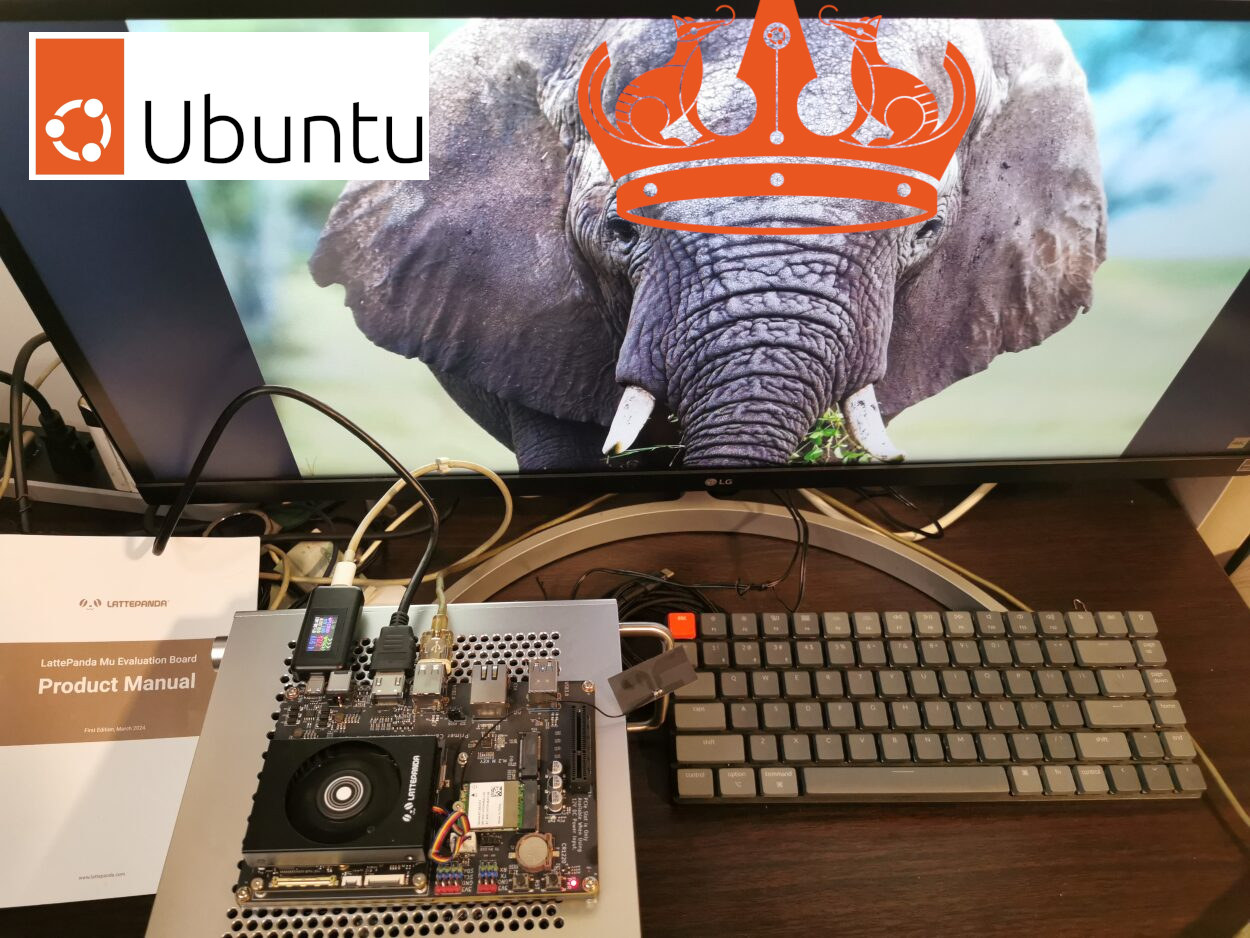
DFRobot and NextPCB are currently running a PCB design contest offering free PCB manufacturing and prizes worth up to $800 to people designing and submitting a carrier board design for the LattePanda Mu x86 Compute Module. As a reminder, the LattePanda Mu Compute Module is an x86 system-on-module initially launched with the Intel Processor N100 Alder Lake-N CPU, and later offered with a more powerful Core i3-N305 octa-core processor. It comes with up to 16GB LPDDR5-4800, 64GB eMMC 5.1 flash, and exposes I/Os through a 260-pin SO-DIMM connector. Arnon reviewed the LattePanda Mu (N100) with Windows 11 and Ubuntu 24.04 using the two reference carrier boards from DFRobot. But now, the company wants to encourage the development of more carrier boards for the LattePanda Mu, hence the PCB design contest. So what can you win exactly? Winners selected by a panel of judges from DFRobot and NextPCB will be offered […]