FreeRTOS Category - CNX Software - Embedded Systems News

Quectel SRG091X and SRG093X NXP i.MX 9 industrial AIoT modules integrates Wi-Fi 6, Bluetooth 5.4, and 802.15.4 radios

Quectel SRG091X and SRG093X NXP i.MX Smart AIoT module

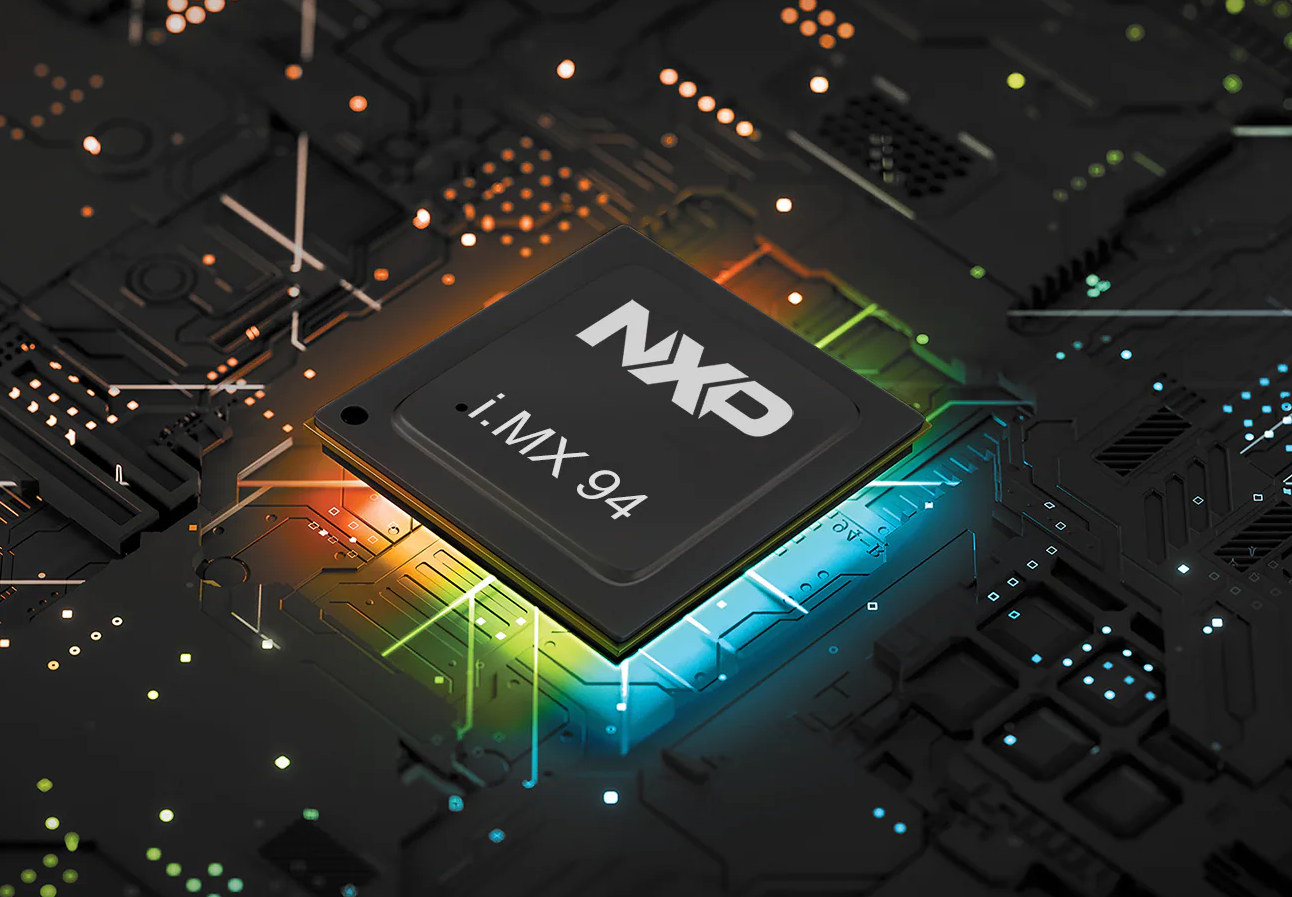
After releasing the very powerful P895BD-AP AIoT module at CES 2026, Quectel now released two new low-power industrial AIoT modules based on NXP’s i.MX 9 series SoCs. The module integrates Wi-Fi 6, Bluetooth 5.4, and 802.15.4 radios through the IW610G chipset, so it can simply be dropped into a PCB to create a fully compliant Matter Border Router without any RF design or coexistence concerns. While both modules share the same 46 x 41.5 mm form factor and wireless capabilities, they are different in terms of  CPU power as the SRG091X is an entry-level solution built around a single-core NXP i.MX 91 processor, while the SRG093X features dual-core NXP i.MX 93 SoC, which includes a Cortex-M33 real-time core and a neural processing unit (NPU) for edge AI workloads. The module supports LPDDR4/LPDDR4X memory, eMMC storage, and various I/O options, including dual Gigabit Ethernet, USB 2.0, CAN-FD, SPI, UART, I²C/I³C, ADC, […]

AMD launches Ryzen AI Embedded P100 and X100 processors with up to 50 TOPS of AI performance

AMD Ryzen AI Embedded P100 X100 SoC

AMD has introduced the Ryzen AI Embedded P100 and X100 x86 processors designed to power AI-driven applications at the edge, such as automotive digital cockpits, smart healthcare equipment, and humanoid robotics. AMD had previously launched several Ryzen Embedded families, starting with the Ryzen Embedded V1000 in 2018, and more recently, the Ryzen Embedded 8000 family with a 16 TOPS NPU, yet without “AI” in the name. The new AMD Ryzen AI Embedded family is based on high-performance “Zen 5” core architecture, an RDNA 3.5 GPU for real-time visualization and graphics, and an XDNA 2 NPU for low-latency, low-power AI acceleration. The P100 Series processors target in-vehicle infotainment and industrial automation, while the X100 Series processors feature higher CPU core counts and AI TOPS performance for more demanding physical AI and autonomous systems. Six models are currently available in the Ryzen AI Embedded P100 family: AMD Ryzen AI P121, P123, P121i, […]

Compact development board features a single ESP32-P4 + ESP32-C5 dual-band Wi-Fi 6 module, MIPI display and camera interfaces

WTDKP4C5 S1, ESP32 P4 and ESP32 C5 WI FI6 Development Board

Just a few months back, Wireless-Tag released the WT99P4C5-S1, which combines the ESP32-P4 with an ESP32-C5 dual-band WiFi 6 module, instead of the more commonly used ESP32-C6 wireless module found on most ESP32-P4 development boards we’ve covered. The company has now released the WTDKP4C5-S1, a more compact development board built around the WT01P4C5-S1 ESP32-P4 and ESP32-C5 core module. The board supports MIPI-CSI and MIPI-DSI through the ESP32-P4, while the SDIO-connected ESP32-C5 provides dual-band Wi-Fi 6 (2.4/5 GHz) connectivity along with BLE 5, Zigbee, Thread, and Matter. Other features include a USB 2.0 Type-C OTG port, two UART debug interfaces, two 40-pin GPIO breakouts from both chips, and various power options via USB-C, a 12V DC input, or headers. The board is suitable for LVGL-based HMIs, data acquisition, industrial control, and Edge AI applications such as IPCs and smart displays. Wireless Tag WTDKP4C5-S1 specifications: Core module – Wireless Tag WT01P4C5-S1 Main […]

VEGA AS2161 “DHRUV64” – A 1GHz dual-core 64-bit RISC-V microprocessor designed in India

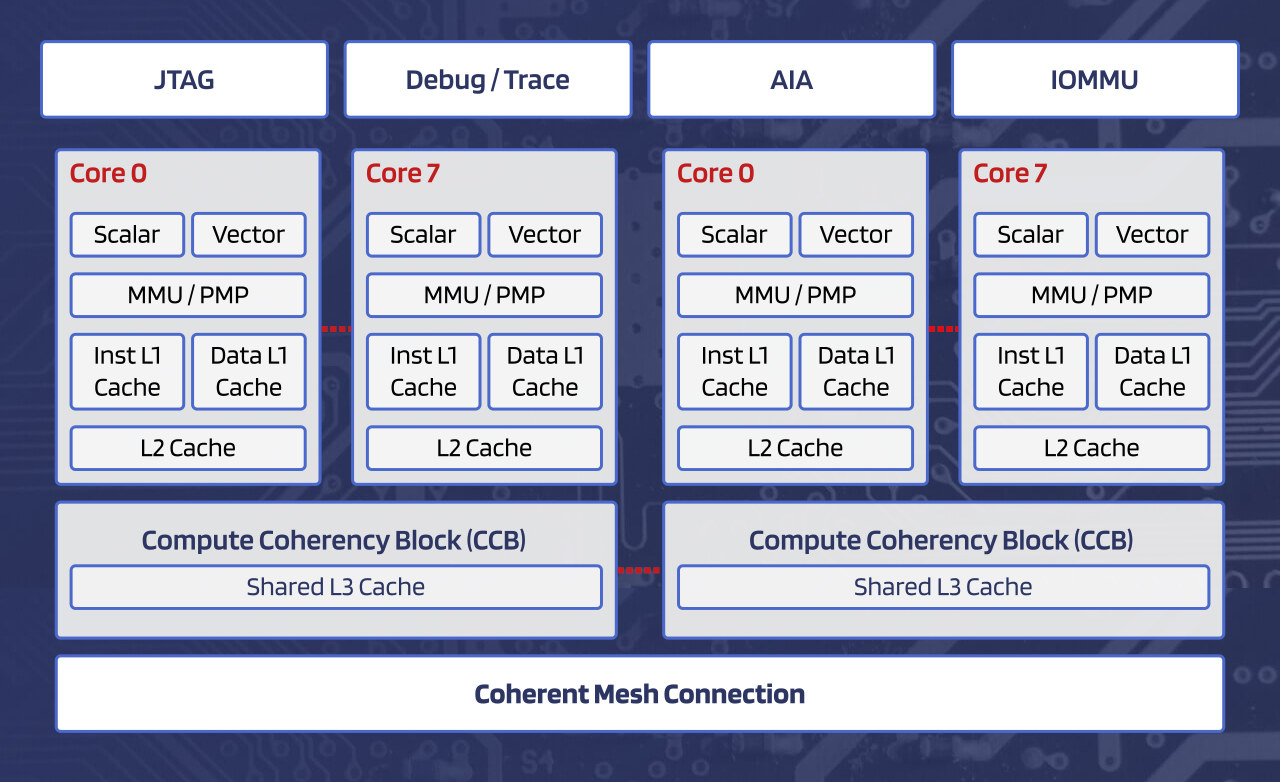
VEGA AS2161 block diagram

The Government of India has been investing to spur up its semiconductor design and manufacturing industry at least since 2018/2019 with the SHAKTI and AJIT microprocessors. In 2022, they decided to focus on the RISC-V architecture with the VEGA processor family, starting with the THEJAS32 (VEGA ET1031) and THEJAS64 (VEGA AS1061) microprocessors, and the former was eventually found in the ARIES v3.0 Arduino UNO-inspired development board. Things continue to progress nicely, albeit slowly, and the government has now announced the launch of the DHRUV64 (VEGA AS2161) dual-core 64-bit RISC-V MPU clocked at 1 GHz and supporting Linux, which it describes as “a fully indigenous microprocessor developed by the Centre for Development of Advanced Computing (C-DAC) under the Microprocessor Development Programme (MDP)”. VEGA AS2161 (DHRUV64) specifications highlights: Architecture – RISC-V 64G (RV64IMAFD) Instruction Set 13-16 stage out-of-order pipeline implementation. Advanced branch predictor – BTB, BHT, RAS. Harvard architecture, separate Instruction and […]

iWave Systems iG-RainboW-G69M TI AM62L OSM Size-S system-on-module powers Raspberry Pi-sized SBC

Raspberry Pi TI AM62L OSM carrier board

Yesterday, I wrote about the Beacon AM62L SoM, one of the first system-on-module based on Texas Instruments AM62L dual-core Cortex-A53 SoC for low-power IoT and HMI applications. It turns out there’s another AM62L module compliant with the OSM Size-S standard, along with a Raspberry Pi-sized carrier board. iWave Systems iG-RainboW-G69M is a 30x30mm CPU module with 1GB or 2GB LPDDR4, 8GB eMMC flash by default, and 332 LGA contacts exposing interfaces such as RGB LCD and MIPI CSI display interfaces, dual gigabit Ethernet, I2S audio, USB 2.0 interfaces, and a range of low-speed I/Os. iWave Systems iG-RainboW-G69M specifications: SoC – Texas Instruments AM62Lx CPU – Dual-core Arm Cortex-A53 processor up to 1.25GHz Cache – 32KB L1 D-cache, 32KB L1 I-cache per core; shared 256KB L2 cache System Memory – 1GB LPDDR4, expandable up to 2GB Storage 8GB eMMC flash (other capacities available upon request) 32Kbit EPPROM 332 LGA contacts Storage […]

STEVAL-ROBKIT1 – A robot evaluation kit based on STM32H725 and STM32G0 microcontrollers

STEVAL-ROBKIT1 STM32H725 robot evaluation kit

The STEVAL-ROBKIT1 is an evaluation kit for robotics applications based on ST’s STM32H725 and STM32G0 Arm microcontrollers. It’s the first such robot kit from the company, and it targets both traditional engineering teams, educators, and students. The kit features an STM32H725 main board, an STM32G0 motor-control PCB, and a 1.53MP camera + ToF sensor module, as well as a robotic frame, wheels, and motors with encoders. It does not require a soldering iron for assembly to make it easier for students. STEVAL-ROBKIT1 key components and features: Main board – STEVAL-ROBKIT1-1 SoC – STMicro STM32H725IGT6 Arm Cortex-M7 microcontroller @ 550 MHz with 1MB flash, 564 KB SRAM with ECC Wireless – BlueNRG-M2 Bluetooth LE 5.2 SoC Sensors 6-axis IMU (LSM6DSV16BX) Magnetometer (LIS2MDL) Microphone (MP34DT06J) Expansion – 40-pin Raspberry Pi-like header Motor control board – STEVAL-ROBKIT1-2 SoC – STMicro STM32G071CBT6 Arm Cortex-M0+ microcontroller at 64 MHz with 128 KB flash, 36KB SRAM Motor […]

Beacon AM62L – A compact (38x28mm), low-power dual-core Cortex-A53 System-on-Module (SoM)

Texas Instruments AM62L System-on-Module

Beacon EmbeddedWorks has announced a compact (38x28mm) System-on-Module (SoM) based on the recently introduced low-power Texas Instruments Sitara AM62L dual-core Cortex-A53 SoC designed for IoT, HMI, and general-purpose applications requiring a display. The AML62L SoM features LPDDR4 or DDR4 memory, an 8-bit eMMC flash, and an optional WiFi 5 and Bluetooth 5.0 LE module. All I/Os are exposed through two board-to-board connectors, including RGB LCD or MIPI DSI display interface, two gigabit Ethernet interfaces with TSN support,  USB 2.0, CAN FD, analog inputs, and more. Beacon AM62L specifications: SoC – Texas Instruments AM62L dual-core Arm Cortex-A53 processor up to 1.25GHz; 5600 DMIPS System Memory – LPDDR4, DDR4 Storage – 8-bit eMMC flash Wireless – 802.11ax WiFi 6 1×1 and Bluetooth 5.0 LE; cnxsoft: 802.11ax is WiFi 6, but the company only mentions support for WiFi 5 in other parts of the description. 2x board-to-board connector Storage – 2x 4-bit SD/SDIO […]

pdsink – An open-source USB PD 3.2 sink stack for embedded devices

open-source USB PD Sink implementation for embedded devices

pdsink is an open-source USB Power Delivery (PD) 3.2 sink implementation for embedded devices released under an MIT license. Vitaly Puzrin noticed that most available USB PD stacks come with at least one hard constraint: vendor lock-in, NDA, no public sources, coupling to a specific OS or framework, incomplete sink feature set (e.g., no EPR), or difficulty extending to new Type-C Port Controller (TCPC)/MCU combinations. So he created pdsink is an attempt to provide a small, platform-agnostic, readable sink-only stack that’s easy to adapt to different controllers. pdsink highlights: USB PD 3.2, SPR (Extended Power Range), and EPR (Extended Power Range for 28V and up) support on the sink side. Platform-agnostic C++ core that does not depend on a specific HAL or RTOS. Reference implementation using OnSemi FUSB302B + FreeRTOS (ESP32-C3). MIT license enabling the project to be used in commercial products without conditions. pdsink can be found on any […]