
Linux (Enlightenment and Lubuntu) in WeTek Play Amlogic TV Box

Last week I reviewed WeTek Play, a TV box with two DVB-S2 tuners, powered by Amlogic AML8726-MX dual core ARM Cortex A9 processor, and running Android 4.2, but the company also released several Linux based images including one with Enlightenment window manager, and another, temporary one, with Ubuntu core which allows you to install Lubuntu or Xubuntu with apt-get. There are also working on OpenELEC, but have not released the binary yet. Today, I’ll try the Enlightenment image because it also supports hardware video decoding via Gplay (gstreamer), and show how to install Lubuntu. The instructions below have been done in a computer running Ubuntu 14.04, but a Windows computer can also be used. Download Wetek-Linux.img.bz2 Connect a micro SD card to your computer, extract and flash Wetek-Linux.img: In Linux using a terminal window:

In Windows, extract the image, and use Win32DiskImager to copy the image to your micro SD […]

Unboxing of WeTek Play DVB-S2 Android / Linux STB
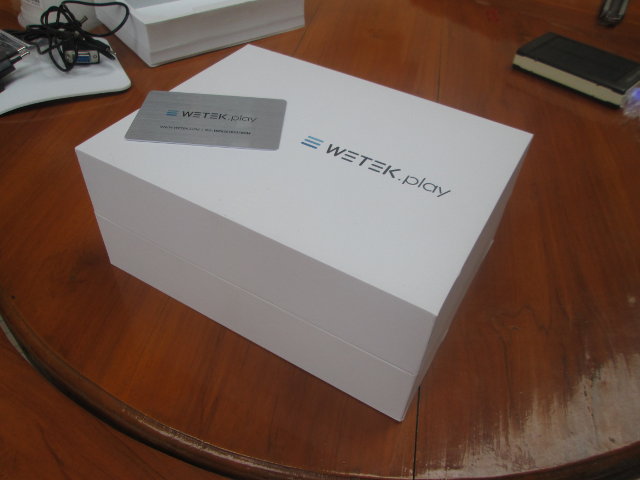
WeTek Electronics, a company based in Hong Kong, has sent me an Android TV powered by Amlogic AML8726-MX dual core Cortex A9 processor. Nothing new here, but I was very very interested in reviewing it because it includes a DVB-S2 tuner, and on top of their stock Android firmware, the company provides various Android and Linux firmware files such as CyanogenMod, ParanoidAndroid, OpenELEC, Linux with Enlightenment desktop environment, Lubuntu 14.04 and so on. Today, I’ll list the hardware specifications of the device, show some unboxing pictures and video, and as usual, open the device to see what’s inside. I’ll provide a full review in one or two more posts. WeTek Play Specifications Apart from the DVB-S2 tuner are the serial port, the hardware specifications sound familiar: SoC – Amlogic AML8726-MX dual core Cortex A9 @ 1.5GHz with Mali-400MP GPU System Memory – 1GB DDR3 Storage – 4 GB NAND flash […]

Lemaker.org is Giving Away Banana Pi Development Boards to Developers and Fans

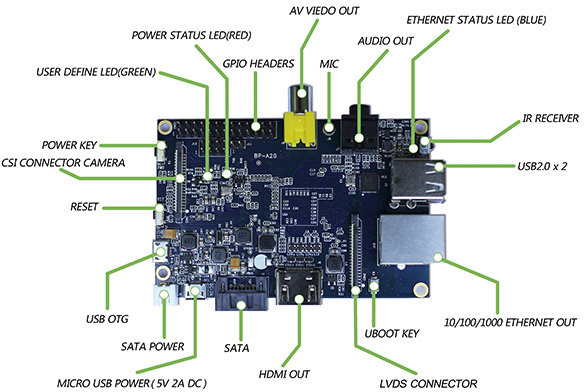
Banana Pi is a development board powered by AllWinner A20 dual core SoC with 1GB RAM, and with expansion headers and a form factor very similar to the Raspberry Pi. It can run Debian, Lubuntu, Android 4.2, Arch Linux ARM, Scratch OS, and OpenSuse, but Lemarker.org community would like more educational materials such as open source software or hardware projects, tutorials, etc.., so they’ve launched a program to give away boards to developers and people who can help writing and maintaining documentation. There are three categories of projects: STEAM – “Science, Technology, Engineering, Art & Mathematics” educational, open source projects running on the the Banana Pi Hardware or Software Project –  Open source projects based on Banana Pi which could be helpful to the community, including open source hardware peripherals projects; Banana Pi Fans – You don’t need to be as technical as for the two others categories, but you […]

Firefly-RK3288 Development Board To Support Android and Lubuntu

We’ve already got a long list of upcoming Rockchip RK3288 based Android media players, but no low cost development boards have been announced to date. We can certainly expect a Radxa Rock 2 board with the Cortex A17 processor, but it might not be the only one, as Firefly-RK3288 development board powered by Rockchip RK3288 is currently being developed by another Chinese team. Current specifications for Firefly-RK3288 board: SoC – Rockchip 3288 quad core ARM Cortex A17 up to 1.8 GHz with Mali-T764 GPU supporting OpenGL ES 1.1/2.0 /3.0, and OpenCL 1.1 System Memory – 2G DDR3 Storage – 8GB eMMC flash + micro SD slot Video I/O HDMI 2.0 up to 3840×2160@60p VGA out (D-SUB connector) VGA in is available via the expansion headers. LCD, MIPI and LVDS Audio Output / Input – HDMI, optical S/PDIF, microphone header, and built-in MIC Connectivity – Gigabit Ethernet, dual band 802.11 b/g/n Wi-Fi with external antenna, and Bluetooth […]

Easy and Safe Way to Try Linux on Popular Rockchip RK3188 mini PCs

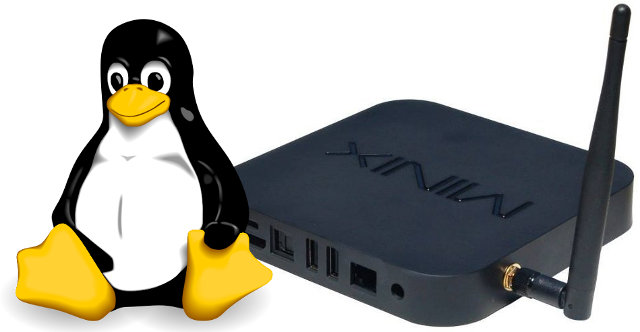
Until recently, installing Linux on Rockchip R3188 based TV boxes or HDMI TV dongles meant you had to flash one or more binaries to your device using various type of tools for Linux or Windows. But thanks to various members of the community, it’s now as easy as flashing an image for the Raspberry Pi, as long as you own Minix Neo X7, PQ Labs iStick A350-SSD, Radxa Rock development board, or Rikomagic MK802IV (AP6210 or 8188EU Wi-Fi module versions) thanks to images provided by Ian Morrison on G+ mini PC community that can be booted from a (micro) SD card, which the added advantage that it won’t mess with your Android installation. You can do it whether you use a Windows or Linux PC, and it should also be possible on Mac OS X, but I don’t know the commands. Here are the steps to follow for MINIX NEO […]

CubieTruck’s DVK570 Daughter Board and Add-ons (GPS, Zigbee, Sensors, RS485, and SPI Flash)

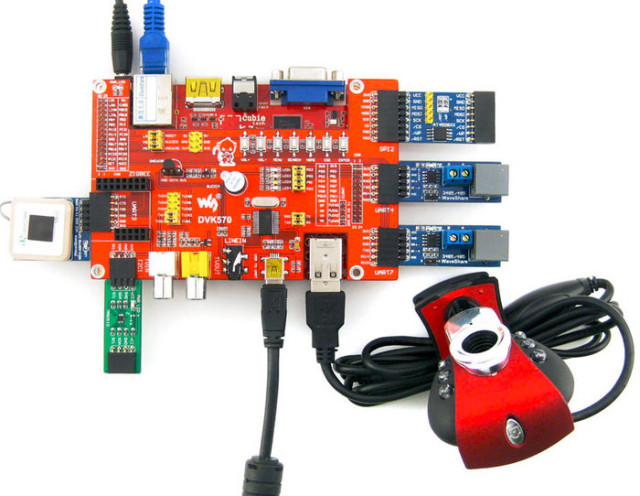
CubieTruck is one of the development boards made by CubieTech. It is powered by AllWinner A20 with 2GB RAM, Gb Eternet, various ports, and supports Android and multiple Linux distributions. Waveshare Electronics has just launched DVK570 daughter board for the CubieTruck which adds support for TV in and out, a buzzer, and headers to connect modules such as GPS, RS485, an SPI flash, a Zigbee module, a magnetometer, or a temperature sensor. Hardware features of DVK570 daughter board: CubieTruck Headers – 1x 30-pin header and  1x 24-pin header for connection with the CubieTruck Video – TVIN in, and TV Out interfaces (CVBS) Audio – 3.5mm Line IN interface Debugging – UART interface, micro USB port with USB to UART chip (Profilic PL2303) Expansions for add-on modules: 1x 4-pin I2C interface to connect I2C modules such as PCF8563 RTC Module, MAG3110 Board, and more 2x 6-pin UART interfaces (UART4 and 7) […]

Ubuntu 14.04 LTS Released

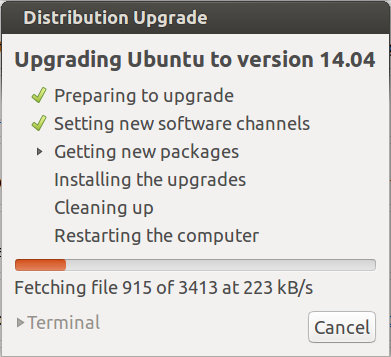
Every two years, Canonical releases Long Term Support (LTS) version of Ubuntu Linux based operating systems. The previous version was Ubuntu 12.04 LTS “Precise Pangolin”, and the latest Ubuntu 14.04 LTS “Trusty Tahr” has just been released with a 5 year support commitment for bug fixes and security patches. The company also releases other version every 6 months without long term support. There has not been major changes to this version, at least compared to Ubuntu 13.10, with the development team focusing on performance and stability improvements. For the first time, this LTS release also includes Kubuntu, Edubuntu, Xubuntu, Lubuntu, Ubuntu GNOME, Ubuntu Kylin, and Ubuntu Studio. It is also the first long-term support release to support “arm64” architecture for 64-bit ARM systems. Some notable others changes for Ubuntu Desktop include: Support for High-DPI screens and desktop scaling New screen saver and lock screen New window decorations, with improved appearance […]

ITEAD Studio IBOX AllWinner A20 mini PC Review

ITEAD Studio IBOX is an AllWinner A20 based mini PC currently running Android or Linux distributions currently featured on Indiegogo. I’ve already written about IBOX in a separate post, where you can get all the specifications, but the company has also sent me a unit (engineering sample) for review. Since the system is still in development, and it’s mostly a development platform, I won’t do a review with video testing, system performance, etc… as usual, but rather show the progress and current issues in terms of hardware and software, and I’ll also mention documentation, and shortly try Android 4.2 (pre-installed) and the Debian 7.0 image released by the company. IBOX Unboxing Pictures I’ve received the device in a cartoon box containing the device itself and a 9V/2A power supply. If you are or become a backer on Indiegogo you’ll also receive an add-on board providing access to a SATA connector,  […]

Exit mobile version