sdr News - CNX Software - Embedded Systems News

PhaseLatch Mini – An STM32-based low-cost SDR digitizer with two 12-bit ADCs, 210 kS/s USB streaming

PhaseLatch Mini modular Software Defined Radio platform

PhaseLatch Mini is a low-cost STM32-based SDR digitizer for the previously released Phase Loom (tuner aboard), built in a Blue Pill–style form factor for HF, FM, and VHF experimentation. The board uses two 12-bit ADCs that sample I and Q at the same time, combine both readings into a 32-bit data word, and send the data over USB at about 210,000 I/Q sample pairs per second using just the standard USB CDC interface. It includes SMA inputs, a built-in ~100 kHz low-pass filter network, USB-C connectivity, ferrite-filtered power, and dedicated 8 MHz/32.768 kHz crystals for stable timing. Other features of the board include dynamic timer tuning, circular DMA, ISR-driven packet chaining, and a lock-free USB feed path to maintain high-rate streaming. PhaseLatch Mini specifications: Microcontroller – ST STM32F103C8 Arm Cortex-M3 @ 72 MHz USB Interface – USB-C 2.0 (Full-Speed) port; CDC class; RAW vendor class planned ADC subsystem Dual simultaneous […]

Improved HackRF Pro open-source SDR platform supports 100 kHz to 6 GHz operating frequency

HackRF Pro

HackRF Pro is an update to the HackRF (One) open-source SDR platform first launched by Michael Ossmann from the Great Scott Gadgets through a Kickstarter campaign in 2013 that attracted close to 2,000 backers at the time, and is still popular since then. Compared to the HackRF One, the HackRF Pro has a wider 100 kHz to 6 GHz operating frequency, features more RAM and flash memory, supports 16-bit samples for low sample rates, eliminates the DC spike, improves RF performance with a flatter frequency response, has been designed with better power management, and implements other small changes such as switching to a modem USB-C port. HackRF Pro specifications (preliminary): MCU – NXP LCP43xx dual-core Arm Cortex M4/M0 microcontroller Logic – Power-efficient FPGA (instead of Xilinx CPLD) Frequency Range – 100 kHz to 6 GHz operating frequency Tunable from 0 Hz to 7.1 GHz Transceiver – Half-duplex Sampling rates – […]

Red Pitaya STEMlab 125-14 PRO Gen 2 is an AMD Zynq 7010/7020-based board for measurement, control, and signal processing

Red Pitaya STEMlab 125-14 PRO Gen 2

The Red Pitaya board was first introduced in 2013 as an Xilinx Zynq 7010 SoC FPGA board designed as a high-performance tool acting as an oscilloscope, spectrum analyser, waveform generator, and more. I hadn’t heard about the company much this then, but they must have been doing alright, since Red Pitaya has just started taking pre-orders for the STEMlab 125-14 PRO Gen 2 Starter Kit based on the same AMD Zynq-7010 SoC FPGA, and the STEMlab 125-14 PRO Z7020 Gen 2 Starter Kit with a more powerful Zynq-7020 device. STEMlab 125-14 PRO Gen 2 specifications: SoC FPGA (one or the other)  Xilinx Zynq 7010 CPU – Dual-core Cortex-A9 clocked up to 667 MHz FPGA fabric – 28K logic cells, 80x DSP slices Memory – 2.1 Mbit block RAM  Xilinx Zynq 7020 CPU – Dual-core Arm Cortex-A9 processor FPGA – 85K logic cells, 220x DSP slices Memory – 4.9 Mbit Block […]

Vaaman reconfigurable edge computer features Rockchip RK3399 SoC and Efinix Trion T120 FPGA (Crowdfunding)

Vaaman reconfigurable edge computer

Vaaman is a reconfigurable single-board edge computer that integrates a Rockchip RK3399 hexa-core ARM processor with an Efinix Trion T120 FPGA, offering a reconfigurable platform for edge computing applications. The board combines the flexibility of an FPGA with the raw power of a hard processor to create a system capable of adapting to varying computational demands in real time. The compact SBC features the Rockchip RK3399 hexa-core processor with two Cortex-A72 cores and four Cortex-A53 cores, as well as an Efinix Trion T120 FPGA with 112,128 logic elements, interlinked with RK3399 via a high-speed 300Mbps bridge (but it’s unclear how this is implemented). It is billed as a “Raspberry Pi-style board for the FPGA world” that can be used for cryptographic acceleration, software-defined radio (SDR), digital signal processing, real-time robotics, real-time video processing, edge AI deployments, industrial automation, and hardware prototyping. It features a 40-pin Raspberry Pi-compatible GPIO header and […]

SignalSDR Pro is a high-performance software-defined radio (SDR) in Raspberry Pi form factor (Crowdfunding)

Raspberry Pi SDR board with AMD Zync 7020 SoC FPGA

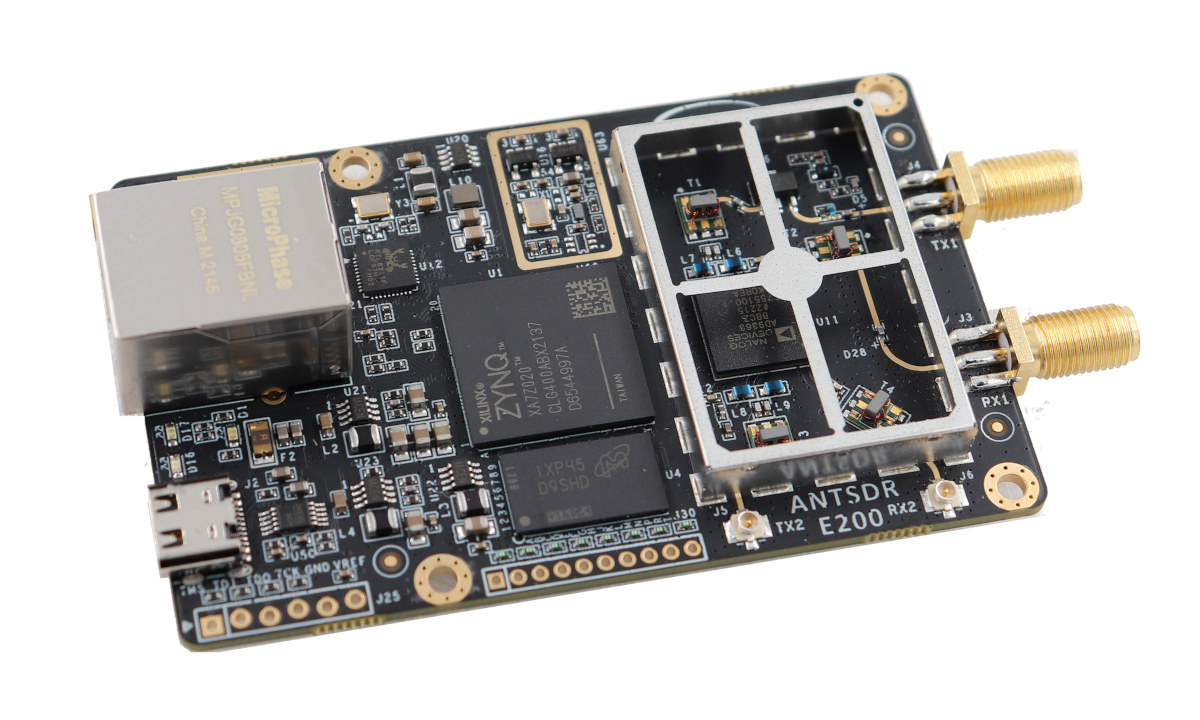
The SignalSDR Pro is a Raspberry Pi-sized SDR that brings a credit-card-sized twist to software-defined radios (SDRs). It is a compact, streamlined device suitable for tasks ranging “from signal processing and spectrum analysis to communication systems and beyond.” The SignalSDR Pro builds on the Analog Devices AD9361 radio transceiver and the AMD Zync 7020 SoC into a credit-card format reminiscent of Raspberry Pi single-board computers. The Raspberry Pi-sized SDR also features a 40-pin GPIO header for expansion with other hardware components and added functionality. The device offers a 70MHz – 6GHz tuning range, 12-bit sample rate, 61.44MHz RF bandwidth, and two full-duplex TX/RX channels via four I-PEX antenna connectors. It is also capable of emulating other SDR hardware such as the ADALM-PLUTO and USRP B210, making it easier to integrate into pre-existing workflows. The SignalSDR Pro is a mid-range alternative to entry-level SDR options such as the AntSDR E200, KrakenSDR, […]

High-speed data acquisition with Raspberry Pi Pico 2’s HSTX interface and HDMI to USB 3.0 video capture dongle
Raspberry Pi Pico 2 high-speed data acquisition

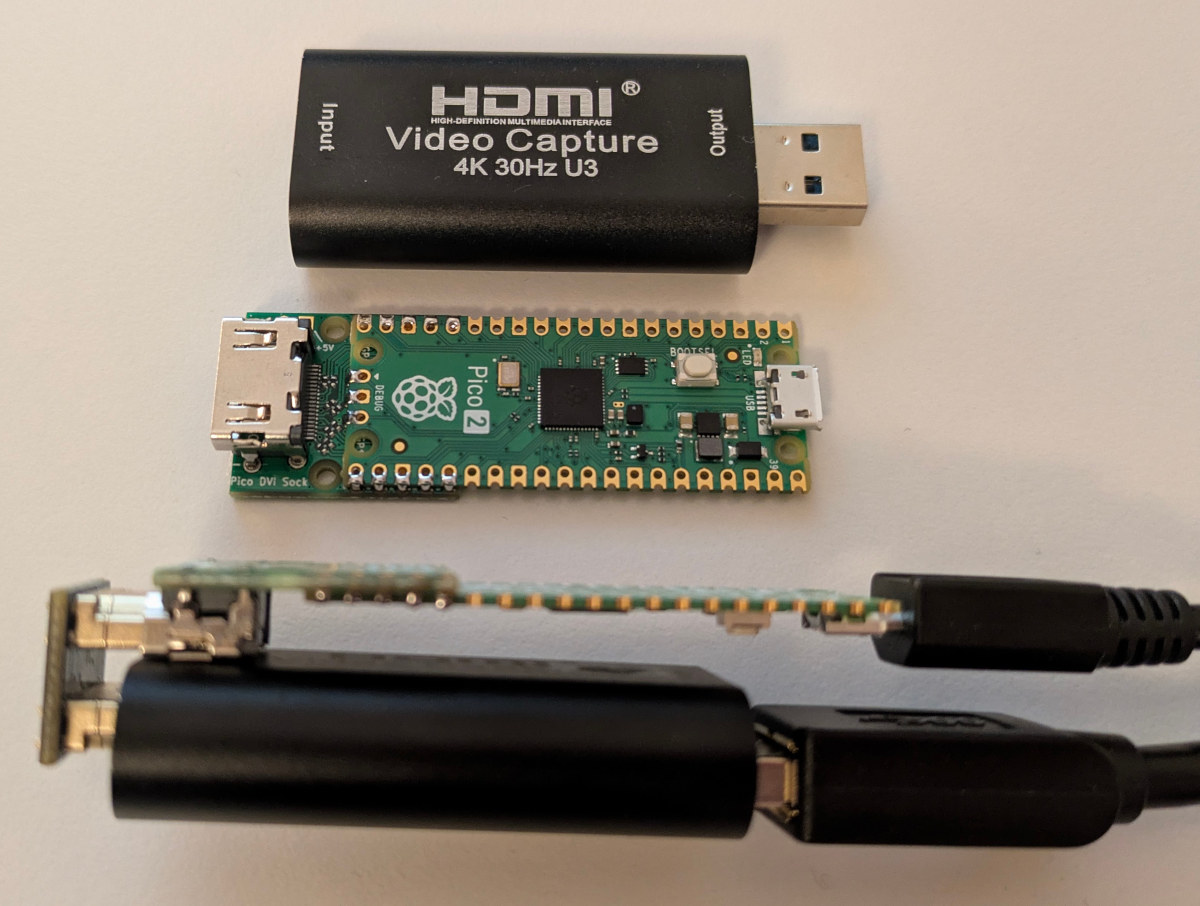
We previously explained the HSTX high-speed serial transmit interface of the Raspberry Pi RP2350 microcontroller was mostly useful for video outputs and display interfaces since it can only transmit, and not receive data. But Steve Markgraf found another use case for the HSTX interface – high-speed data acquisition – combining a Raspberry Pi Pico 2 board with the DVI Sock board for Pico and one of those cheap MS2130-based HDMI to USB 3.0 video capture dongles. He managed to stream out up to 75 MB/s of real-time data from an overclocked RP2350 to a host computer with a USB 3.0 port. The Adafruit Feather RP2350 HSTX board should also work, but also not been tested. Steve’s “hsdaoh-rp2350” data acquisition over HDMI firmware is based on the dvi_out_hstx_encoder example from Raspberry Pi using the HSTX interface for DVI output and code by Shuichi Takano implementing the HDMI data island encoding required […]

DeepRad is a cheap, modular SDR receiver based on the RTL-SDR (Crowdfunding)

Deeprad Single modular SDR receiver

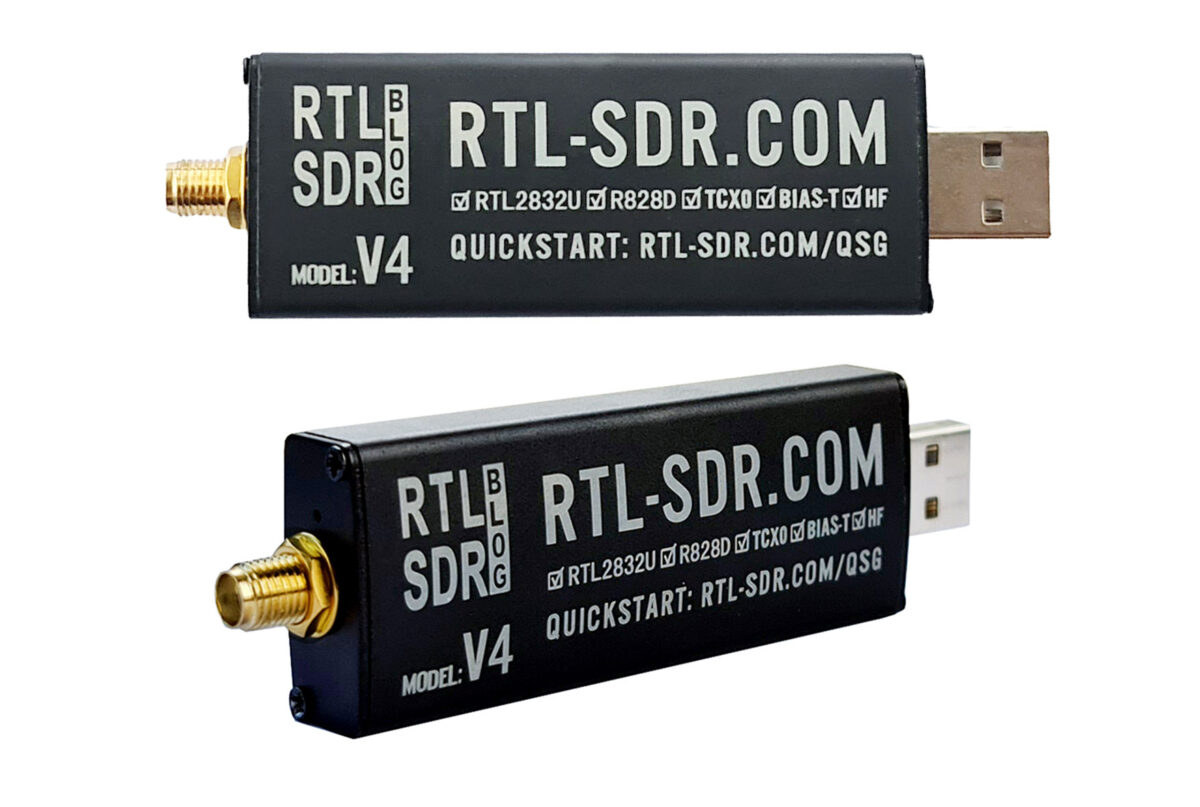
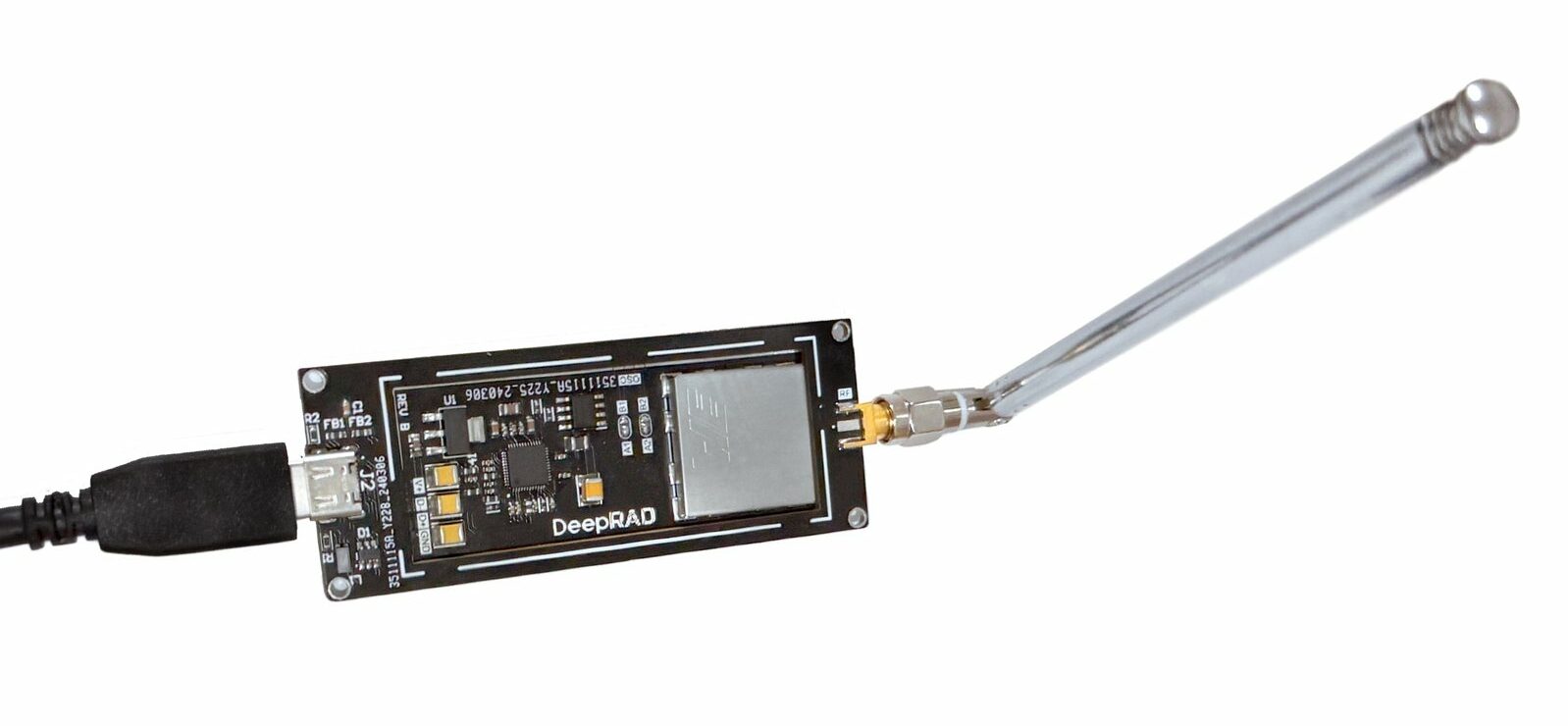
DeepRad is a software-defined radio (SDR) receiver built in the RTL-SDR form factor. The modular SDR receiver offers advantages over other RTL-SDR-based devices which make it easier to integrate with other components and build custom solutions for your specific applications. The DeepRad SDR receiver is based on the RTL-SDR dongle and features the same Realtek RTL2832U demodulator chip with an R860T tuner. The module features D+ and D- pins for USB connection, V+ for 5 V power supply, solderable jumpers for oscillator selection, an RF pin for antenna connection, and 8 shield pin connectors for shielding and support. The module is targeted at custom designs, with the user free to choose the best components for their application. It is as versatile as a typical SDR receiver, with applications ranging from FM radio listening to aircraft tracking. We have previously covered other RTL-SDR receivers, such as the KrakenSDR and the RTL-SDR […]

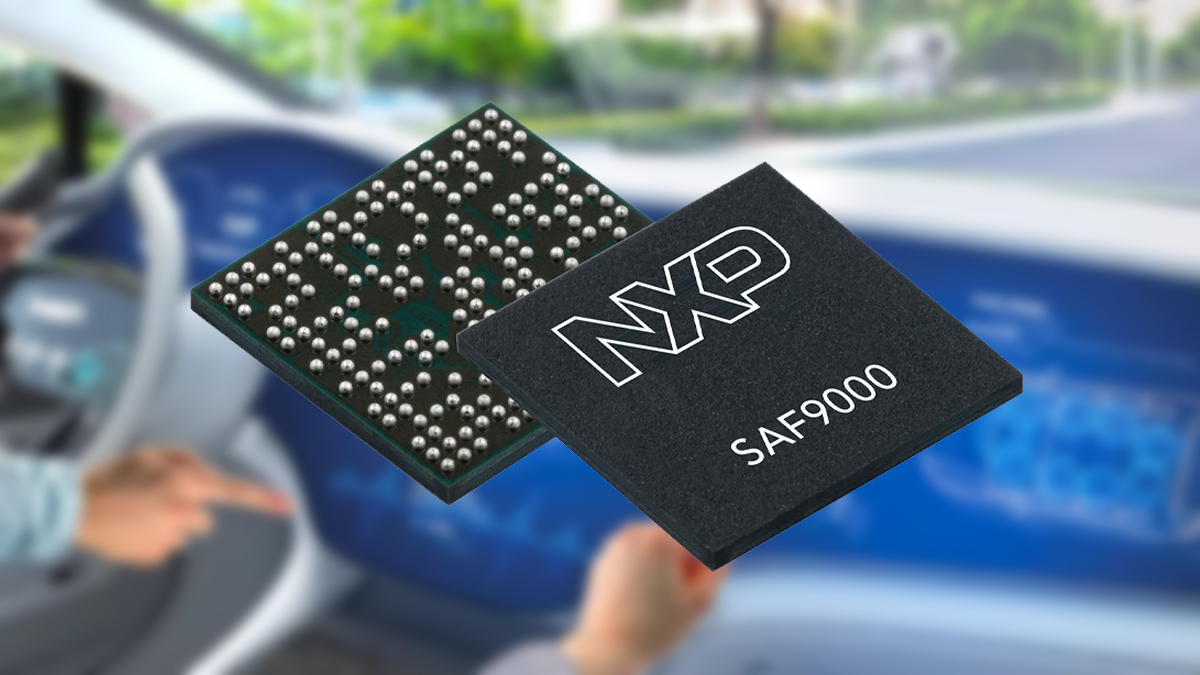
NXP SAF9000 and SAF9100 Automotive Audio DSP bring AI to car infotainment

NXP AI Audio Proce with SAF9xxx Audio DSPs

NXP has recently launched the SAF9xxx Automotive Audio DSP family, which currently includes SAF9000 and SAF9100 AI audio DSPs. Built around Cadence’s latest generation high-performance Tensilica HiFi 5 DSPs, these new chips not only feature AI and ML capabilities, but also include features like driver’s voice pitches and accent recognition, noise cancellation, voice recognition, emergency siren detection, and more. Additionally, the SAF9000 chip includes a software-defined radio option with up to five integrated tuners (controlled by an integrated Arm Cortex-M7 core) that covers all major global broadcast radio standards, including DAB, HD Radio, DRM, CDR, and AM/FM into a single chip solution. SAF9xxx Automotive Audio DSP specifications DSP – Tensilica HiFi 5 DSPs with dedicated neural network engines Integrated Controller – Arm Cortex-M7 core for tuner and audio control middleware Radio Features (SAF9000 only) Supports AM, FM, DAB, DAB+, DMB, HD Radio, DRM for AM, DRM for FM (DRM+), CDR […]