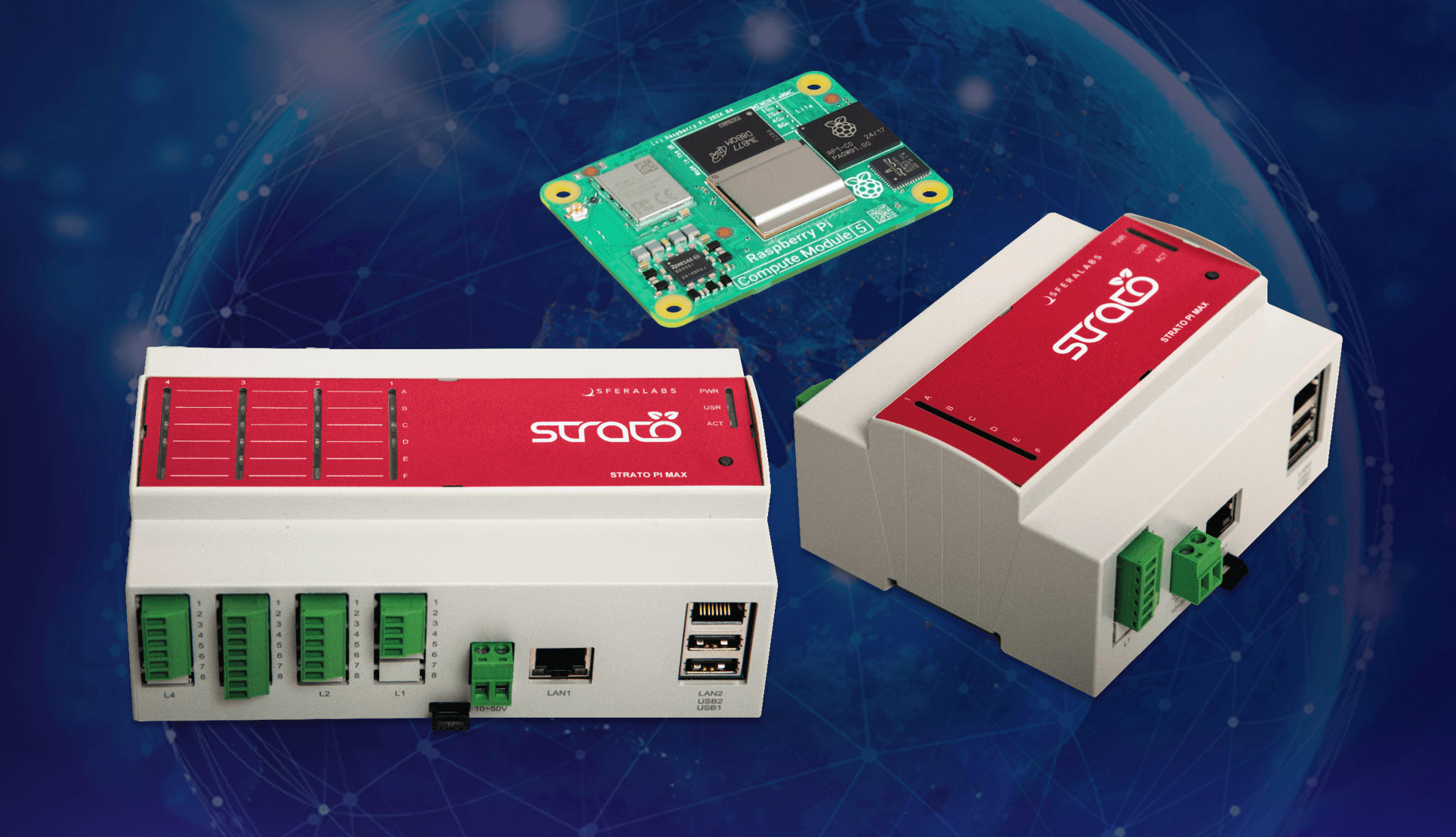
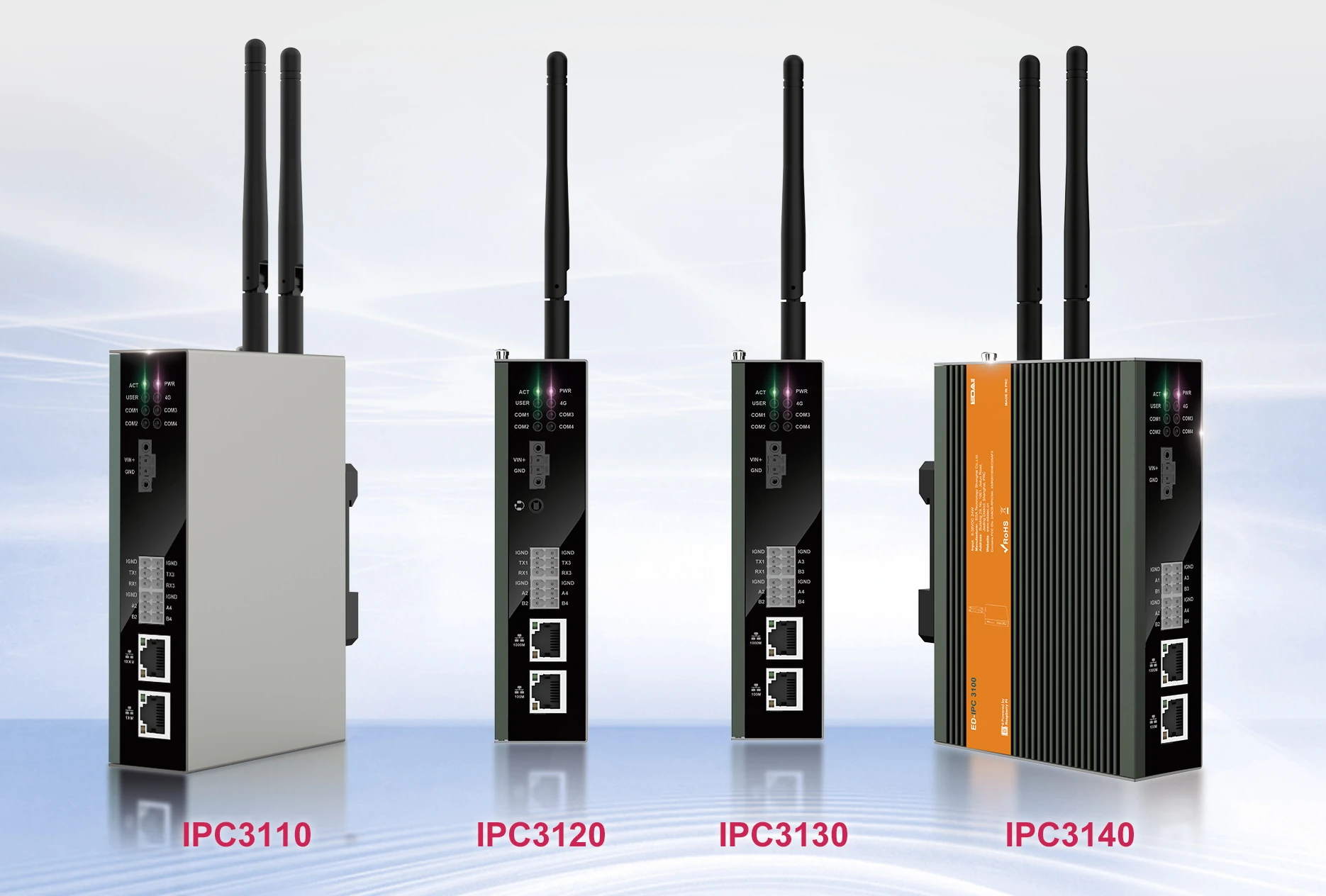
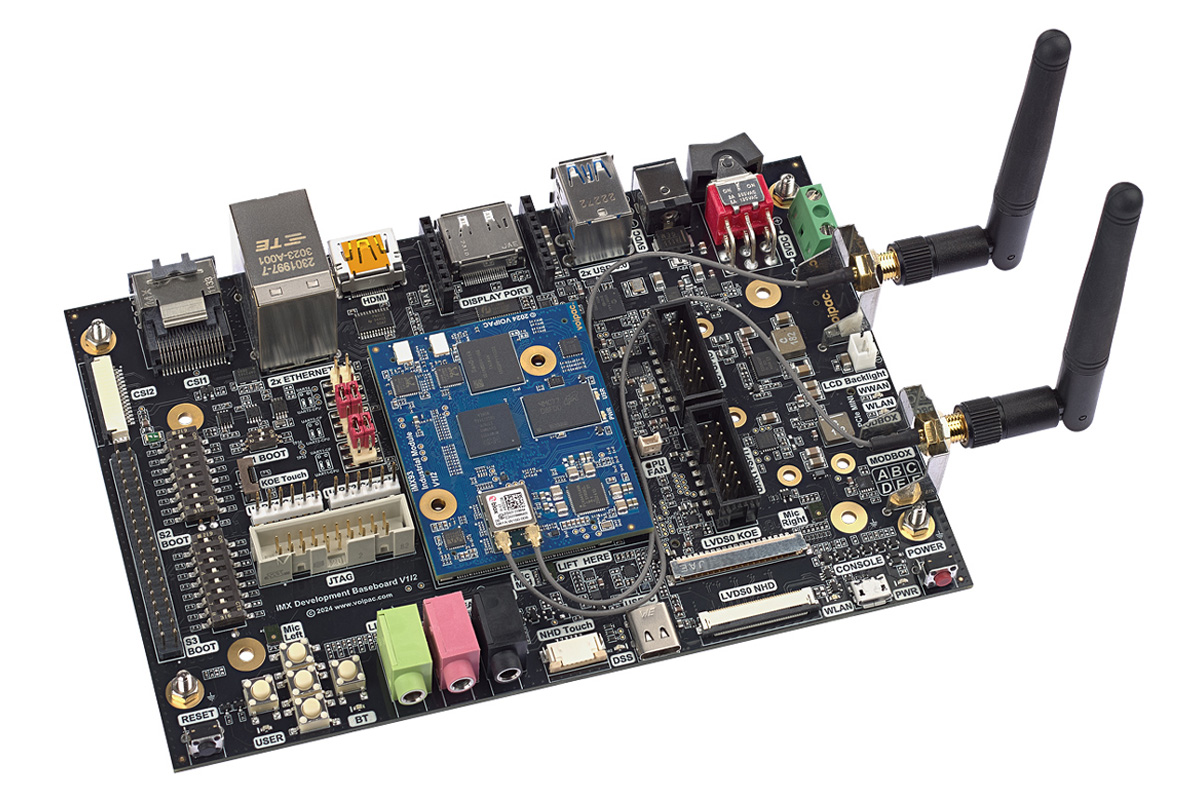
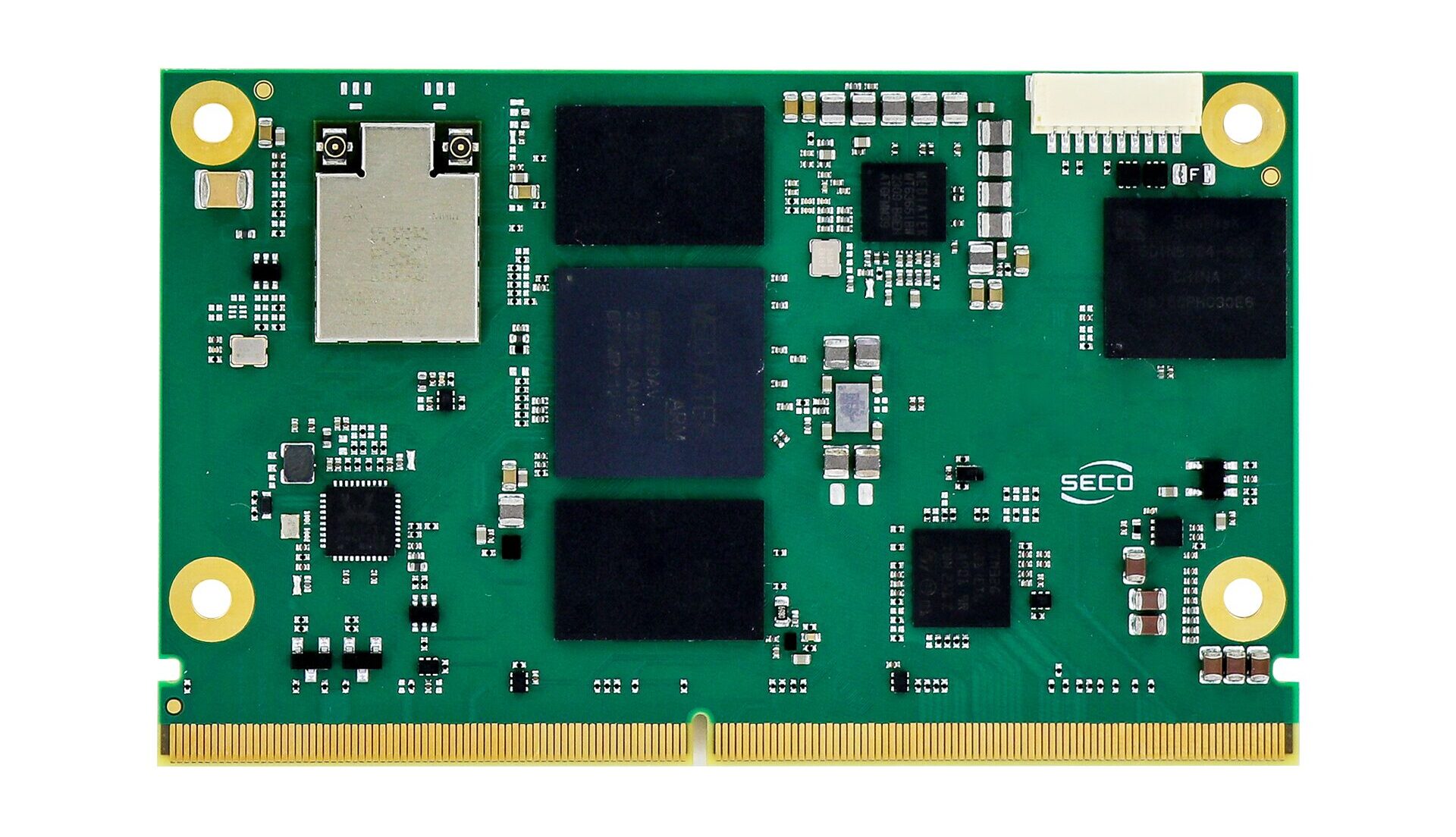
Back in April last year, Allwinner released the T536 SoC, and since then, we’ve seen MYiR Tech and Forlinx introduce SoM and SBC based on it. The latest to join the lineup is Boardcon, which has recently launched the PICOT536 SoM and EMT536 SBC for industrial HMI, machine vision, robotics, and other edge computing applications. As a reminder, the Allwinner T536 SoC features a quad-core Arm Cortex-A55 CPU, XuanTie E907 and E902 RISC-V coprocessors, and a 2 TOPS NPU for edge AI. The module comes with up to 8GB LPDDR4/LPDDR4X memory, up to 64GB eMMC flash, an optional WiFi 6 and Bluetooth 5.4 module, and a 314-pin MXM edge connector exposing I/Os such as MIPI DSI and LVDS, camera inputs, audio inputs and outputs, Gigabit Ethernet, PCIe, USB 3.0, and more. PICOT536 System-on-Module PICOT536 specifications: SoC – Allwinner T536 CPU – Quad-core Arm Cortex-A55 at up to 1.6GHz, RISC-V XuanTie […]
Forlinx UP4 – A 40×40 mm LCC + LGA system-on-module family with Rockchip, NXP, and Allwinner CPU options
Forlinx Embedded UP4 is a new family of pin-to-pin compatible system-on-modules currently offered with Rockchip RK3568J/RK3562J, NXP i.MX 9352, or Allwinner T527N/T536 processors. The UP4 modules measure just 40×40 mm and expose 487 pins through a hybrid LCC (Leadless Chip Carrier) and LGA (Land Grid Array) design with 1.0mm contact pitch and 1.27mm ball pitch, respectively. This should allow companies to design a single carrier board for multiple CPU variants. Forlinx UP4 specifications: SoC FET-MX9352-UP4 – NXP i.MX 9352 with 2x Arm Cortex-A55 cores @ up to 1.7 GHz, Cortex-M33 real-time core @ 250 MHz, 2D GPU only, 0.5 TOPS Arm Ethos U65 microNPU FET3568-UP4 – Rockchip RK3568B2/J with 4x Arm Cortex-A55 cores @ up to 2.0/1.8 GHz, Arm Mali-G52 MP2 3D GPU, 1 TOPS AI NPU FET3562J-UP4 – Rockchip RK3562J with 4x Arm Cortex-A53 cores @ 1.8 GHz, Arm Mali-G52-2EE 3D GPU, 1 TOPS NPU FET527N-UP4 – Allwinner T527N […]
Rockchip RK3326-S quad-core Cortex-A35 SBC targets smart audio devices
Boardcon EM3326S is a single board computer powered by a Rockchip RK3326-S quad-core Cortex-A35 processor paired with up to 4GB LPDDR4 memory and 128GB eMMC flash. With a 3.5mm audio jack and a speaker connector, Fast Ethernet, WiFi, and Bluetooth connectivity, the company says the board mainly targets smart audio applications. But it could certainly be used for a wider range of applications with RGB LCD and MIPI DSI display interfaces, MIPI CSI and DVP camera interfaces, an RS485 terminal block, a mini PCIe socket plus a SIM card slot for 4G LTE connectivity, and more. Boardcon EM3326S specifications: SoC – Rockchip RK3326-S CPU – Quad-core Cortex-A35 @ 1.5GHz with 512KB L2 cache GPU – Arm Mali G31-2EE with support for OpenGL ES 1.1/2.0/3.2, DirectX 11 FL9_3, OpenCL 2.0, and Vulkan 1.0 VPU Video Decoder – MPEG-4, H.264, H.265/HEVC, VP8, VC-1 up to 1080p60 Video Encoder – H.264 video encoder […]
Ezurio Tungsten 510/700 SMARC SoM features MediaTek Genio 510/700 AIoT SoC, dual GbE, WiFi 6
Ezurio Tungsten 510 and Tungsten 700 SMARC 2.1 compliant system-on-module powered by MediaTek Genio 510 hexa-core and Genio 700 octa-core Cortex-A78/A55 AIoT SoCs with an up to 4 TOPS NPU. The SMARC modules feature 4GB or 8GB LPDDR4 memory and 16GB flash by default (upgradeable up to 128GB), offer dual Gigabit Ethernet, WiFi 6 and Bluetooth 5.2 connectivity, and various interfaces exposed through a standard 314-pin MXM connector, including HDMI, DisplayPort, eDP, and MIPI DSI display interfaces, two MIPI CSI camera interfaces, two I2S audio interface, PCIe Gen2 x1, and more. Ezurio Tungsten 510/700 specifications: SoC (one or the other) MediaTek Genio 510 (MT8370) CPU – Hexa-core processor with 2x Arm Cortex-A78 core up to 2.2 GHz, 4x Cortex-A55 cores up to 2 GHz GPU – Arm Mali-G57 MC2 GPU VPU – 4Kp60 H.265, AV1, VP9, H.264 video decoding, 4Kp30 H.265 and H.264 video encoding Accelerators – Up to 3.2 […]
Boardcon Tiny1126B is a smaller and lighter Rockchip RV1126B system-on-module, yet with more I/Os
Boardcon Tiny1126B shrinks the company’s MINI1126B-P Rockchip RV1126B system-on-module (SoM) from 38x30mm to 34x30mm, targeting even more compact AI vision systems such as smart cameras, smart door locks, inspection cameras, cleaning/logistics robots, DMS (Driver Monitoring Systems), BSD (Blind Spot Detection) solutions, and smart displays. Despite its smaller size, the Tiny1126B features two 0.4mm pitch 100-pin connectors, instead of two 0.5mm pitch 80-pin connectors for its predecessors, offering even more I/Os. It’s notably gaining a USB 3.0 DRD (Dual-Role Device) interface, an extra SDMMC interface, one additional SPI and I2C interfaces, Fast Ethernet, and more. The rest of the specifications, including memory capacity (up to 4GB LPDDR5) and storage (up to 256GB eMMC flash), remain the same. Boardcon Tiny1126B system-on-module Boardcon Tiny1126B specifications: SoC – Rockchip RV1126B CPU – Quad-core Arm Cortex-A53 up to 1.6 GHz with 32KB L1 I-Cache and 32KB L1 D-Cache, unified 512KB L2 Cache GPU – 2D […]
ADLINK OSM-MTK520 – A MediaTek Genio 520-based OSM Size-L system-on-module
ADLINK OSM-MTK520 is a 45 x 45mm OSM Size-L system-on-module (SoM) powered by a MediaTek Genio 520 AIoT processor with a 10 TOPS NPU for Edge AI workloads. It’s basically an upgrade to the company’s OSM-MTK510 OSM Size-L module with a Genio 510 hexa-core SoC (3.2 TOPS NPU), up to 32GB eMMC flash, and 8GB LPDDR4 with a Genio 520 octa-core SoC (10 TOPS NPU), up to 256GB or 512GB UFS 3.1 storage, and up to 16GB LPDDR5 memory. There are also some minor changes to I/Os with an extra USB OTG interface, DisplayPort instead of HDMI, an extra MIPI CSI camera interface, fewer I2C interfaces, and more GPIOs. ADLINK OSM-MTK520 specifications: SoC – MediaTek Genio 520 (MT8371) CPU – Octa-core processor with 2x Cortex-A78 cores @ up to 2.2 GHz and 6x Cortex-A55 cores @ up to 2.0 GHz GPU – Arm Mali-G57 MC2 GPU up to 880 MHz […]
Linux 7.0 Release – Main changes, Arm, RISC-V, and MIPS architectures
Linus Torvalds has just released Linux 7.0 on LKML: The last week of the release continued the same “lots of small fixes” trend, but it all really does seem pretty benign, so I’ve tagged the final 7.0 and pushed it out. I suspect it’s a lot of AI tool use that will keep finding corner cases for us for a while, so this may be the “new normal” at least for a while. Only time will tell. Anyway, this last week was a little bit of everything: networking (core and drivers), arch fixes, tooling and selftests, and various random fixes all over the place. Let’s keep testing, and obviously tomorrow the merge window for 7.1 opens. I already have four dozen pull requests pending – thank you to all the early people. Linus This follows the Linux 6.19 release about two months ago, which brought us PCIe link encryption and […]
Feature-rich Raspberry Pi CM5 carrier board offers dual Ethernet, quad RS485, 4G LTE/5G connectivity, and more
Waveshare CM5-ETH-RS485-4G-BASE Raspberry Pi CM5 carrier board offers plenty of features such as GbE and 2.5GbE RJ45 jacks, optional 4G LTE/5G connectivity, terminal blocks for RS485, relay, and digital outputs, and more. The board also features a 4K-capable HDMI output, an M.2 Key-M socket for an NVMe SSD or AI accelerator, two MIPI DSI/CSI connectors, ten status and user LEDs, and a wide 7-36V DC power input. Waveshare CM5-ETH-RS485-4G-BASE specifications: Supported system-on-modules – All Raspberry Pi Compute Module 5 variants with up to 16GB RAM, 64GB eMMC flash, Wireless Storage Optional NVMe SSD via M.2 Key-M socket MicroSD card socket for Compute Module 5 Lite only Video Output HDMI 2.0 port up to 4K resolution 2x MIPI DSI connectors (multiplexed with MIPI CSI) Camera I/F – 2x MIPI CSI connectors (multiplexed with MIPI DSI) Networking Gigabit Ethernet RJ45 port 2.5GbE RJ45 port Optional WiFi 5 and Bluetooth 5.2 on Raspberry […]