Raspberry Pi Category - CNX Software - Embedded Systems News

PocketTerm35 – A Raspberry Pi 4/5-based handheld Linux terminal with 3.5-inch touch display and built-in keyboard

PocketTerm35

Waveshare PocketTerm35 is a portable handheld terminal for the Raspberry Pi 4 or 5 single board computers featuring a 3.5-inch touchscreen display and a built-in QWERTY keyboard. The device also features Gigabit Ethernet and USB 3.0/2.0 ports from the Raspberry Pi SBC, gaming buttons, a built-in stereo speaker, a 3.5mm audio jack, a USB Type-C port for power, and an optional 5,000 mAh battery. PocketTerm35 specifications: Compatible SBC – Raspberry Pi 4 Model B and Raspberry Pi 5 MCU – Raspberry Pi RP2040 MCU for keyboard, brightness, and volume Storage – Optional 64GB microSD card with OS Display – 3.5-inch 640 × 480 IPS display with 5-point capacitive touch; toughened glass panel, 6H hardness Audio Built-in 8Ω 2W stereo speaker 3.5mm audio jack Networking – Gigabit Ethernet ports (on Pi 4/5) USB – 2x USB 3.0 ports, 2x USB 2.0 ports (on Pi 4/5) User Input 67 keys QWERTY silicone keyboard […]

Velxio is an open-source, self-hosted Arduino, Raspberry Pi, and ESP32 simulator

Velxio multi board simulator

Velxio is an open-source, self-hosted simulator for Arduino, ESP32, and Raspberry Pi boards that works directly in your web browser. You can drag-and-drop boards, connect components and modules, write and run code in Arduino or Python, and access the serial console, all without hardware. If it looks similar to what the Wokwi simulator has to offer, it’s because Velxio was inspired by it and even integrates the AVR8 CPU emulator, RP2040 emulator, and QEMU fork for ESP32 Xtensa emulation from the Wokwi project. But the key difference is that Velxio can be self-hosted, although there’s also an online demo. Velxio currently supports 19 targets across five architectures AVR8 (ATmega / ATtiny) Arm Cortex-M0+ (Raspberry Pi RP2040) RISC-V RV32IMC/EC (ESP32-C3 / CH32V003) Xtensa LX6/LX7 (ESP32 / ESP32-S3 via QEMU) Arm Cortex-A53 (Raspberry Pi 3 Linux via QEMU) The project also offers 48 components. The developer mentions that additional features compared to […]

picoZ80 – A Z80 microprocessor drop-in replacement based on Raspberry Pi RP2350B and ESP32

picoZ80

The picoZ80 board is a drop-in replacement for the Z80 microprocessor based on the Raspberry Pi RP2350B dual-core Cortex-M33 microcontroller and an ESP32 wireless SoC for WiFi and Bluetooth connectivity. My first computer was a ZX81 powered by a Zilog Z80 microprocessor, which was eventually phased out in 2024 after almost 50 years of production. But retro computing enthusiasts keep the platform alive, usually with softcore FPGA implementations such as MiSTer. The picoZ80 is different as it relies on the programmable I/O (PIO) state machines from the RP2350B MCU to reproduce cycle-accurate address, data, and control buses of the Z80 MPU. picoZ80 specifications: MCU – Raspberry Pi RP2350B CPU – Dual-core Arm Cortex-M33 CPU @ up to 150/300 MHz  (the two RISC-V cores do not appear to be used by the project) Memory – 520KB SRAM Storage – 8KB OTP flash Package – QFN-80 Memory – 8MB PSRAM Storage 16MB flash […]

Ampisu is a compact pocket-sized USB lab power supply with SCPI and web control (Crowdfunding)

Ampisu Portable programmable lab power supply

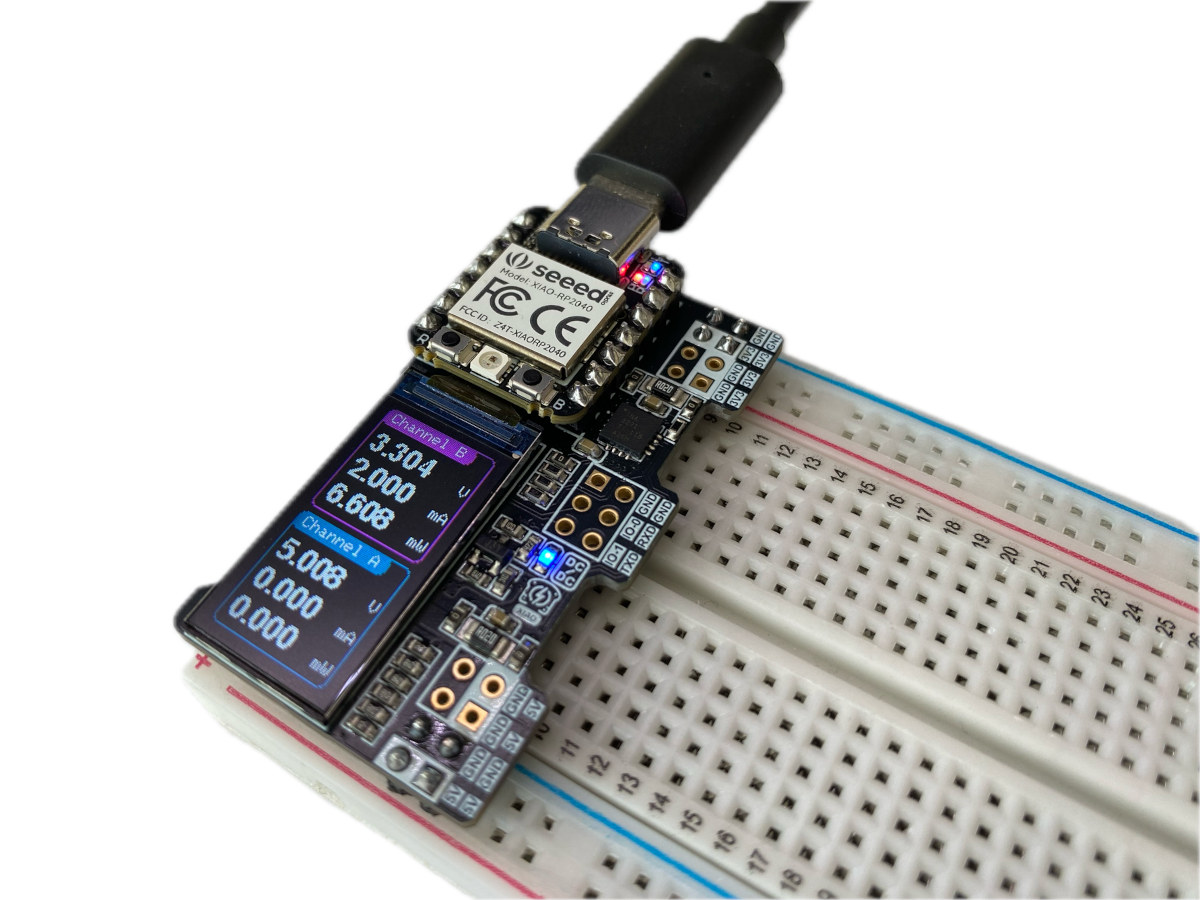
The concept of a USB-C-based power supply is not new, and we have previously seen projects like XIAO Powerbread and Axiometa BrodBoost-C. As USB PD-based power adapters and power banks have become much cheaper, adjustable power supplies like the PocketPD and BenchVolt PD have come out. Both have their own limitation: the PocketPD has only a single output channel, thus hardly a lab power supply, and the BenchVolt PD is not quite compact enough to be considered pocket-friendly. This is where the Ampisu comes in. It’s a compact, pocket-friendly, and isolated three-output lab power supply designed to fit in a pocket and includes features of a typical full-sized power supply. It’s designed for low-power embedded work, field debugging, and automated test setups. Ampisu specifications: MCU – Raspberry Pi RP2040 dual-core Cortex-M0+ microcontroller @ 125 MHz with 264KB SRAM Storage – Non-volatile memory for saving configurations Power Input 5V via USB Type-C port Automatically adapts to […]

Clintech Pico – The first Raspberry Pi RP2354B board offers 48 GPIOs in Raspberry Pi Pico form factor

Clintech Pico Board

Designed by Clintech Ltd. in Bulgaria, the Clintech Pico Board appears to be the first development board based on the Raspberry Pi RP2354B chip with 2MB on-chip flash. It retains the same form factor as a Raspberry Pi Pico 2 but adds extra GPIOs to make use of the 48 general-purpose GPIOs provided by the RP2354B chip. Like the Raspberry Pi Pico 2, this board features 40 castellated and through holes on the sides, exposing GPIOs 0–22 and 26–28, along with 3 debug pins. Additionally, the board includes 27 extra on-board through holes that break out the remaining GPIOs (23–25 and 29–47) as well as the QSPI interface (SD0–SD3 and SCLK) for external memory. Clintech Pico specifications: SoC – Raspberry Pi RP2354B  CPU Dual-core Arm Cortex-M33 @ 150 MHz with Arm Trustzone, Secure boot Dual-core 32-bit RISC-V Hazard3 @ 150 MHz (3-stage in-order pipeline; RV32IMAC with Zba, Zbb, Zbs, Zbkb, Zcb, Zcmp, and […]

PycoClaw – A MicroPython-based OpenClaw implementation for ESP32 and other microcontrollers

Pycoclaw MicroPython Openclaw ESP32

PycoClaw is a MicroPython-based platform for running AI agents on ESP32 and other microcontrollers that brings OpenClaw workspace-compatible intelligence to resource-constrained embedded devices. We had already covered the C-based Miniclaw for ESP32-S3 SoCs, the PycoClaw’s developer (Jonathan Peace) told CNX Software that it is a “full OpenClaw-compliant agent” that supports more LLM providers (OpenAI, Gemini, Ollama, etc.), interfaces with not only Telegram, but also ScriptO Studio and WebRTC, and offers features like OTA updates, extensions, and battery-optimized operation. The table below compares PycoClaw to OpenClaw, Nanobot, PicoClaw, NullClaw, and MimiClaw. MimiClaw still offers the lowest footprint and highest efficiency, but PycoClaw appears to offer many more features, including improved GPIO support. It works on ESP32-S3 with at least 8MB flash and PSRAM, ESP32-P4, and should soon support Raspberry Pi RP2350 boards with PSRAM as well. PycoClaw can be installed on supported hardware through a “one-click install” using a compatible web […]

WiFi and Bluetooth LE can now be used simultaneously on Arduino boards with NINA-W102 (ESP32) module

Arduino Nano RP2040 Connect WiFi and Bluetooth

Today I learned that WiFi and Bluetooth LE could NOT be used simultaneously on Arduino boards featuring the ESP32-based u-blox NINA-W102 wireless module, impacting the Arduino Nano RP2040 Connect, Arduino MKR WiFi 1010, and Arduino Nano 33 IoT boards. It’s a long-running problem since the first Arduino board with NINA-W10 was introduced in 2018, and meant you could use WiFi or Bluetooth LE, but not both simultaneously. The good news is that the issue has finally been fixed, thanks to a new firmware for the module and new WiFi and BLE libraries. More specifically, you’ll need the following libraries and firmware: WiFiNINA library version 2.0.0 or later ArduinoBLE library version 2.0.0 or later NINA-W102 firmware version 3.0.1 or later The libraries can easily be updated in the Library Manager in the Arduino IDE, and the firmware needs to be updated with the Firmware Updater Tool in Tools > WiFi101 / […]

PicoIDE – An open-source hardware IDE/ATAPI drive emulator for vintage computers (Crowdfunding)

PicoIDE IDE drive emulator

PicoIDE is an open-source hardware IDE/ATAPI drive emulator based on a Raspberry Pi RP2350 board and designed to replace hard drives and CD-ROM drives in vintage computers with microSD card storage. Users don’t need to burn optical discs or deal with old IDE hard drives with bad blocks, and instead, they can simply put their disk images on a microSD card and swap between them as needed. Two versions are offered, namely the PicoIDE Base featuring full IDE/ATAPI emulation in a standard 3.5-inch enclosure with a microSD card slot, and CD audio output, and the PicoIDE Deluxe, adding an ESP32-C3-based front panel with WiFi connectivity, an OLED, and navigation buttons. PicoIDE specifications: MCU – Raspberry Pi RP2350 microcontroller CPU 2x Arm Cortex-M33 cores @ 150 MHz 2x Hazard3 RISC-V cores @ 150 MHz Up to two cores can be used at any time (configured at boot) Memory – 520KB SRAM […]