3d printing News - CNX Software - Embedded Systems News

Project Aura – A neat, easy-to-assemble, DIY Air quality monitor compatible with Home Assistant

Project Aura DIY Air Quality Monitor

Project Aura is an ESP32‑based DIY air quality monitor that combines a touchscreen display and industrial sensors. It is fully integrated with the Home Assistant open-source home automation platform. The words “DIY” and “open source” often imply manufacturing the board yourself and soldering components, but that’s not the case for Project Aura. It’s based on off-the-shelf components connected through cables without any soldering requirements, while the enclosure can be 3D printed. The firmware is equally easy to install through a one-click web installer. Project Aura key components: Waveshare ESP32-S3-Touch-LCD-4.3 – ESP32-S3 board with 16MB flash, 4.3-inch IPS display (800×480) with capacitive touch. Similar to the ESP32-S3-Touch-LCD-4.3B but using PH2.0 connectors instead of a terminal block for I/Os Sensirion SEN66 + Adafruit breakout for data capture PM1, PM2.5, PM4, PM10 particle levels (full spectrum of particles from smoke to pollen) CO2, VOC, and NOx for air freshness, volatile chemicals, and exhaust […]

3D printed breadboards optimized for Raspberry Pi Pico and ESP32 boards

Raspberry Pi Pico ESP32 board 3d printed breadboards

We’ve seen people try to make MCU development boards as breadboard-friendly as possible by leaving plenty of space to connect wires and components. lhm0 tackled the issue from the opposite direction and designed 3D printed breadboards optimized for Raspberry Pi Pico and ESP32 development boards. The Pico typically only leaves two rows of each side of a typical breadboard, and some ESP32 boards are wide enough to take all rows and, as a result, are unusable. The trick here was to design the breadboard for each board with an opening in the middle, so that they only take two rows (one on each side) on the 3D printed breadboard, and the user still has four rows on each side to play with, plus the top and bottom rows. We only have photos for two variants of the breadboard (highlighted in bold below), but a total of five breadboard designs are […]

Open-source hardware USB to GPIB adapter connects legacy GPIB/IEEE-488 instruments to modern hosts

USB to GPIB adapter

XyphroLabs’s UsbGpib is an open-source hardware, inexpensive, and portable USB to GPIB adapter aiming to provide “access to legacy GPIB/IEEE-488 instruments using contemporary hardware and software, with a focus on accessibility, openness, and ease of integration into current workflows”. Initially developed by Hewlett-Packard in the late 1960s/early 1970s, GPIB (General Purpose Interface Bus), also known as IEEE-488 or initially HP-IB (Hewlett-Packard Interface Bus), is a short-range digital communications bus standard designed for connecting and controlling programmable electronic test and measurement instruments such as oscilloscopes, multimeters, and power supplies to computers or controllers. The UsbGpib project helps connect GBIP-compliant equipment to modern host computers with a USB port. UsbGpib key hardware features and specifications: Microcontroller – Microchip ATMega32U4 8-bit AVR microcontroller for 5V I/O compatibility USB – USB Type-C port with full USBTMC (USB Test and Measurement Class) support 24-pin GPIB interface – Fully IEEE-488.1 and IEEE-488.2 enabled, including service request […]

ESP-Scope is a web-based oscilloscope built using the ESP-IDF framework and Gemini 3 LLM

ESP32 oscilloscope

ESP-Scope is an open-source firmware transforming any ESP32 board into an oscilloscope using one of the ADC pins up to 83,333 Hz sample rate (on the ESP32-C6) and visualizing the results over Wi-Fi in a web browser, be it Google Chrome, Mozilla Firefox, or others. It’s not the first ESP32 oscilloscope project we’ve seen, as last year, we covered Bojan Jurca’s “Esp32_oscilloscope” Arduino sketch doing something very similar. The ESP-Scope is a little different, since it’s based on the ESP-IDF framework, and was used to test AI code generators, specifically “Google Antigravity using Gemini 3, with refinements, hints and tips and overall design specified by a human”. It just took a few hours to build. ESP-Score firmware features: Real-time signal visualization on a web browser. Adjustable sample rate (1-83333 Hz) and attenuation. Crosshair functionality for precise measurements Adjustable trigger level Test signal generation Reset functionality to clear settings and reload […]

ExtrudeX machine recycles failed/old 3D prints into new filament (Crowdfunding)

ExtrudeX machine recycle 3d printer filament

When 3D printing, users will always waste filament one way or the other, either due to a failed print or because of the support for the print, and there may also be test/old prints that you don’t need/use anymore, for example, a retraction cube or a benchy. That means all that material usually ends up in the dustbin. Priyank Pal, founder of Creative3dp, did not like all that waste, so he created the ExtrudeX machine to recycle 3D print waste and filament scraps back into usable filament. On top of that, the machine itself is 3D printable and much more affordable than commercial solutions from companies such as Filabot. I’d usually provide the specifications here, but as a crowdfunded project, the ExtrudeX’s full technical details are not fully available. We just know that a single DC gear motor drives the main screw inside a metal barrel, while band heaters and […]

PCBWay’s Christmas Event Is Now Live (Sponsored)

PCBWay Christmas 2025

As the holiday season approaches, PCBWay is thrilled to announce their Christmas Promotions! If you’ve been considering starting a project or testing out their services, this is a great time to begin. Don’t hesitate to visit the website to learn more: https://www.pcbway.com/activity/christmas2025.html. Activity Time: November 28th to December 31st Unlock Special Material Advantages To encourage customers to explore more capabilities and remove barriers to innovation, PCBWay has launched special benefits on some material options. For PCB manufacturing, the solder masks of purple, pink, and matte black incur no additional cost. For 3D printing, UTR8100 Clear and Somos Ledo orders can enjoy 10% off on materials + 20% off on the starting price. Never miss this chance to try these services at a low price and add a splash of premium color for your projects. Discover Special Offers Cost-effectiveness has always been a priority for customers. Recognizing this, except for the […]

Creality Sermoon S1 3D scanner review – Part 2: Using Creality Scan 4 software with Intel Graphics

Creality Scan 4 Sermoon S1 3D scanner review

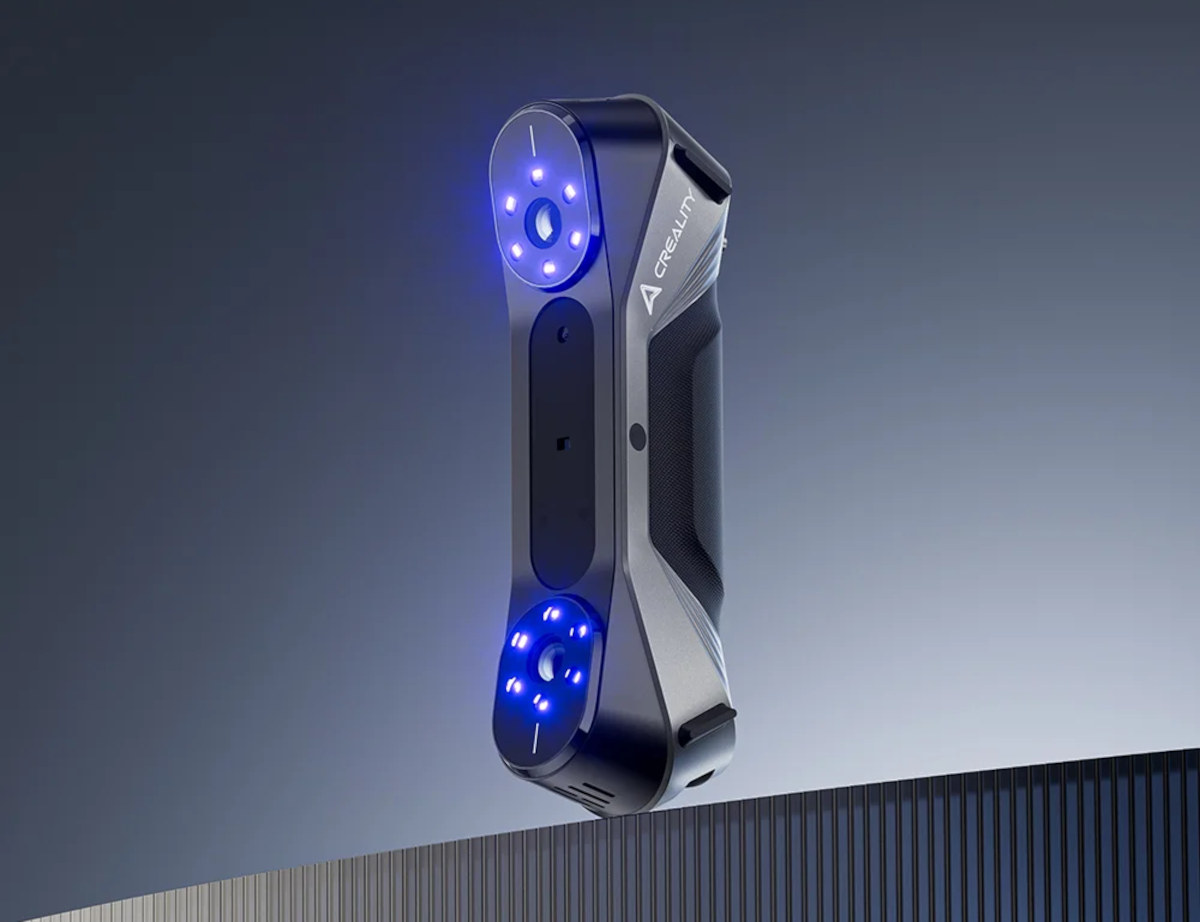
Earlier this month, we checked the specifications and did an unboxing of the Sermoon S1 high-end 3D scanner with support for blue laser and infrared scanning. I had some concerns about my host machines due to the fairly high minimum requirements: Intel Core i7 Gen7 CPU, NVIDIA GPU (6GB VRAM), 16GB RAM, Windows 10/11 (64-bit). I had planned to use an ASUS Vivobook 16 laptop with a 13th Gen Intel Core i5-13500H SoC with a 12-core Raptor Lake processor and integrated Intel Iris Xe Graphics, as well as 16GB of RAM to run Creality Scan 4 software. After talking with Creality, it was confirmed to me that a “dedicated graphics card” was required. I have some good and bad news. The good news is that I might get a mini PC with an NVIDIA RTX 5060 Ti (16GB) external GPU for review. The bad news is that I have to […]

Arduino-programmable environmental and air quality sensor kit features ENS160 and BME280 sensors

Novaduino Environmental Sensor Kit

Designed by Nova Radio Labs in the US, the Novaduino Environmental Sensor Kit is an Arduino-programmable air quality and weather monitoring solution built around the company’s own Novaduino Display Module. It provides VOCs, eCO₂, temperature, humidity, and barometric pressure data in real time, making it ideal for Smart Home experiments, classroom projects, or hobby weather-station builds. The kit integrates a Sciosense ENS160 air-quality sensor and Bosch BME280 environmental sensor connected via Qwiic, which measures TVOCs, eCO₂, temperature, humidity, and pressure with an on-device AQI indicator. It includes the Novaduino display PCBA, 2.4-inch IPS touchscreen, buttons, rotary encoder, Feather M0 Express or RP2040 module support, headers, mechanical hardware, and optional 3D-printable enclosures (STL/F3D/STP).  Designed for learning soldering, assembly, and Arduino programming, the kit is uncalibrated and intended for educational and experimental use only. Novaduino Environmental Sensor Kit specifications: Core Platform – Novaduino 2.4-Inch Display Module Supported development boards – Adafruit Feather and […]