sony News - CNX Software - Embedded Systems News

AsteroidOS 2.0 open-source smartwatch OS released, now supports around 30 devices

AsteroidOS 2.0

AsteroidOS 2.0 Linux-based, open-source smartwatch operating system has just been released with features such as always-on display support, Tilt-to-Wake, a customizable QuickPanel, multiple launcher styles, Nightstand mode, performance improvements, and support for about 30 devices. It’s been a long journey. We first noted the open-source project in 2016 when Florent Revest showcased a basic user experience on the LG G Watch, just before giving a talk at FOSDEM 2016 introducing AsteroidOS. This was followed by the launch of the Connect Watch (crowdfunded) AsteroidOS smartwatch in 2017 by a French company (which didn’t get funded), and AsteroidOS 1.0 was released in 2018. So it’s been ten years since it all started, and the developers have now released AsteroidOS 2.0. AsteroidOS 2.0 highlights: New features Always-on Display, Tilt-to-wake, Palm-to-sleep Heart rate monitor app Initial step counting support Music volume control Compass support Support for Bluetooth HID and Audio Design, Usability, and App Improvements […]

Raspberry Pi CM5-based outdoor PoE security camera features 12.3 MP IMX500 sensor, IP66 enclosure

All in One Raspberry Pi AI Camera Kit with CM5 inside

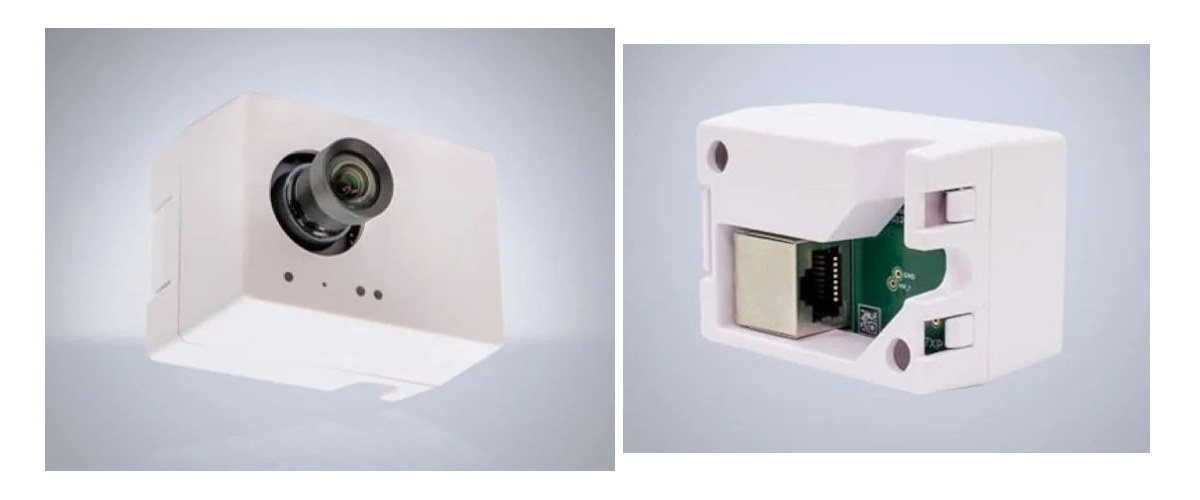
Arducam recently launched the All-in-One Raspberry Pi AI Camera Kit with CM5, a Raspberry Pi CM5-based PoE outdoor security camera featuring a 12.3MP Sony IMX500 AI vision sensor housed in an IP66-rated enclosure. The camera combines pixel-level sensing and AI inference on a single chip, reducing the need for cloud processing while improving efficiency and privacy. The security camera supports operation from -20°C to +75°C, although image stability is only guaranteed in the 0 to 50°C range, potentially making it unsuitable for locations where temperatures drop below freezing. It can be used for perimeter security, construction site safety monitoring, traffic and parking enforcement, and public-space crowd analytics. All-in-One Raspberry Pi AI Camera Kit specifications SoM – Raspberry Pi Compute Module 5 (CM5) by default CM5004016 with  4GB RAM, 16GB eMMC Flash, no Wi-Fi and Bluetooth Image Sensor 12.3MP Sony IMX500 Intelligent Vision Sensor (as found on the Raspberry Pi AI camera) […]

Sony AS-DT1 tiny industrial LiDAR depth sensor can operate under bright conditions (up to 100,000 lux)

Sony AS DT1 LiDAR sensor

Sony AS-DT1 is a tiny and precise LiDAR depth sensor, which the company claims is the world’s smallest at just 31 x 29 x 29mm and the world’s lightest at 50 grams compared to other solutions with a range of 10 meters or more. It is designed for applications such as drones for inspections and surveys, autonomous mobile robots, food service robots, and warehouse automation. The LiDAR module uses Direct Time of Flight (dToF) LiDAR technology with a Single Photon Avalanche Diode (SPAD) sensor to deliver fast, accurate three-dimensional distance measurements both indoors and outdoors. According to the company, the sensor can measure a range of up to 40 meters indoors and 20 meters outdoors, even in bright light, with ±0.2-inch (+/-0.5mm) accuracy at 10 meters, and a distance resolution of 0.98 inches (2.5cm). Featuring a rugged yet lightweight aluminum alloy housing, two USB-C ports, and connectors for external power, […]

Getting Started with Raspberry Pi AI HAT+ (26 TOPS) and Raspberry Pi AI camera
Raspberry Pi AI HAT+ and AI camera review

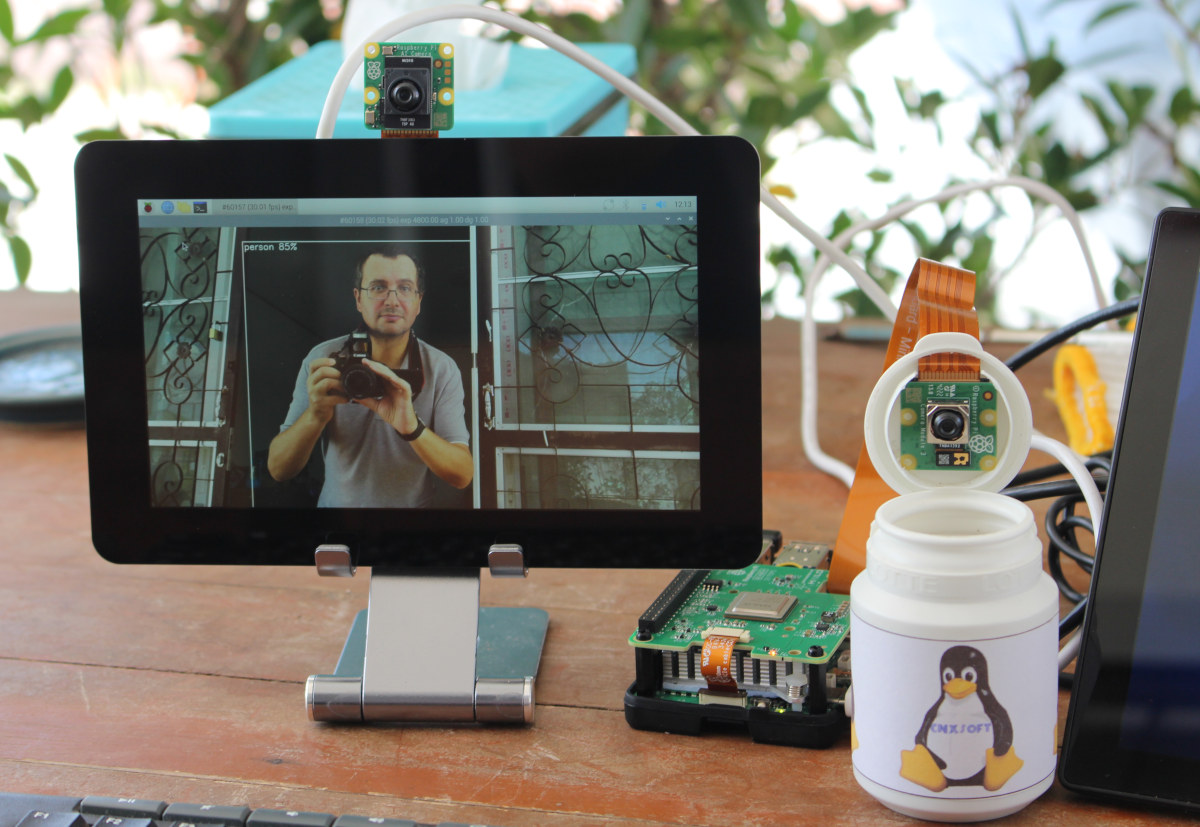
Raspberry Pi recently launched several AI products including the Raspberry Pi AI HAT+ for the Pi 5 with 13 TOPS or 26 TOPS of performance and the less powerful Raspberry Pi AI camera suitable for all Raspberry Pi SBC with a MIPI CSI connector. The company sent me samples of the AI HAT+ (26 TOPS) and the AI camera for review, as well as other accessories such as the Raspberry Pi Touch Display 2 and Raspberry Pi Bumper, so I’ll report my experience getting started mostly following the documentation for the AI HAT+ and AI camera. Hardware used for testing In this tutorial/review, I’ll use a Raspberry Pi 5 with the AI HAT+ and a Raspberry Pi Camera Module 3, while I’ll connect the AI camera to a Raspberry Pi 4. I also plan to use one of the boards with the new Touch Display 2. Let’s go through a […]

Raspberry Pi AI Camera with Sony IMX500 AI sensor and RP2040 MCU launched for $70

Raspberry Pi AI camera

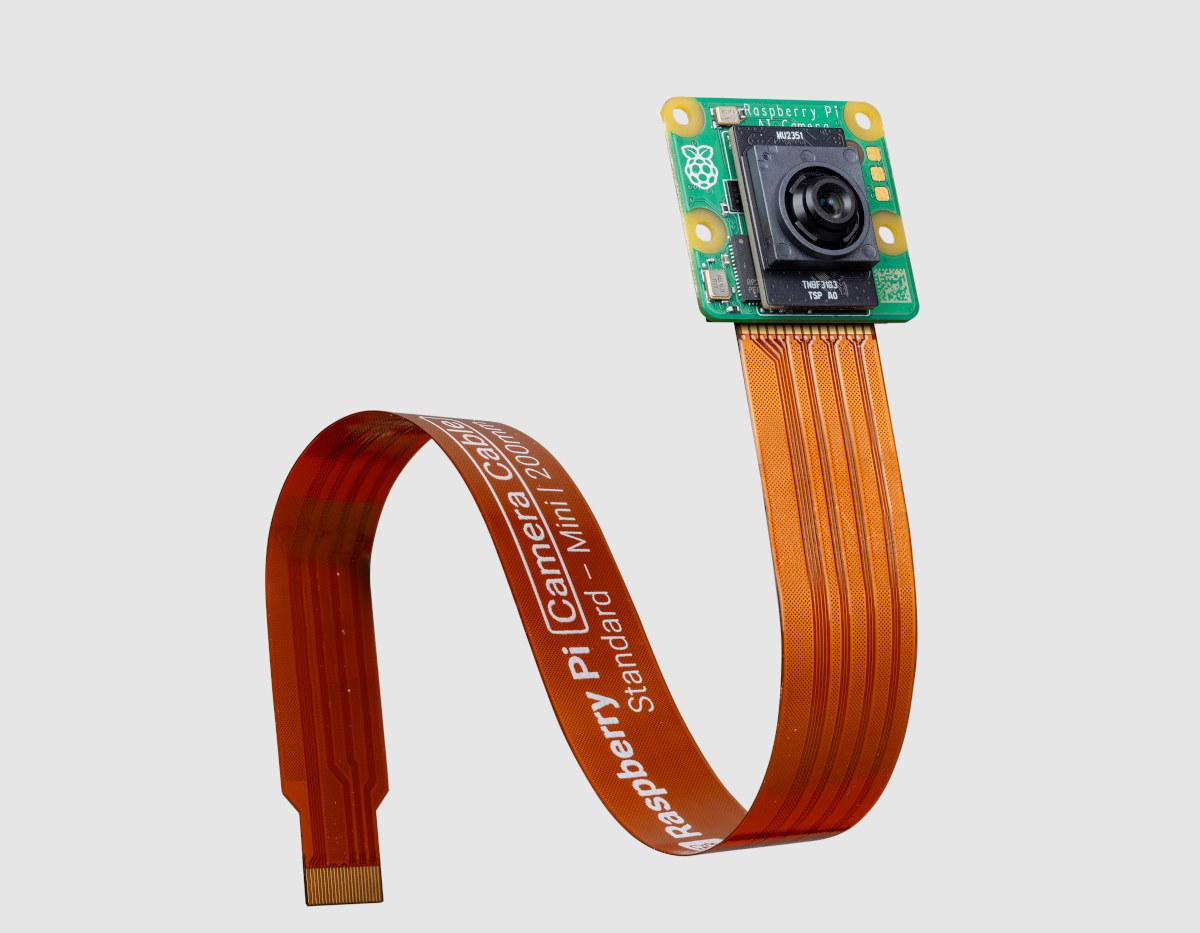
We previously noted that Raspberry Pi showcased a Raspberry Pi Zero 2W with a Raspberry Pi AI camera based on a Sony IMX500 intelligent vision sensor at Embedded World 2024, but it was not available at the time. The good news is that the Raspberry Pi AI camera is now available for $70 from your favorite distributor. This follows the launch of the more powerful Raspberry Pi AI Kit designed for the Raspberry Pi 5 with a 13 TOPS Hailo-8L NPU connected through PCIe. The AI camera based on a Sony IMX500 AI camera sensor assisted by a Raspberry Pi RP2040 to handle neural network and firmware management is less powerful, but can still perform many of the same tasks including object detection and body segmentation, and works on any Raspberry Pi board with a MIPI CSI connector, while the AI Kit only works on the latest Pi 5 board. […]

Linux 6.10 Release – Notable changes, Arm, RISC-V, and MIPS architectures

Linux 6.10 Release Changelog

Linux Torvalds has announced the release of Linux 6.10 on LKML: So the final week was perhaps not quote as quiet as the preceding ones, which I don’t love – but it also wasn’t noisy enough to warrant an extra rc. And much of the noise this last week was bcachefs again (with netfs a close second), so it was all pretty compartmentalized. In fact, about a third of the patch for the last week was filesystem-related (there were also some btrfs latency fixes and other noise), which is unusual, but none of it looks particularly scary. Another third was drivers, and the rest is “random”. Anyway, this obviously means that the merge window for 6.11 opens up tomorrow. Let’s see how that goes, with much of Europe probably making ready for summer vacation. And the shortlog below is – as always – just the last week, not some kind […]

Raspberry Pi at Embedded World 2024: AI camera, M.2 HAT+ M Key board, and 15.6-inch monitor

Raspberry Pi AI Camera Sony IMX500

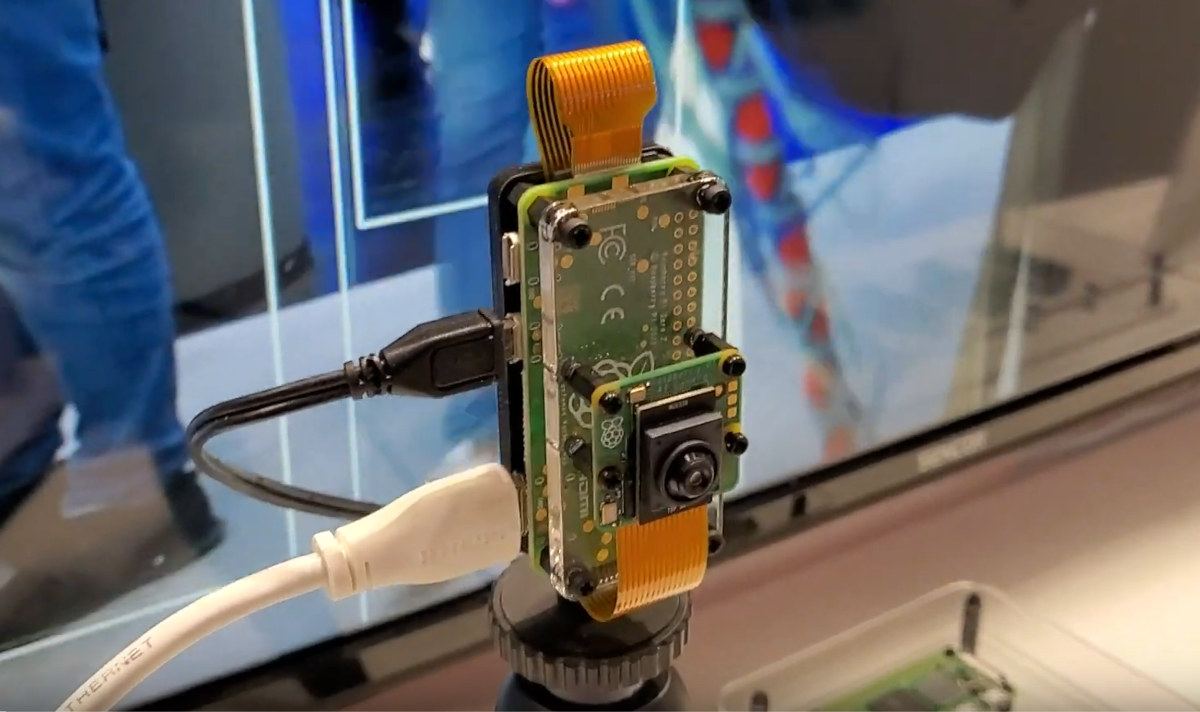
While Raspberry Pi has not officially announced anything new for Embedded World 2024 so far, the company is currently showcasing some new products there including an AI camera with a Raspberry Pi Zero 2 W and a Sony IMX500 AI sensor, the long-awaited M.2 HAT+ M Key board, and a 15.6-inch monitor. Raspberry Pi AI camera Raspberry Pi AI Camera kit content and basic specs: SBC – Raspberry Pi Zero 2 W with Broadcom BCM2710A1 quad-core Arm Cortex-A53 @ 1GHz (overclockable to 1.2 GHz), 512MB LPDDR2 AI Camera Sony IMX500 intelligent vision sensor 76-degree field of view Manually adjustable focus 20cm cables The kit comes preloaded with MobileNet machine vision model but users can also import custom TensorFlow models. This new kit is not really a surprise as we mentioned Sony and Raspberry Pi worked on exactly this when we covered the Sony IMX500 sensor. I got the information from […]

Sony energy harvesting module generates power from electromagnetic wave noise

Sony energy harvesting module

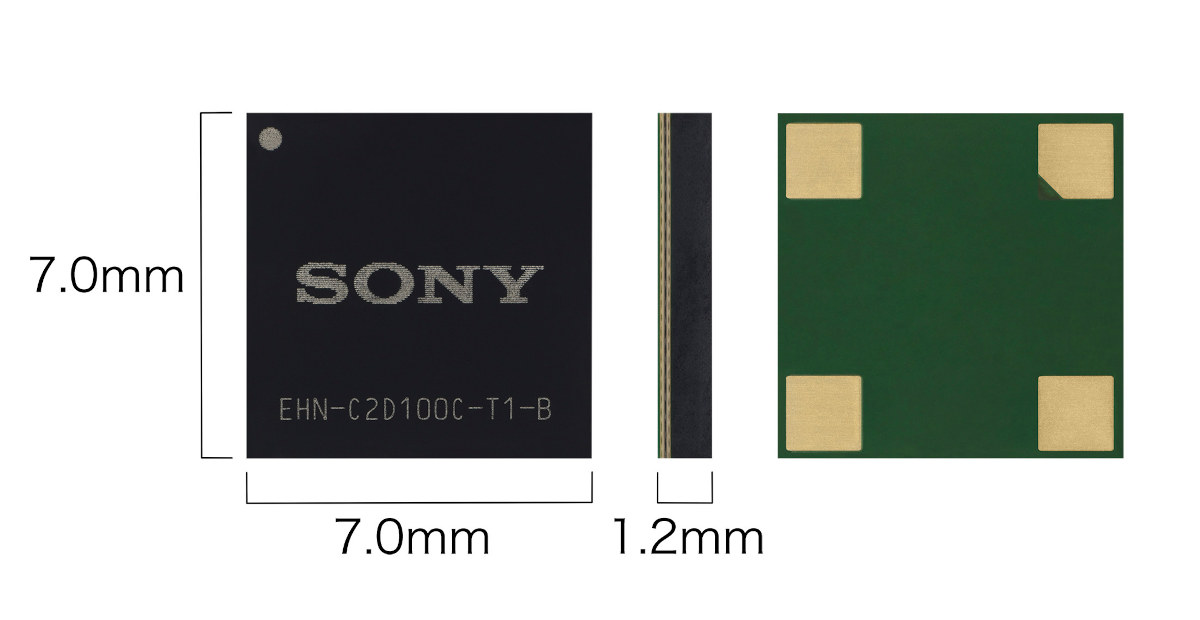
Sony Semiconductor Solutions Corporation (SSS) has developed an energy harvesting module that uses electromagnetic wave noise energy to power IoT devices. The new module leverages Sony’s tuner development process to generate power from electromagnetic wave noise from robots inside factories, monitors and lighting in offices, monitors and TVs in stores and homes, etc. in order to provide a stable power supply needed to run low-power IoT sensors and communications equipment. The tiny 7×7 mm module uses the metal parts of electronic devices that serve as the source of electromagnetic wave noise as part of an antenna and employs a rectifier circuit in order to convert electromagnetic wave noise in a range of several Hz to 100 MHz into electrical energy and supply power to low-power consumption IoT sensors and communications equipment or to charge batteries. The module harvests energy from electronic equipment that generates a significant amount of electromagnetic wave […]