Nuvoton’s NuMicro M55M1 is a low-power AI MCU that combines a 220 MHz Arm Cortex-M55 CPU with a 111 GOPS Ethos-U55 NPU to run basic AI tasks on-device. It specifically targets small IoT and embedded devices that need low-power voice, audio, or simple image processing. The chip embeds 1.5 MB RAM, 2 MB flash, and supports external OctoSPI/HyperRAM memory. Connectivity options include Ethernet, USB-OTG, CAN-FD, I3C/I2C/SPI, SDIO, and an 8-bit camera interface, along with ADCs, DACs, comparators, PWM, and multiple low-power modes. It’s built for secure IoT applications with Arm TrustZone, secure boot, AES, and PSA Level 2 certification. Typical uses include voice triggers, smart sensors, simple vision nodes, small appliances, and industrial monitoring devices. Nuvoton NuMicro M55M1 specifications: CPU Core – 220 MHz Arm Cortex-M55 core Architecture – Armv8.1-M with Helium M-Profile Vector Extension (MVE) Arm TrustZone Technology DSP extensions Hardware Floating-point Unit (FPU), double-precision Cache – 16KB I-Cache […]
Renesas RA4L1 ultra-low-power MCU family offers 168 µA/MHz operation, dual-bank flash, capacitive touch
Renesas has recently introduced the RA4L1 ultra-low-power Arm Cortex-M33 MCU family along with two evaluation/development boards. This new lineup consists of 14 ultra-low-power devices based on an 80 MHz Arm Cortex-M33 processor with TrustZone support and designed for metering, IoT sensing, smart locks, digital cameras, and human-machine interface (HMI) applications. The RA4L1 MCU family offers high power efficiency at 168 µA/MHz while active and a standby current of 1.70 µA while retaining SRAM. Additionally, they support segment LCD, capacitive touch, USB-FS, CAN FD, low-power UART, multiple serial interfaces (SPI, QSPI, I2C, I3C, SSI), ADC, DAC, real-time clock, and security features like the RSIP security engine with TRNG, AES, ECC, and Hash. Renesas RA4L1 microcontroller Renesas RA4L1 specifications MCU core Arm Cortex-M33 core (Armv8-M) Up to 80 MHz operating frequency Arm Memory Protection Unit (MPU) 8 secure regions (MPU_S) 8 non-secure regions (MPU_NS) CoreSight ETM-M33 Dual SysTick timers (secure & non-secure) […]
STMicro STM32H5 Arm Cortex-M33 MCU clocks at 250 MHz, supports STM32Trust TEE Secure Manager
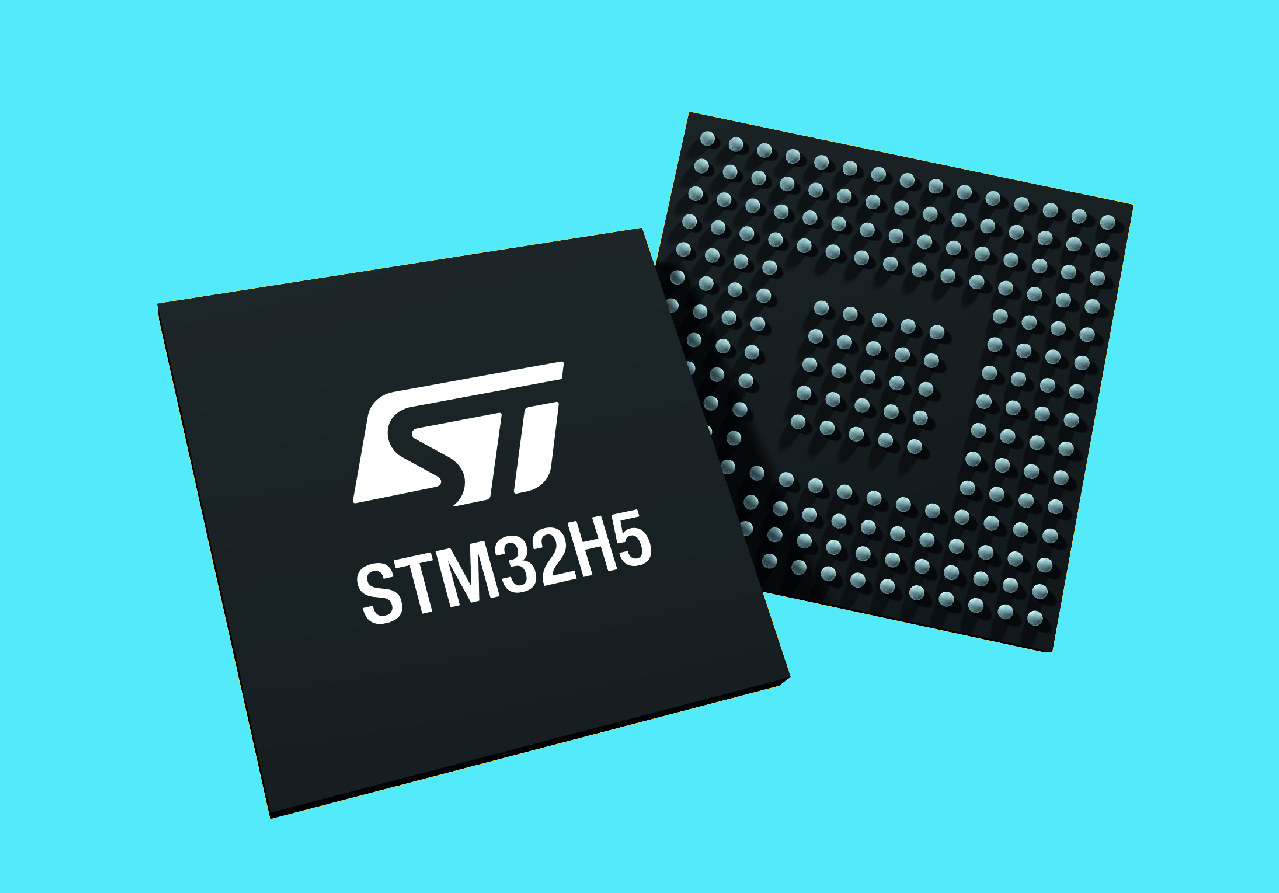
STMicroelectronics has announced the STM32H5 Arm Cortex-M33 “high-performance” microcontroller family clocked at up to 250 MHz and supporting STM32Trust TEE Secure Manager to boost both performance and security in “next-generation smart applications”. The STM32H5 family has three product types namely the higher-end STM32H563/573 with up to 2MB flash, 640KB SRAM, Ethernet, and hardware security, the STM32H562 with a similar design but fewer interfaces, and the entry-level STM32H502 with 128KB flash, 32KB SRAM. STM32H5 key features and specifications: MCU core – Arm Cortex-M33 core with TrustZone technology, digital signal processing (DSP) and floating-point unit (FPU) running up to 250 MHz; Up to 375 DMIPS and a 1023 CoreMark score executing from the flash memory Memory and Storage STM32H563/573/562 – 1 to 2 Mbytes of flash memory, 640 Kbytes of SRAM STM32H503 – 128 Kbytes of flash memory and 32 Kbytes of RAM. OSPI serial flash memory interface Up to 2x SDMMC […]
STMicro adds more STM32U5 Cortex-M33 MCUs with NeoChrom 2.5D GPU, 128KB to 4MB flash, NIST certification, etc…
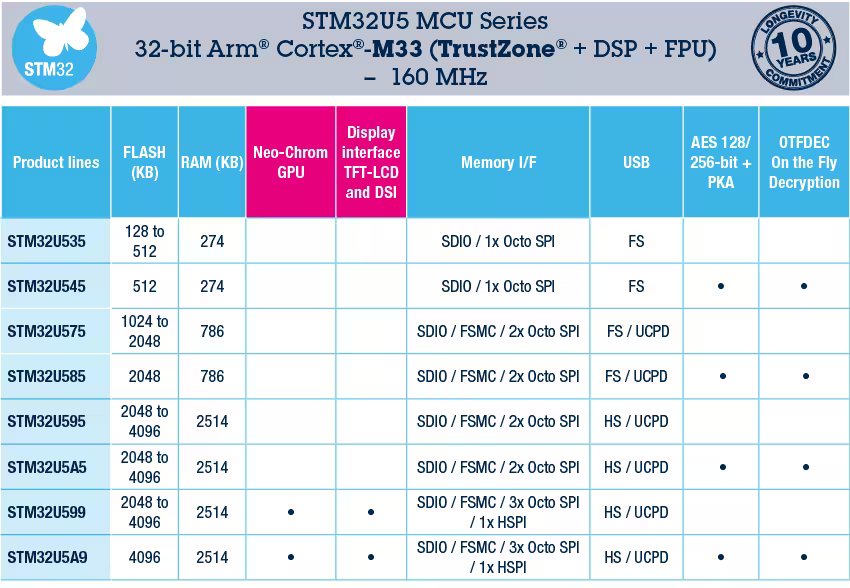
STMicro has added three new families to its STM32U5 Cortex-M33 microcontroller series with the entry-level STM32U535/545 with as little as 128KB flash, the STM32U595/5A5 with up to 4MB of Flash and 2,514KB of RAM, and the STM32U599/5A9 with similar features as the STM32U595/5A5 by adding the new NeoChrom 2.5D GPU plus TFT-LCD and DSI display interfaces. STMicro also announced that STM32U5 series MCUs were the first general-purpose MCUs to receive NIST-embedded random-number entropy source certification. As of now, along with the STM32U575/585 introduced in February 2021 with an optional Chrom-ART 2D GPU, STMicro offers eight product lines as part of the STM32U5 MCU series as shown in the table below. That means the STM32U5 microcontroller can address a wider range of applications with the STM32U535/545 targetting lower-cost applications with less flash and RAM, the “legacy” STM32U575/U585 for mid-range applications, and the STM32U59X/5AX for applications where more storage and memory is […]
PiFinger is a Fingerprint HAT for Raspberry Pi (Crowdfunding)
“There’s a HAT for that” they say, or something close to it… We’ve covered many HAT expansion for Raspberry Pi boards over the years, but so far, I don’t think we’ve seen any HAT with a fingerprint sensor, probable because tiny USB fingerprint readers are a thing. But if you’d like a HAT with a built-in fingerprint sensor, the guys at SB Components have you covered with PiFinger HAT equipped with a 2D capacitive fingerprint sensor and a small display. The expansion board is also powered by a Nuvoton Cortex-M23 MCU with Arm TrustZone support and on-chip crypto-accelerator. PiFinger specifications: SoC – Unnamed Nuvoton Arm Cortex-M23 microcontroller with Arm Trustzone (likely NuMicro M2351 since it’s made for fingerprint applications) Display – 0.91-inch OLED display Sensor – 2D capacitive fingerprint sensor with 176×176 resolution connected to MCU over SPI Host interface USB to computer UART up to 115,200 baud + GPIO […]
Renesas Launches RA6M4 Cortex-M33 Microcontrollers for Secure IoT Applications
Arm Cortex-M33 core with Arm Trustzone security was first unveiled in 2016, and since then several silicon vendors introduced secure Cortex-M33 microcontrollers with, for instance, Nordic nRF91 LTE-IoT SoC, STMicro STM32L5 MCU family, or NXP LPC551x/S1x. Renesas has now added one more alternative with RA6M4 Cortex-M33 microcontroller family clocked at up to 200 MHz with increased performance and security compared to their earlier Cortex-M4 RA6 microcontrollers clocked at 120 Mhz. Key features for RA6M4 microcontrollers: MCU Core – Arm Cortex-M33 @ 200 MHz with TrustZone technology Memory – 256 KB RAM include 64KB ECC RAM Storage – 512-1024 embedded flash, QuadSPI, and OctaSPI memory interface Networking – Ethernet controller with DMA USB – USB 2.0 Full Speed and CAN Other Peripherals Capacitive touch sensing unit SCI (UART, Simple SPI, Simple I2C), and SPI/ I2C multi-master interface SDHI and SSI (Serial Sound Interface) Security Renesas’ Secure Crypto Engine supporting multiple symmetric […]
USB Armory Mk II USB Linux Computer Targets Security Applications (Crowdfunding)
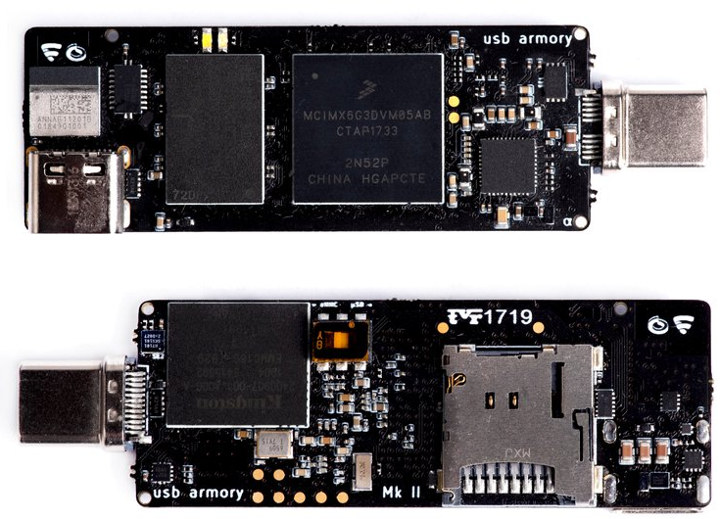
Back in 2014, Inverse Path launched USB Armory computer dongle running headless Linux from a MicroSD card and designed for security applications. The company got bought by F-Secure Foundry in 2017, and the latter has now launched another crowdfunding campaign for an upgraded version USB Armory Mk II keeps a similar USB dongle form factor but replaces the NXP i.MX53 Cortex-A8 processor with a more efficiency NXP i.MX 6ULZ Arm Cortex-A7 processor, the USB type-A port with a modern USB-C port, adds 16GB eMMC flash, Bluetooth 5 LE connectivity, and new security features. USB Armory Mk II specifications: SoC – NXP i.MX6ULZ Arm Cortex-A7 @ 900 MHz System Memory – 512 MB DDR3 RAM Storage – 16 GB eMMC flash + external microSD Connectivity – Bluetooth 5 LE + mesh module (U-blox ANNA-B112) with Arm Cortex-M4 MCU (nRF52832) USB – 2x USB type-C ports: 1x DRP (Dual Role Power) receptacle […]
Ameba Z2 IoT Board Features Realtek RTL8720CM Armv8-M KM4 Secure Wireless MCU
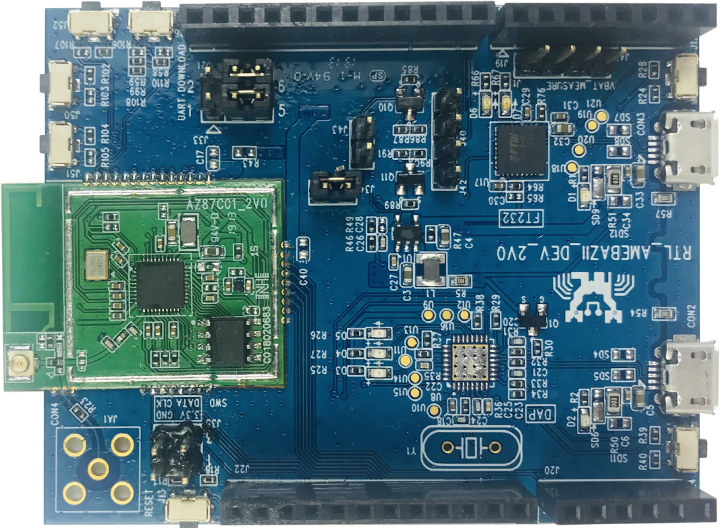
In 2016 we discovered Realtek Ameba wireless microcontrollers combining an Arm Cortex-M3 core with WiFi connectivity, and that could potentially become an ESP8266 competitor with modules selling for as low as $2. But the solution never really took off, because it was about the same price as ESP8266, and the latter already had a solid software ecosystem and community. But RealTek has now introduced a new Ameba Z2 IoT development board powered by RTL8720CM microcontroller featuring an Armv8-M KM4 core clocked at 100 MHz. What’s an Arm KM4 core you may ask? Seeed Studio informed me Arm and RealTek worked together on the KM4 core, so it looks like a custom Armv8-M microcontroller. Ameba Z2 IoT Development Board Ameba Z2 (ZII) specifications: Wireless MCU – Realtek RTL8720CM single core Armv8-M KM4 core @ 100MHz with 4.2MB internal RAM, WiFi and Bluetooth radios Storage – 2MB external flash on module Connectivity […]